


One Expensive Mistake
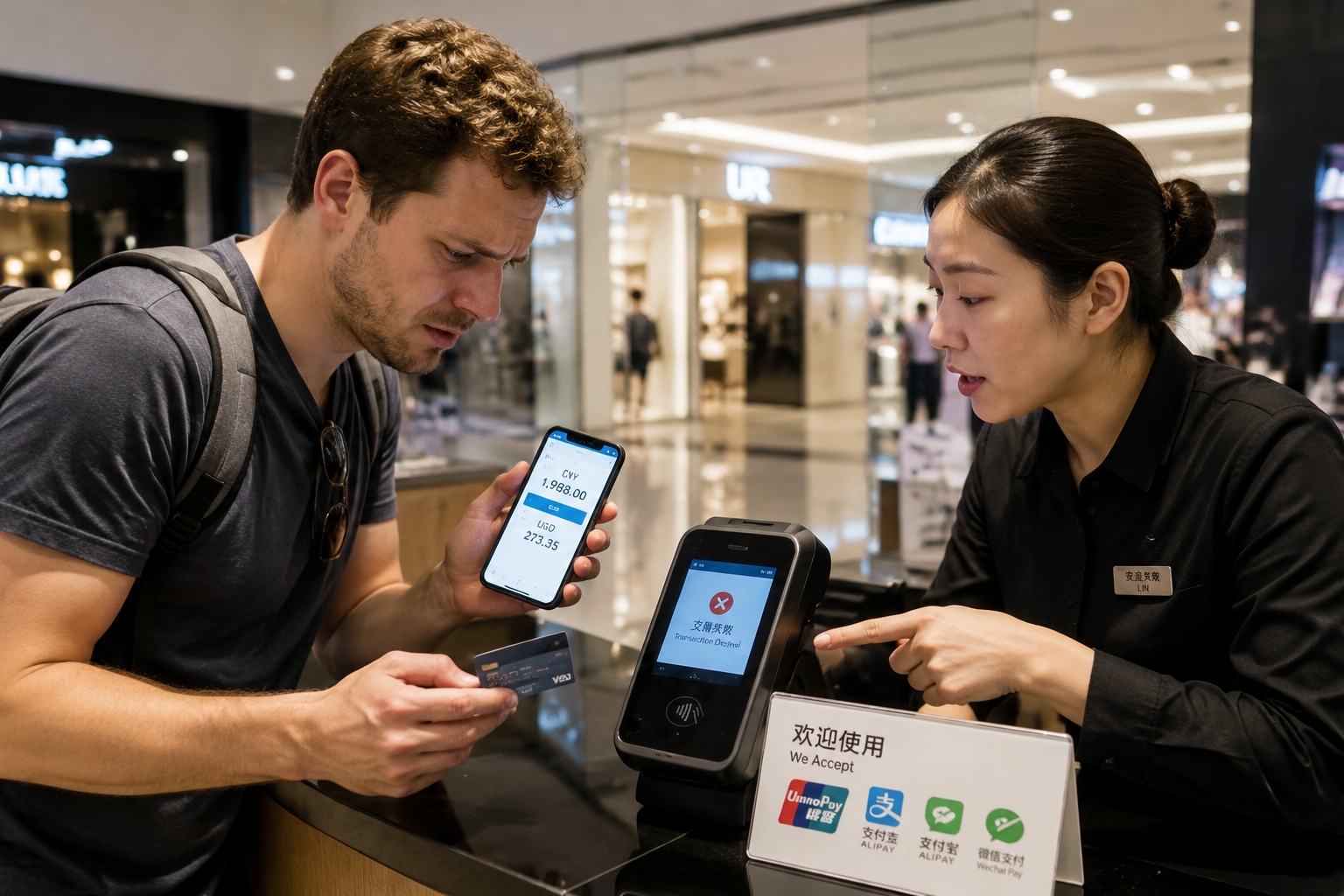
Last September, Emma, an Australian expat living in Shanghai, tried to pay her son’s annual school tuition online with her Visa card. The payment was declined. After a confusing call with the school, she learned that her card had already hit the annual spending limit for foreign cards in China — roughly $50,000 USD equivalent. She had no idea that such a ceiling existed, and neither do most international visitors.
The Invisible $50,000 Ceiling
When you bind a foreign Visa, Mastercard, JCB, or American Express card to China’s mobile payment giants (Alipay and WeChat Pay), your transactions are not just processed like local cards. They fall under cross-border payment regulations. According to the People’s Bank of China and the State Administration of Foreign Exchange, non-resident cards used through these platforms generally face a single-transaction limit (often between $1,000 and $3,000) and a rolling annual cumulative limit of $50,000 equivalent.
This means that if you spend $45,000 on a hotel booking, jewelry, or medical fees in a given year, your remaining capacity is only $5,000. Any single payment above the per-transaction cap may also be rejected. The limit resets every calendar year, but it is not applied to every card-issuer across the board. Different platforms may have slightly different rules.
Why the Limit Exists
The simplest explanation is capital control and anti-money-laundering regulation. China manages the flow of foreign currency carefully. Letting anyone spend unlimited RMB via a foreign card could create loopholes for money transfers and speculative flows. The cap ensures that foreign card usage stays within the scope of personal consumption, not financial channels.
Understanding this helps visitors plan. It’s not a technical glitch or a bank emergency — it’s a regulatory design.
How Fees Eat Into Your Purchase
Before you hand over your card, let’s talk about cost. Using an overseas card in China usually triggers a foreign currency conversion fee, typically 1.5% to 2.5% charged by your issuing bank. On top of that, the payment processor (Alipay or WeChat Pay) may add a small cross-border transaction fee. The total markup often lands between 2% and 3% per transaction.
Worse, if you get a refund, the fees you already paid are usually not returned. The refund may take 5-10 business days and will not immediately restore your annual limit. You’ll be stuck with a temporary spending cap even after the money is back.
Workarounds for Big Payments
Now for the practical part. If you need to pay more than the ceiling allows, here are some common strategies used by people living in China:
1. Use the NFC / POS solution
When you physically swipe your foreign card at a point-of-sale terminal in a shop, the transaction does not go through Alipay or WeChat Pay’s cross-border channel. Many travelers report that POS card swiping bypasses the $50,000 cap. But not all merchants accept foreign cards. Restaurants, high-end malls, and hotels that are tourist-friendly tend to. Ask for ‘swipe the card’ rather than ‘Alipay’.
2. Split the payment across cards
The $50,000 cap applies per card, not per person. If you have a Visa and a Mastercard from the same bank, they are separate cards. You can spread large transactions across two or more cards to double the available capacity. Of course, you also pay conversion fees twice.
3. Wire transfer from your home account
For tuition, rent, or medical deposits above $50,000, bank-to-bank transfer is the most straightforward alternative. Use SWIFT or the Chinese bank’s own overseas remittance service. This does not touch the foreign card limit, though it will require a local bank account and proper documentation (contract, invoice, passport).
4. Pay in RMB cash
Carry up to $5,000 cash per entry per current rules — but for large single payments there are also Chinese customs limits on cash. This is really only useful for small amounts, but worth mentioning.
5. Ask someone to pay on your behalf
Many expats just invite a Chinese friend to pay, then wire them back. That works until the friend hits their own annual purchase limit. It’s informal, but common.
A Common Confusion: Two Different “$50,000” Rules
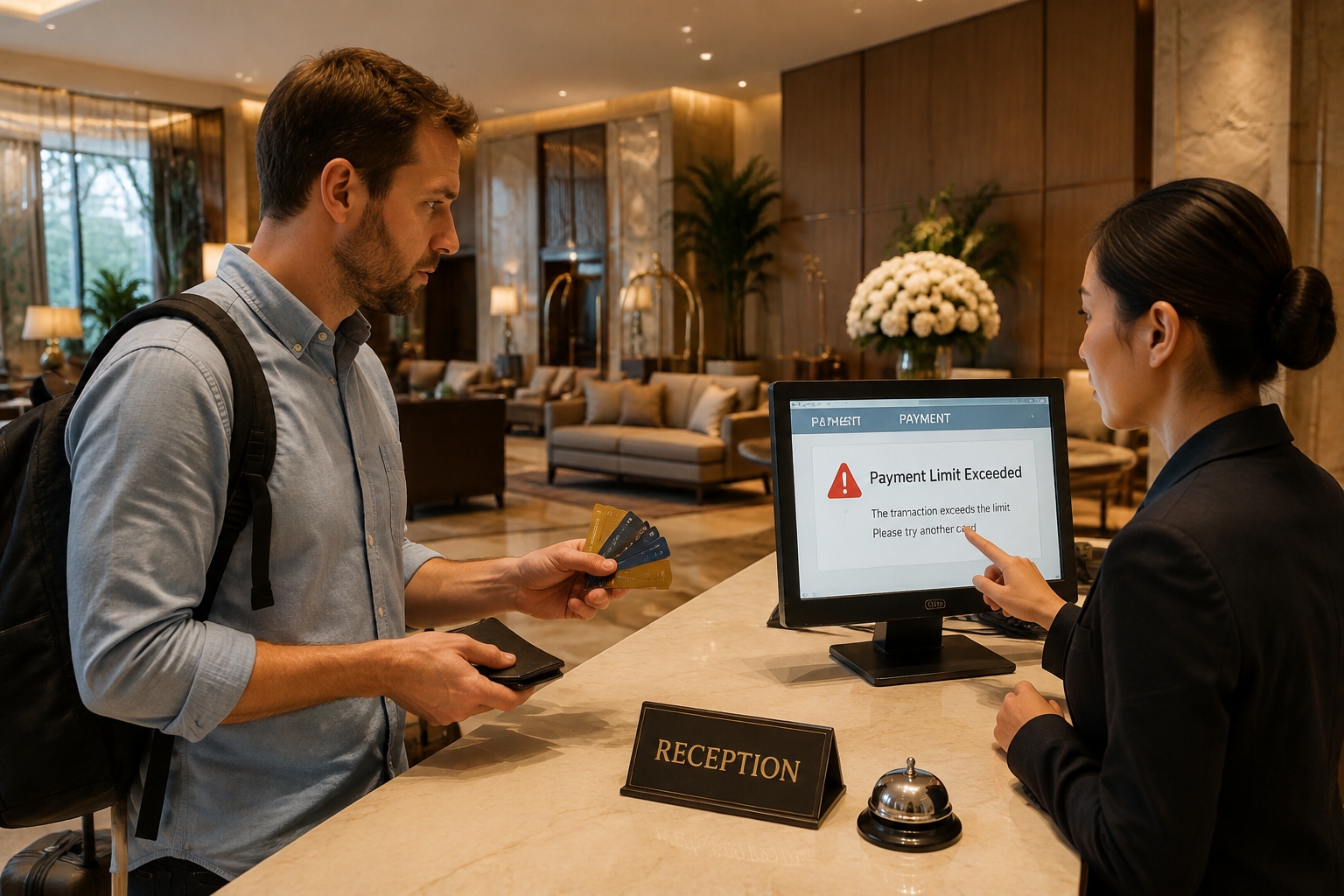
Overseas visitors often Google ‘China $50,000 annual limit’ and stumble upon Chinese residents’ forex purchase quota. Under China’s State Administration of Foreign Exchange, every Chinese citizen can buy up to $50,000 worth of foreign currency per calendar year at local banks. That’s a completely different regulation. It applies to Chinese residents buying foreign currency, not to foreigners spending with their own cards in China.
So when a reader says ‘I read you can only spend $50,000 in China’, they’re mixing up two rules. The foreign card ceiling applies to foreign card transactions through Chinese mobile payment processors. The resident forex quota applies to Chinese residents exchanging RMB for foreign currency.
Long-Term Residents: Plan Your Payment Stack
If you’re planning to live in China for a year or more, here’s how to reduce dependence on the $50,000 ceiling:
Open a local bank account
Apply for a Chinese debit card with UnionPay. For salaries, rent, and everyday expenses, local cards have no such foreign card cap. You’ll need your passport, a residence permit, and a local mobile number.

Get a Chinese credit card
On a normal work visa, some Chinese banks will issue a credit card after a few months of salary history. Once approved, you get a second credit line in RMB, and the foreign card ceiling becomes irrelevant.
Use a dedicated transfer service
For larger sums, platforms like Wise, Remitly, or international bank transfers can move money into a local account. Some expats also use crypto routes, but that’s risky and not recommended.
Keep a backup foreign card
Even if you have a local card, you’ll still need an overseas card for booking flights, streaming subscriptions, and travel outside China. Keep a spare, and track your usage counter if your bank tells you.
The Bottom Line
Foreign card users in China are not actually prohibited from spending more than $50,000 a year. They are prohibited from doing so through specific digital payment channels. With a little planning, you can work around the invisible ceiling — or never need it at all.
Know your transaction sizes, track your annual usage, keep multiple tools ready, and the ceiling becomes just a number.
Start the discussion at forum.chinacomes.com