
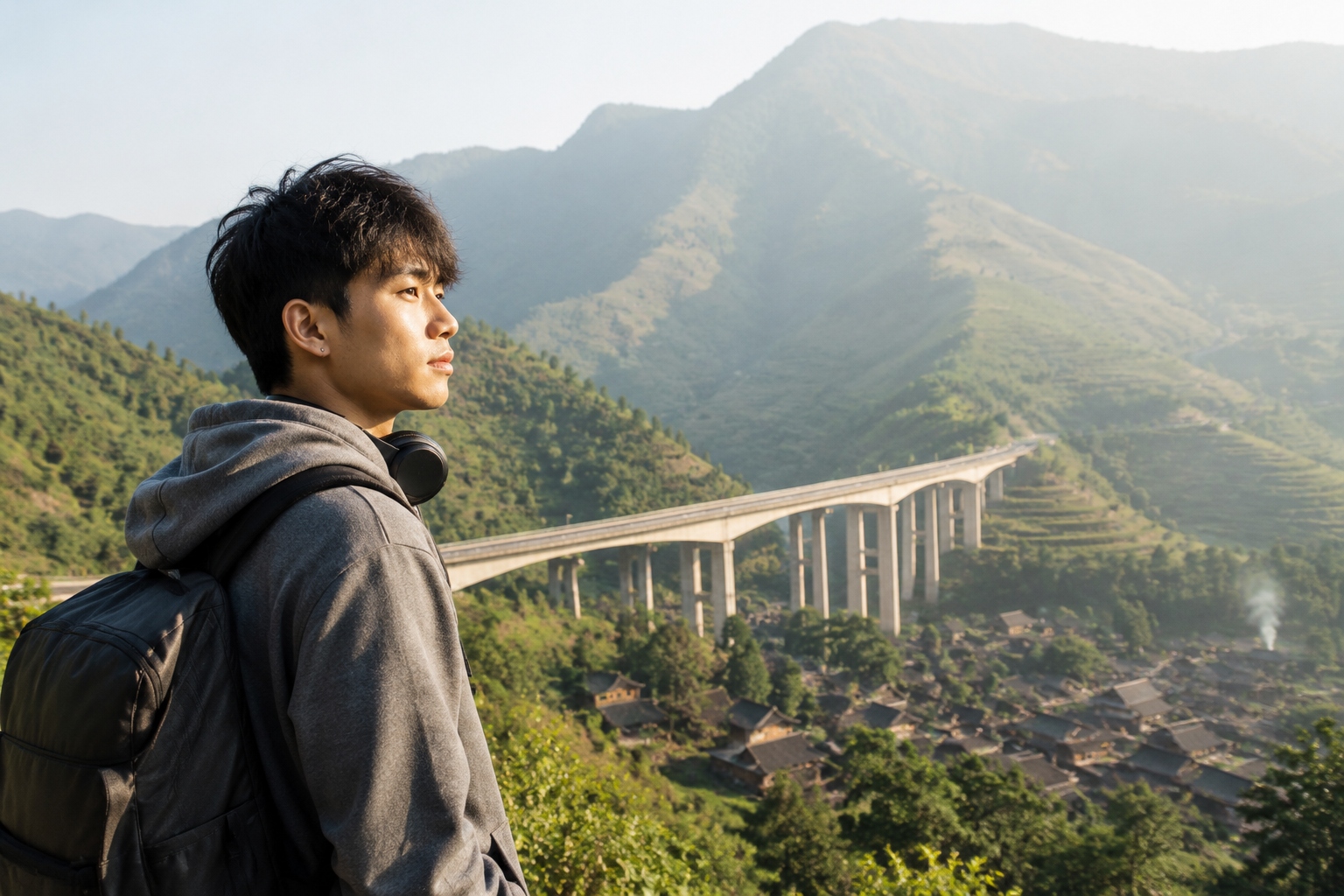

From a village with no road to a song that travels the world
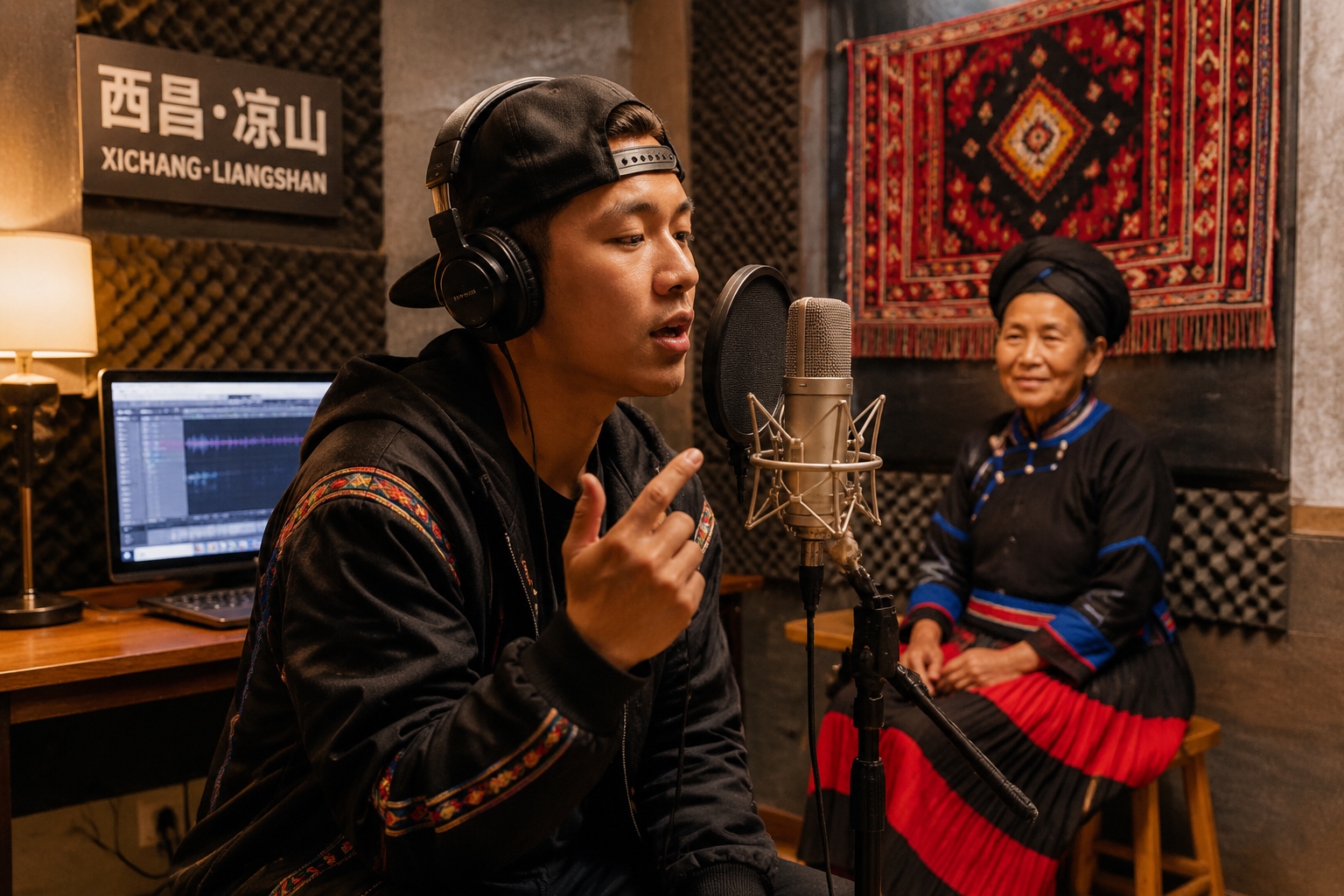
The recording studio is half an hour from the nearest mountain path—at least if you drive. But inside a small room above a bike-repair shop in Xichang, the capital of Liangshan Yi Autonomous Prefecture, 23-year-old Amu is making music that began with his grandmother’s voice. He’s layering a trap beat under a recording of her reciting a mourning song in the Yi language, in a dialect few people under 40 still speak.
“My grandmother is 78,” he says, pulling off his headphones. “She asked me why I wanted her to sing something sad. I told her: Because it’s beautiful. And because if I don’t record it, who will?”
That question—who will tell the story, and how—is at the center of a small but growing scene of young Yi rappers in Liangshan, one of China’s most ethnically distinct and historically poor regions. For decades, the area was known to outsiders mainly for its dramatic mountains, its remoteness, and, in recent years, the national government’s massive poverty-alleviation program. But now, a different kind of change is arriving through headphones and phone speakers.
Hip-hop has found a home in Liangshan. And the people writing the verses are the kids who grew up in villages their parents left, who don’t always agree on what “moving forward” means, but who agree that their hometown deserves a soundtrack.
Why hip-hop makes sense in the mountains
It’s easy to see why the genre resonates. Yi culture has a long tradition of poetic oral storytelling, and hip-hop is, at its core, exactly that. “Rapping is just talking in rhythm with emotion,” says 26-year-old Xiao Ma from the neighboring Zhaojue County. “In my village, elders would sit by the fire and chant the history of our family. The structure is different, but the feeling is familiar.”
That connection is not lost on older listeners. At a small concert in Xichang last spring, a group called “Black Wolf” performed a track that mixed a traditional yueqin (moon lute) melody with a 808 bassline. In the crowd, a middle-aged woman from a nearby village turned to me and said: “I didn’t understand a word he sang in Mandarin, but the chorus in Yi—that I know. It’s about the hay harvest. My mother used to sing it.”
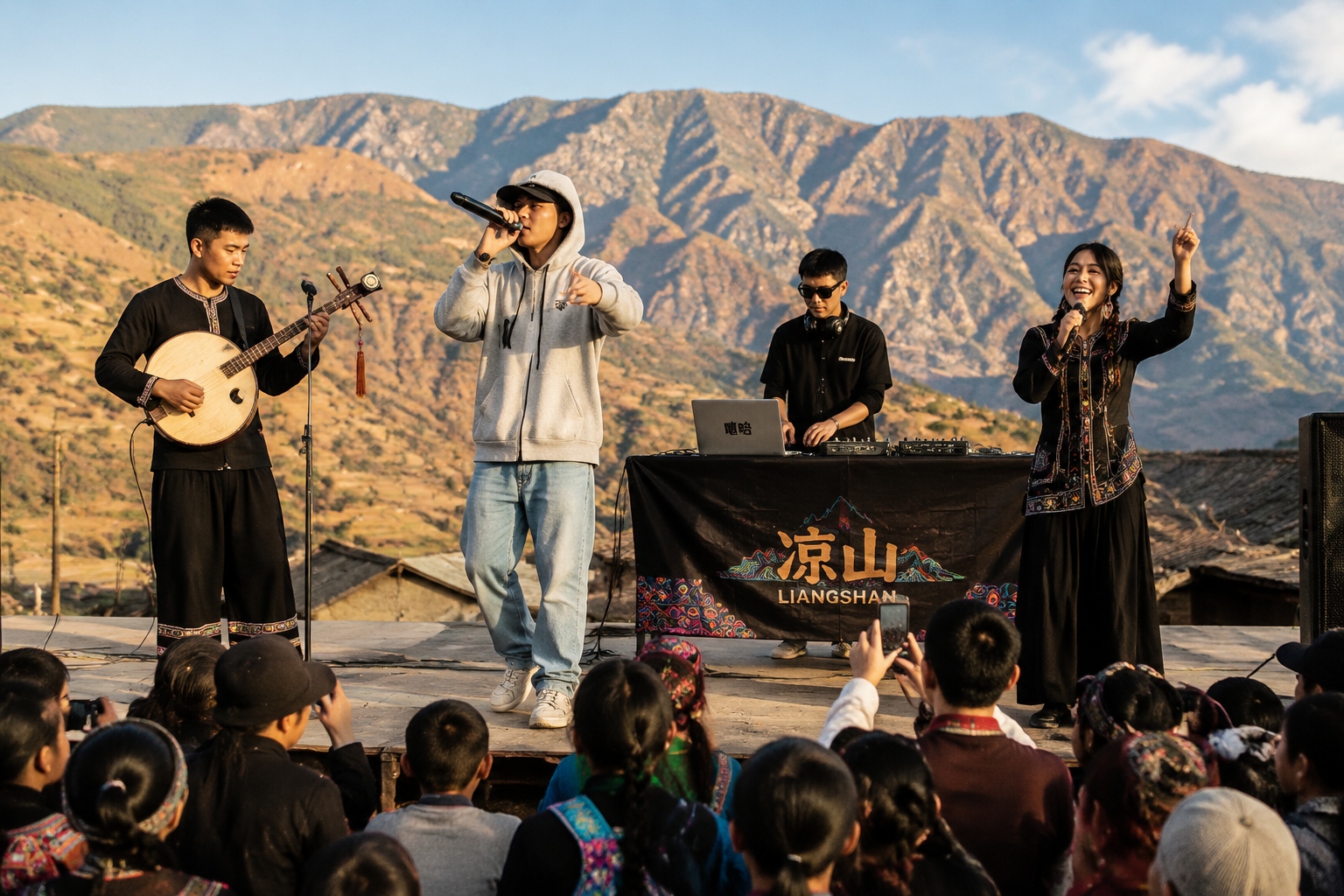
The embrace of technology is also part of the story. Cheap microphones, free beat-making apps, and village-level 4G towers mean that someone living in a community at 2,500 meters can upload a song to a streaming platform in minutes. The barriers to “getting heard” have collapsed in a way that was unthinkable ten years ago.
Lyrics about roads, walnut trees, and the taste of old water
What are these young artists rapping about? Often, the same things that fill their parents’ conversations: the new expressway that now reaches the county seat, the cost of school fees, whether to move back to the village or stay in the city. But they also rap about a quieter kind of loss—the sound of the river changed after the dam, the taste of water from modern pipes, the way their grandfather’s knife no longer has a purpose.
“There’s a phase in a place’s life when it moves faster than memory,” says Amu, whose latest single includes the line: “The bridge goes across the valley in two minutes, but my grandmother’s stories take a lifetime to cross.”
Not all of the music is nostalgic. Some tracks celebrate the new options: a 19-year-old female rapper named Abo writes about loading up a drone for agricultural surveying in her father’s orchard, and about being the first woman in her family to own a motorcycle. The tone is often playful, and the point of view is intimately local.
The lyrics also blur languages in a way that’s unusual in China. A single song might move between the Yi language, the Sichuan dialect, and standard Mandarin. This multilingual flow isn’t just style—it’s a reflection of how the young artists actually live.
What the world gets wrong about ‘minority rap’
There is a certain formula that international audiences expect from “ethnic minority music” in China: exotic colors, traditional costumes, maybe a backdrop of misty mountains. The young Yi rappers I spoke with are aware of that formula, and most of them are quick to push back.
“We are not a soundtrack for tourism ads,” says Xiao Ma. “I don’t wear an embroidered vest on stage unless I want to. I wear sneakers. And I rap about my life, which includes my culture but also includes memes and street food stalls.”
Yet they’re not rejecting tradition either. On the contrary, many have gone back to their villages to learn forgotten instruments and vocal techniques, and they credit hip-hop for giving them a reason to listen again. “Before I started rapping, I would have told you Yi songs were only for old people,” Abo admits. “Now I’m the one bugging my aunt to teach me an old lullaby.”
Building a scene, not just a playlist
The biggest challenge is no longer access to equipment or the internet. It’s space. There’s no real music venue in Xichang dedicated to original work, and few local producers understand how to record a live band with traditional instruments. So the scene is learning by doing: a collective of about a dozen artists rents a warehouse on weekends, converts a classroom into a workshop, and uses a friend’s car battery to power speakers in an open-air canteen.
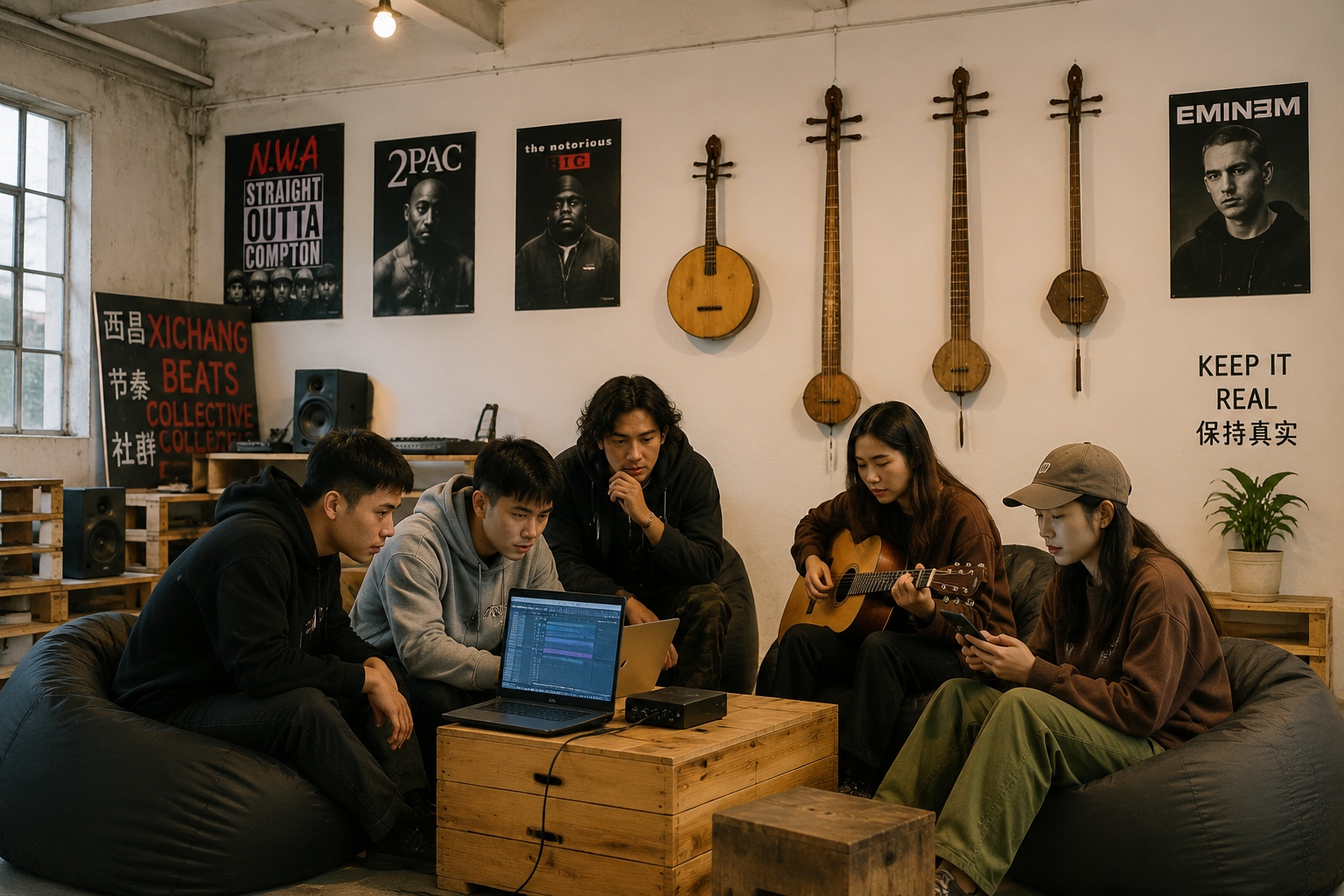
They also try to connect with the Liangshan government’s cultural projects. Some have performed at official events to celebrate the area’s heritage. But they see their role as something more personal: being witnesses, not just performers.
This is the rapping that happens when a place goes through change too fast for anyone to process alone. The rhyme is the thinking, and the thinking is shared.
The beat goes on
Back in the studio, Amu’s grandmother has just arrived. She’s brought a bag of walnuts from her village, 80 kilometers away, and she’s curious about this “music machine.” He hands her a set of headphones, and she listens to herself singing, recorded a week ago. She laughs, then gets quiet. Then she says, in Yi, “It sounds better than real life.”
Amu smiles. “No,” he tells her. “It’s real life. It’s just someone finally pressing record.”
That’s what the hip-hop in Liangshan feels like right now—a moment of people pressing record, before the next verse begins.
Start the discussion at forum.chinacomes.com