
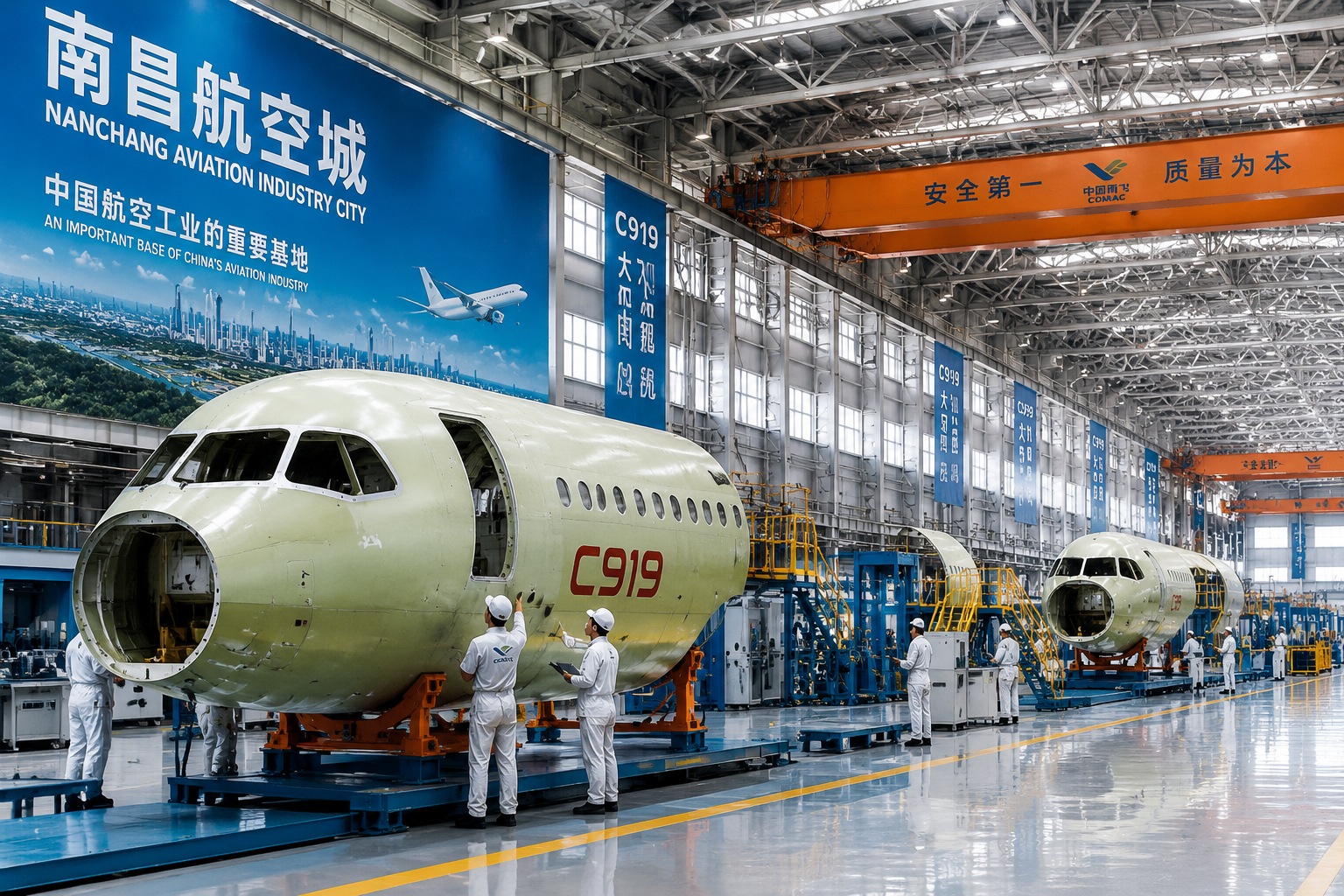

A Hidden Aviation Hub in Central China
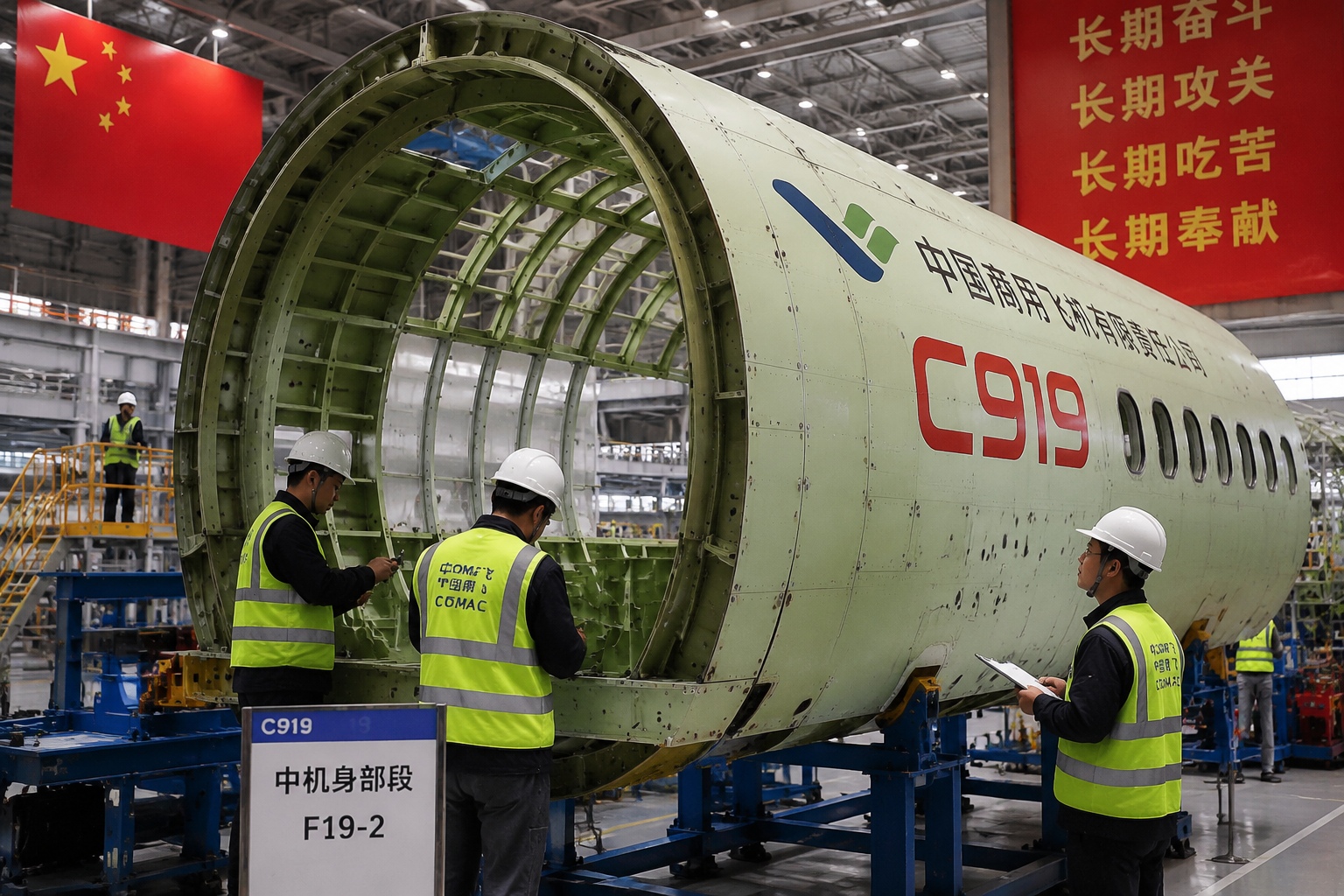
At the edge of Nanchang, the capital of Jiangxi Province, a hangar-sized workshop is assembling what looks like the skeleton of a giant bird. These are fuselage sections for the C919, China’s first homegrown narrow-body jetliner. For most outsiders, this scene might come as a surprise: the C919 is often associated with Shanghai, where it is assembled, but a significant part of the aircraft is actually made here, in an inland city better known for its revolutionary history than for high-tech manufacturing.
Nanchang’s aviation story goes back further than almost any other city in China. In 1954, the state-owned Hongdu Machinery Plant—now known as AVIC Hongdu—produced the country’s first domestically designed and built airplane, the Chujiao-5 trainer. Today, that same industrial DNA has evolved into a modern aviation cluster that includes airframe manufacturing, avionics, and a growing ecosystem of suppliers and research institutes.
From a Nation’s First Plane to a Modern Industrial Base
The Chujiao-5, or Primary Trainer-5, rolled out of Nanchang in July 1954, just a few years after the People’s Republic was founded. It was a milestone that put the city on the map as one of China’s earliest aviation manufacturing bases. The plant later became part of AVIC, the state-owned aviation conglomerate, and shifted to producing military trainers, missiles, and components for commercial aircraft.
This long history created a deep reservoir of skills and infrastructure. Even as nearby provinces focused on electronics or textiles, Jiangxi quietly retained its engineering core. The 2000s brought a major shift: the Chinese government decided to develop a large passenger aircraft, the C919, and chose Shanghai as the final assembly site. But the supply chain was distributed across the country, and Nanchang won a crucial role.
The Industrial Ecosystem Today
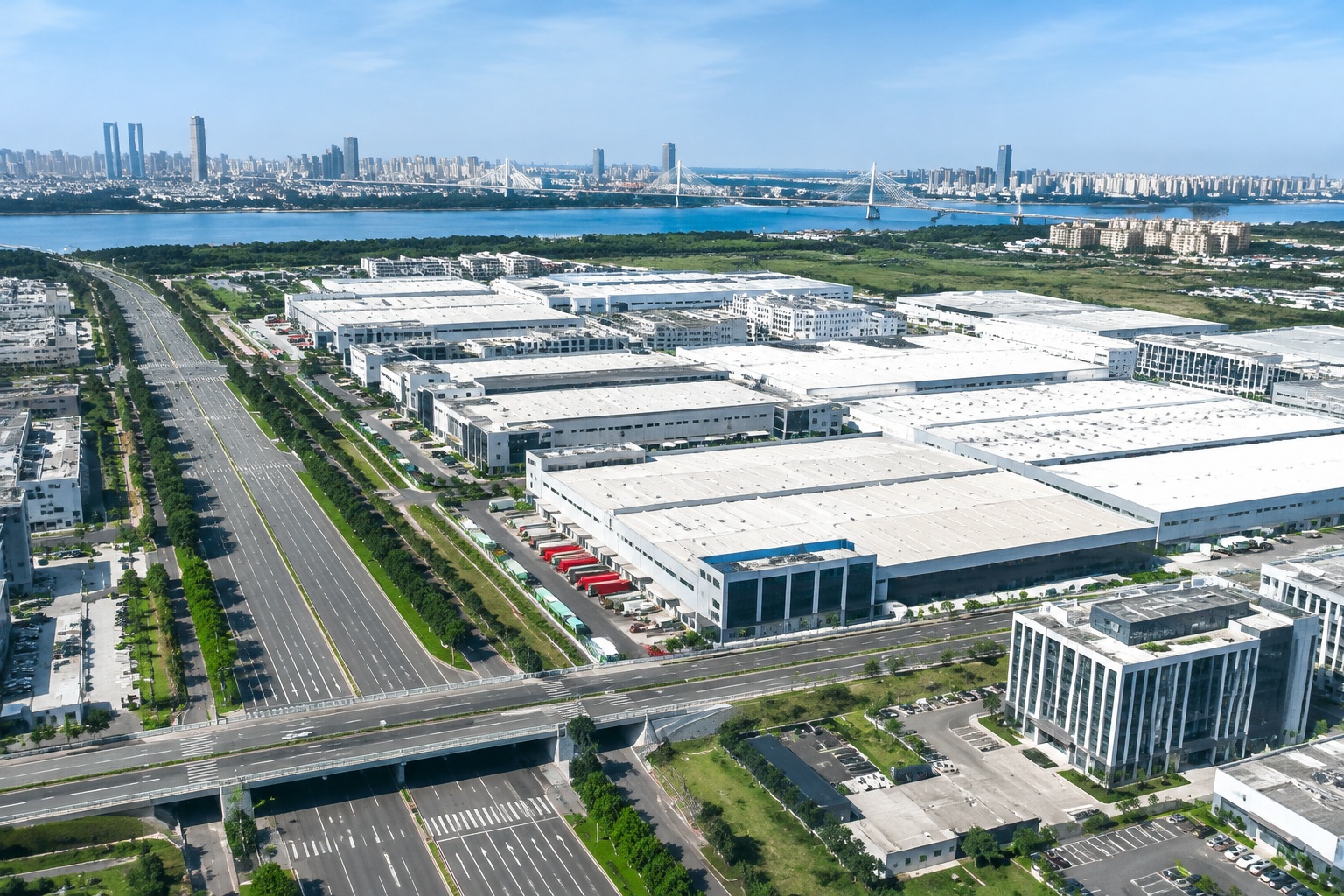
Today, Nanchang’s aviation industry is far more than just one factory. The Nanchang Aviation City, a 25-square-kilometer industrial zone, houses AVIC Hongdu, an arm of Commercial Aircraft Corporation of China (COMAC), and dozens of smaller suppliers. The zone specializes in fuselage sections, wing components, and other structural parts. It is a closed-loop system: design, machining, heat treatment, surface treatment, and testing all happen within a few kilometers.
The numbers tell a clear story. AVIC Hongdu is the primary supplier for the C919’s front fuselage and rear fuselage, which together account for about one-quarter of the entire airframe. For every C919 that takes to the sky, a significant portion of its metallic skeleton comes from Nanchang. In 2023, the C919 made its first commercial flights, and production is ramping up; this means more orders flowing to Nanchang and more pressure to expand capacity.
More Than Just a Factory City
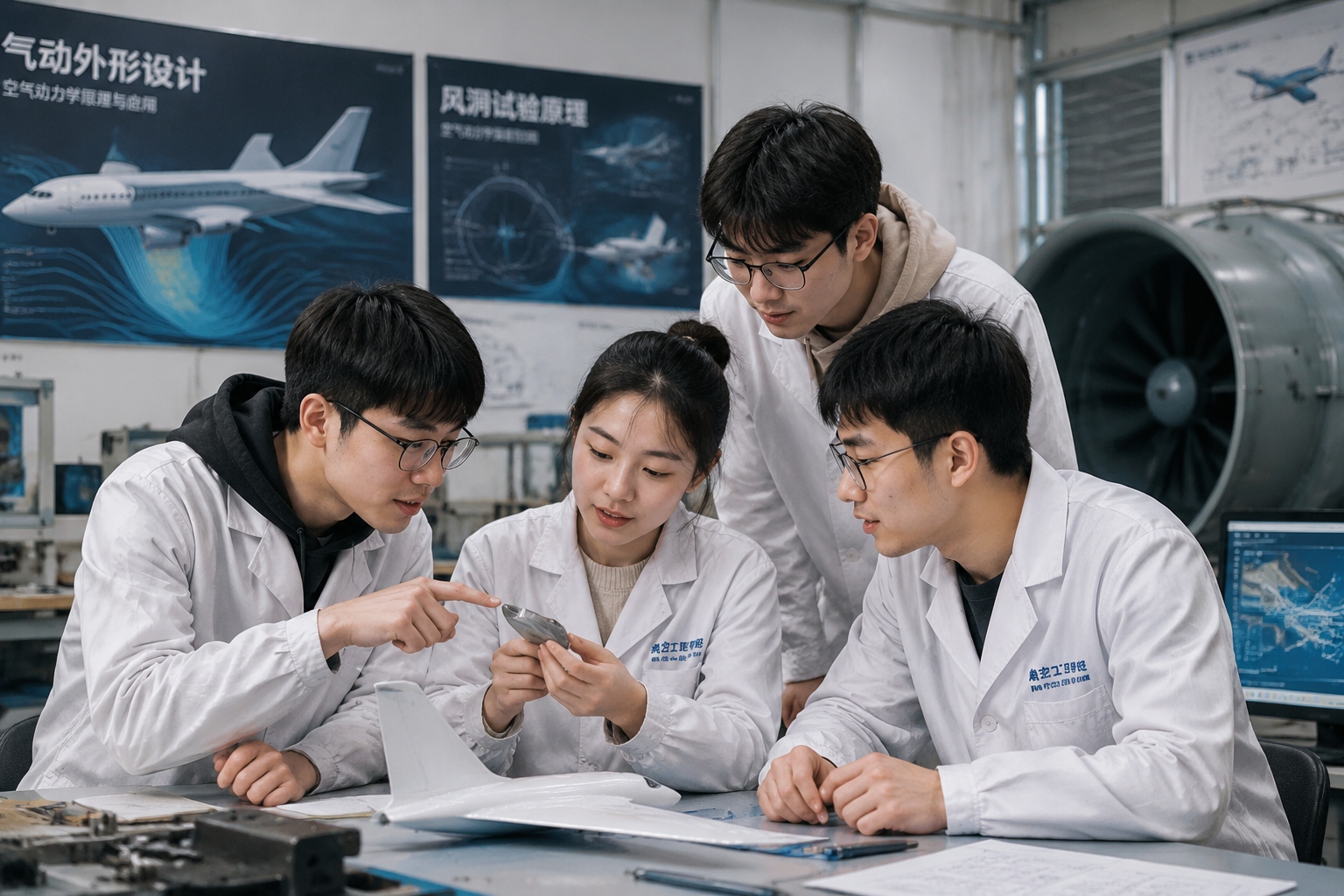
The aviation boom is also reshaping the urban landscape. The Aviation City, once a remote suburb, now has new roads, apartment blocks, and schools. A metro line extends to the area, connecting workers to the city center. Local universities, such as Nanchang Hangkong University (Nanchang Aviation University), have expanded their aerospace engineering programs to feed talent into the industry. The result is a self-reinforcing cycle: better jobs attract skilled workers, and that labor pool attracts new investment.
Policy Support and the C919 Opportunity
Nanchang’s rise is not accidental. It is part of a national strategy to build competitive aviation clusters across China. Local governments at both the Jiangxi province and Nanchang city levels have offered tax incentives, subsidized land, and streamlined approval for aviation companies. The province has also set up an aviation industry fund to support startups and R&D in the field.
But the biggest opportunity is the C919 program itself. As COMAC pushes to increase annual production, every supplier in the chain will have to scale up. For Nanchang, this means moving up the value chain. Local firms are now investing in automation, digital manufacturing, and new materials research. Some are even beginning to export parts to international airframers, a sign that the city is being integrated into global supply networks rather than just serving a domestic monopoly.
What It Means for Ordinary People
The aviation industry has changed the daily life of many locals. Take Wang Lei, a 34-year-old engineer who grew up in Nanchang. After graduating from Nanchang Hangkong University, he considered leaving for Beijing or Shenzhen, but found a well-paid job at a subcontractor in the Aviation City. He now earns a salary comparable to what he might get in a coastal city, but his cost of living is much lower. ‘I work on parts that end up in the C919,’ he says. ‘When I see the plane on TV, I feel a sense of pride.’
Such stories are common. The average wage in the aviation sector in Nanchang is noticeably higher than the city’s average. The industry also supports a chain of service jobs, from logistics to catering. But the benefits are not equally spread. Many workers are still migrants from rural areas, and the gap between the high-skilled engineering class and the assembly-line workers can be wide. Still, the overall effect is positive: unemployment is low, and the city’s GDP growth has remained solid even as other parts of China have slowed.
Challenges Ahead
Nanchang still has a long way to go to become a fully-fledged ‘global aviation city’. It faces stiff competition from Xi’an, Shenyang, and Chengdu, which have their own aerospace legacies. Infrastructure for research and development is thinner than in Beijing or Shanghai, and many top graduates still prefer to move to larger cities. The city also suffers from a lack of direct international flights and a small foreign-invested base.
A bigger issue is the health of the global aviation market. The C919 has strong orders, but production is still in the early stages, and the supply chain is being tested by the ramp-up. If COMAC fails to deliver at scale, Nanchang’s aviation economy could overheat. Yet, the city’s leaders seem aware of this. They are diversifying into general aviation, drones, and maintenance, repair, and overhaul (MRO) services. The aim is to build resilience, not just ride one big project.
A Story of Chinese Industrial Policy
Nanchang is a reminder that China’s economic rise is not just about coastal metropolises or internet giants. It is also about inland cities that have quietly transformed themselves through decades of state planning and entrepreneurial effort. From a single trainer plane in 1954 to supplying the C919, the city has climbed a long ladder. For international observers, Nanchang offers a useful lens: it shows how industrial policy can work—when it is paired with a long historical memory, a stable workforce, and a willingness to learn from elsewhere.
As the evening sun sets over the Aviation City, the lights come on in the factories, and the next C919 components are machined through the night. The planes that eventually fly over the Pacific may have their final assembly in Shanghai, but a good part of their origins will trace back to this quiet corner of Jiangxi.
Start the discussion at forum.chinacomes.com