

Standing on the Bridge
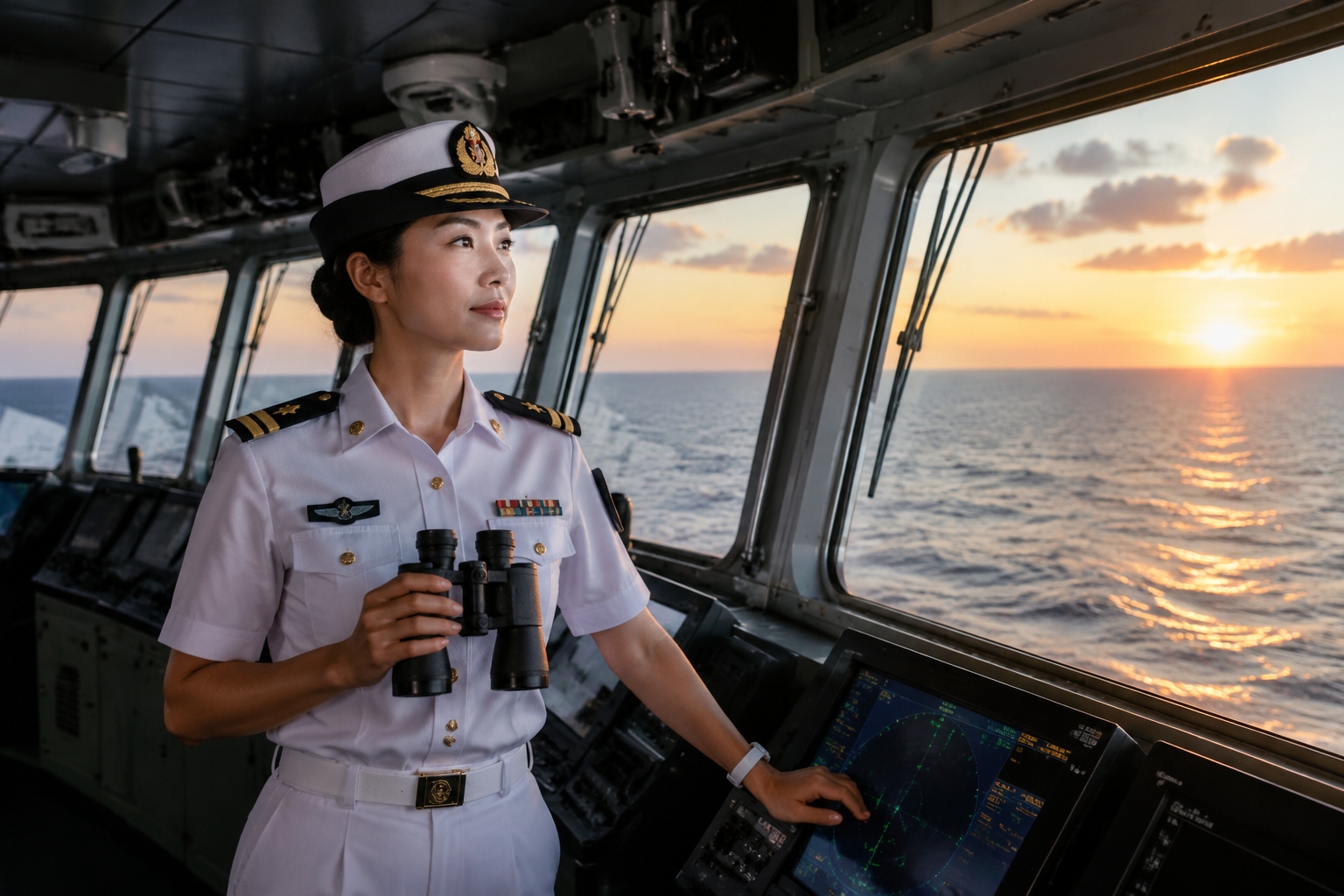
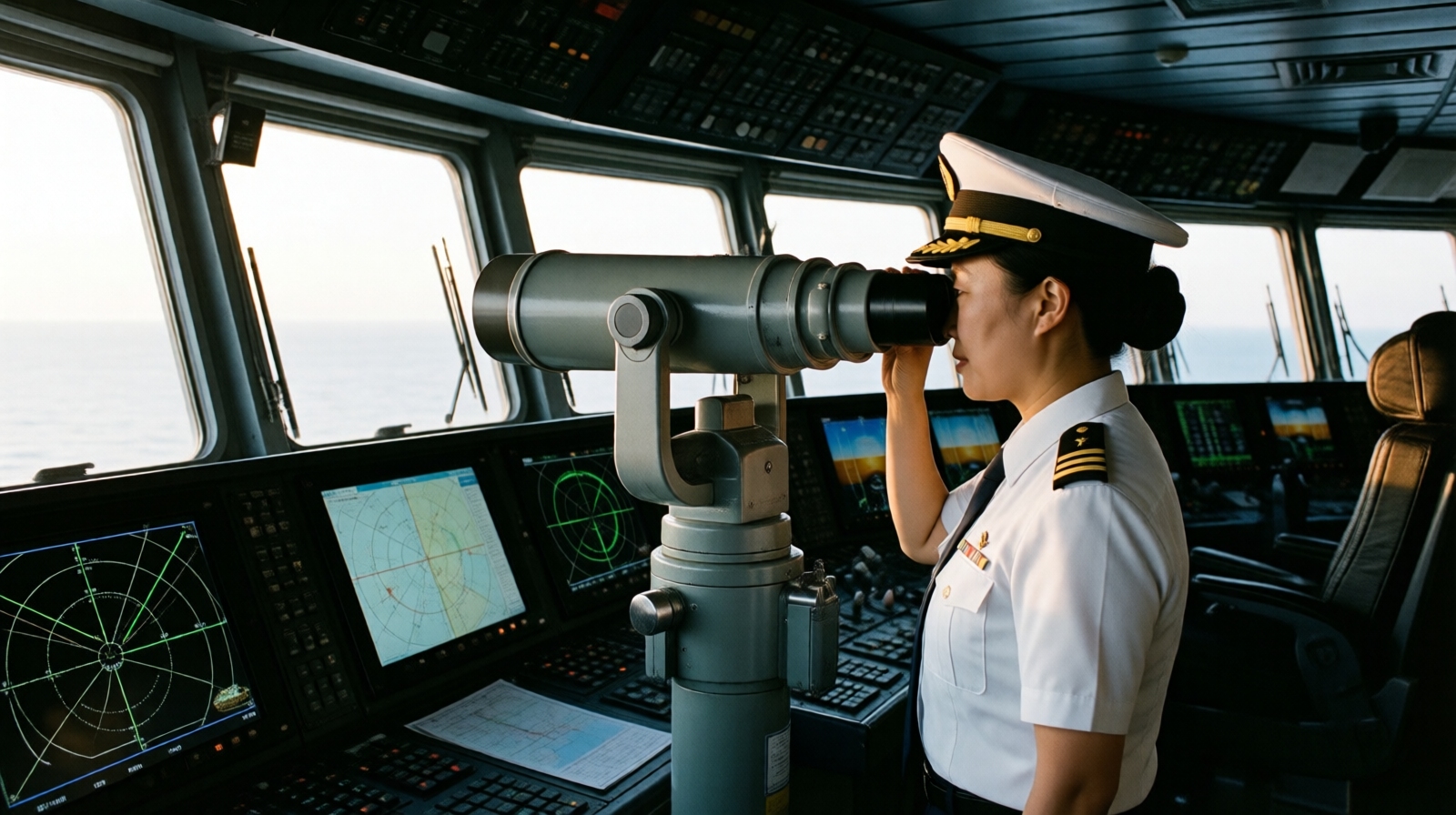
The first light of dawn crept across the East China Sea, painting the water in soft shades of gray and gold. Aboard the guided-missile destroyer Shaoxing, Captain Wei Huixiao stood on the bridge with a cup of green tea. The tea had gone cold, but she didn’t notice. Her eyes were fixed on a distant cargo ship that had drifted slightly off course. She set down the cup, picked up a radio, and gave a concise order to the helmsman. The ship’s bow dipped gently as it adjusted its heading. On the radar screen, the tracks of other vessels pulsed in slow green circles.
Wei is the first woman in the history of the Chinese People’s Liberation Army Navy to command a warship. She reached this position through a path that looks almost random on paper: a top student, a tech company executive, a doctoral graduate, and finally, a naval officer. The popular Chinese media has often called her a ‘Peking University whiz kid,’ but that is a misnomer. Her undergraduate degree came from Nanjing University, and she earned her doctorate from Sun Yat-sen University. The inaccurate label stuck because her academic record was so impressive that people assumed it had to be from China’s most famous institution.
Standing here, with the wind whipping across the deck and the faint taste of salt in the air, Wei still seems a little amazed at her own journey. ‘For a long time, I didn’t believe I could do this,’ she said in an interview on the ship’s helipad. ‘But every time I doubted myself, a single thought pulled me forward: I have to try.’
A Student with a Restless Heart
Wei was born in 1977 in Baise, a mountainous town in the Guangxi Zhuang Autonomous Region. Her mother was a teacher, and her father worked in a government office. From an early age, she was a diligent student. She skipped two grades in primary school and entered high school at eleven. When it came time for college, she chose atmospheric science at Nanjing University, not because she loved the subject, but because she wanted to understand the weather that often battered the coastal towns near her home.
At university, she was not just a bookworm. She became involved in student theater, served as a class leader, and, in a moment of spontaneity, entered the Guangdong regional contest of the Miss Universe pageant. To everyone’s surprise—including her own—she was selected among the top ten finalists in China. That experience taught her something important about herself: she was capable of stepping into unfamiliar worlds.
After graduating in 2000, Wei accepted a job at Huawei, one of the largest telecommunications companies in the world. She worked initially in marketing and later in the corporate training department. The pay was excellent, the future was bright, and her colleagues expected her to rise through the corporate ranks. But after four years, she felt a nagging emptiness. ‘I had a good salary and a good title, but I wanted to do something that truly served a larger purpose,’ she later recalled.
She left Huawei and enrolled in graduate school at Sun Yat-sen University in Guangzhou. During her studies, she spent a year as a volunteer teacher in a remote village in Tibet. The experience transformed her. Living in a tent at an altitude of 4,500 meters, she taught science and math to children who had never seen a computer. The nights were freezing, and there was no electricity, but she found a kind of peace she had never known.
When she returned to campus, she still felt restless. She considered many paths: a doctorate, a job in research, even a career in media. But a television documentary about Chinese naval officers changed her mind. She saw ships, uniforms, and a sense of duty that moved her. In 2012, at age 34, she submitted an application to join the navy. It was a decision that puzzled almost everyone who knew her.
The Hardest Years
Wei’s entry into the navy did not come with a red carpet. The People’s Liberation Army Navy takes its officers from military academies or from rapid selection in universities. For someone like Wei, who was older than typical recruits and lacked any military background, the first year was a brutal test. She was assigned to a training unit in Dalian, where she had to learn basic seamanship: tying knots, reading maps, marching in formation. Her body was sore every day, and her hands were cut from ropes and metal cables.
The most difficult part was the physical training. At 34, she was a decade older than most junior recruits. Her running times were slow, and her upper body strength was almost nonexistent. She remembers one afternoon when she struggled to haul a heavy canvas bag over a waist-high wall. The other trainees made it look easy. She could not lift herself over, no matter how many times she tried. A young male officer, probably nineteen, reached down and pulled her up. ‘That moment was humiliating,’ she told a reporter. ‘But I made a promise to myself that I would never need to be pulled up again.’
She began to train twice as hard. Every morning, she ran three kilometers before breakfast. At night, she did push-ups and sit-ups in the dark. Within six months, she passed the physical fitness test with a score in the top 10% of her class. More importantly, she gained the respect of her peers. They no longer saw her as an old student, but as a determined sailor.
Wei’s first sea assignment was on the aircraft carrier Liaoning. It was a humbling experience in another way. The ship was enormous, like a floating city, and its crew moved with precise choreography. For the first two weeks, Wei was constantly lost. She studied the deck plans at night, tracing her finger along every corridor and passage. She also suffered from intense seasickness. She vomited so many times that she lost weight and felt weak. The only cure, she found, was to stand outside on the deck and look at the horizon, letting her eyes find a stable point while the world rocked around her.
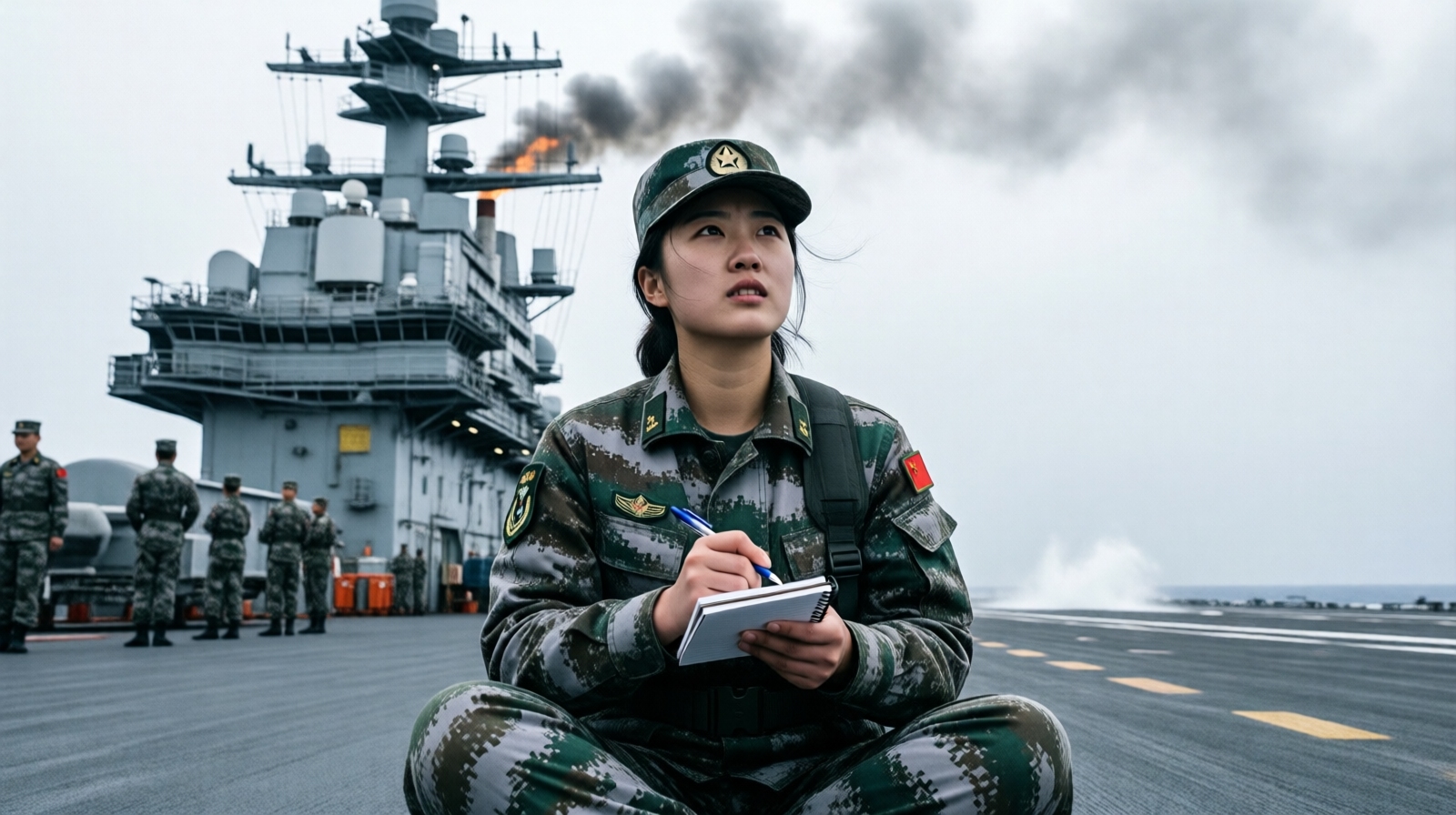
She kept a small notebook in her pocket. In it, she wrote down every piece of technical information she learned: the functions of valves, the rules of navigation, the protocols for emergency communication. She filled more than a dozen notebooks over the years. When a senior officer asked her a question about the ship’s firefighting system, she answered without hesitation. The officer raised an eyebrow. ‘You might be the first person ever to memorize this manual,’ he said.
Becoming a Captain
In 2017, Wei was promoted to the position of executive captain (or executive officer) on the frigate Changchun. This was the highest position a woman had reached in the navy’s operational chain at that time. Her responsibilities were enormous: she oversaw navigation, personnel, training, and daily operations. On the surface, she maintained an outward calm, but inside she felt the weight of every decision. ‘The moment you become an executive captain, you stop being a passenger,’ she said. ‘You carry the ship in your head.’
She demanded strict discipline from her crew, but she was equally demanding of herself. During a routine inspection, she noticed that a sailor had missed a small leak in a pipe. She did not raise her voice. Instead, she knelt down, pointed out the stain, and explained how even a tiny leak could cause serious damage over time. The sailor later said that her quiet explanation was more humbling than any punishment.
In 2022, she was given command of the Shaoxing, one of the newest and most advanced destroyers in the navy. The ship is armed with guided missiles, torpedoes, and a close-in weapon system. It is designed to operate far from the coast, in what Chinese strategists call the ‘deep blue’ waters of the Pacific. Taking command of such a vessel is a mark of trust, and Wei was aware of the symbolism. ‘I don’t want to be a token,’ she said. ‘I want to prove that this is about competence, not gender.’
A New Generation on the Seas
Wei’s rise is part of a broader trend in the Chinese military. Over the past decade, women have been accepted into more combat roles, including piloting fighter jets and serving on submarines. According to the Ministry of National Defense, the number of female officers and soldiers in the People’s Liberation Army has grown steadily, though it remains a small percentage of the total. In the navy, several women have now joined the ranks of captains and chief engineers.
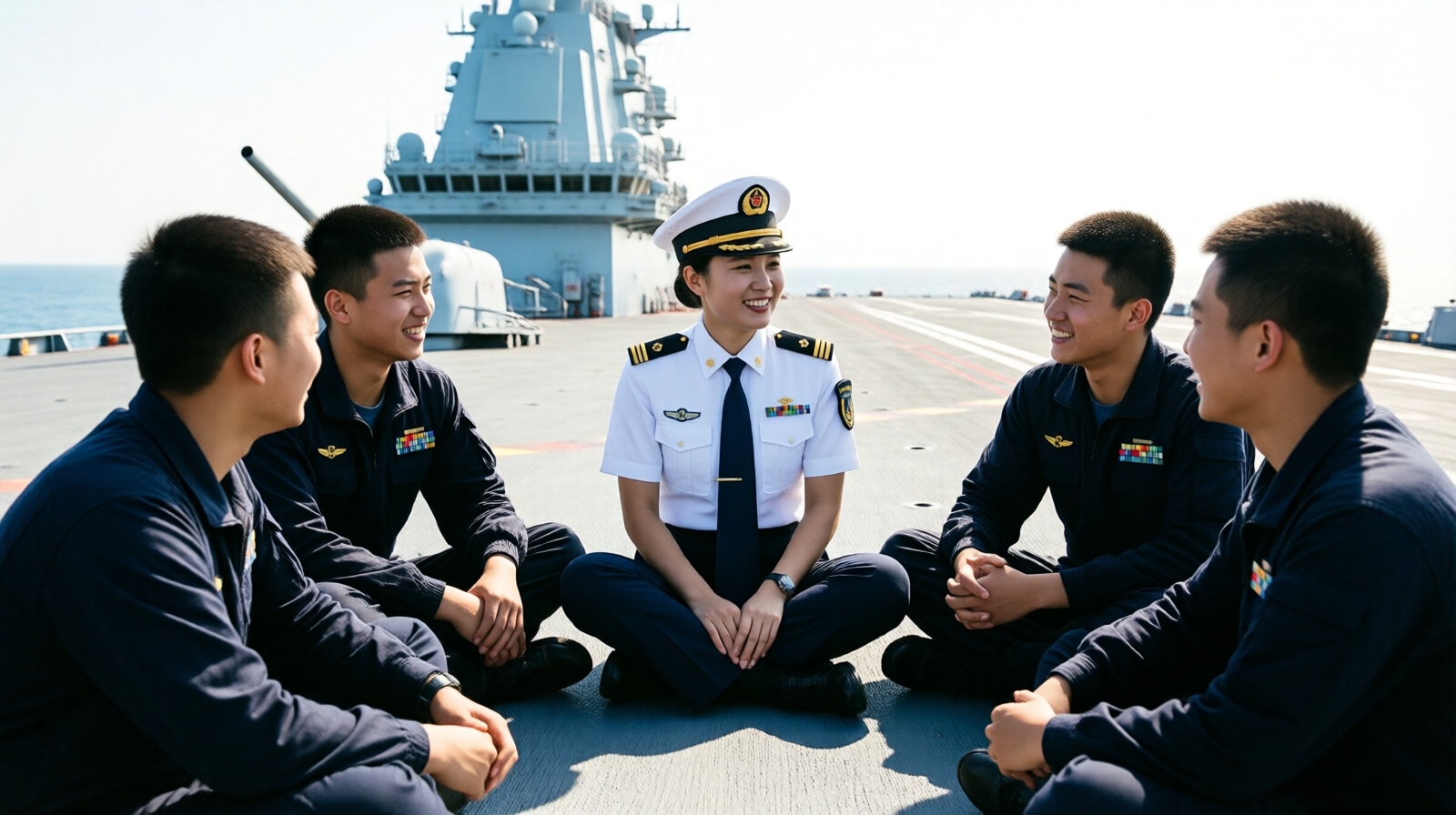
On the Shaoxing, Wei leads a crew of approximately 200 sailors. Many of them are young enough to be her children. She has made it a point to know their names and to understand their strengths. Once a month, she invites a different group of sailors to eat with her and share their concerns. One young female officer, who struggled with confidence, said that Captain Wei helped her see that being a woman was not a liability, but a different way of seeing the world.
Wei is also a public figure. She gives occasional speeches at universities and community events, and her interviews often appear in national media. She uses these platforms to encourage young people, especially girls, to dream beyond conventional limits. She tells them: ‘If you have a dream, chase it. If I can do it, so can you.’ Her story has been watched by millions online, sparking discussions about gender roles and military service.
The Long Horizon
At 46, Wei remains active at sea. She often thinks about the younger self who sat in a library, dreaming of places far away from her small hometown. She never imagined that she would command a warship, but she also never believed that a good education was enough. ‘A degree is important,’ she says, ‘but it’s not the destination. It’s the starting point.’
On the bridge, Wei adjusted the radio frequency and gave another order. The destroyer moved on, cutting through the waves with quiet confidence. Ahead was the open sea, a horizon that seemed endless. For Wei, it was just another day of work. But for the women who watch her story, it is a reminder that the horizon is not a limit. It is a beginning.
Start the discussion at forum.chinacomes.com