

It starts with a knock on the door
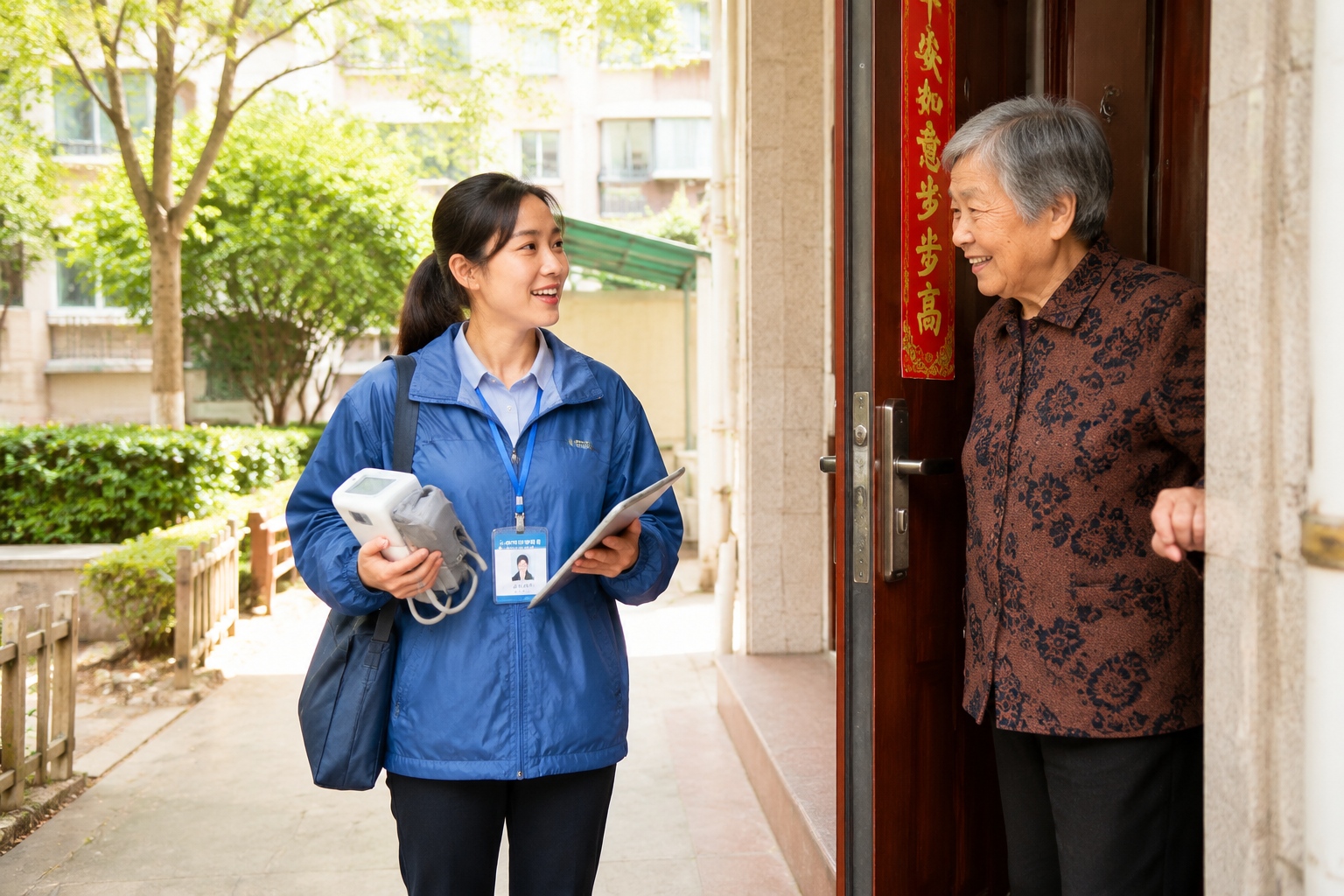
On a Tuesday morning in a residential compound in Chengdu, 58-year-old Zhang Aiping hears a knock. It’s Chen Jie, the community health nurse, carrying a small blood-pressure monitor and a worn clipboard. Chen has come to check whether Zhang’s mother, 82-year-old Mrs. Liu, has been taking her antihypertensive pills regularly. Mrs. Liu is sometimes forgetful, so Chen has been visiting once a week for three months.
This scene plays out in thousands of Chinese neighborhoods every day. But Chen Jie is not what many foreigners might imagine as a “nurse.” She is not working in a hospital ward. She wears no white uniform—just a simple blue windbreaker with a small badge. Her office is the community health service center, a two-story building next to a supermarket and a bank. Her tools include blood-pressure cuffs, a mobile ECG device, a smartphone, and a well-thumbed notebook.
The invisible backbone of Chinese healthcare
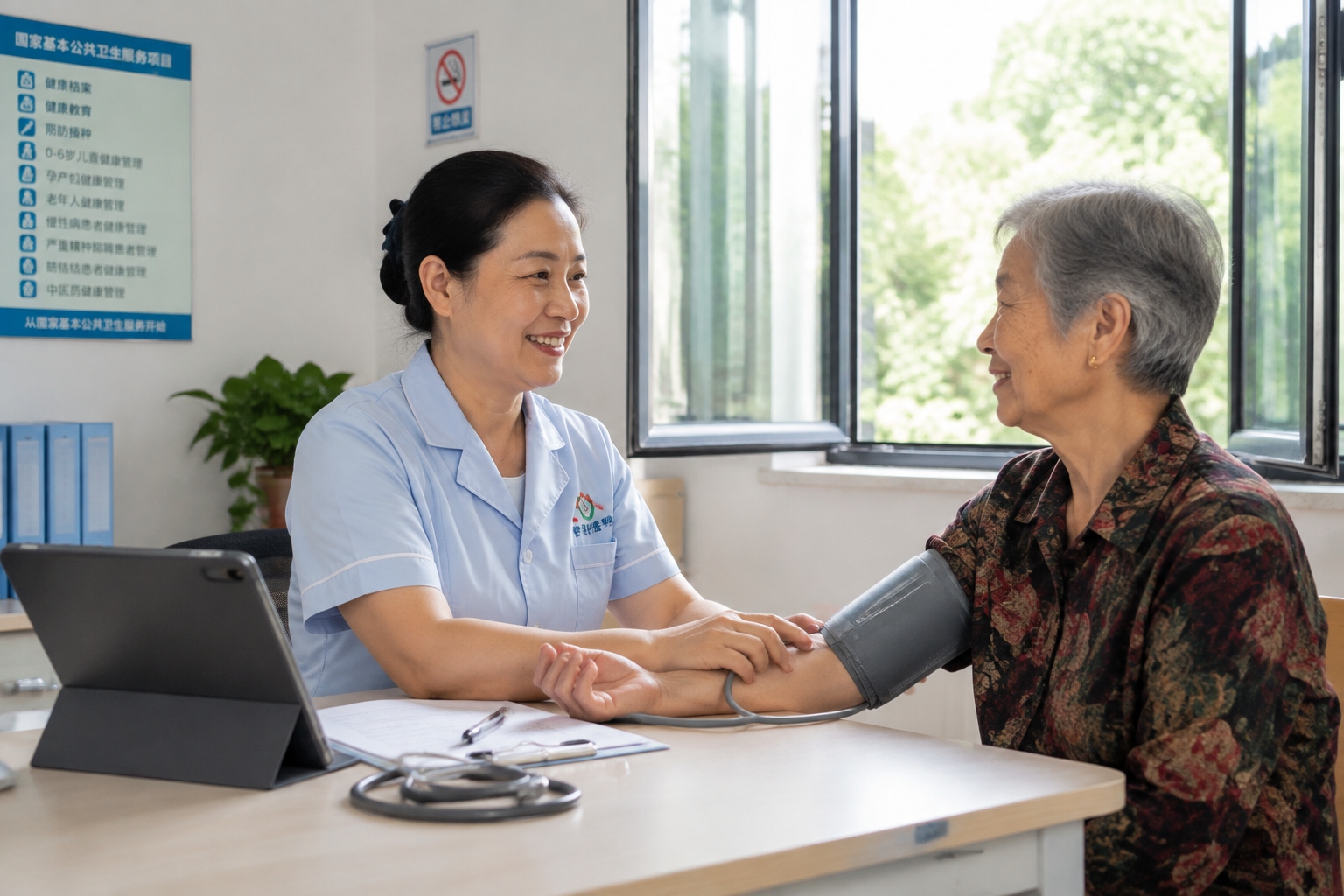
China’s healthcare system is often discussed in terms of big hospitals, high-tech surgery, and the massive expansion of insurance coverage. But behind those headline achievements lies a quieter army: community health workers. Official statistics show there are more than 1 million community-level medical institutions in China, and the majority of their staff are women. These are the nurses, family doctors, and public-health workers who operate the grassroots tier of a system that serves over 1.4 billion people.
Internationally, they might be compared to community health nurses or public health officials, but the scope of their work in China is much broader. They are expected to run chronic-disease management plans, give vaccinations, lead health education sessions, do home visits for elderly residents, track newborn babies, provide post-surgery care, and even mediate between patients and higher-level hospitals when someone needs a referral.
Their “superpower” is not a single medical skill. It is the ability to know an entire neighborhood—who lives alone, whose blood pressure is dangerously high, which child has missed a vaccine, which elderly resident has become too frail to walk to the clinic. They combine medical knowledge with the instincts of a social worker and the patience of a neighbor.
A morning in the life: vaccinations, diabetes, and a phone call
Let me take you through a typical morning at the Community Health Service Center in Haidian District, Beijing. At 8 a.m., the waiting room is already active. Wang Li, 34, has been a community health worker for eleven years. She is not a doctor; her official title is “community nurse,” but in practice she acts as a coordinator for about 3,000 residents in her designated block.
Her first hour is spent on vaccination. Parents bring in children for routine shots. Wang Li checks records, enters data into a tablet, and calms a toddler who is crying because of the needle. Her manner is quick and efficient, but also warm. She knows many of these families by name.
At 9:30, she switches to the chronic-disease clinic. A 67-year-old retired teacher, Mr. Guo, comes in with a blood-sugar logbook. Wang Li reviews his numbers, adjusts his follow-up schedule, and reminds him to cut down on white rice—a common staple that can be problematic for diabetics. She also asks about his mood. “Feeling down?” she says. “It happens with chronic disease. Let’s talk about it.”
At 10:40, the phone rings. It’s an elderly woman who lives alone and is worried about dizziness. Wang Li recognizes the address and immediately calls a nearby volunteer who checks on her within half an hour. In the afternoon, she will visit three homebound patients.
Wang Li tells me: “In a hospital, you treat the disease and send the patient home. Here, we live in the same community. We see them at the market, outside the school, in the elevator. You can’t just punch out at 5 p.m. and forget about them. And actually, that’s what I like about this job.”
The emotional labor: listening, calming, and solving small problems
One of the most underrecognized parts of a community health worker’s job is emotional support. In China, mental health services are still limited in many places, especially outside major cities. People often come to a community health center not with a specific complaint, but with a vague feeling of being unwell—insomnia, fatigue, anxiety, or a family conflict that has started to affect their health.
Chen Jie, the nurse in Chengdu, recalls an experience from last year. A 45-year-old delivery driver came in with stomach pain. After ruling out major medical issues, Chen realized the pain was stress-related. His mother had just been diagnosed with cancer, and he was driving 12 hours a day to pay for her treatment. Chen didn’t just prescribe painkillers. She spent 40 minutes talking with him, than connected him to a social worker who helped apply for a special medical assistance fund. She also gave him the number of a free psychological hotline.
“Sometimes the medicine we give is not in a box,” she says. “It’s telling a tired person that they are not alone.”
The digital tools that make them more powerful
In recent years, digitalization has significantly expanded what community health workers can do. Most community centers now use electronic health records that are shared—at least partly—with higher-level hospitals. When a patient is discharged from the hospital, the community team receives the discharge summary and can arrange follow-up visits. This helps prevent the dangerous gap between hospital care and home recovery.
Mobile apps are also part of the toolkit. In Shanghai, some community health workers use a special app to track the blood-pressure readings of elderly hypertensive patients. The patient or a family member uploads the measurement, and the data is automatically flagged if something goes beyond a safe range. The worker can then call or visit.
During the COVID-19 pandemic, these workers became the backbone of testing and vaccination campaigns. They went door to door, organized lines, answered thousands of frightened questions. Many overseas readers might remember the images of “heroic” urban workers in China during the lockdowns. But those workers were largely the community nurses and health workers I’m describing.
Yet technology is not always a blessing. Some older workers struggle with the constant need to enter data on tablets and phones. More importantly, many feel that the administrative burden has increased. They spend hours filling out forms and uploading records—time that could be spent talking to residents. This is a real tension that Chinese media and policy researchers have acknowledged.
Gender, pay, and the quiet inequality
It is no coincidence that this workforce is overwhelmingly female. In China, nursing and community health have long been seen as “women’s work”—demanding care, patience, and emotional labor. The title of this article, “More Than a Nurse,” points to a reality that is both inspiring and sobering.
While the work is crucial, pay is often modest. In an average city, a community nurse’s monthly salary might be between 5,000 and 8,000 RMB (roughly 700 to 1,100 USD), depending on location and years of experience. In comparison, a hospital nurse in a big city may earn somewhat more, though still not generously. Many community health workers are on contracts rather than permanent civil-service positions, which affects job security and benefits.
When I raised this issue with a nurse in Guangzhou, she was not surprised. “Everyone in our line of work knows the pay gap,” she said. “But we stay because we believe this is where healthcare is actually going to happen in the future—in communities, not just in hospitals.”
A growing recognition of the importance of grassroots healthcare is leading to some changes. In 2022, the Chinese government announced a plan to strengthen community health services, with measures such as improving salary mechanisms, offering more training, and increasing the number of home-care beds. Nurses in a few pilot cities have seen modest salary bumps. But the pace of change is uneven.
The neighborhood is their office
It’s easy to look at China’s futuristic hospitals and gleaming medical drones and miss the modest human scale of community healthcare. But for most ordinary Chinese people, their first point of contact with the medical system is not a specialized hospital—it’s the small clinic in their neighborhood, often nested between a convenience store and a hair salon.
On my last visit to a health center in Hangzhou, I watched a young nurse teach a group of elderly residents how to use a digital thermometer. They were laughing at their own mistakes, passing around the thermometer like it was a curious artifact. The nurse was patient, repeating the steps again and again. One grandmother finally got it right and clapped her hands.
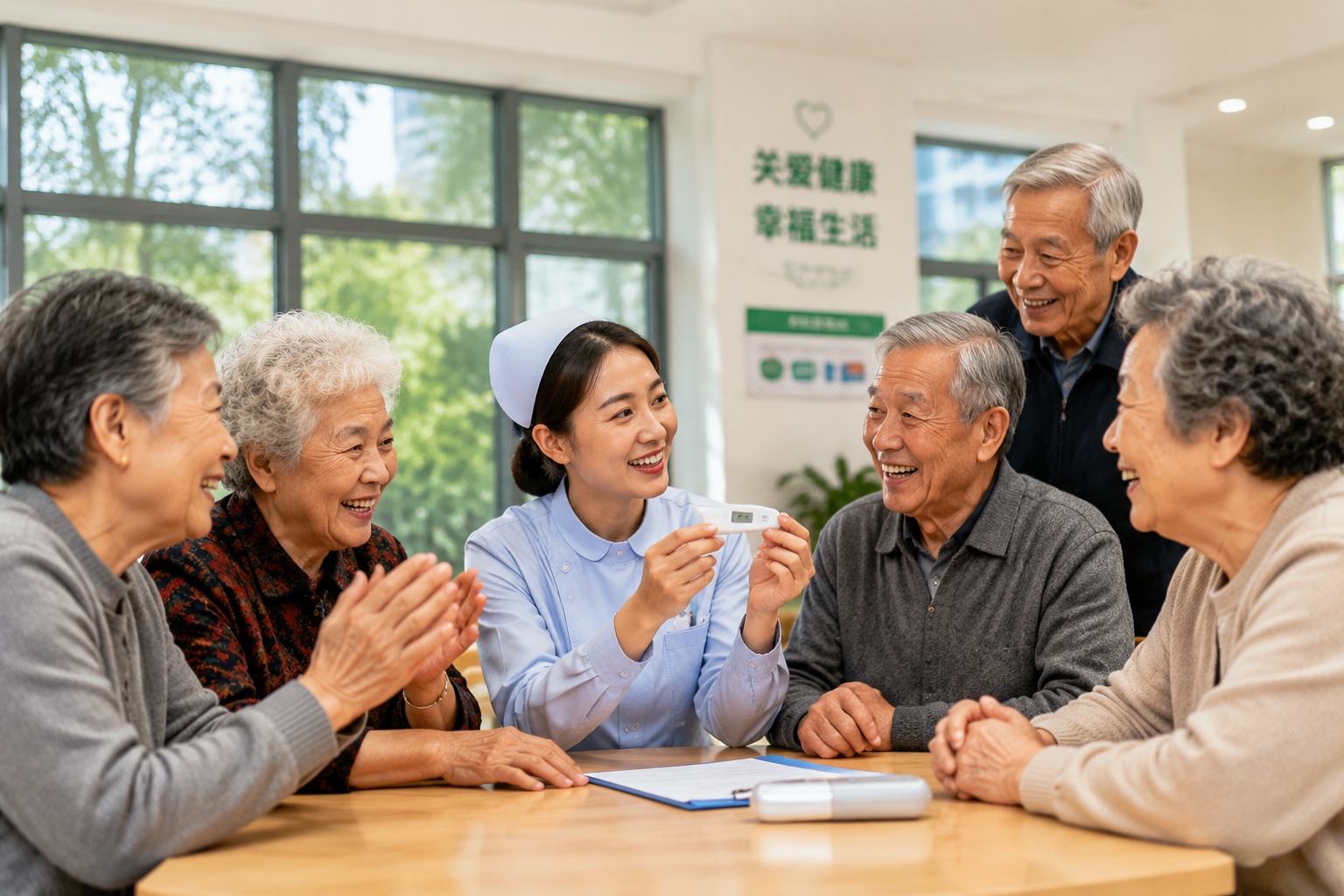
That small moment felt like the essence of this job. It is not glamorous. It does not make headlines. But it helps millions of people live safer, more dignified lives.
Why they are the “superpowers” we don’t see
Community health workers in China are not superheroes in capes. They are usually women in their thirties, forties, and fifties, carrying blood-pressure monitors and tablets, walking through narrow alleys and modern apartment complexes. They know which grandparent has no one to call in an emergency. They notice the slight tremor in a hand that could be the start of Parkinson’s. They remember the child who was born premature and needs extra check-ups.
Their superpower is the ability to be present: to knock on doors, to listen without judgment, to translate complex medical instructions into simple talk, to spot the small change that might become a big problem. In a country with a rapidly aging population—by 2035, around 30% of Chinese people will be over 60—that kind of presence is not optional. It is an indispensable form of social infrastructure.
The next time you read a dramatic story about China’s medical advances, take a moment to think about the invisible army of women who make sure the system works for ordinary people. They are not just nurses. They are the eyes, ears, and hands of a healthier society.
Start the discussion at forum.chinacomes.com