

6:30 a.m. on a Hohhot Street Corner
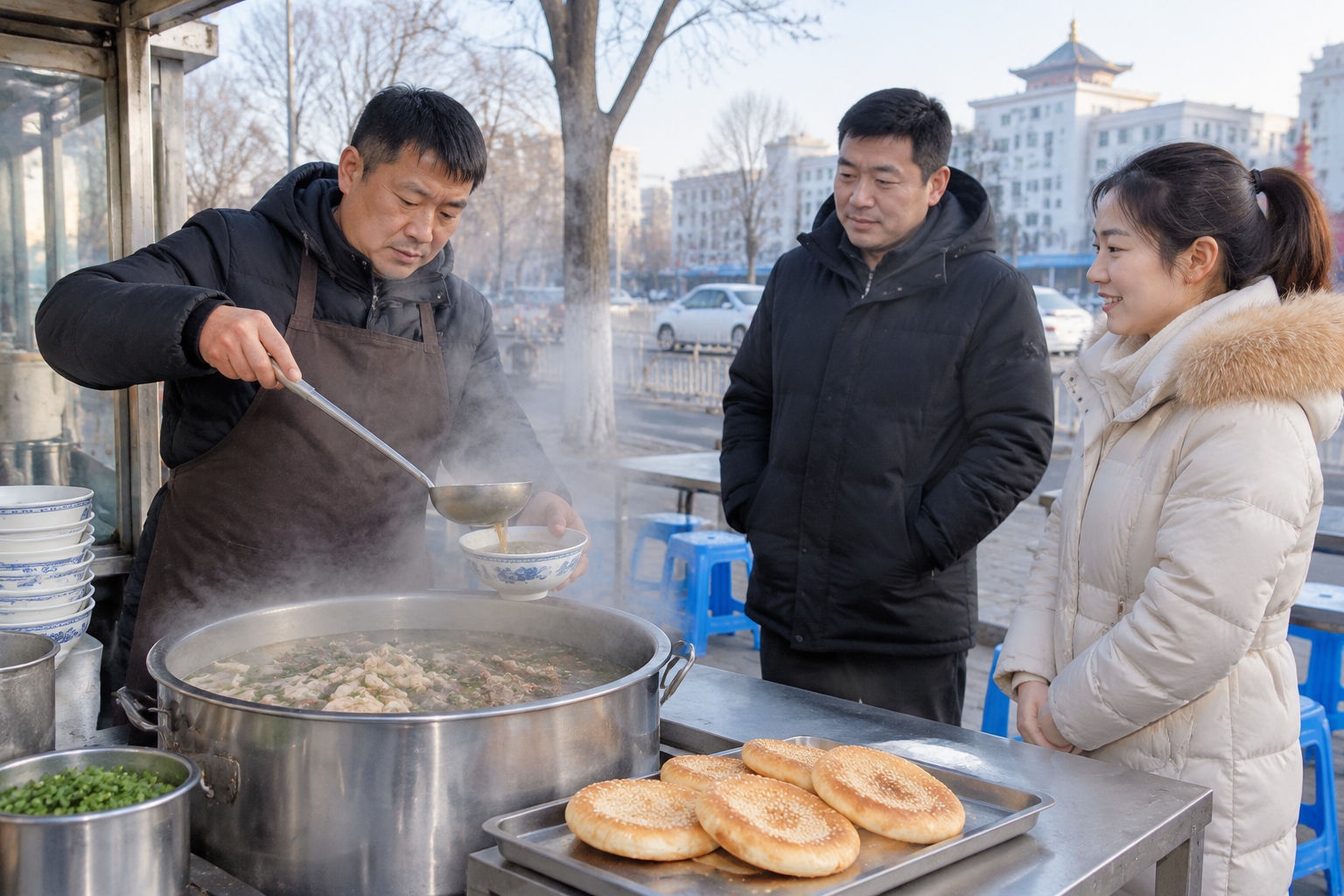
At 6:30 on a cold Tuesday in Hohhot, the sky over the old city is still the color of wet cement. A vendor named Lao Bai—everyone calls him that—lifts the lid off a stainless-steel pot. Steam rolls out, carrying the smell of lamb bones, pepper, and vinegar. He sets the lid down, stirs once, and calls out to the first customer: “Big bowl or small?”
The shop is barely a shop. It is a storefront the width of two parked scooters. A handwritten sign says 羊杂碎—yangza sui, sheep offal soup—in red characters that have faded at the edges. Inside, six small tables are squeezed against the wall. A tray of sesame flatbreads, called bèizi, sits near the door. Two blue plastic stools have been pulled onto the sidewalk. By 6:45, there are eight people in line.
This is the part of breakfast in Inner Mongolia that guidebooks rarely show: not a banquet, not a performance, but a hot, salty, fast meal eaten before work. The question is simple. What do ordinary people eat in the morning, and how does it fit into the rest of their day?
What Is in a Bowl of Yangza Sui?
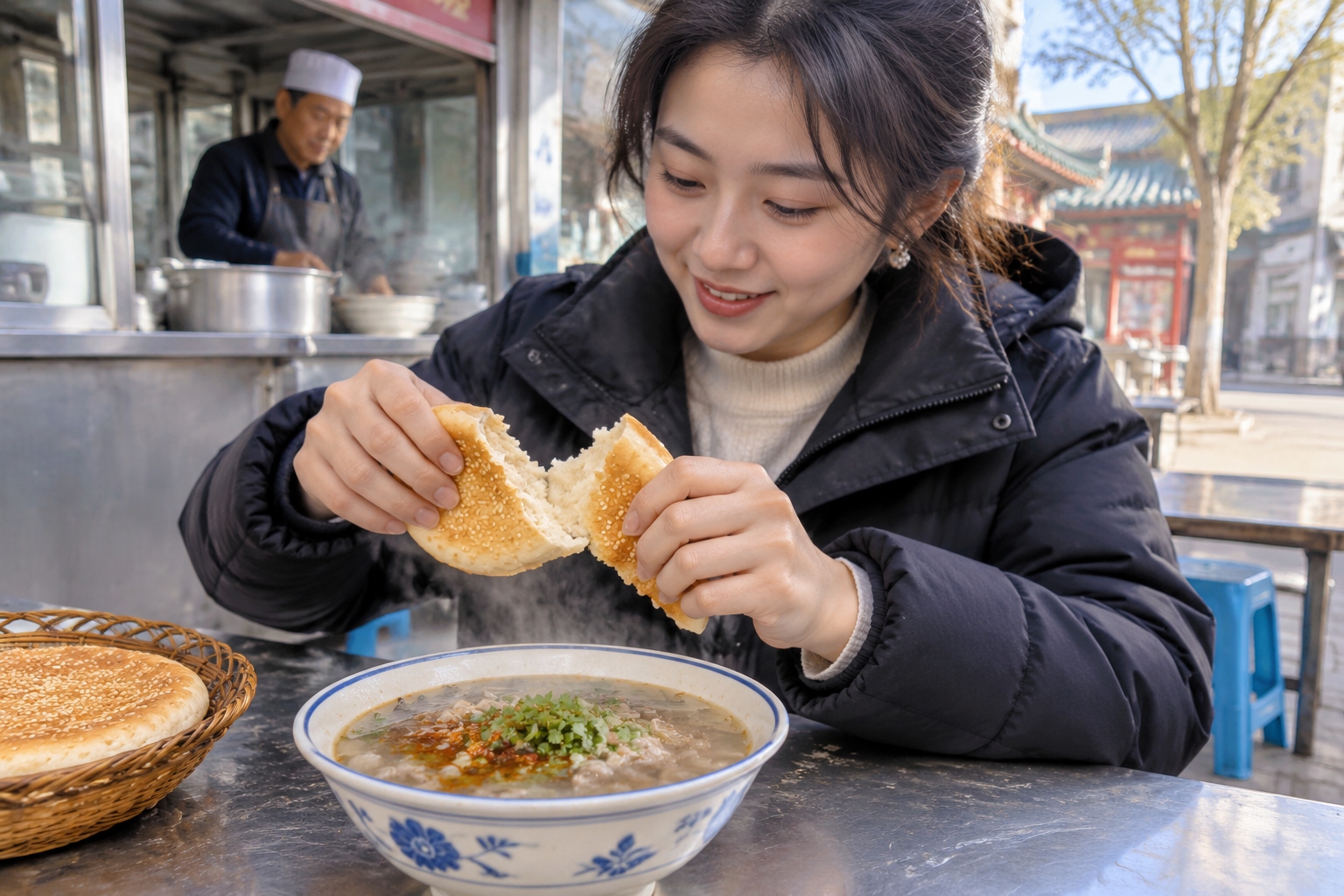
Yangza sui is a soup made from sheep or lamb offal—stomach, liver, lung, heart, and sometimes blood curd—simmered in a bone broth. The broth is usually cloudy and strong, seasoned with Sichuan pepper, ginger, and salt. At the counter, the vendor adds chili oil, chopped cilantro, and scallions. A splash of black vinegar sits on every table.
The bowl arrives with a piece of bèizi, a layered wheat flatbread with a sesame crust. Some people tear the bread and drop it into the soup; others bite the bread between spoonfuls. The soup is rich, a little gamey, and very warm. On a winter morning, it does what a cup of coffee does elsewhere: it tells the body to wake up.
Prices vary by shop and bowl size. A small bowl often costs around 15 yuan, about $2; a large bowl with extra offal can reach 25 yuan. In Hohhot, many of these breakfast shops are run by Hui Muslim families, which is why the meat is usually halal and the menu is short. The shop does one thing well, from 6 a.m. to about 10:30 a.m., then closes to prepare for the next day.
The People in the Queue
A woman in a navy coat, maybe in her thirties, orders a small bowl and checks her phone. She works at a logistics company on the other side of the city. Her bus comes at 7:10. She eats in seven minutes, pays with a QR code, and leaves with the last piece of bread in her hand. “I come here two or three times a week,” she says. “When I’m late, I buy a tea egg at the convenience store. It’s not the same.”
Behind her is a retired railway worker, 68, who has been coming to this corner for more than a decade. He walks from his apartment four blocks away. He orders the same thing every time: small bowl, extra chili, no cilantro. He sits on the blue stool and reads the news on his phone. He tells me he likes the shop because “the broth is clean and the owner remembers my order.”
A high school student, backpack on both shoulders, buys a bèizi and a cup of soy milk. She does not have time for soup. Her school is a ten-minute bike ride away. The vendor hands her the bread in a paper bag and says something that makes her laugh. This is the other side of the breakfast economy: not everyone has twenty minutes. The street adapts. Some shops sell plain congee, tea eggs, and steamed buns for people who need to keep moving.
Breakfast here is not a ritual of leisure. It is a small piece of infrastructure. It sits between the alarm clock and the bus stop, between family schedules and work schedules. The food is hot because the morning is cold. It is fast because the day is long.
Salty Milk Tea Is Not Bubble Tea
Not far from the offal shop, another breakfast counter sells milk tea. But this is not the sweet, chewy drink that has traveled around the world from Taiwan. In Inner Mongolia, milk tea—nǎichá—is usually salty. It is boiled with brick tea and milk, sometimes with a little butter. At home, families keep it hot in a thermos and pour it into bowls throughout the morning. At breakfast shops, it comes in small bowls or a small pot, often with fried millet, milk skin, and dried curd on the side.
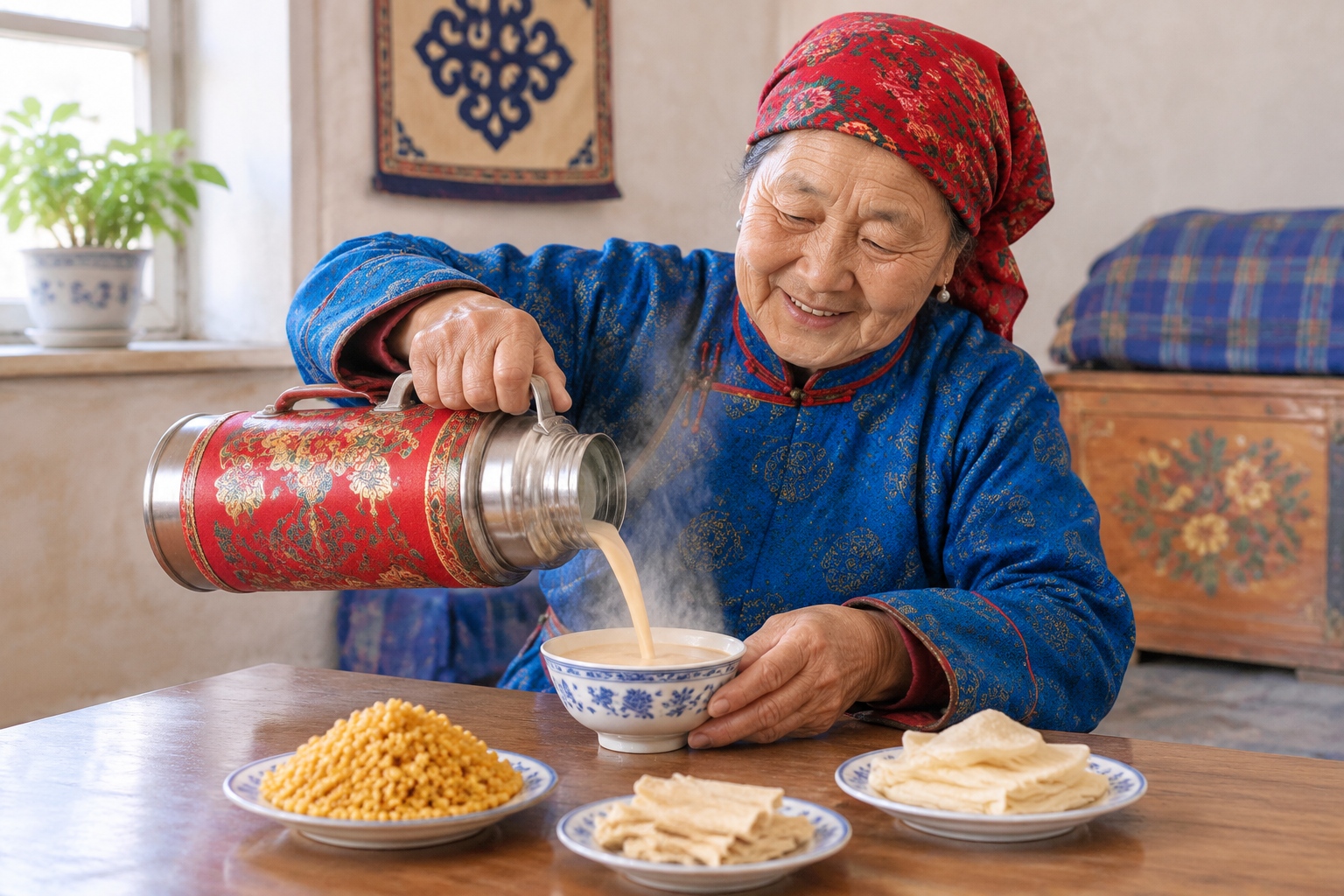
The first sip can surprise a visitor. It is savory, slightly smoky, and thin enough to drink with food. People add fried millet for crunch, or tear bread into the bowl. In pastoral families, milk tea can be a whole breakfast with dried beef, cheese, and flour products. In the city, it is often a side dish: a bowl of tea next to a bowl of soup, or tea with a piece of bread on the way to work.
This is one of the clearest differences between breakfast in Inner Mongolia and the sweet milk tea shops that have spread across Chinese cities. Both are called milk tea. They belong to different worlds. One is a dessert drink; the other is a daily staple, closer to soup than to a snack.
One Region, Many Breakfasts
Inner Mongolia is huge. It stretches about 2,400 kilometers from west to east, roughly the distance from London to Ankara. It makes little sense to talk about “Inner Mongolian breakfast” as a single thing. In Hohhot and Baotou, sheep offal soup, baked flatbreads, and salty milk tea are common. In the grasslands, herding families may start with milk tea, dried meat, and dairy products. In the eastern leagues, the food shifts toward the northeast Chinese table: millet porridge, pickles, steamed buns, and in Chifeng, a local meat-stuffed flatbread called duijia.
Even within Hohhot, breakfast changes by neighborhood. Near schools, you find steamed buns and soy milk. Near office buildings, there are chain shops selling sandwiches and coffee. In the old city, the offal shops still open before sunrise. The common thread is not a single dish. It is the pace: eat close to home, eat something hot, and get on with the day.
QR Codes, Delivery Bags, and Younger Owners
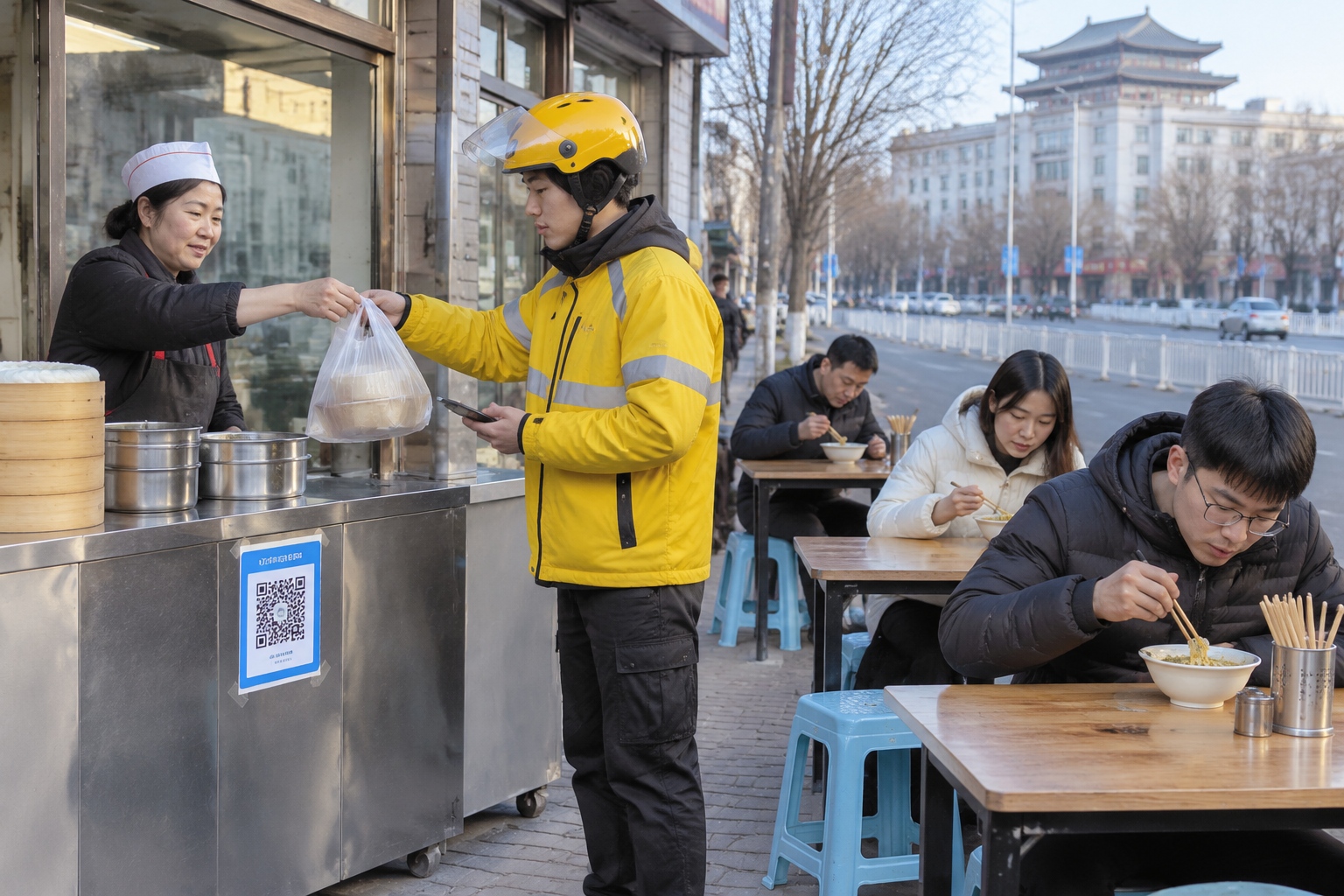
The breakfast stall has changed, but not in the way a trend report might suggest. The biggest visible difference is payment. A QR code is taped to the stainless-steel counter, next to a small blue sign for WeChat Pay. Most customers scan it before they sit down. The vendor’s phone announces each payment in a recorded voice. Cash still works, but it is no longer the default.
Delivery has also arrived. At 7:20, a rider in a yellow jacket picks up two plastic bags of soup and bread. The bags are tied tight, and the rider puts them in an insulated box. The shop owner says delivery is maybe 10 percent of morning sales. It matters for people who are home with children or working night shifts, but the street counter is still the center of the business.
Younger owners are making small adjustments. One shop near the university sells the same offal soup but has added a cleaner dining room, a card reader, and a social media account. The owner posts photos of the morning pot at 6 a.m. Tourists sometimes come in from a nearby hotel, order a small bowl, and take a photo. The regulars barely look up. For them, this is not a food experience. It is breakfast.
The food itself has not changed much. The broth still takes hours. The bread is still baked in the morning. The shop still closes when the pot is empty. What has changed is the surrounding choreography: the phone payment, the delivery bag, the customer who found the shop on a screen. The bowl remains the same.
8:40 a.m., the Street Settles
By 8:40, the line is gone. The woman in the navy coat is on her bus. The retired railway worker has walked home with a newspaper under his arm. The student is in class. Lao Bai stacks the empty bowls in a gray plastic tub and wipes down the counter. He adds more broth to the pot, tastes it, and adds a little salt. A man in a delivery uniform stops, orders a small bowl, and eats standing up. Two minutes later, he is gone.
The street does not feel dramatic. A truck passes. A shop shutter rolls up. The smell of lamb and chili hangs in the cold air for another hour. This is how the day starts for many people in Inner Mongolia: not with a slogan or a grand tradition, but with a bowl, a piece of bread, and a place to sit for seven minutes. Then the city gets on with it.