


6:30 a.m.: The Quiet Hour Belongs to Her
In a 70-square-meter apartment on Shanghai’s outskirts, 34-year-old Li Wei slips out of bed before the alarm—habit, not heroism. She tiptoes past the bedroom where her husband still sleeps and settles into the tiny home office she shares with a pile of laundry. For the next hour, she opens her laptop and tackles two bug fixes in the company’s payment system. The code repository is quiet now; her colleagues in India and Berlin are just signing off. This is her golden hour—no message pings, no child crying, just the satisfying clack of a mechanical keyboard.
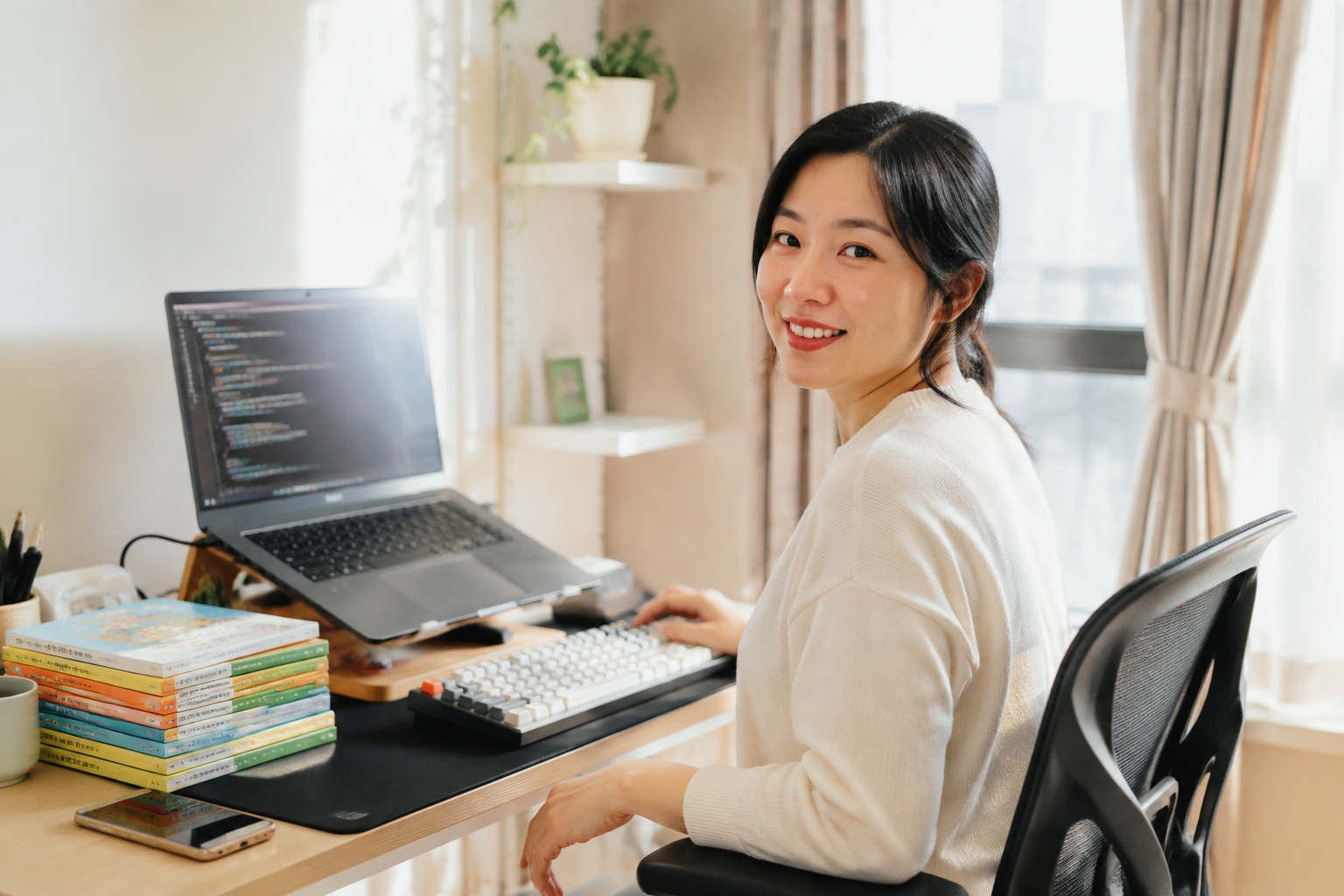
Li Wei is part of a growing generation of Chinese women who code for a living. According to a 2023 survey by the networking platform Maimai, women make up about 35% of China’s tech workforce, with concentrations in quality assurance, front-end development, and data analysis. What’s less well-known outside China is how they balance the traditional expectations of motherhood with the relentless pace of the tech world. For Li Wei and many like her, the art of getting everything done starts not with fancy productivity apps, but with a brutally honest assessment of what actually matters.
7:15 a.m.: The School Run—On an E-Bike
By 7:15, Li Wei’s daughter, Yunyun, is awake. The next 45 minutes are pure choreography: a bowl of congee, a quick braid, a yell to find the missing shoe. “I used to try to make elaborate breakfasts,” Li Wei says, laughing. “Now if we have an egg and a steamed bun, that’s a win.” At 7:45, she straps Yunyun onto the back of her e-bike—a vehicle seen everywhere in Chinese cities. They weave through morning traffic, past street vendors selling jianbing and old-timers doing tai chi in the park. It’s a 15-minute ride to the kindergarten, rarely more. E-bikes, with their speed and flexibility, are the unsung heroes of Chinese school runs.

Yunyun runs into the gate, waving over her shoulder. Li Wei checks her phone: a message from her engineering manager reminding everyone to update their project status before the 9:30 stand-up. She’s already done that—from her phone while stopped at a red light, using the voice-to-text function to draft a concise update. “I’ve learned to do a lot in those two-minute waits,” she says. “No call is too short to be useful.”
8:30–9:30 a.m.: The Commute—And the Game of Being Present
Li Wei’s office is a 30-minute subway ride away. She carries her laptop in a backpack that also holds a change of sneakers and a small umbrella. On the train, she doesn’t code—the network is spotty—but she reads technical messages on her phone and listens to a podcast about system design. She also does something many Western commuters might find strange: she stores her bicycle at the subway station, a common habit in Chinese cities that saves a 10-minute walk.
At 9:20, she slides into her seat at the open-plan office, unhooks a headset, and joins the daily stand-up meeting on a video call. Two teammates are remote, so the screen is on. Her turn: “Fixed the payment time-out issue. The API latency is still above target; I’ll dig into that after lunch.” Thirty seconds, done. The meeting wraps in three minutes. “Our team is good at keeping it short,” she says. “We all have kids or long commutes. We know that every minute in a meeting is a minute not spent doing actual work.”
The Real Secret: It’s Not About Doing More
Li Wei’s morning didn’t go perfectly. She forgot to pack Yunyun’s snack—again. The e-bike almost hit a delivery courier. And she’ll probably be too tired to cook dinner tonight, so her husband will pick up takeout. But inside her routine lies a set of practical principles that any busy working parent—in China or anywhere else—can borrow.
1. Own the quiet time before anyone else wakes
Li Wei wakes at 6:30, a full hour before her daughter. “That hour is non-negotiable for me,” she says. “I use it for deep work. I know some moms use it for exercise or meditation. The point is to have a slice of the day that belongs entirely to you.”
2. Prepare everything the night before
Yunyun’s backpack is packed before bed. Li Wei’s work clothes are laid out. The e-bike is charged and parked by the door. “Hardest part of parenting is decision-making in the morning. If I take that away, it’s easier to focus.”
3. Use commute time as transition time
The subway is not a dead zone. Li Wei uses it for catching up on reading or answering non-urgent messages. She also deliberately sets a rule: when she’s with Yunyun, she doesn’t check work phones unless it’s urgent. “Kids know when you’re not really there. I’d rather be half-efficient at work than half-present at home.”
4. Negotiate for asynchronous stand-ups
Not all teams need a live meeting. Li Wei’s team switched to a text-based stand-up on a company messaging app because two members are in different time zones. “That meant I could update the team at 7 a.m. from home, and we only have one live call per week.” It’s worth asking your team for this flexibility—it saves everyone time.
5. Accept help and accept imperfection
Li Wei’s husband does half the morning runs each week. Her own parents live nearby and pick Yunyun up from school on Tuesdays. “We don’t try to be superheroes. There’s no such thing as having it all—you just have to choose what matters most each day.”
The Bigger Picture: How China Is Adapting (and Where It Needs Work)
Li Wei’s experience is not unique, but it isn’t the whole story either. In many Chinese cities, companies offer on-site nursery rooms, break rooms with milk pumps, and flexible hours for mothers—though these are more common in tech companies than in smaller firms. The government has also expanded maternity leave to 158 days in many provinces, and paternity leave is becoming more standard. But challenges remain: the pressure to return to work early is real, and some workplaces still hold the stereotype that mothers are less committed.
For Li Wei, the future looks brighter than the past. “When I started programming 12 years ago, I was one of very few women in my advanced classes. Now my final-year intern is a woman, and she’s fantastic. The next generation won’t have to fight the same battles I did.”
Take it from Her
If there’s one thing you take away from Li Wei’s morning, it’s this: productivity is not about having a perfect life. It’s about having a workable one. By ruthlessly protecting a couple of quiet hours, preparing everything that can be prepared, and letting go of the rest, she manages to write production code, raise a cheerful kid, and still show up to stand-up with her head above water. As she puts it: “You don’t need to do everything. You just need to do the things that are actually yours.”
Start the discussion at forum.chinacomes.com