

Prologue: A Name Written in the Margins
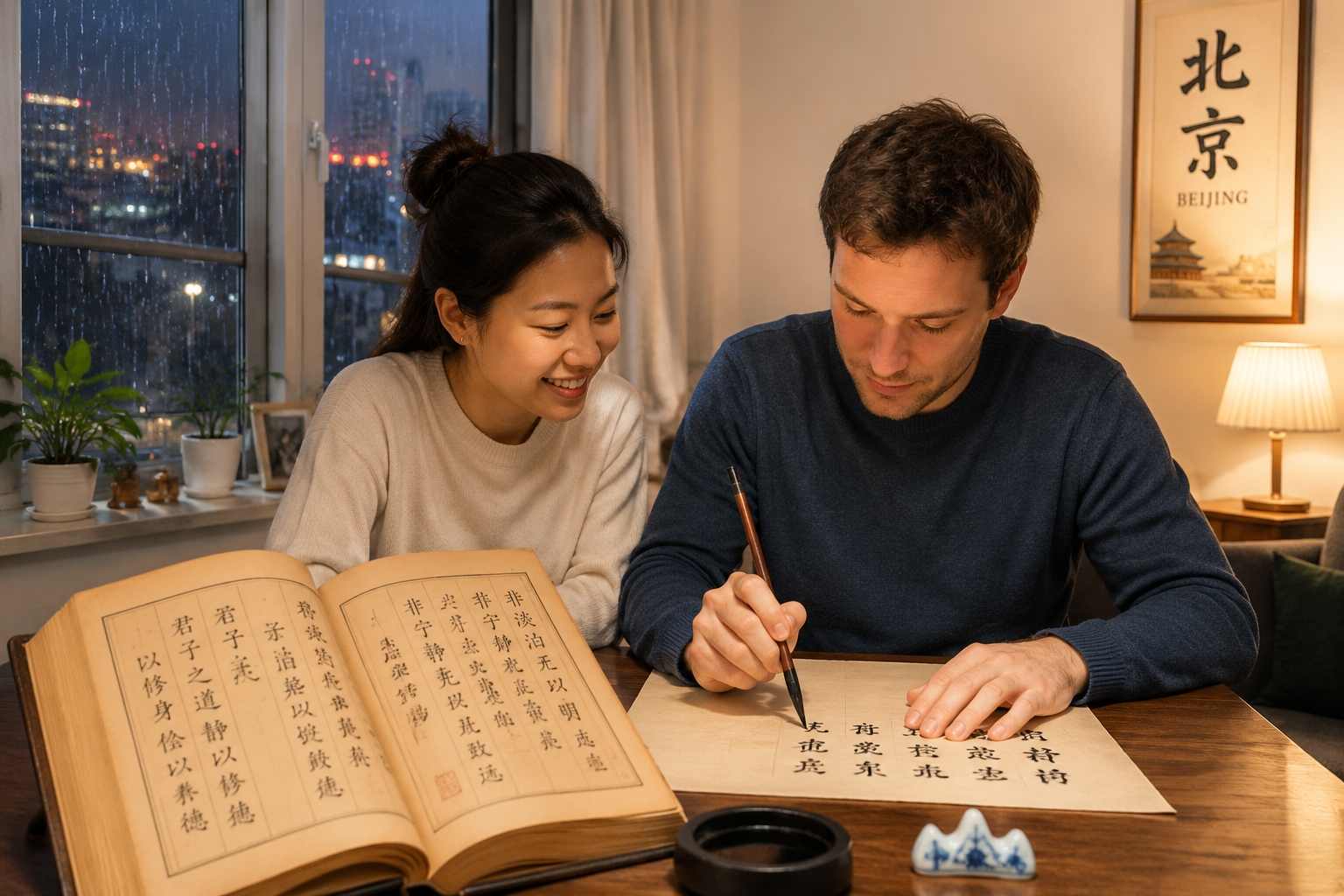
It was a rainy Tuesday evening in the old part of Beijing. My friend, Zhang Xin, was sitting cross-legged on a worn-out sofa, a cup of jasmine tea cooling at her elbow. She had just asked me if I wanted a Chinese name. I had been in China for only a few months, and I always used my English name ‘Lucas’. But that night, she reached for a thick, yellowed book from her shelf: a modern annotated edition of the Book of Songs, or Shi Jing.
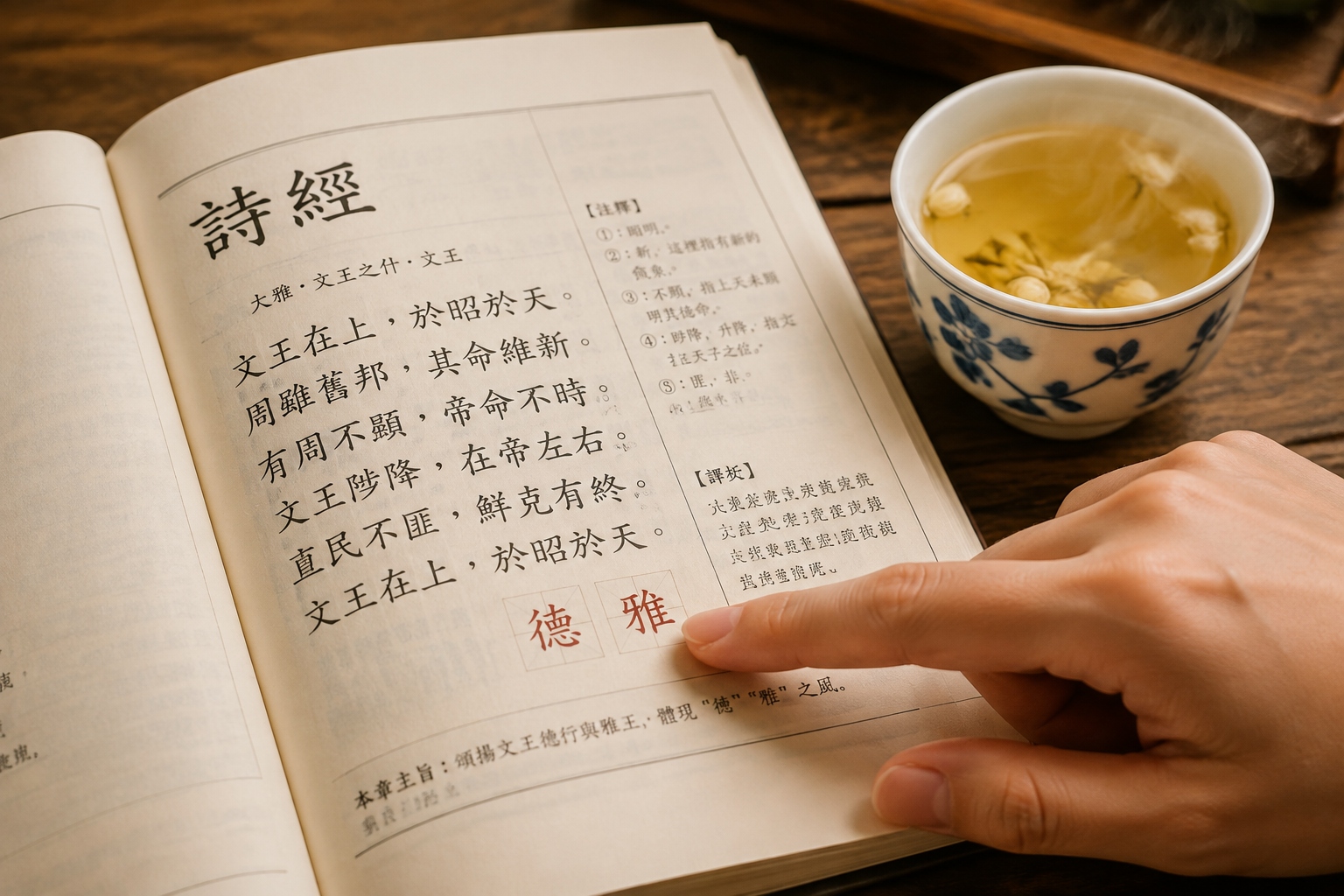
She didn’t just pick a pretty word. For over an hour, she flipped through the ancient pages, her finger tracing characters that looked to me like little pictures of a lost world. She read lines aloud, explaining the stories behind the verses. Then she looked up and said: ‘How about Déyā? 德雅.’ She laughed at my blank expression, then began to unpack the gift.
The Meaning Hidden in Two Characters
In Chinese culture, a name is never just a random sound. It is a wish, a prayer, a small piece of destiny. My friend chose 德 (dé), which means virtue or moral integrity. She pointed to a line from the Shi Jing: ‘All things have their rules, and the people hold to their innate virtue.’ The character appears throughout Confucian classics, but she wanted the simplest, most human sense: to be a person of quiet strength.
Then she chose 雅 (yǎ), a character that in ancient times referred to the refined ya music played at court, and later came to mean elegance, grace, and pure expression. The very structure of the Shi Jing is divided into Feng, Ya, and Song — the airs of the people, the elegant odes, and the hymns. Placing ‘ya’ after ‘de’ felt like a quiet blessing: that I would not only be good, but also graceful.
Why a Name Feels Like a Sacrament
In the West, names are often chosen for sound or family tradition. But in China, the act of naming is wrapped in a deeper reverence for language itself. Characters are not just marks; they carry sound, imagery, and cosmology. Parents consult books, fortune-tellers, even ancient poems, to find combinations that bring harmony. My friend was not trying to give me a label. She was trying to give me a lens through which to see my own path.
That night, she told me that in Chinese culture, a name is believed to shape the person who carries it. ‘If you say your name a thousand times,’ she joked, ‘you become it.’ I don’t know if I fully believed her, but I did start to notice a shift.
Wearing the Name in Daily Life
For the next few weeks, I practiced writing 德雅 over and over, my brush strokes clumsy but earnestly hopeful. I introduced myself as Déyā at a neighborhood dumpling shop, and the owner, an elderly woman, smiled approvingly. ‘Good name,’ she said, and gave me an extra piece of scallion pancake. A few friends in my Chinese class started calling me Déyā, and I noticed how their tone softened — like they were speaking to a different, slightly more elegant version of me.
There were funny misunderstandings too. One night at a bar, a tipsy stranger asked me how to spell my name, and when I told him ‘Déyā’, he thought I was saying ‘dui ya’ — ‘yes, right!’ and laughed that all foreigners answered every question with ‘dui ya’. He also told me my name sounded old-fashioned, like a character from a 1930s novel. I liked that.
More Than a Label: A Forward-Looking Heirloom
Today, I use my Chinese name on my phone’s lock screen and in every coffee shop order. It’s not about claiming an identity I haven’t earned. It’s about remembering that a friend gave me a part of her culture and asked me to carry it well. In a world that often feels fast and forgettable, my name is a slow, hand-written note. It connects me to the person who chose it, to the poets who wrote those verses three thousand years ago, and to all the moments I’ll spend in China learning what virtue and grace really mean, one ordinary day at a time.
Conclusion: The Lucky Charm Lives
When my friend gave me that name, I didn’t ask if it was lucky. I knew it was. You could hear the luck in the way she said it, in the weight of the ancient book on her lap, in the rain that drummed against the window as if applauding our small ceremony. A Chinese name is not a trophy, and it is not a test. For me, it is a living reminder that we write our stories on each other — and sometimes the best way to understand a culture is to accept a gift it has been perfecting for thousands of years.
Start the discussion at forum.chinacomes.com