

The 2 AM Street Food Revolution
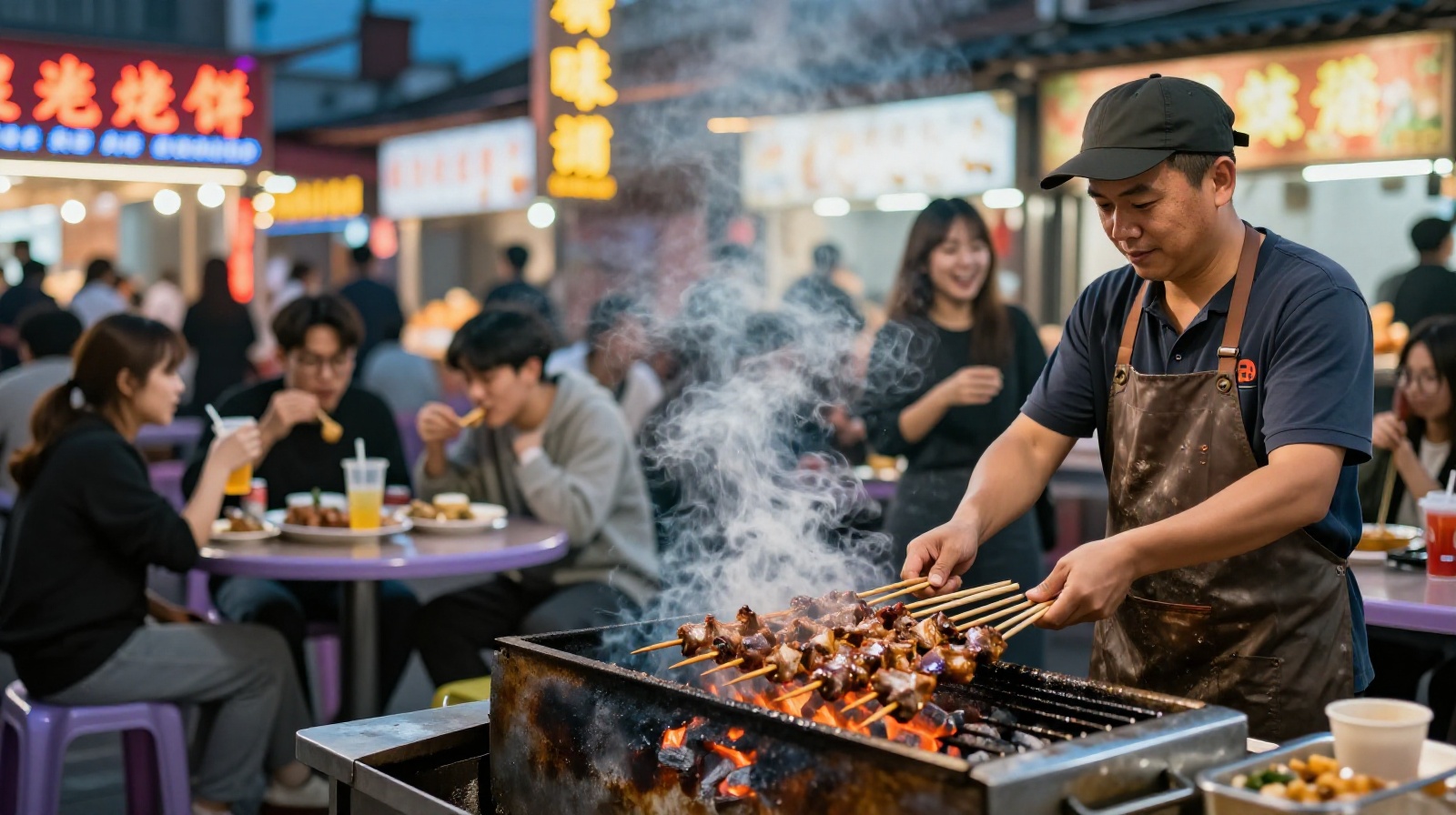
At 2 a.m., when the skyscrapers in Shenzhen or Chengdu go dark, the city doesn’t sleep. It shifts gears. On every corner, under the glow of fluorescent tubes, plastic stools are stacked high and woks roar with fire. This is the unofficial capital of modern Chinese dining: the street food stall.
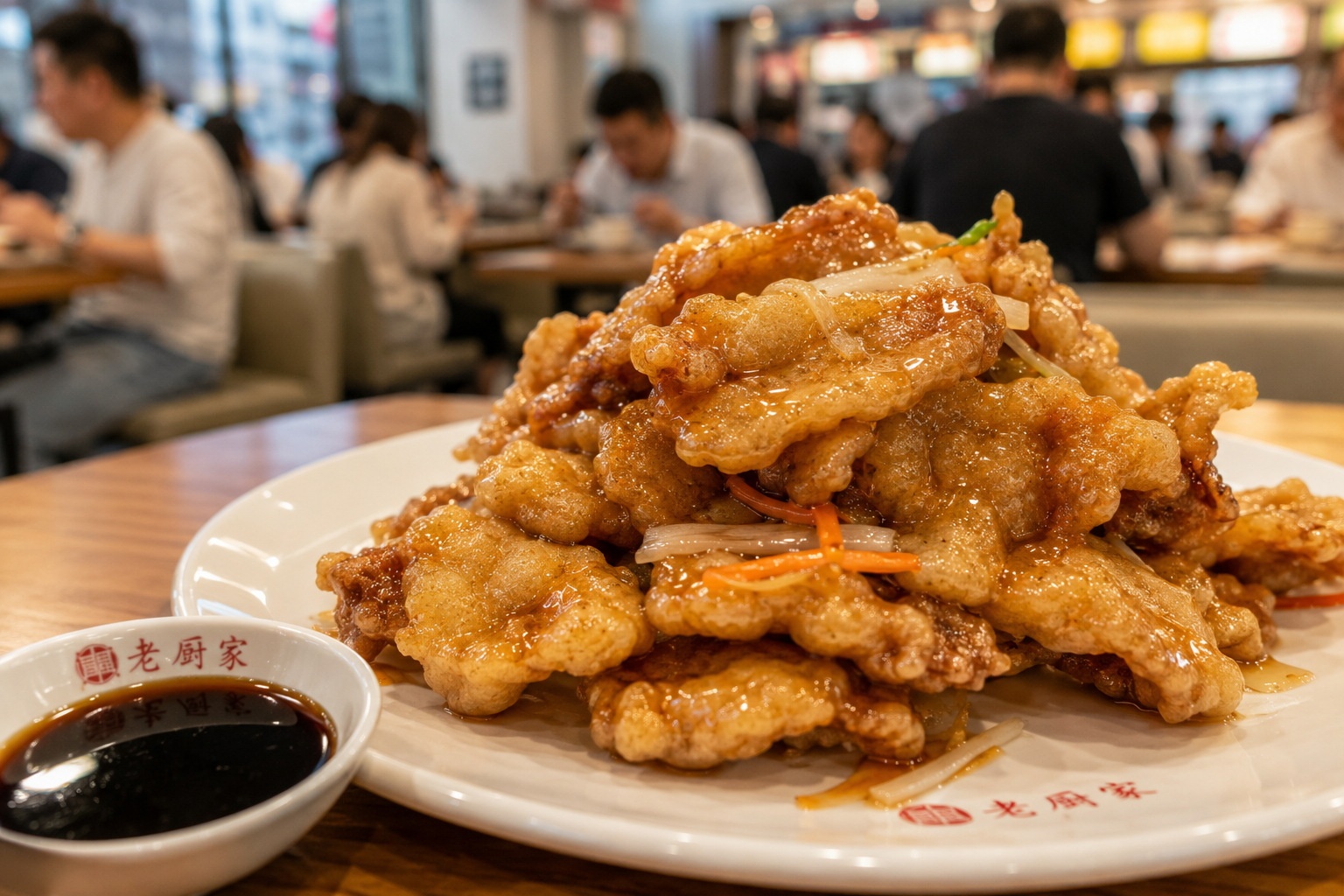
While traditional Chinese cuisine is often defined by the “Eight Great Traditions”—refined, regional styles associated with history and luxury—the real pulse of the nation beats elsewhere. Walk through any night market today, and you will find two dishes dominating the stalls: Northwest-style lamb skewers (yangrou chuan) and Northeast-style pot-roasted pork (guobaorou). These dishes are not on ancient imperial menus. They are rough, salty, fatty, and deeply satisfying. And they have become the spiritual “fast charge” for a society in motion.
From Migrant Roots to National Tables
To understand why these specific dishes rule the streets, you have to look at China’s massive population shift over the last three decades. As hundreds of millions of people moved from rural areas and smaller towns to booming megacities, they brought their stomachs with them.
Lamb skewers originated in the arid, pastoral northwestern regions (like Xinjiang and Gansu), where shepherds cooked meat over open fires during long winters. Pot-roasted pork, meanwhile, is a product of China’s “Rust Belt”—the industrial northeast (Heilongjiang, Jilin, Liaoning). It was born in a climate so cold that people needed high-calorie, crispy, and sour-sweet meals to survive the freeze.
When these workers migrated south to work in factories or tech hubs, they didn’t just bring labor; they brought their culinary identity. The demand for familiar tastes created a supply chain that crossed thousands of kilometers. Today, a lamb skewer in Guangzhou tastes almost identical to one in Lanzhou. The food has detached from its geography, becoming a universal language of the migrant worker.
The Economics of Efficiency and Fullness
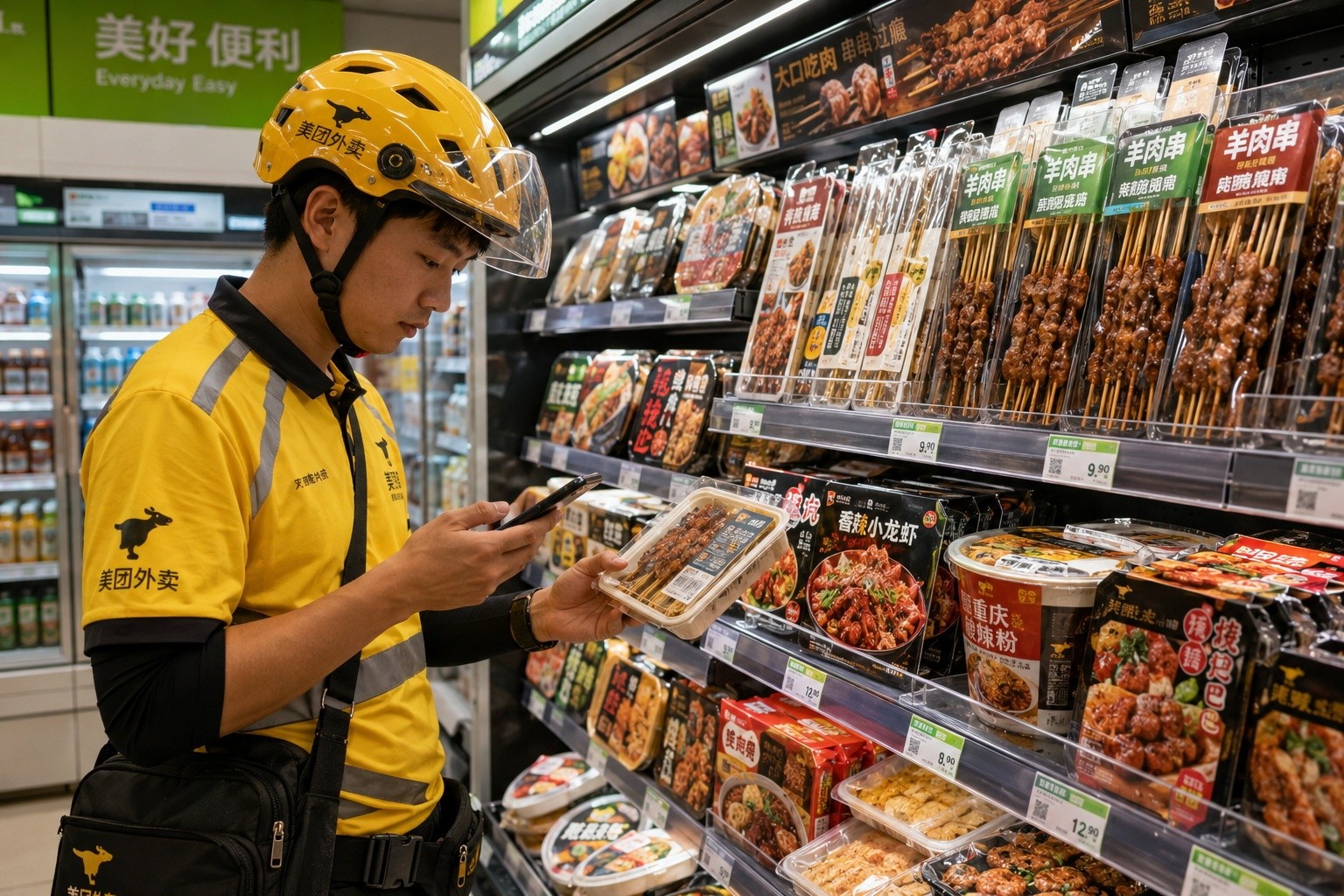
Why these dishes? Why not something lighter or more refined? The answer lies in the life of the modern Chinese urbanite. For the average office worker or delivery driver, lunch is a 30-minute break between tasks. Dinner is often a quick refuel after overtime.
Lamb skewers and pot-roasted pork are the ultimate fast food. They are calorie-dense, protein-rich, and incredibly cheap. A meal of these dishes can cost less than $5 USD, yet it provides enough energy to power through a 12-hour shift. In an era where efficiency is king, these foods offer the best ratio of cost, speed, and satiety.
There is also a psychological element. The act of eating something hearty and unpretentious is a form of rebellion against the sterile, high-pressure corporate world. Chewing on a charred lamb rib or biting into crispy pork releases tension in a way that a delicate salad simply cannot.
Street Stalls and Standardized Chains
You might assume these are only available in dirty alleyways. Not anymore. The rise of these dishes has created a unique hybrid in China’s public dining space.
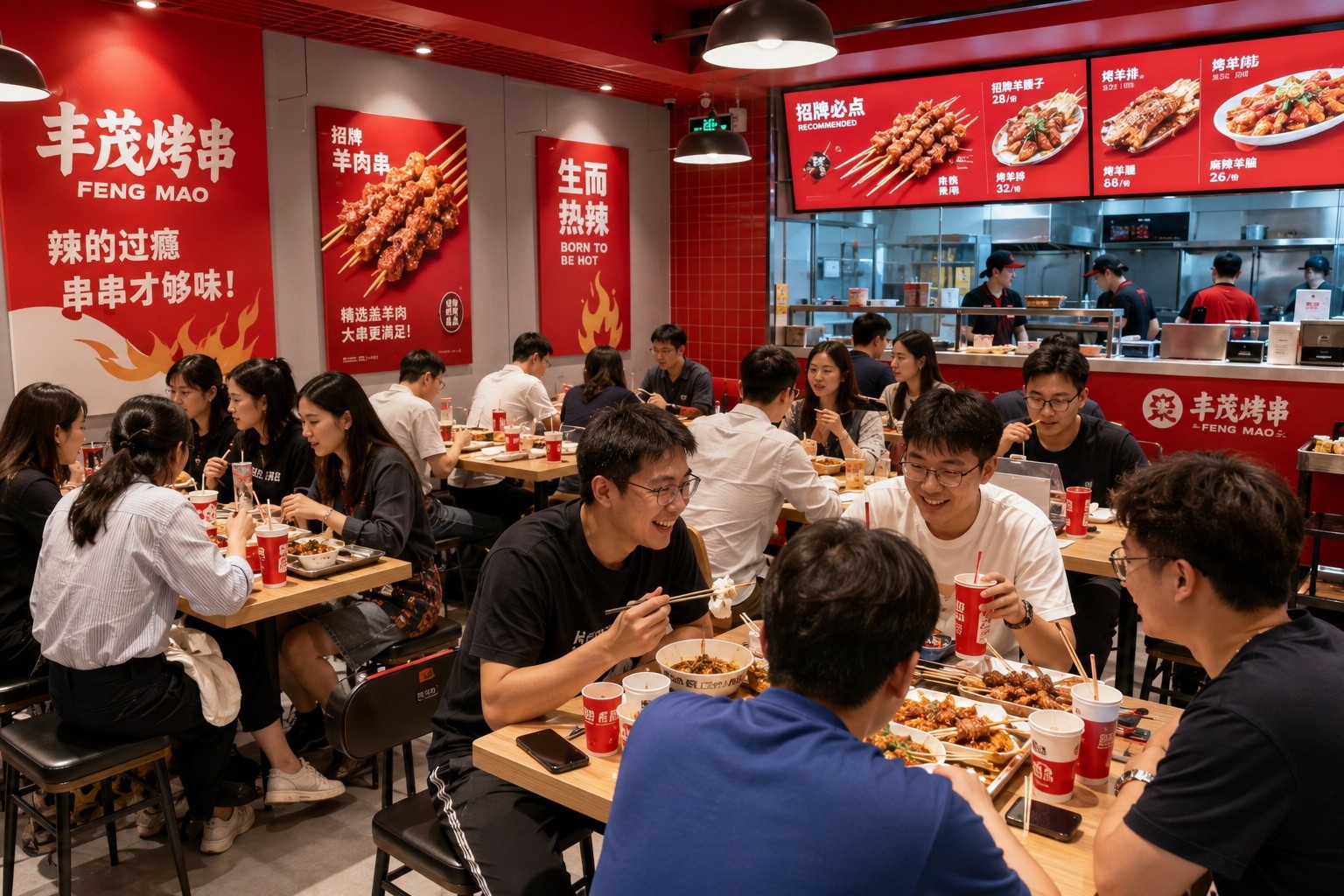
On one end, you have the traditional night market stall, where the chef shouts orders and the smoke fills the air. On the other, you have sleek, standardized chains with bright red branding, appearing in every shopping mall. Brands like “Xiabu Xiabu” for lamb hotpot or various “Guobaorou” specialty shops offer hygiene guarantees and digital ordering via apps.
This coexistence is vital. The street stalls provide authenticity and community vibe, while the chains provide reliability for those who are afraid of stomach issues. Together, they form a robust infrastructure that supports the daily lives of hundreds of millions of people. It is a democratization of flavor, where a factory worker and a software engineer can sit at the same table, eating the same spicy lamb.
Emotional Fast Charging
In a society that moves at breakneck speed, stress is the default state. Young people face intense competition in education and employment. Middle-aged workers worry about mortgages and aging parents. In this context, food is not just fuel; it is therapy.
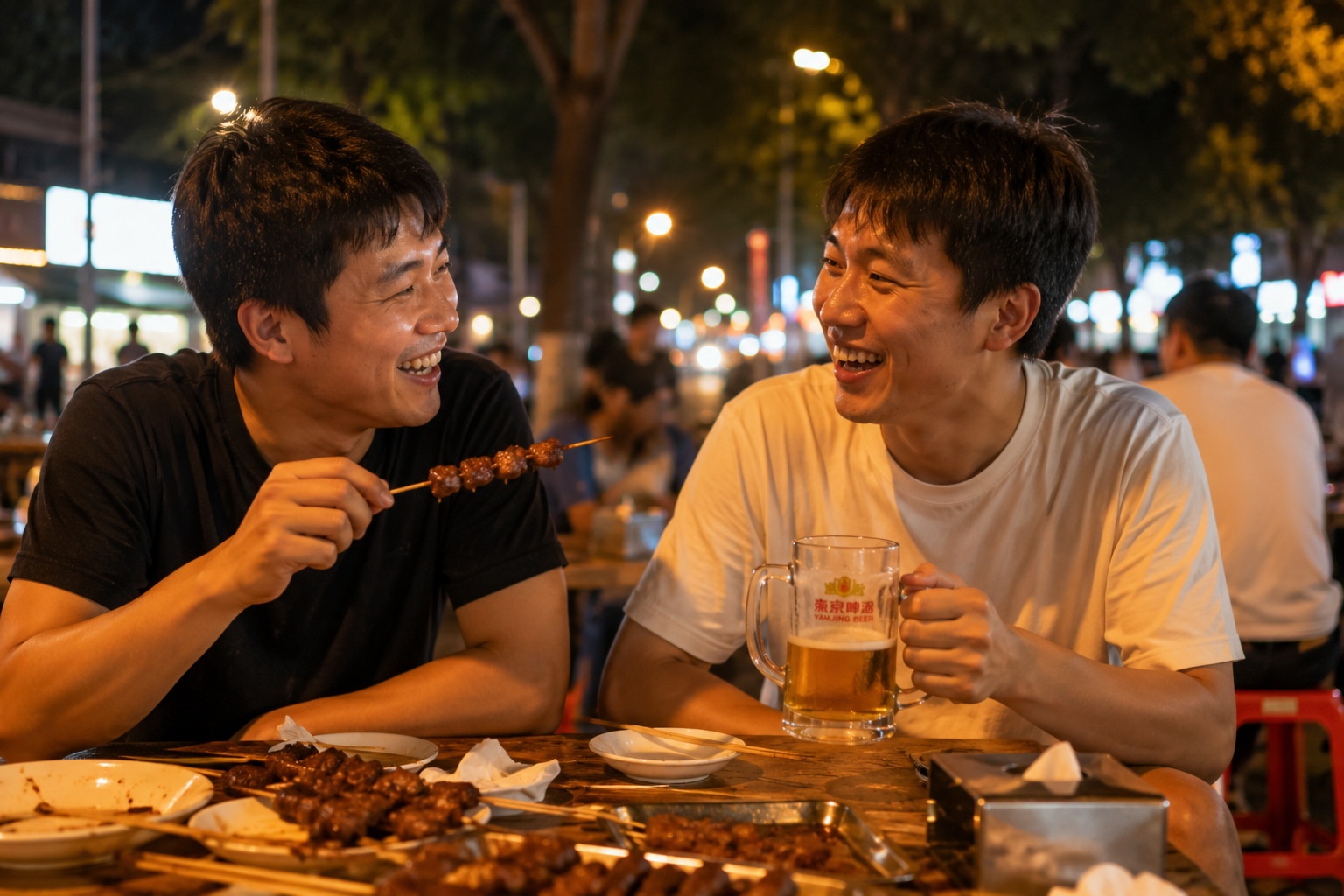
Eating lamb skewers with cold beer or dipping crispy pork in vinegar is a moment of pause. It is a “spiritual fast charge.” The strong flavors—spicy, salty, sour, sweet—cut through the numbness of daily routine. It is a reminder that life, despite its pressures, still offers tangible pleasures.
For overseas readers, this might seem simple. But in China, where traditional values often emphasize restraint and hard work, these loud, messy, and delicious meals represent a necessary release. They are the taste of resilience.
Taste the Real China
If you want to understand modern China, do not just look at its high-speed trains or AI labs. Look at what people eat when the workday ends. The popularity of Northwest lamb and Northeast pot-roasted pork tells a story of migration, adaptation, and the enduring human need for comfort. It is a story written in smoke, fire, and flavor—a story of ordinary people finding joy in a fast-changing world.