
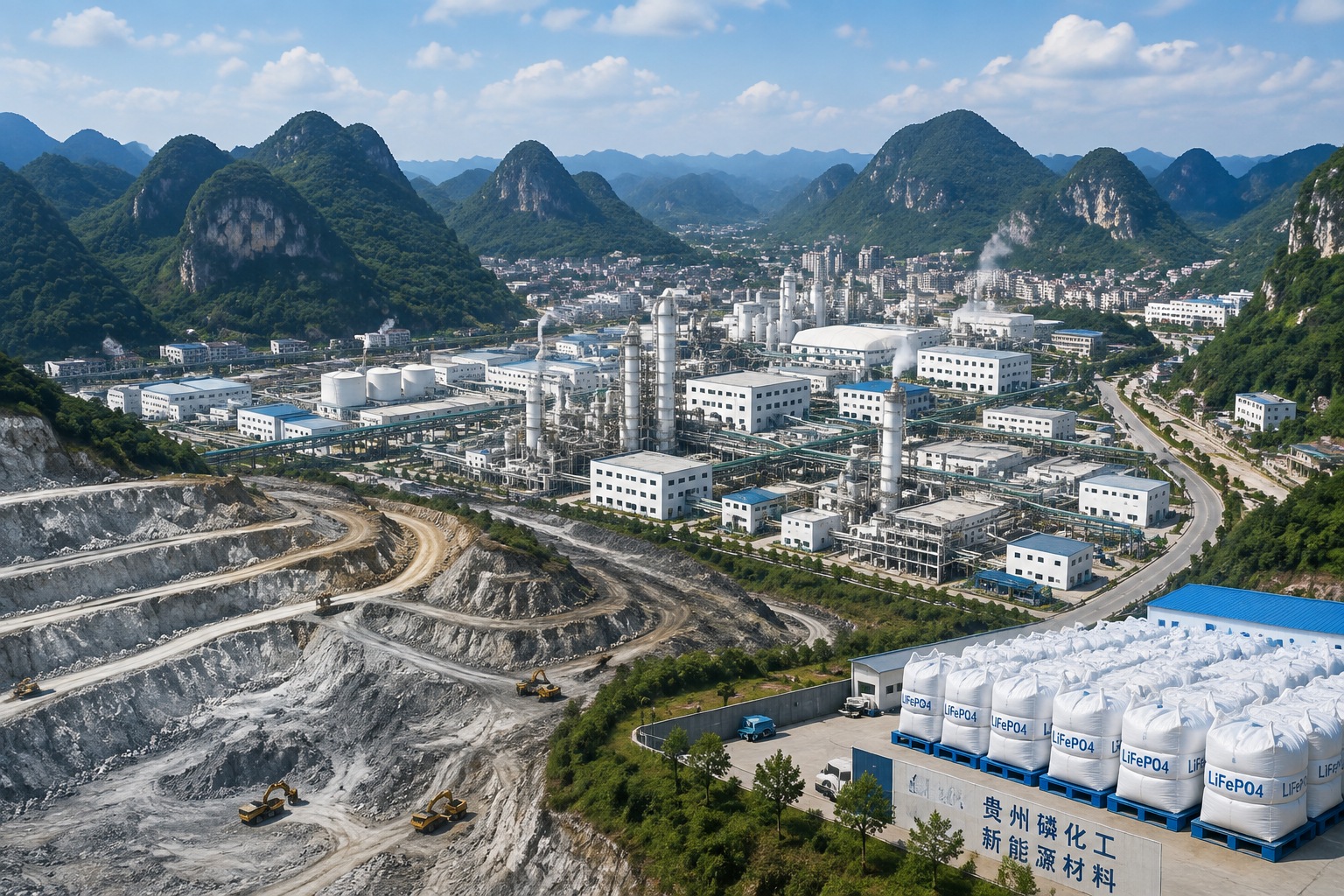

From a Mountain Province to a Battery Material Hub
Imagine unwinding the battery pack of an electric vehicle. You’ll find a gray-black powder called lithium iron phosphate, or LFP. That powder is the workhorse cathode material in many of today’s EVs—and a growing share of it is made from phosphate rock mined in Guizhou, a mountainous province in southwest China.
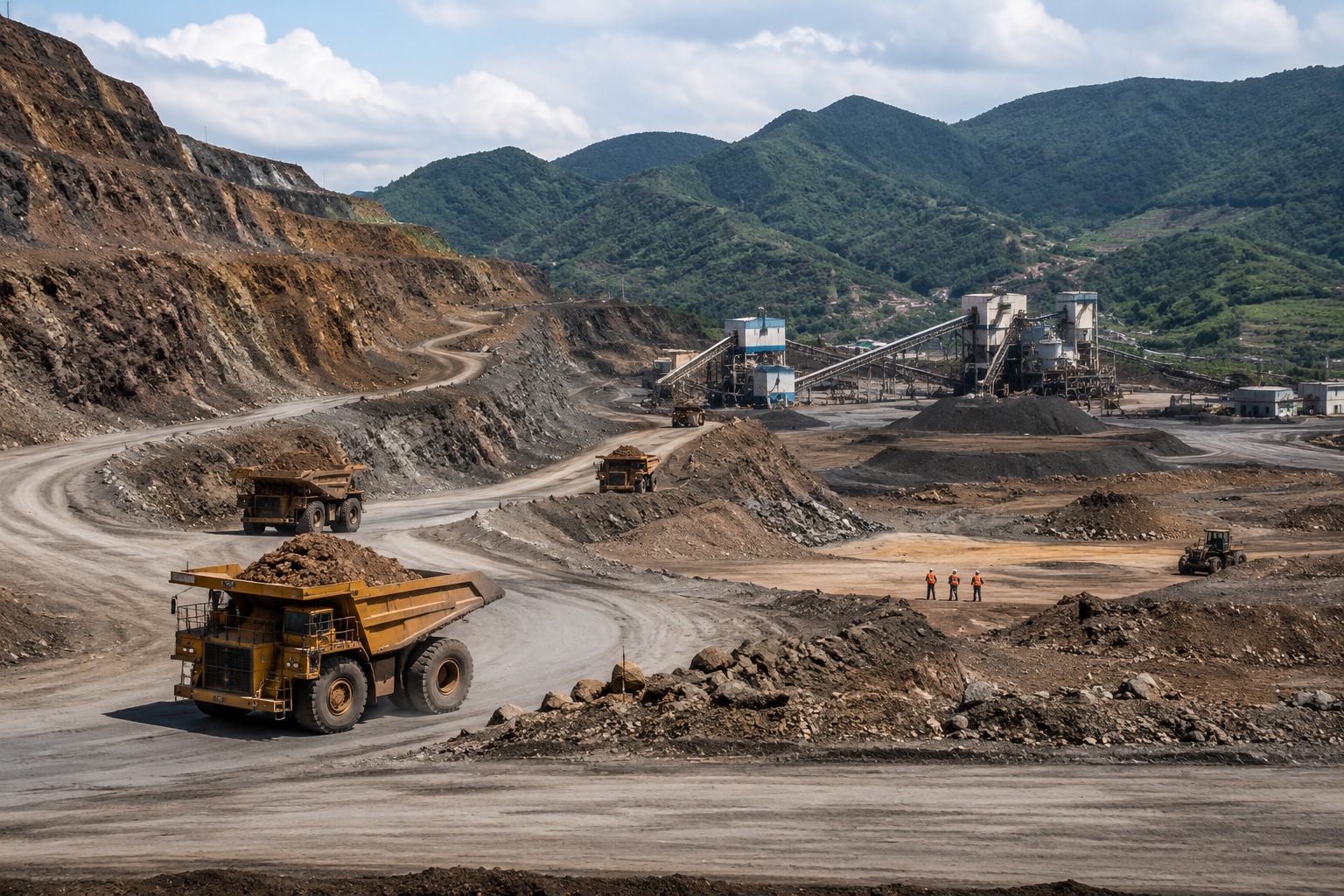
Guizhou is not a name you often see in headlines about the tech boom. But just as the Negev desert supplies Europe with solar power, this remote province is quietly anchoring the raw-material side of the electric vehicle revolution. With an estimated 2.7 billion tonnes of phosphate reserves—among the top three in China—Guizhou has long been a supplier of agricultural fertilizer. Now, it is redirecting that resource into the battery supply chain, creating a new economic identity in the process.
Why Phosphate Matters for Batteries
Most battery chemistry discussions focus on lithium or nickel. But phosphate is equally critical, especially for LFP batteries. Unlike nickel-cobalt-manganese (NCM) cells, LFP batteries are cheaper, safer, and longer-lasting, making them the default choice for budget-friendly and commercial EVs. Since 2021, LFP has overtaken NCM in China’s passenger EV market, accounting for more than half of all installed batteries.
For that, you need high-purity phosphate. Most phosphate rock is turned into fertilizer, but a fraction is refined into phosphoric acid and then into battery-grade lithium iron phosphate. The quality of the final product depends heavily on the purity of the original ore. This is where Guizhou shines. Some of its mines, like the Kaiyang and Wengfu deposits, contain ore grades above 30% P2O5, among the highest in China.
From Fertilizer Producers to Battery Material Makers
For decades, Guizhou’s phosphate industry revolved around ammonium phosphate fertilizer. Companies like Wengfu Group built large chemical complexes to supply China’s farmers. But as fertilizer demand stagnated and EV demand surged, these companies began pivoting.
Take Guizhou Phosphate Chemical Group, a state-owned enterprise formed in 2019 by merging several local players. It now operates production lines for battery-grade monoammonium phosphate and iron phosphate, feeding directly into the LFP supply chain. The province has also attracted independent battery material makers, such as Pulead Technology and Hunan Yuneng, which have set up plants in industrial parks around Guiyang, the provincial capital.
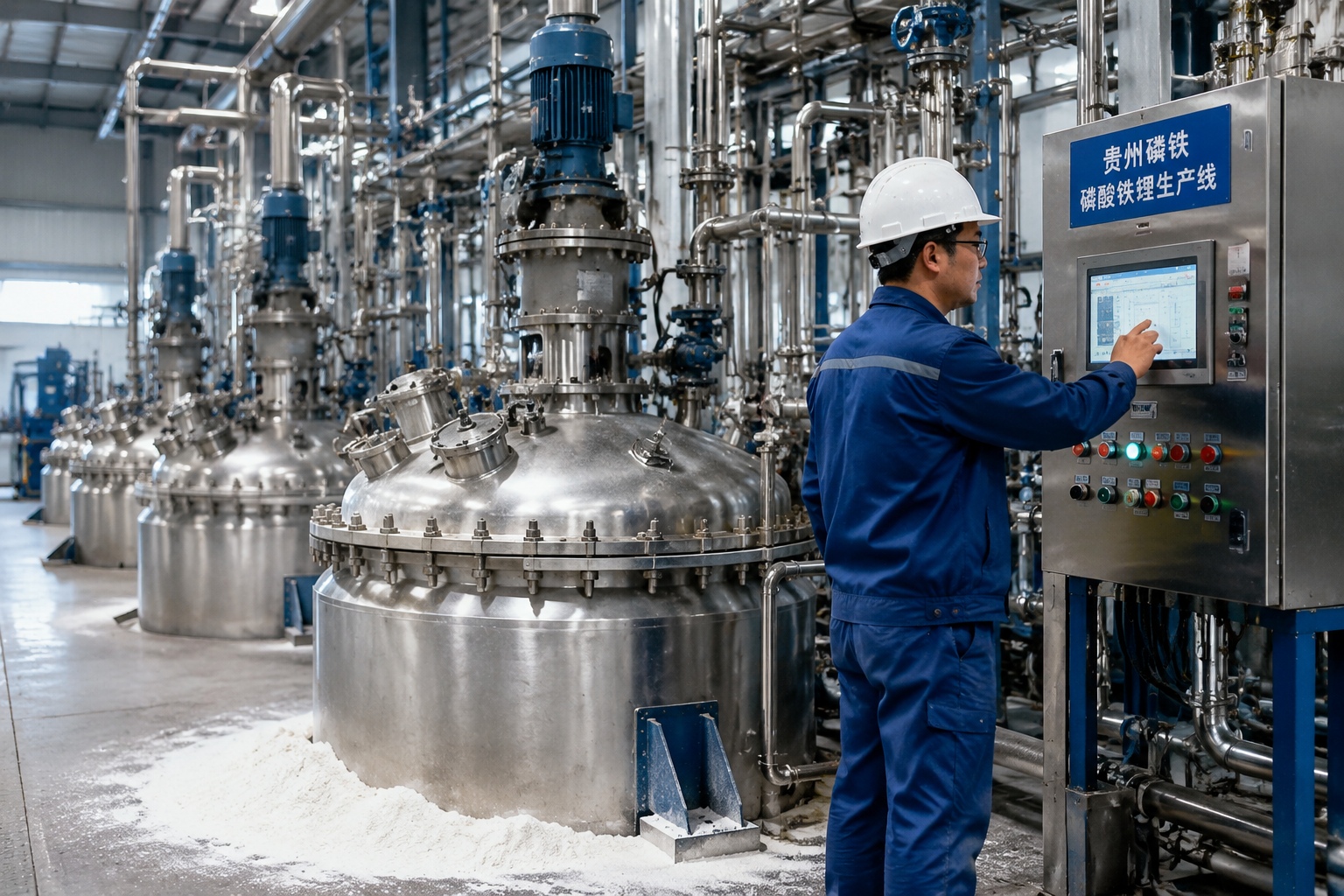
The result is a rapid transformation. In 2023, Guizhou produced over 350,000 tonnes of iron phosphate, a key LFP precursor, making it one of the country’s top producers. The province aims to build a complete industrial chain—from phosphate ore to cathode material to battery cells—by 2025.
Policy, Power, and Practical Advantages
Why has this shift happened in Guizhou rather than in coastal manufacturing heartlands? The answers lie in geology, energy, and policy.
First, the obvious: the phosphate is here. Mining costs are lower because the ore is close to the surface and can be processed nearby. Second, Guizhou is one of China’s largest hydropower producers, offering abundant, comparatively cheap electricity. Producing battery materials is energy-hungry, so low power rates are a significant draw.
The provincial government has also been proactive. In 2021, it launched a “rich ore intensive processing” strategy (富矿精开, literally “to refine rich ores meticulously”) aimed at moving from selling raw materials to producing high-value products. New industrial parks, streamlined permits, and subsidies for green energy consumption have encouraged companies to invest. In the industrial city of Fuquan, for instance, a phosphate-chemical cluster now hosts both raw material producers and downstream refiners, cutting logistics and energy costs.
The Challenges Ahead
No transformation is without friction. Phosphate mining and processing generate large volumes of waste, including phosphogypsum, which can pollute water if not handled correctly. Strict environmental rules have forced some smaller mines to shut down, and larger companies are investing in waste recycling and closed-loop water systems. The process is also carbon-intensive; while hydropower helps, the chemical reactions themselves release CO2. Reducing this footprint is key to maintaining the green credentials of EVs.
Another issue is value capture. Making iron phosphate is still a relatively low-margin business compared to assembling battery cells or whole vehicles. Guizhou therefore wants to move up the chain, attracting cell makers like CATL and BYD to build nearby factories. A BYD plant in Guiyang, which produces batteries for EVs, started full operations in 2023, offering a glimpse of how far the province could go.
Looking Ahead
Guizhou’s story is not about a single company or a single mine. It is another reminder that the energy transition runs on physical resources—often shaped by geography. What was once a quiet, agricultural region is now a node in a global supply chain for clean transportation. The next time you see an LFP battery, there is a good chance it began its life as phosphate rock, mined in a mountainous province few foreigners have ever visited.
As the world pushes toward electrification, understanding where materials come from is as important as understanding the technology itself. And in that story, Guizhou has carved out a vital—and only growing—role.
Start the discussion at forum.chinacomes.com