

A Potato Field on the Edge of the Desert
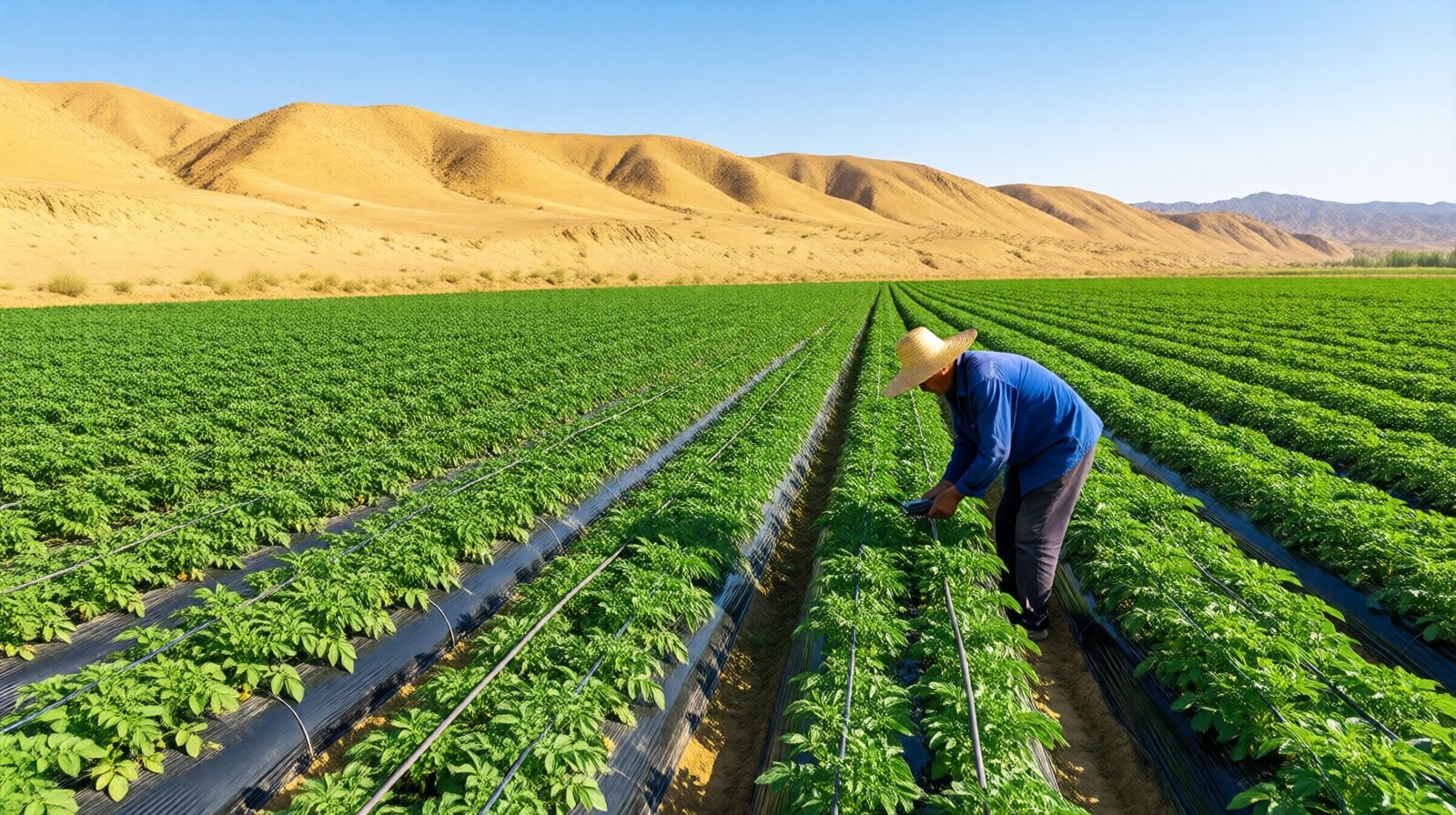
Stand in a potato field outside Wuwei, Gansu, in late summer, and you might forget you are in one of China’s driest regions. The plants are dark green, the rows run straight to the horizon, and the soil is moist enough that you can squeeze a handful. But the horizon is not a green plain. It is dry, brown mountain slopes. This part of Gansu sits along the Hexi Corridor, where rainfall often stays below 200 millimetres a year. The surprise is not that potatoes can grow here. It is that they can grow with so little water, and many weigh close to a kilogram.
Potatoes are not the first crop you’d expect in a desert. But Gansu has become a major potato producer in China. In counties around Dingxi, known as the country’s so-called potato capital, farmers grow seed potatoes, table potatoes, and processing varieties. The shift from wheat and barley to potato is recent. And it is tied to technology: drip irrigation, plastic film, and cheap sensors.
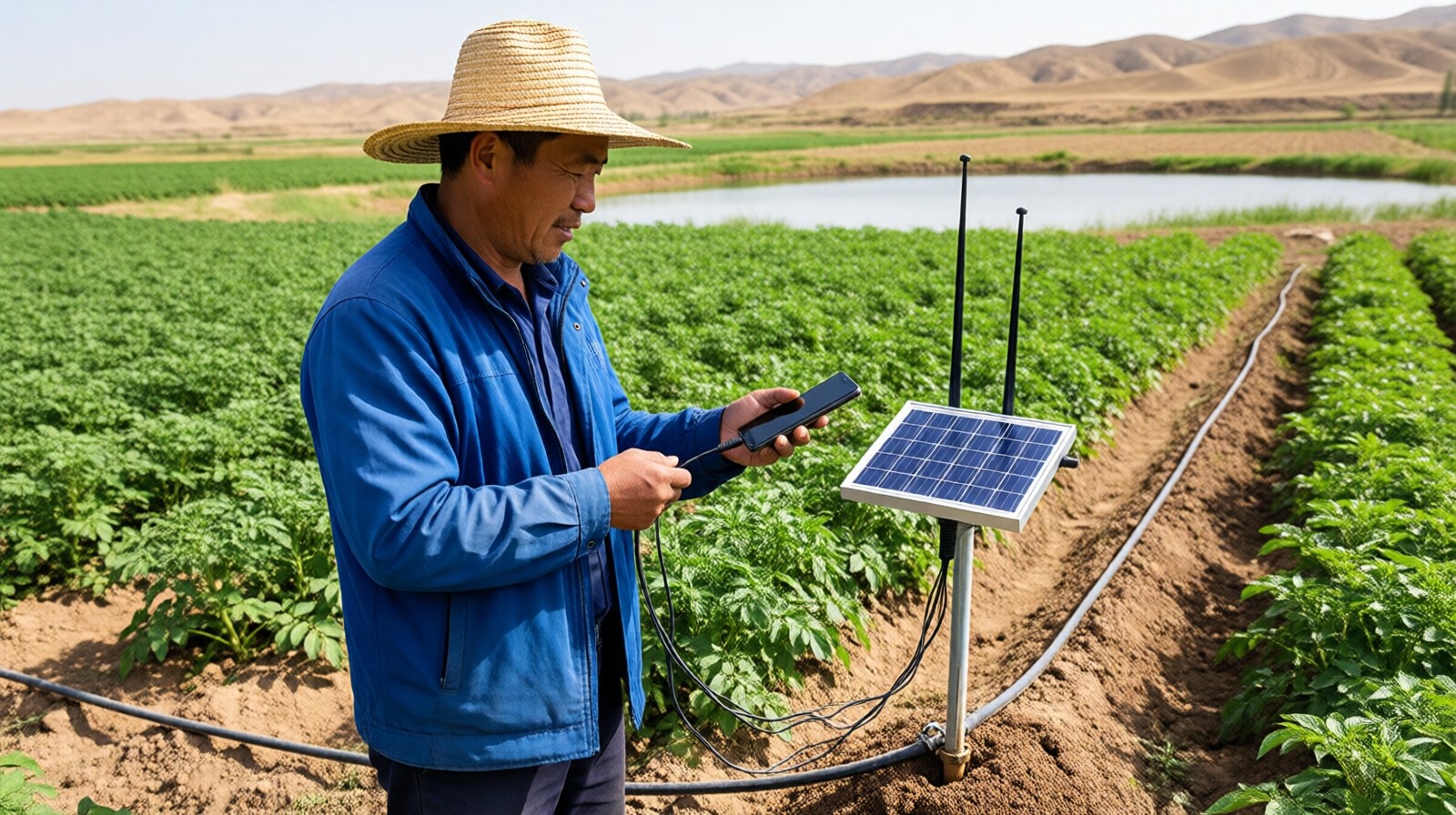
Part of the reason is climate. Gansu’s high altitude and dry air mean fewer crop diseases, and warm days with cool nights help potatoes form starch. But the bigger reason is that water is now managed with far more care. One farmer in his fifties in Liangzhou District told me he used to stand by the canal at night, waiting for his turn to flood the field. Now he opens a phone app when the soil tells him to.
How to Farm Without Much Water
Farming in dry land in China used to mean praying for rain. In Gansu, rain can come in sudden summer storms and then disappear. Traditional flood irrigation wastes water and can wash away nutrients. New methods are more precise.
Drip Irrigation: Water on Demand
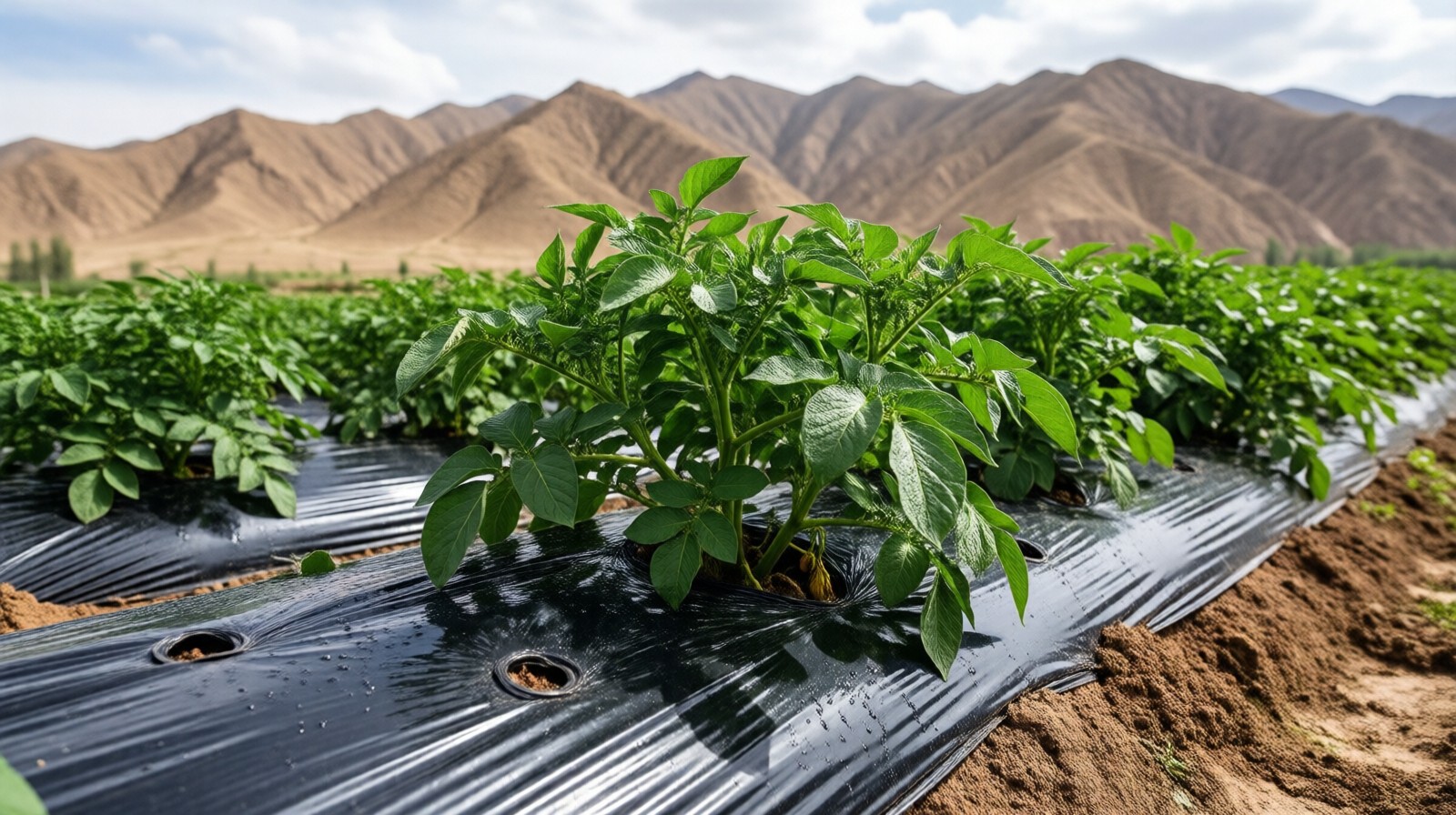
Walk into a modern potato field in Gansu and you will often see black plastic mulch covering the raised beds. Underneath, a thin drip tape runs along each row. Small emitters release water and dissolved fertilizer directly to the roots at intervals. The system can be controlled by a soil moisture sensor or by a farmer using a smartphone. In many demonstration fields, the change is visible: the same crop uses 40 to 60 per cent less water than flood irrigation, and yield often rises. Fertilizer is also used more efficiently, because it goes where the root is.
Plastic Film: A Blanket for the Soil
The black film above the drip tape does more than keep weeds down. It prevents evaporation from the soil surface. On a sunny afternoon in Gansu, unprotected soil can lose an enormous amount of moisture; the film traps that water. It also warms the soil in spring, giving potatoes an earlier start. Farmers punch small holes and drop in seed pieces by hand or with a simple planter. When the plants push through, they get a mini greenhouse effect around their roots.
Film mulching is not new in northwest China. Farmers have used it for decades. The innovation is combining it with drip irrigation and automated control. The result is a system that behaves almost like a greenhouse, but in an open field.
Sensing, Apps and Local Experiment
In recent years, local agricultural bureaus and tech companies have installed wireless soil sensors in pilot fields. The sensors measure humidity and temperature at depths of 20, 40 and 60 centimetres. When a field is dry, the data appears on a screen in a village service centre. Farmers can then open a valve, or let the system do it automatically. “The first time I saw this, I thought it was for young people,” said one farmer in his fifties in Liangzhou District. “Now I am the one using it.”
Not every field has that system. Many plots operate on a simpler model: water pumped from a well into a storage pond, then run through filters and drip tape. Even this is a big step from the old method of releasing a muddy canal across the field.
What the Tech Changes for Farmers
The effect on daily life can be felt in multiple ways. Weeding takes less time because the film blocks most weeds. Fertilizer is applied through the drip line, meaning no one must carry heavy bags into the field. Women and older farmers can manage the irrigation schedule. And because yields are more stable, families may stay on the land longer.
The economic logic is strong. Potatoes sell for more than wheat or corn. With drip irrigation and mulch, a good harvest can be more predictable. In Dingxi, where the soil is often poor and rocky, locals describe potato growing as “planting silver in the ground.”
The Real Limits
It would be misleading to say Gansu has become an oasis. The region remains water-scarce. Some early drip irrigation projects relied too much on groundwater, and the water table fell. Policymakers now want to limit wells and encourage treated wastewater reuse. Plastic film is another problem: when it becomes brittle, pieces stay in the soil. Farmers have to remove and recycle it. Researchers are testing biodegradable films, but cost is still high.
Also, “desert” is not an exact word here. Most potato fields are not in shifting sand dunes. They are on the edge of desertified land or on low-fertility plains that were abandoned for years. Technology can make that land productive, but it cannot create unlimited water. What it does is squeeze more food from every drop.
A Different Kind of Green
The potato fields of Gansu are not a return to some original landscape. They are an engineered landscape. The green comes from a thin plastic layer, a pulse of water, and a crop that responds. For outsiders, the scene looks like a miracle. For the farmers who work it, it is more practical: it is a way to stay on the land with less risk, and a reminder that in a dry place, water must be treated like a valuable resource.
Potatoes in the desert? Not exactly. But in Gansu, technology has turned an unlikely idea into something closer to daily life.
Start the discussion at forum.chinacomes.com