

7:30 AM in Xining: The Market Wakes Up
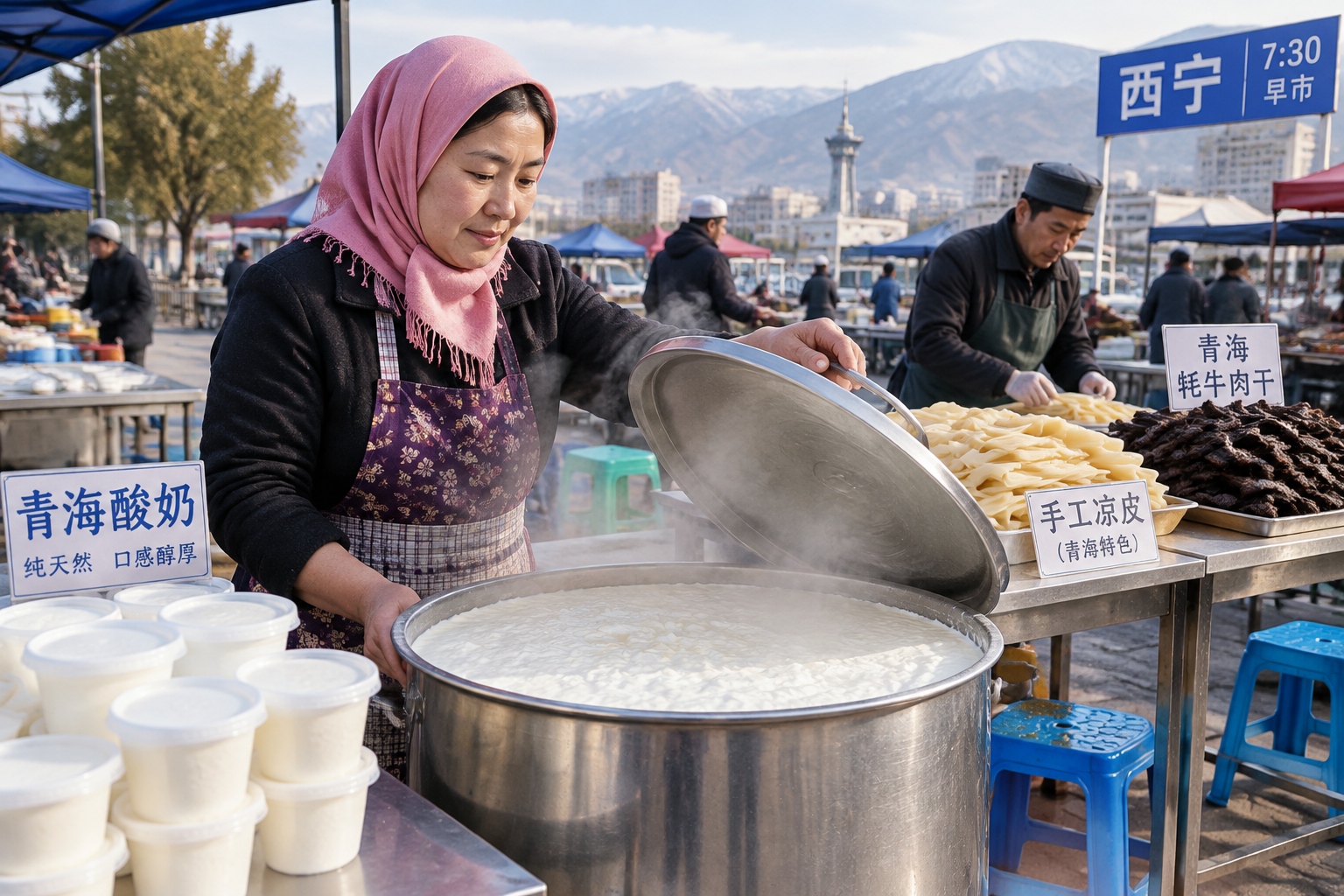
At 7:30 on a Tuesday morning, the air in Xining still carries the chill of the plateau night. Vendors at the Shuijingxiang morning market are already arranging plastic stools and wiping down stainless steel tables. A woman in a faded pink headscarf lifts the lid off a large pot of yogurt. The smell—slightly sour, rich, and clean—drifts into the narrow alley.
Xining sits at about 2,200 meters above sea level. Mornings here are cool even in summer, and the market is where the city’s day begins. Office workers, retirees, and students on their way to class stop for a quick bowl of niangpi—cold steamed noodles in a tangy, garlicky sauce—or a cup of yogurt so thick it coats the spoon.
Yogurt in Xining is not the sweet, thin kind you find in supermarkets. It is set in small ceramic bowls, often topped with a layer of yellow milk fat. A bowl costs three yuan. The vendor, Ms. Ma, has been selling it here for eleven years. “People want it fresh,” she says. “If I make it at 4 AM, it’s gone by 9.”
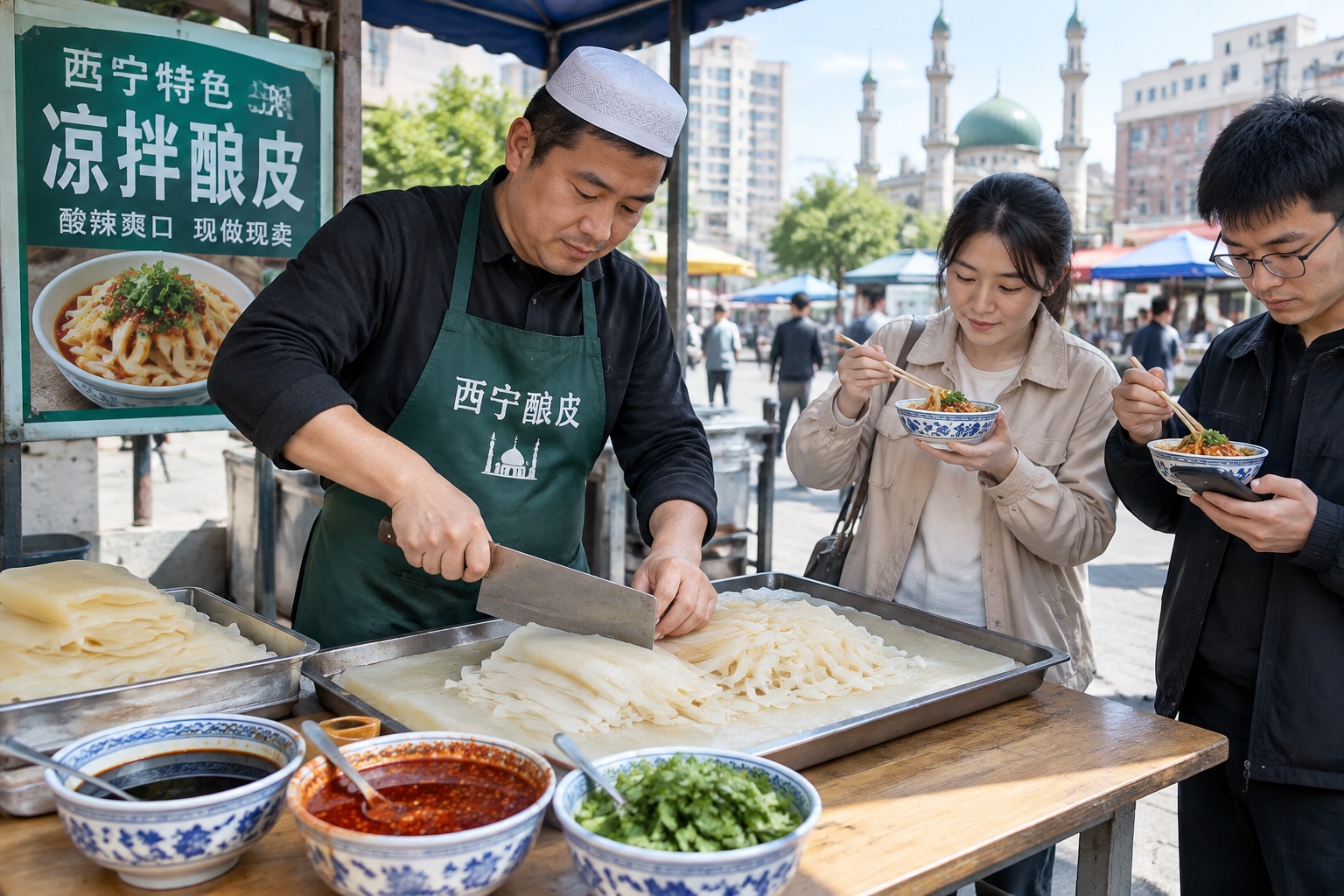
Next to her, a Hui vendor slices niangpi from a wide, flat tray. He uses a large, blunt knife and moves quickly, stacking the ribbons into a bowl, then adding vinegar, chili oil, and a handful of chopped cilantro. The line moves fast. Most customers eat standing up, balancing the bowl in one hand and a phone in the other.
Further down the row, a Tibetan woman sells dried yak meat. The strips are dark, hard, and salty. She cuts small pieces for customers to taste. “From my brother’s herd,” she says, pointing north. “Hainan Prefecture.” The meat is chewy and intense, tasting of grass and wind.
What the Market Tells You About Qinghai
This is a province where Tibetan, Hui, Han, and other ethnic groups have lived side by side for generations. In the market, that shows up in small ways: the yogurt seller speaks Mandarin with a slight Tibetan accent; the niangpi vendor greets a regular in the local dialect; a Han customer asks for extra chili and calls the Tibetan meat seller “ajia”—a term of respect.
Prices are low. A full breakfast—yogurt, niangpi, and a cup of tea—costs about 15 yuan, or just over two dollars. That matters in a city where the average monthly salary is around 6,000 yuan. The morning market is not a tourist attraction. It is where people eat before work.
Two Hours by Car: The Shores of Qinghai Lake
By 10 AM, the sun has burned off the chill. A two-hour drive west of Xining brings you to Qinghai Lake, China’s largest saltwater lake. The water is a deep, clear blue. On the southern shore, near the town of Heimahe, Tibetan herders are moving their yaks across the road.
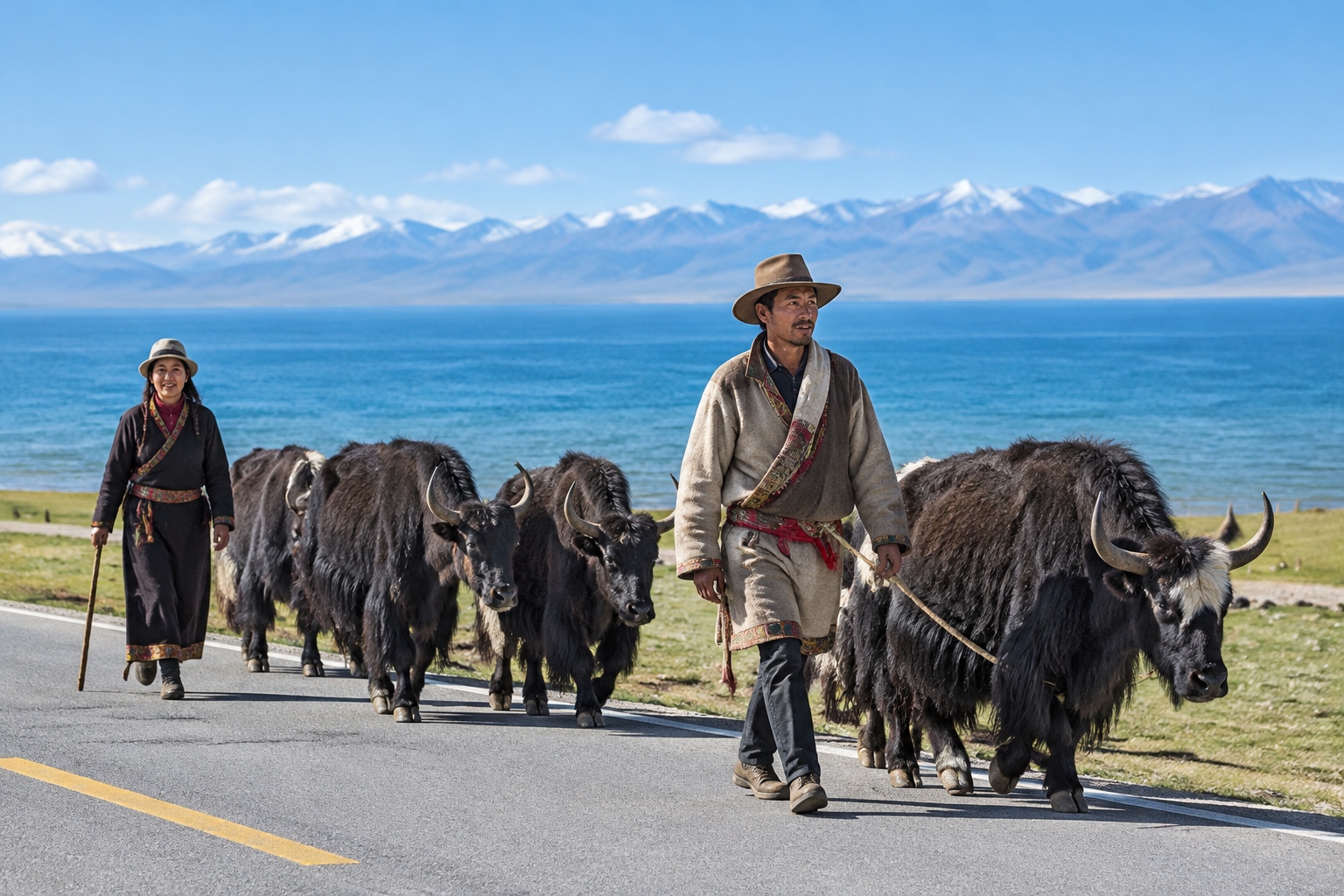
Sonam is 34. He has 120 yaks and 300 sheep. In summer, he grazes them on the high pastures above the lake. In winter, he moves them down to lower ground. “The grass tells you when to move,” he says. “You don’t argue with the grass.”
His family has lived here for generations. But the way they live has changed. Ten years ago, most herders sold milk and meat at local markets. Today, many also rent horses to tourists or run small guesthouses. Sonam’s wife, Dolma, runs a two-room homestay next to their winter house. In July and August, they are fully booked. “Tourists want to ride horses and take photos,” she says. “We give them butter tea and tsampa.”
That income matters. A night in the homestay costs 200 yuan. In a good summer, they earn 30,000 to 40,000 yuan from tourism alone—more than they make from selling yaks.
Cycling the Lake, and the Tension Over Grass
Every July, thousands of cyclists ride the 360-kilometer loop around Qinghai Lake. The annual Tour of Qinghai Lake is one of Asia’s top cycling races. But on ordinary weekends, you see families in rental cars and young people on rented bikes, stopping to take photos of the yellow rapeseed fields that bloom in summer.
That tourism brings money, but it also brings pressure. The lake’s ecosystem is fragile. In the past, overgrazing and rising tourism caused erosion along the shore. Since 2008, the government has paid herders to reduce herd sizes and restore grassland. Sonam receives about 8,000 yuan a year to keep his yaks off certain pastures in summer.
“At first, people didn’t like it,” he says. “But the grass came back. The lake looks better.”
What Stays the Same
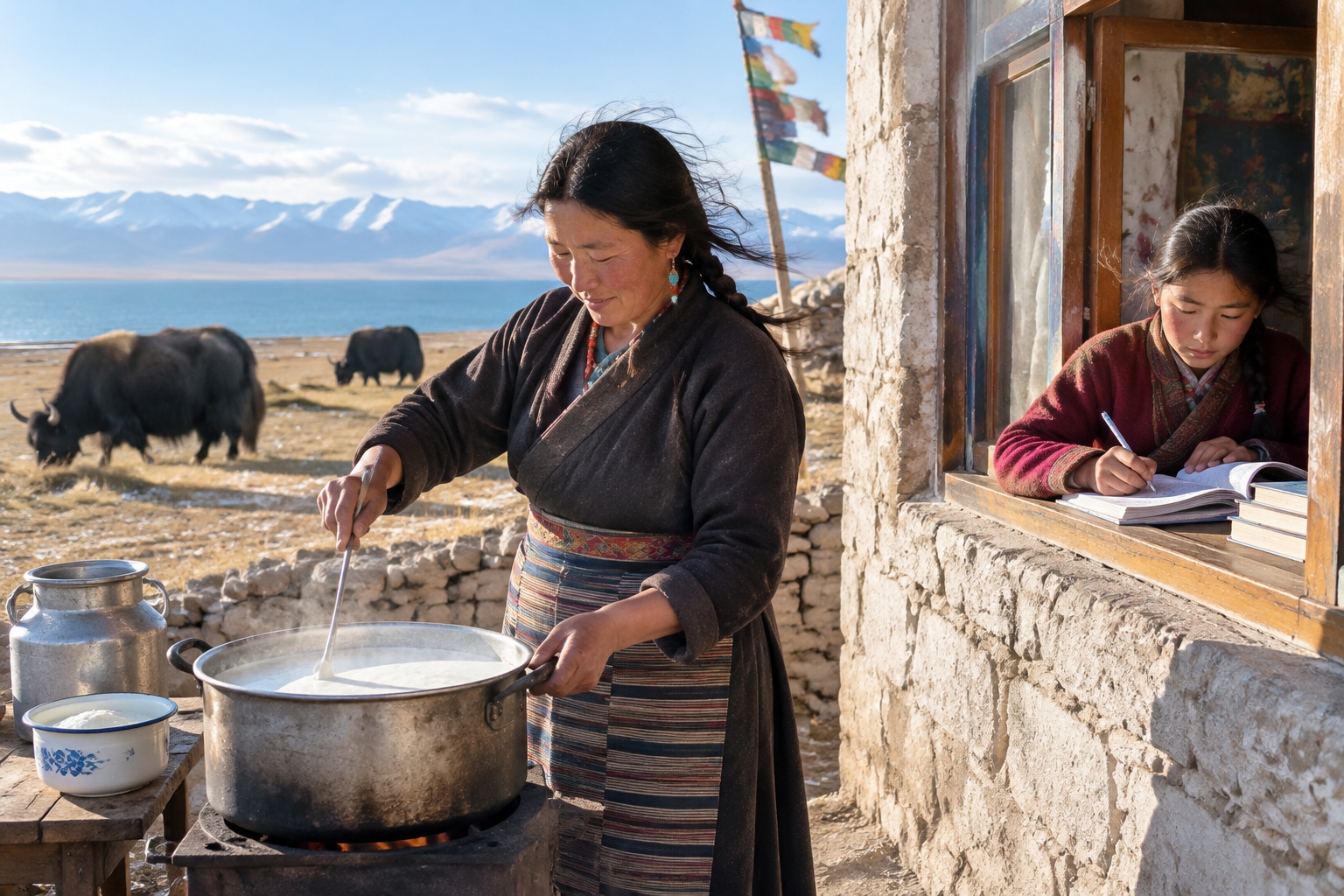
By 6 PM, the wind picks up. Sonam brings the yaks back toward the family’s winter house. Dolma is boiling milk for yogurt. Their daughter, 14, is doing homework by the window. She wants to study medicine in Xining.
In the city, the morning market is long closed. But tomorrow at 7 AM, Ms. Ma will be back, lifting the lid off the yogurt pot. The niangpi vendor will sharpen his knife. The city and the lake, the market and the pasture, are two parts of the same day.
Qinghai is not a postcard. It is a place where people work, adapt, and keep moving—just like the grass tells them to.
Start the discussion at forum.chinacomes.com