
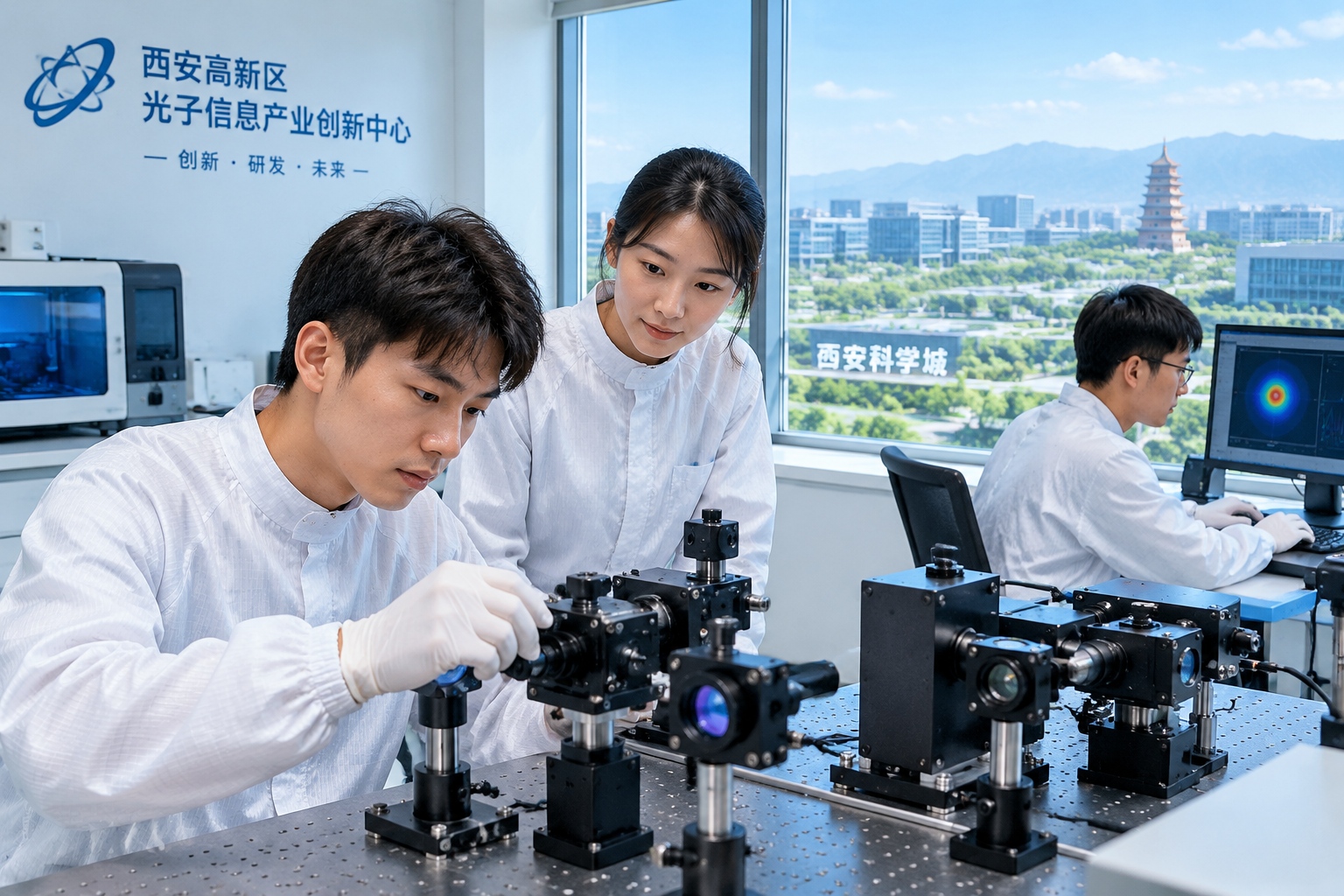

Inside Xi’an’s Deep-Tech Startup Scene
In the western outskirts of Xi’an, inside a strikingly clean room, a 34-year-old engineer named Wang Lei is staring at a photonic chip that could one day improve the vision of self-driving cars. Wang used to work as a researcher at the Xi’an Institute of Optics and Precision Mechanics (XIOPM), one of China’s oldest and most respected optics laboratories. Now he runs his own startup with a handful of former colleagues. It’s a pattern you see again and again across Shaanxi province: scientists becoming founders.
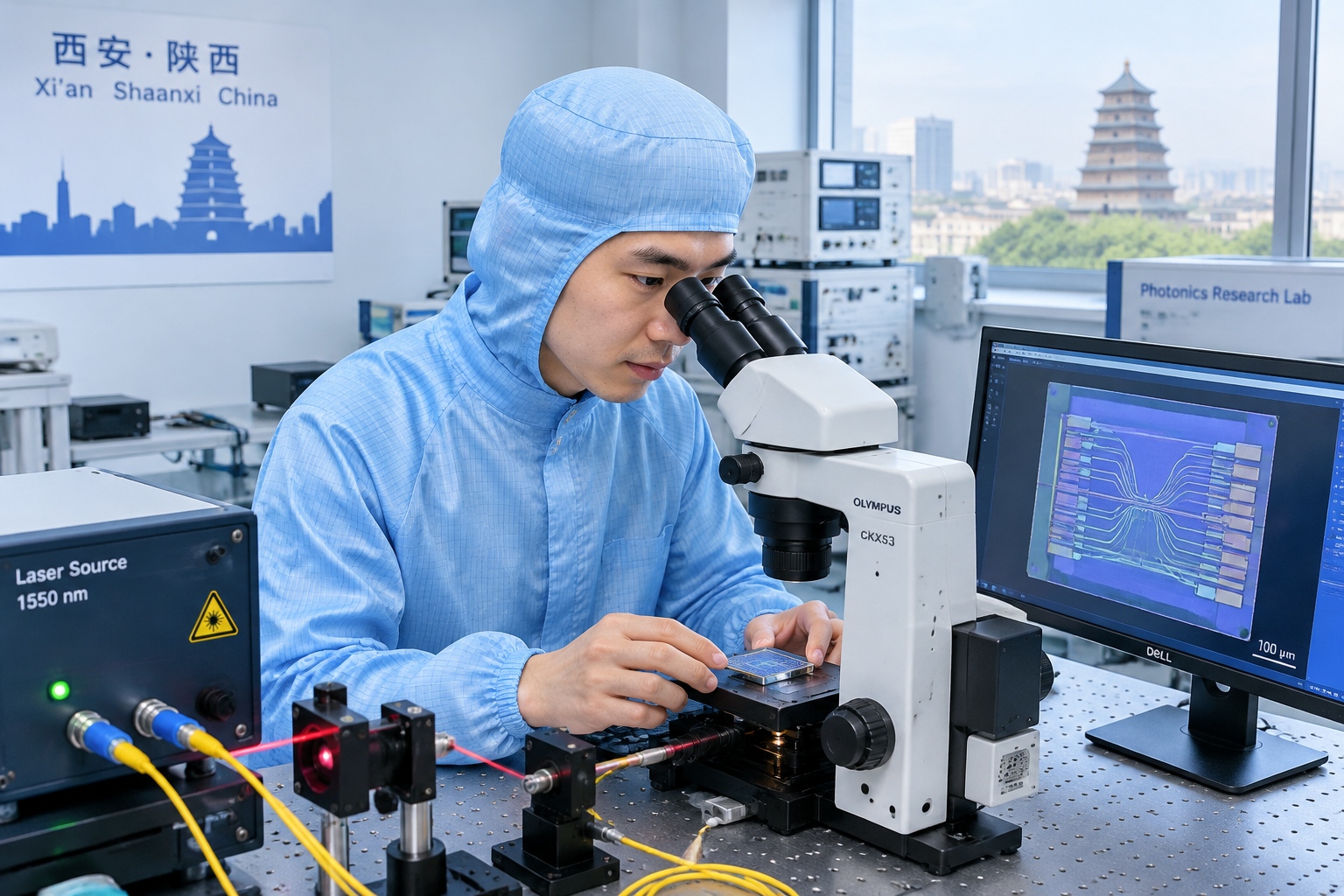
The Chinese term for these ventures is ‘ying ke ji’ or ‘hard tech.’ It describes businesses built on long-cycle scientific breakthroughs, high technical barriers, and serious patent portfolios—photonic chips, advanced aviation materials, hydrogen fuel cells, or satellites, for example. Unlike consumer internet apps, hard-tech startups cannot scale by hiring a few coders and pouring money into marketing. They need rare equipment, patient capital, and years of R&D. And Shaanxi, thanks to its dense network of universities and national laboratories, happens to be a prime place to do this.
A Province Built for Heavy Tech
Xi’an, the provincial capital, is the heart of China’s aerospace and defense research. Northwestern Polytechnical University, Xi’an Jiaotong University, and Xidian University churn out some of the country’s best engineers in materials, electronics, and artificial intelligence. The region also has more than 100 higher-education institutions, giving it a large pool of advanced technical talent. But until around a decade ago, most of that talent lived almost entirely inside academia or large state-run factories.
The tide started turning after 2015, when a team at XIOPM, led by Dr. Mi Lei, championed the concept of ‘hard tech’ as a strategic approach to regional growth. They set up the investment fund CAS Star to help scientists turn their discoveries into companies. Today, CAS Star has backed more than 350 deep-tech firms across China, and a large share are based in Shaanxi.
The Xi’an Model of Spin-offs
The process usually starts with a researcher who has developed a technology and wants to see it built. XIOPM offers lab space, technical support, and early-stage funding in exchange for a modest equity share. This ‘Xi’an model’ lowers the initial risk for faculty and researchers. ‘The key is to make it easy for a scientist to become a founder without leaving the lab,’ explains Li Wei, a former optics researcher who now runs a technology-transfer department at the institute.
The results are tangible. One startup from Xi’an for example, now produces high-power laser components used in cutting metal for cars and ships. It exports to Asia and Europe and employs more than 80 people. Another startup, spun out of Xidian University, makes radar-based systems for farming drones. It has raised millions of dollars from both Chinese and international investors.

The provincial government is also playing an active role. In 2021, it created the Qinchuangyuan Innovation Platform, a network of tech accelerators and service centers designed to help scientists commercialize patents. Qinchuangyuan offers legal advice, patent filing, and even ‘technology broker’ services to connect laboratories with companies that want to license inventions.
How Growth Feels on the Ground
Walking through Xi’an’s new science parks, you notice the average age is early 30s. Office coffee machines are always hot. Small companies share 3D printers and test equipment. Many founders say they were drawn back to Xi’an by a combination of a lower cost of living and bigger institutional support. ‘In Shenzhen, I could raise money easily, but building deep tech is expensive there,’ says one founder who moved from the coast. ‘Here, I can build something substantial with a fraction of the budget.’
Still, challenges remain. Shaanxi is landlocked, and its tech companies often depend on supply chains that end in Guangdong or Shanghai. Global investors and customers are less familiar with the region’s capabilities. Financing is more conservative than in China’s coastal capitals, and many early-stage ventures rely heavily on government-backed funds. But the improvement is steady. In recent years, Shaanxi’s technology contract value has grown at a double-digit rate, a sign that more inventions are crossing into the market.
The Next Chapter Under the Terracotta Haze
For the outside world, Xi’an still sells itself as the home of ancient China—the Terracotta Warriors, the old city walls, the Muslim Quarter. But inside its ever-growing corridors of glass and steel, another story is being written. Hard tech is not a slogan in Shaanxi; it’s a system of labs, funds, and startups. It is still young, and not every venture will succeed. But the direction is unmistakable.
As the day ends, Wang Lei walks back to his desk and pulls up an image of the photonic chip he’s developing. ‘This chip might not be famous like the Terracotta Warriors,’ he jokes, ‘but it will be seen in every city of the future — on roads, in power grids, and in spacecrafts.’
Start the discussion at forum.chinacomes.com