

After Dark in Yulin
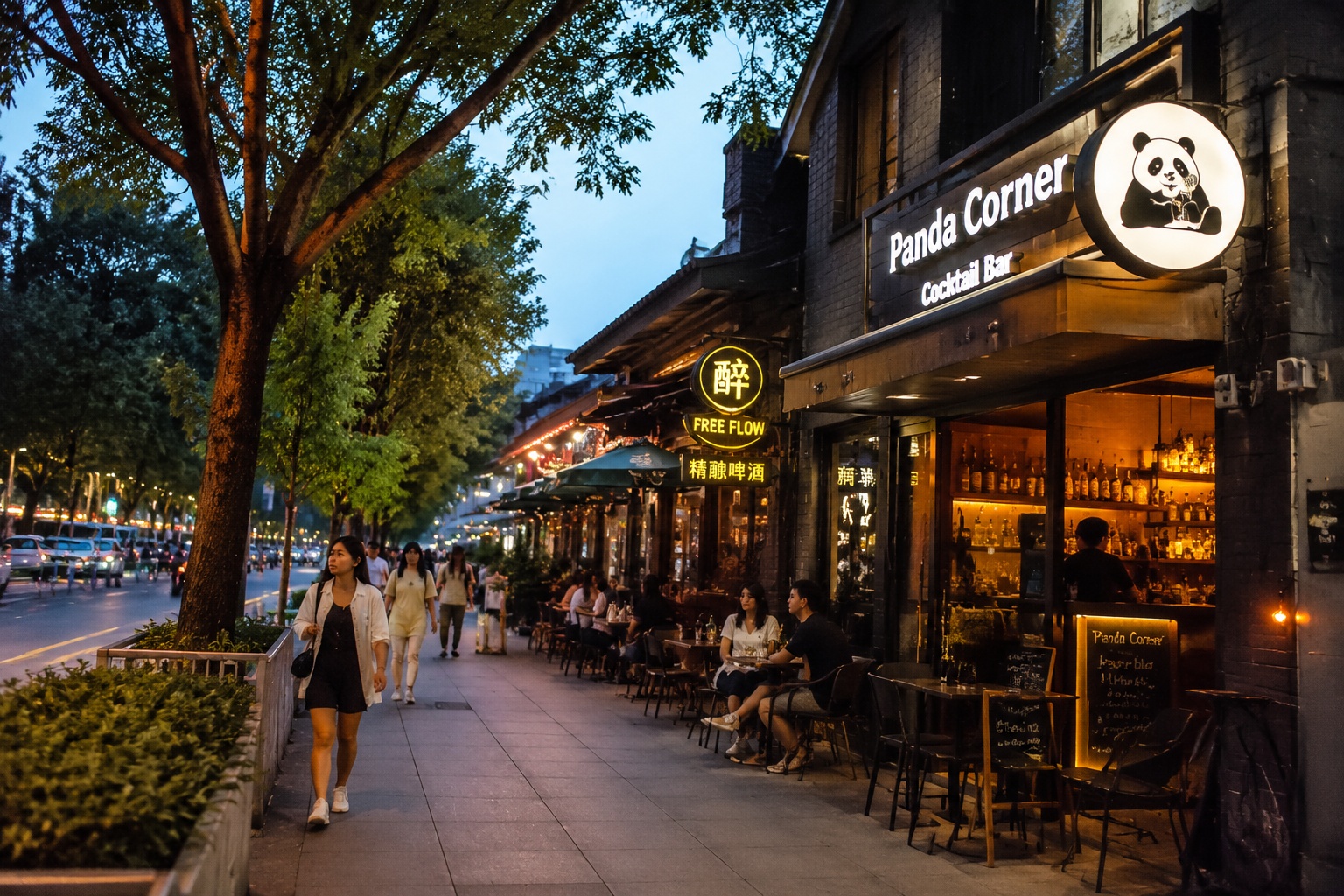
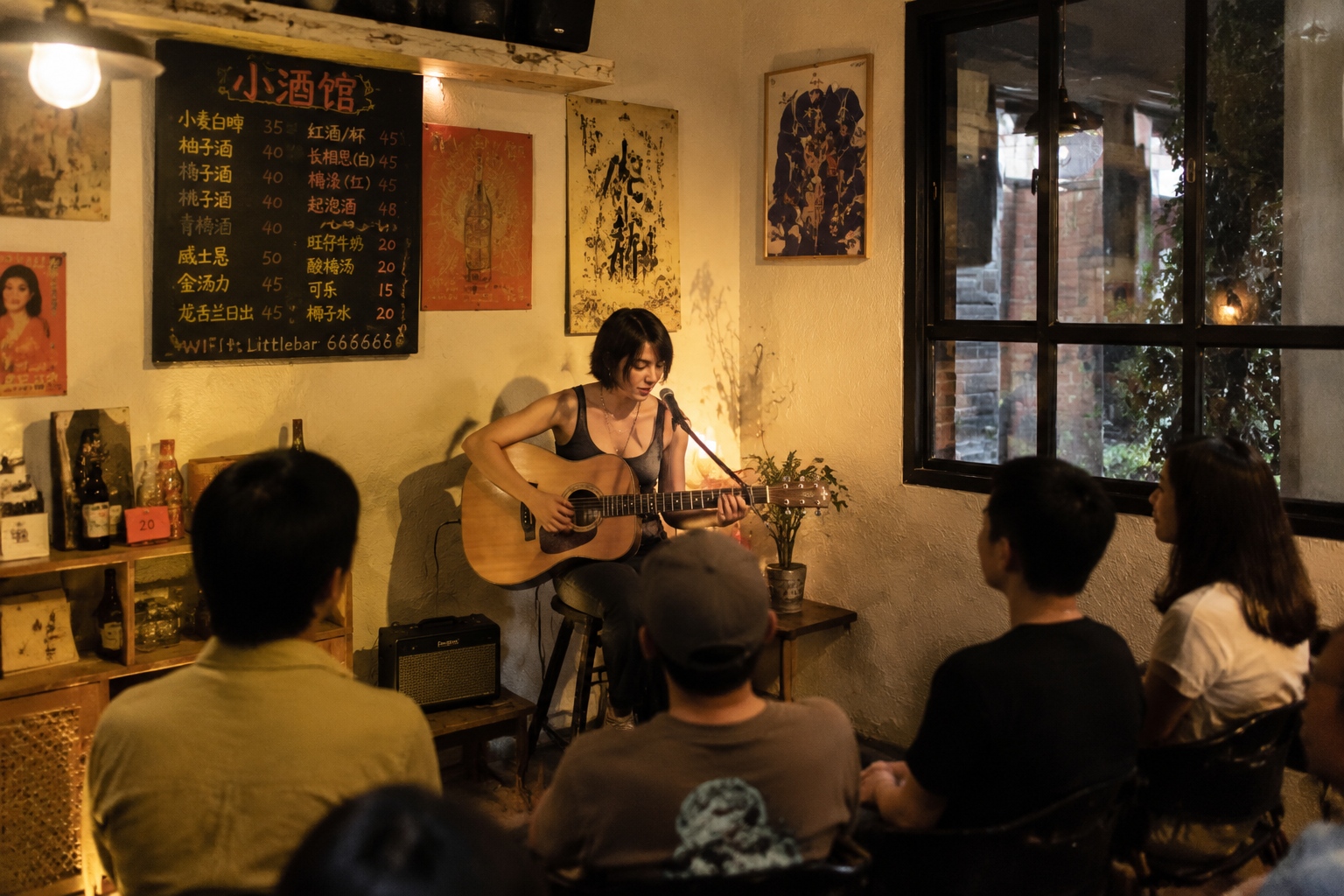
It’s 10 pm on a Tuesday, and the city of Chengdu is not slowing down. In Yulin, a leafy residential district that earned fame as the backdrop of singer Zhao Lei’s hit song “Chengdu,” the streets are warm with a kind of relaxed energy. Outside a small bar called “Evening,” three friends are sharing a plate of spicy rabbit heads and arguing about whether the beer tastes better in glass or in a paper cup. Inside, a young woman plays an acoustic guitar to fourteen listeners. It’s humid, a little noisy, and absolutely alive.
What Is the Night Economy Anyway?
Chinese cities have embraced the phrase “night economy” (夜经济) in recent years, but it’s not just about neon signs and nightclubs. In Chengdu, the night economy is a layered ecosystem of small businesses operating after sunset. It includes tiny bars tucked into former apartments, food stalls that open at dusk, tea houses that serve into the night, even bookstores that host readings until midnight. These are not elite venues; they are everyday spaces for ordinary people to meet, eat, and unwind.
Small Bars: A City of Personal Hangouts
Walk around the backstreets of Chengdu and you’ll see the “小酒馆” (xiǎo jiǔguǎn), literally “small wine house.” These bars are usually small in size—ten to twenty seats—but huge in personality. Many are run by former musicians, travelers, or even ex-tech workers who decided that pouring a craft beer for a neighbor is better than writing code in Shenzhen.
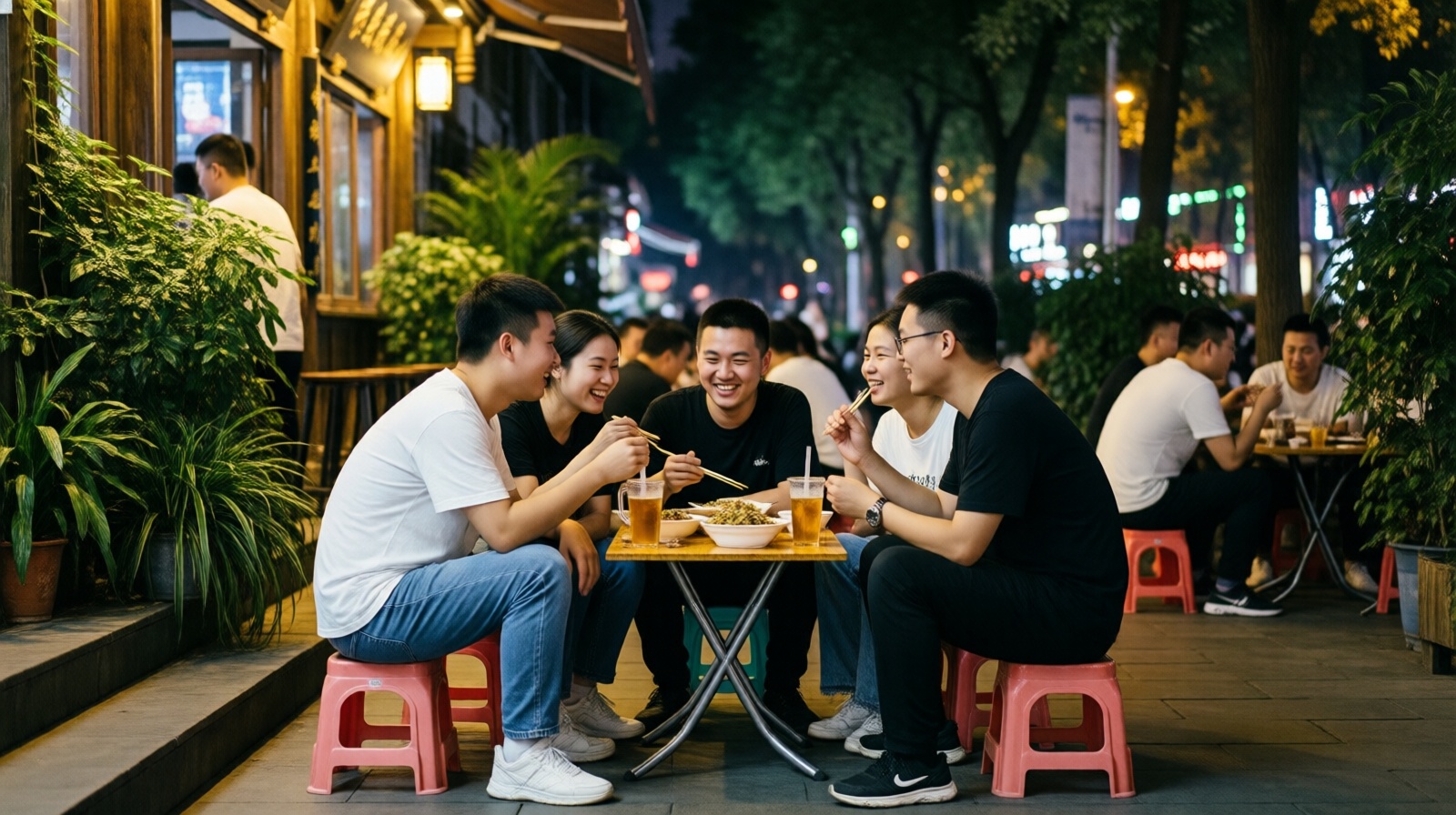
What makes them different from, say, a typical pub in London or a shisha lounge in Beirut? The atmosphere is both casual and collective. You don’t dress up. You often sit outside on low plastic stools, share a table with strangers, and order from a menu that doubles as a drawing. There’s no doorman, no dress code, and absolutely no compulsion to spend a lot. A drink costs 20 to 35 yuan—around $3 to $5.
This style didn’t appear overnight. Chengdu has always been a city of leisure, famous for its teahouses and abundant green spaces. The small bar is a natural descendant of that teahouse culture, updated for a younger crowd. It’s also a response to the city’s growing creative class, who want a third place between work and home—a place to feel like themselves.
Night Markets: Smell, Taste, and the Hum of a City
If you want to see the night economy’s energy, skip the bars and head straight to a food street like 建设路 (Construction Road) near the University of Electronic Science and Technology. The neon signs are not fancy; some are just a couple of bulbs around a stall. But the air is dense with the scent of Sichuan pepper, grilled chicken, and sizzling oil. It’s a form of theater.
On any given night, you’ll find students comparing noodle bowls, office workers grabbing late dinners, and families walking with skewers and cups of “bingfen” (a sweet jelly dessert that is a little misleading because the first bite is spicy). The crowd moves slowly, stopping to take photos of a griller’s technique or to chat with a vendor.
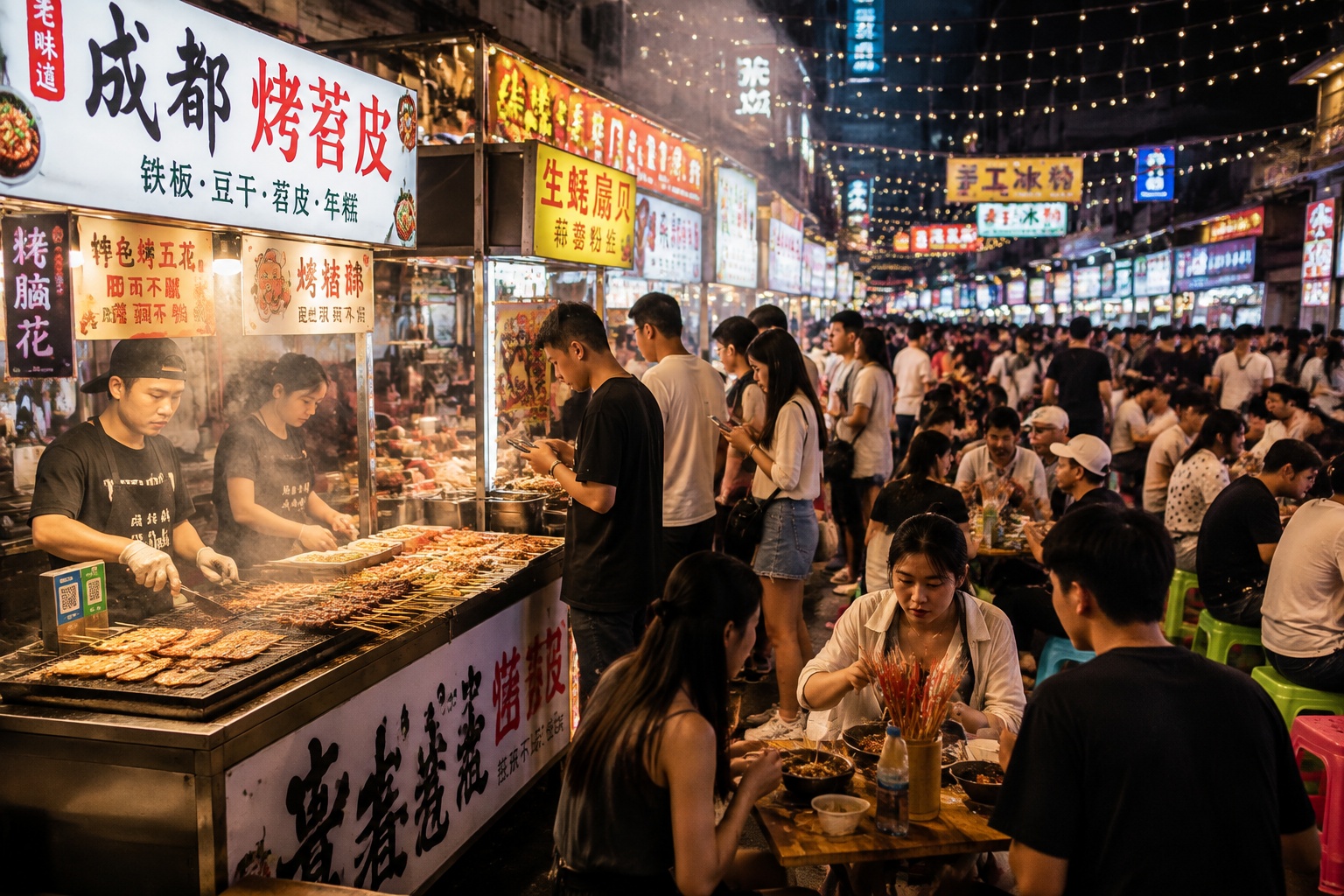
Night markets are also places of economic mobility. Many stall owners are newcomers to the city, using cheap rents to test a business idea. According to a 2023 report from a Chengdu business association, the city’s night market and food street sector created tens of thousands of jobs, many of them flexible. For students and part-timers, a few hours behind a hot grill can earn a decent supplement to their income.
Why Young People in Chengdu Love the Night
To understand the night economy’s appeal, you have to look at how Chinese Gen Z lives. Most apartments are small, and many young people share with roommates or live in rental housing that doesn’t invite hosting. The city—the street—becomes their living room. And because night-time venues are cheap and casual, they can socialize without breaking the bank.
Then there’s social media. A small bar with mismatched chairs and a cat on a shelf is more “Instagrammable” than a gold-plated club. The app Xiaohongshu, also known as Little Red Book, is filled with reviews and photos of Chengdu’s hidden bars. A single viral post can turn a quiet alley into a queue. Owners are aware of this, so they design their spaces with photo corners and signature drinks. This isn’t just commercialism; it’s how small businesses survive in a digital age.
From Policy Push to Public Habit
China’s central government began officially promoting the night economy around 2019 as a way to boost urban consumption. Chengdu responded with concrete measures: extended metro schedules on weekends, subsidies for street-light renovations, and a more relaxed permitting process for outdoor seating. These policies helped “enable” the night economy, but they didn’t create the desire for it. That desire came from locals who wanted to go outside after dinner.
Still, the mix isn’t all smooth. Elderly residents complain about noise. Environmental agencies worry about waste. Small bars sometimes fold when a landlord doubles the rent. There was a famous case in 2021 when a popular night market in the western part of the city was paused for three months to improve drainage and reduce complaints. It reopened with better planning and a stronger identity.
These challenges show that a night economy is not a magic trick but a process of constant adjustment. The city and its people are negotiating how to be lively without being wild.
One Owner’s Year: From Tech to Tonic
Let me tell you about Chen Yu, who left a job in an e-commerce company in Shenzhen to open a 30-square-meter bar in Yulin. When I visited her last month, she was pouring hibiscus tonic into a copper cup. “I couldn’t find a bar where I felt at home,” she said. “So I started one.” Six months in, her bar has a steady base of regulars, including a retired doctor who comes for the quiet and a group of DJs from a nearby venue.
She says the biggest surprise wasn’t the income—it was the friendships. “People come in stressed, and they leave relaxed. It’s not that the drink is magical. It’s that we’re surrounded by other people in the same life stage.” Her rent is moderate, but her hours are long. “I don’t have a day off. But it’s worth it. This is what urban life should feel like.”
How to Experience Chengdu’s Night Economy Like a Local
If you are planning a trip to Chengdu, here is a simple field guide. Start with a late dinner around 7 pm, then move to a small bar in the Yulin area for a drink and maybe some live music. After that, go to a food street like 建设路 or the more tourist-friendly Jinli night market for a walking snack. Finally, end the night at a 24-hour teahouse if you still have energy.
The key is to adopt the local mantra: “Man”—which in the local dialect means “slow.” Don’t rush from place to place. Sit longer, talk more, and let the night decide.
More Than a Trend
Chengdu’s night economy is not a fad. It’s a reflection of the city’s identity: relaxed, collective, and deeply human. At a time when many cities feel divided or rushed, Chengdu offers an alternative, where a night out means anything from sharing a barbecue with a stranger to discovering a local musician’s first song.
Understanding the night economy is one of the simplest ways to understand contemporary China. It’s not about silicon chips or high-speed trains. It’s about people, after sunset, finding each other.
Start the discussion at forum.chinacomes.com