
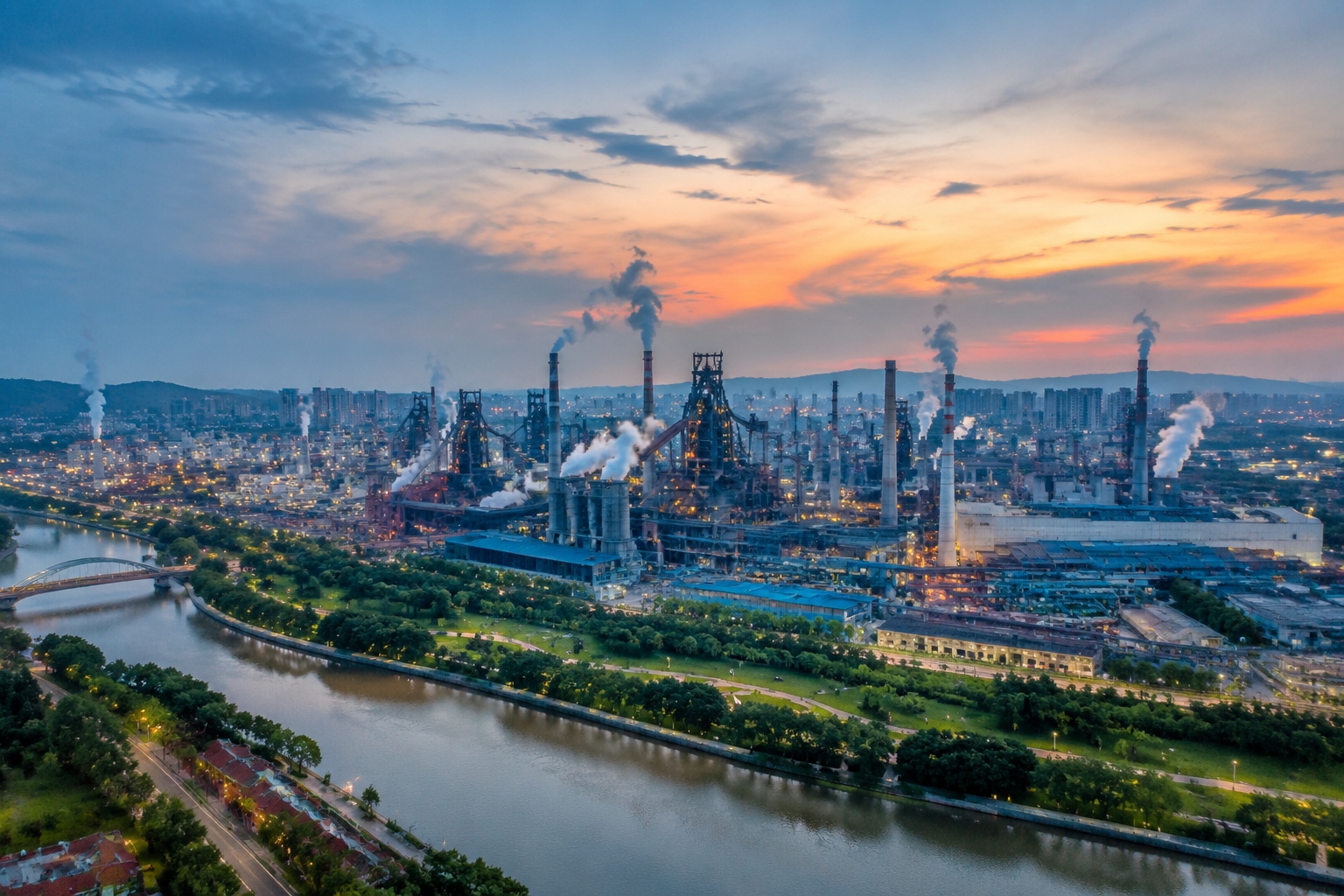

A Steel City You Can See from Space
In 2023, the city of Tangshan produced roughly 120 million tonnes of crude steel. To put that in perspective, that is more than the entire annual output of Germany, the world’s sixth-largest steel producer. If Tangshan were a country, it would rank among the top five steelmakers on the planet. It also means about one in every seven tonnes of steel made in China now comes from this single city on the Bohai Bay coast.
But you’ve probably heard a more dramatic number: one in three. The ‘one in three’ saying has been around for years, often used to describe Hebei province, the region around Beijing that Tangshan belongs to. Yet Tangshan alone actually accounts for roughly 14 percent of China’s output—still astonishing, but not quite a third. Still, the exaggeration reveals something real: Tangshan is the undeniable epicenter of Chinese heavy industry, a city that has turned iron ore and coal into the skeleton of modern China.
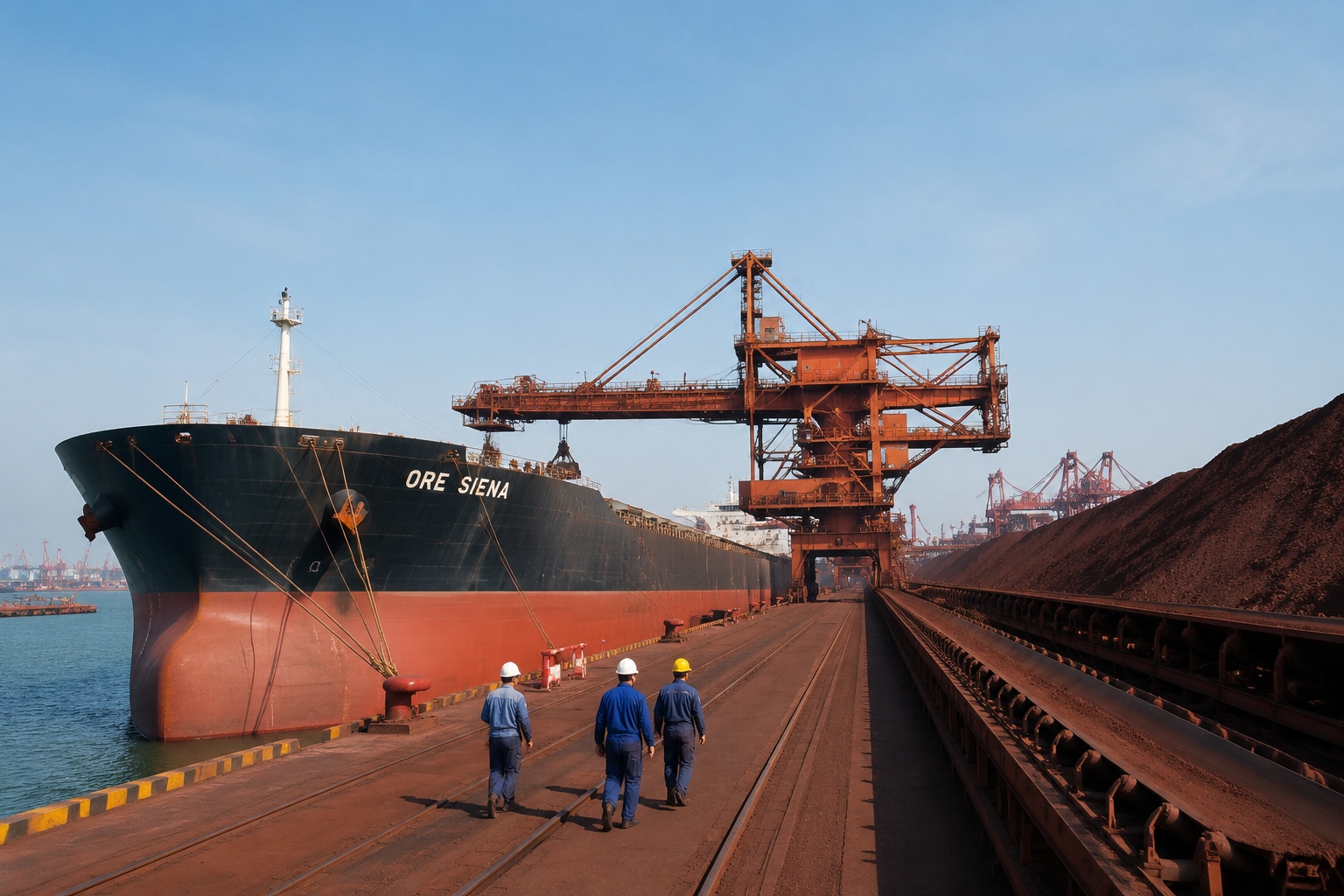
Why Tangshan? Geography, Coal, Ore, and a Deep-Water Port
Tangshan’s steel story didn’t start with a government plan. It started with geology. The city sits on one of China’s richest iron ore reserves, near coal fields that have supplied fuel for over a century. When China began its rapid industrialization in the 1980s and 1990s, nearby entrepreneurs and state enterprises both saw the logic: bring together iron ore, coal, and a deep-water port at Caofeidian to ship the finished steel directly to shipping lanes across the Pacific.
That combination made Tangshan remarkably competitive. In the 1990s, local governments—especially in smaller towns like Qian’an and Luanzhou—encouraged the building of small steel mills. Some of these were rough, polluting operations, but they were also fast and cheap. By the early 2000s, hundreds of active mills dotted the landscape. When China joined the World Trade Organization and the global construction boom began, Tangshan was ready to supply the world with rebar, wire rod, and structural steel.
The numbers tell the story. In 2001, Tangshan produced around 20 million tonnes of steel. A decade later, that figure had quadrupled. By 2020, the city was making more steel every year than the entire United States. Steel from Tangshan built subways in Shanghai, bridges in Southeast Asia, and pipelines in the Middle East.
The Human Scale: Workers, Engineers, and the Steel Lifestyle
Walk through any Tangshan steel town and you’ll feel the industry in your bones. In Qian’an county, the streets are lined with shops selling flame-resistant overalls, work safety shoes, and earplugs. Many families have at least one member who works in a mill. There’s a social rhythm that revolves around shift changes, the clang of metal, and the distant orange glow of furnaces.
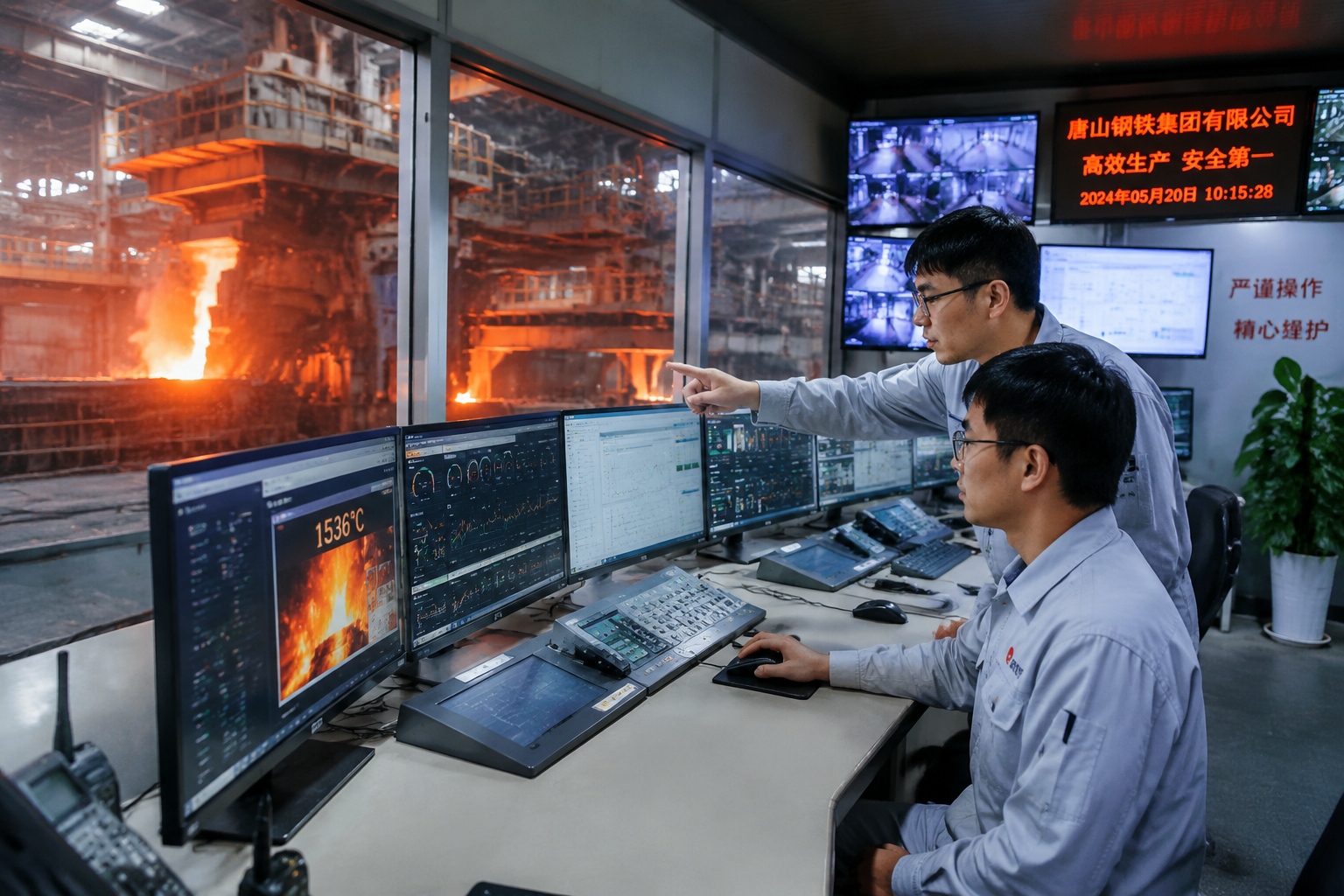
But the industrial character is evolving. New large-scale plants, like those at Caofeidian district, are highly automated. A single operator may monitor an entire blast furnace from a control room filled with screens. Workers now need computer literacy more than physical strength. Mill managers often recruit from vocational colleges that teach metallurgy and automation. The rough, makeshift steel culture of the 1990s is gradually giving way to a cleaner, more professional industrial workforce.
That shift mirrors Tangshan’s changing role in China’s economy. The city’s steel is no longer just for building homes. It’s engineered for high-speed rail, electric vehicles, and wind turbines. The demand for low-alloy, high-strength steel has pushed local mills to invest in advanced casting and rolling lines. Some of these are genuinely world-class.
From ‘Steel Stacks’ to ‘Green Steel’: Tangshan’s Struggle to Reinvent Itself
For years, the price of Tangshan’s steel was measured partly in air pollution. In 2017, the city was frequently among China’s most polluted places. That changed when Beijing, eager to clear its skies, ordered heavy industry in the surrounding region to cut emissions. Tangshan became a laboratory for environmental enforcement.
The results have been tangible. Since 2018, dozens of small mills have been shut down or merged. The surviving plants have installed desulfurization units, electric arc furnaces, and ultra-low emission systems. The average fine particle concentration in Tangshan’s air has dropped by roughly half since 2015, according to local environmental data. It’s still not a clean city by global standards, but the change is visible: the mountain-like slag heaps have been capped and landscaped, and new plants use scrubbers that turn a once-toxic waste into gypsum for construction.
More importantly, the steel itself is getting greener. In 2022, a major mill in Caofeidian started producing hydrogen-based direct reduced iron (DRI), a trial process that can eventually replace coal in the reduction of iron ore. This is still small-scale, but it makes Tangshan one of the few places in the world where green steel is more than a PowerPoint pitch. With the cost of hydrogen falling, a cleaner steelmaking path may one day turn the city from a pollution poster child into a model for the global industry.
What Tangshan’s Steel Tells Us About China’s Industrial Engine
Outside observers often see China’s heavy industry as a monolithic, state-driven machine. Tangshan complicates that picture. Yes, the largest mills are state-linked, but the sector is full of private entrepreneurs who built their fortunes on rapid, market-driven construction demand. Local officials and business owners constantly negotiate over land, environmental permits, and taxation, creating a dynamic that’s more like a high-stakes business corridor than a central plan.
This is also why the city has become a barometer for China’s economic health. When Chinese property sales slump, steel prices in Tangshan fall, and the implications ripple across the global market—affecting iron ore prices in Australia and Brazil, and the sale of Chinese steel in Africa, Southeast Asia, and Europe. Traders around the world track ‘Tangshan steel’ prices as a key indicator of Chinese demand.
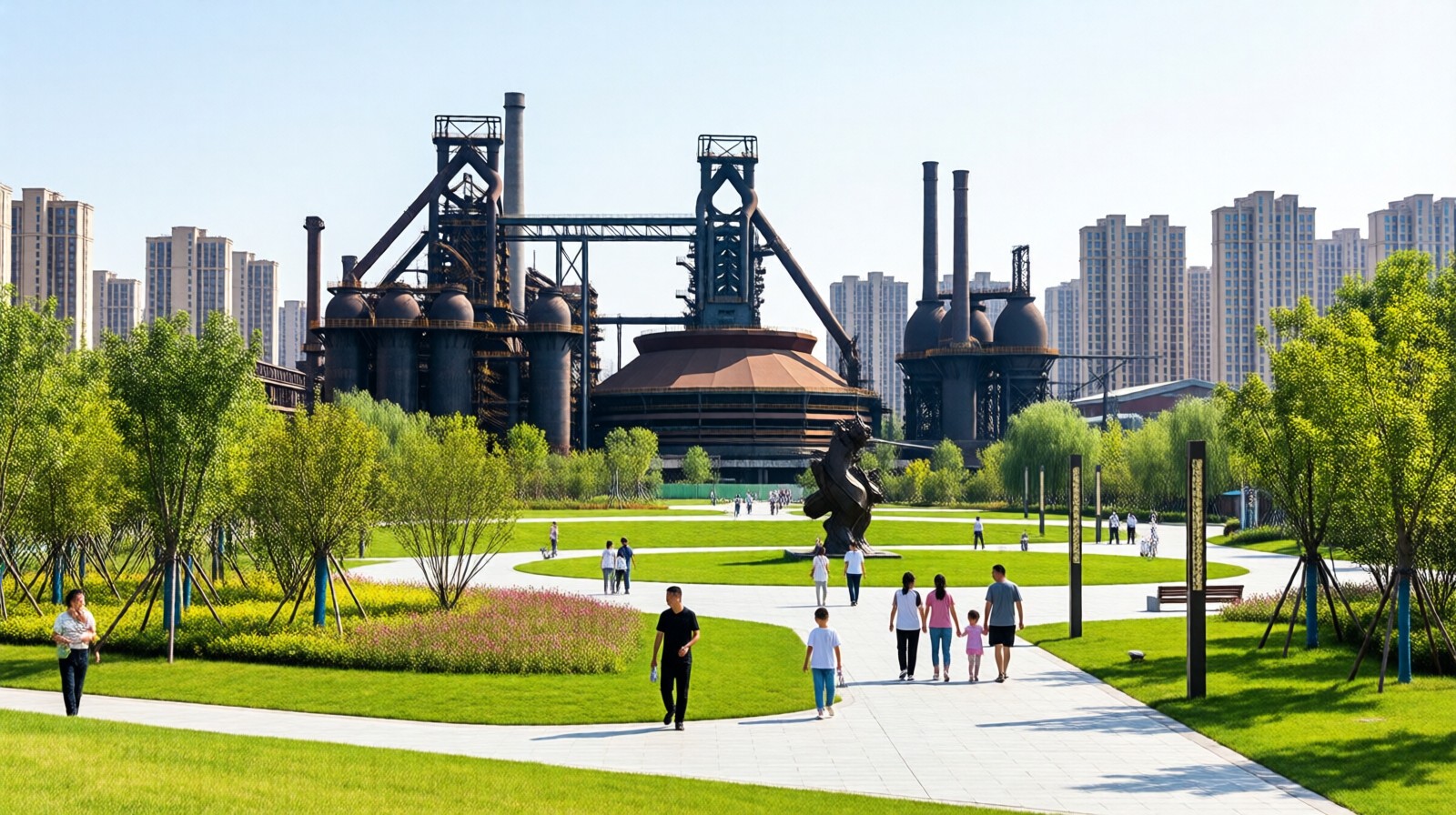
Today, Tangshan still faces deep challenges. The industry employs fewer people than it did a decade ago, and the neighborhoods that depended on small mills are struggling to adapt. But the city is also leveraging its steel wealth to diversify into robotics, logistics, and even tourism—including a recent effort to turn some disused mill sites into museums and public parks.
Conclusion: Steel Is Still Here, but It Is Changing
The ‘one in three’ claim may be a myth, but it points to a deeper truth: Tangshan is a city that China—and the world—cannot quite do without. Steel from Tangshan is in the cars we drive, the hospitals we stand in, and the bridges we cross. As the industry transforms, so does the city. For a place whose modern identity was forged in fire, the next chapter may be written with hydrogen, electric furnaces, and cleaner air. That would be a new kind of steel miracle—one measured not just in tonnes, but in breathable skies and lasting jobs.
And the next time you hear that one-in-three statistic, you’ll know the real story: it’s not the whole truth, but it’s not pure fiction either. It’s just how the world talks about a city that still, more than any other, makes the metal that builds our shared future.
Start the discussion at forum.chinacomes.com