

A plane with no cockpit
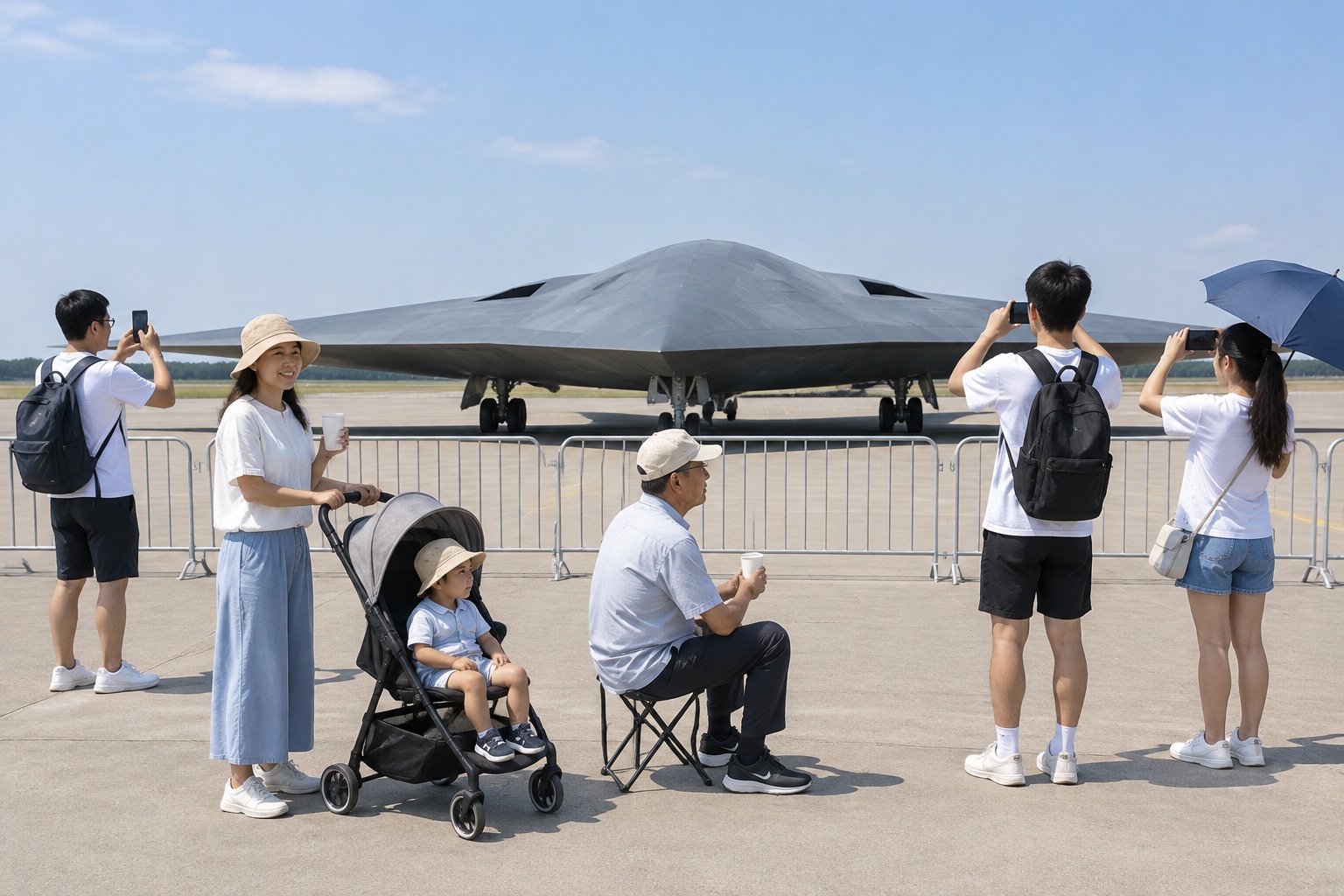
At Airshow China in Zhuhai, the queue in front of the static displays moves at the pace of people taking photographs. Families push strollers. Retired men carry folding stools and thermoses. Teenagers hold their phones above their heads to film over the crowd. Behind a low barrier sits a matte grey aircraft with no cockpit, no windows and no obvious front or back — just a smooth, angular wing resting on its landing gear.
The question visitors ask most often is not about range or payload. It is: where does the pilot sit?
Nowhere. This is the Attack-11, an uncrewed flying-wing aircraft that Chinese state media now calls by that name and that first appeared in public as the GJ-11 “Sharp Sword.” No seat, no canopy, no life support, because nobody is meant to be inside. The design goal is narrow and old: be hard to see on radar, and be something you can lose without a funeral.
Why stealth aircraft look like this
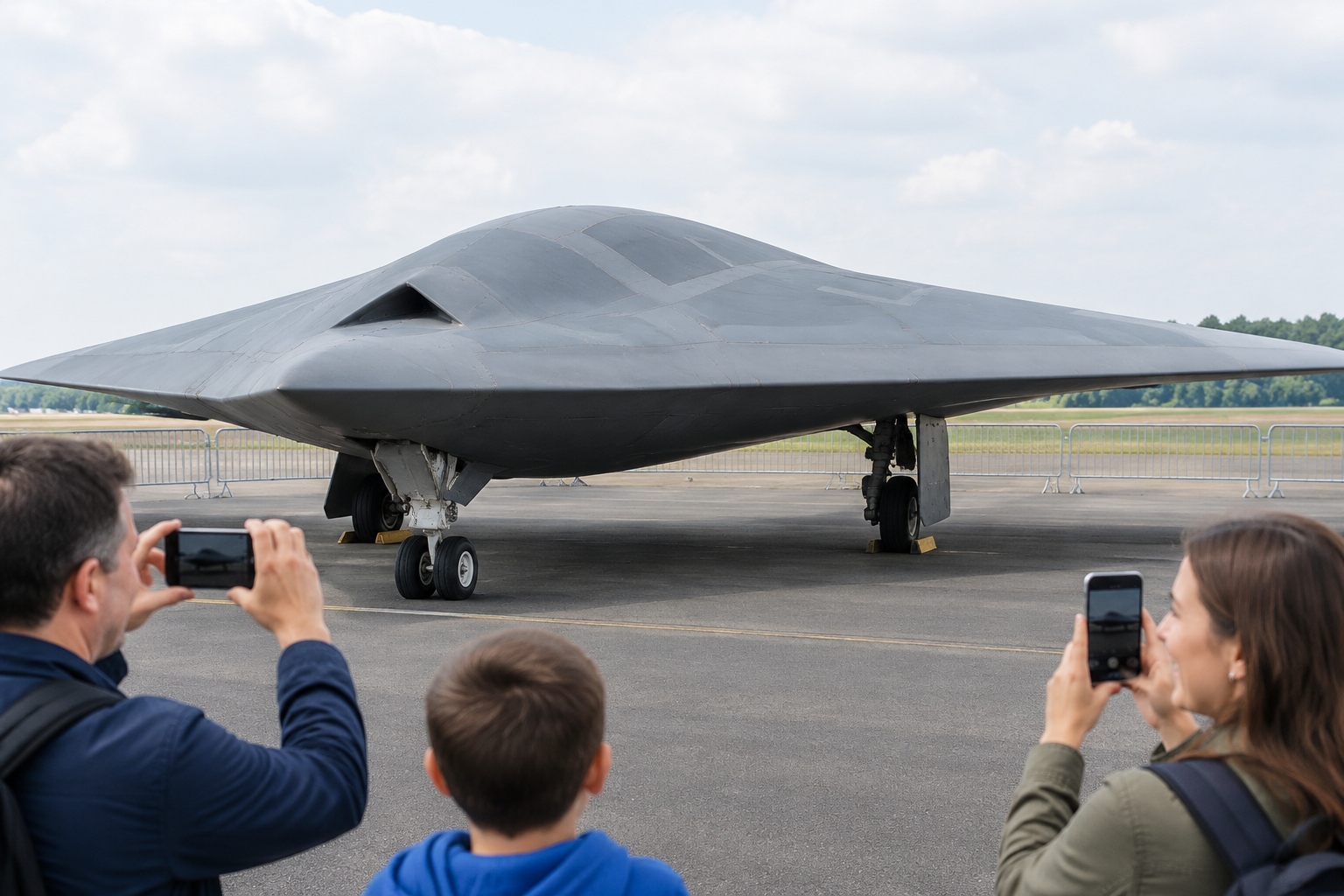
A conventional fighter is a stack of edges. Vertical tail, horizontal tail, canopy, pylons, missile fins — each one catches radar energy and bounces some of it back at the transmitter. A flying wing deletes most of them. The tail disappears, the engines sit inside the body, the air intake moves to the upper back, and weapons go into an internal bay instead of hanging under the wings. What is left is a shape that tends to deflect radar waves away from the receiver rather than straight back at it. The same reasoning produced the B-2, the X-47B and Europe’s nEUROn.
The cost is control. Without a tail, a flying wing is aerodynamically unstable — it wants to pitch and yaw on its own. Keeping it in the air depends on flight-control computers making small corrections many times a second. A machine with this layout is therefore less a model aeroplane than a software project with wings, which is one reason only a handful of countries have flown one in public.
The “New Three Musketeers,” explained
For years, this shape was something you saw parked. Then, on 3 September 2025, it flew over Beijing.
At the parade marking the 80th anniversary of the end of the Second World War, the aerial echelons included J-20 stealth fighters, twin-seat J-16 multirole fighters and the Attack-11, according to state broadcaster CCTV and coverage in Chinese military media. Commentators quickly gave the trio a nickname: the “new three musketeers” (新三剑客).
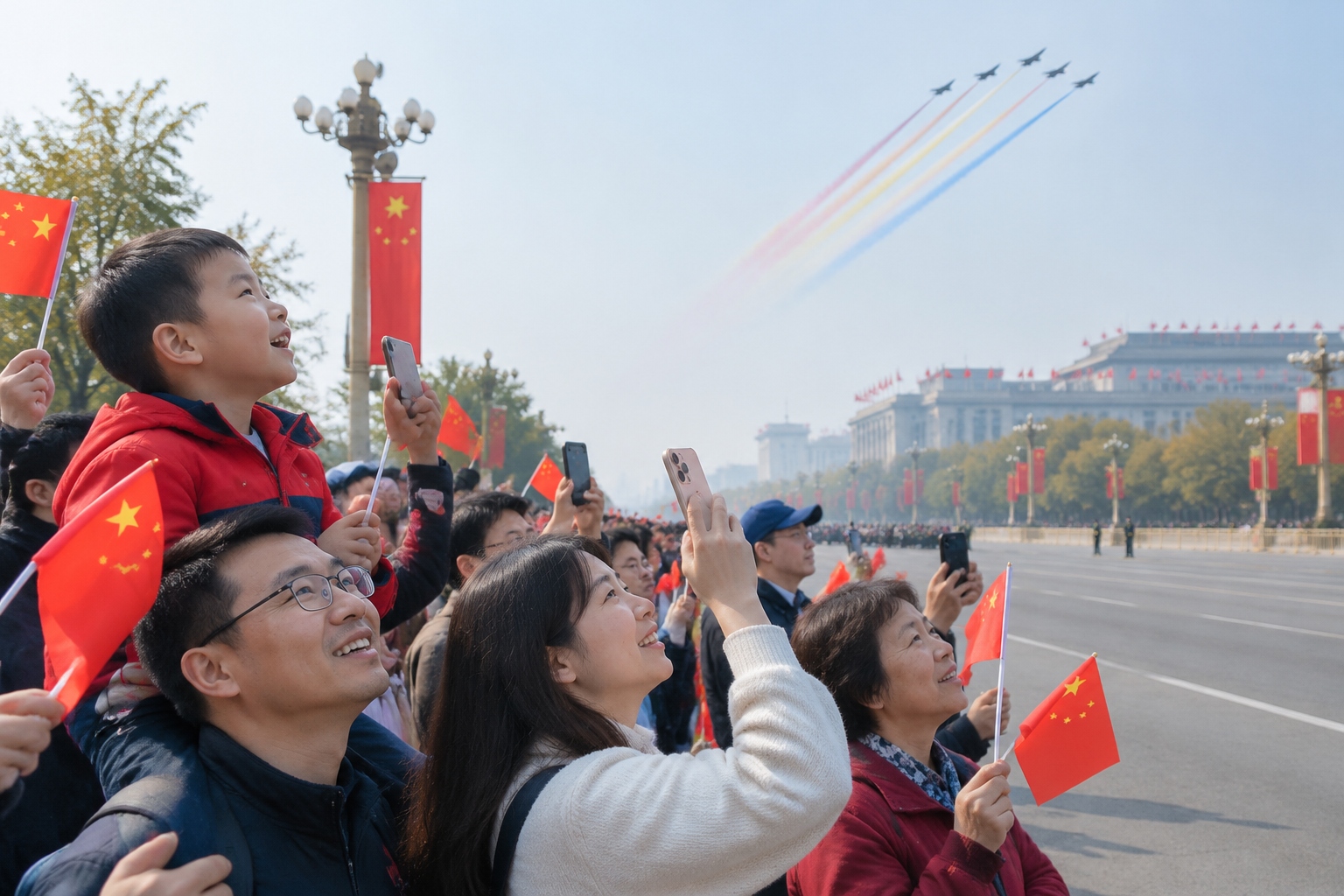
The phrase was already in circulation. It had been used for the J-20, the J-16 and the single-engine J-10C — three aircraft with three pilots inside them. The news in 2025 was the substitution: one of those seats had been removed, and a machine took its place in the same formation. For a public audience, that is compact messaging. It says, without a press release, that uncrewed aircraft are no longer a side project parked at the edge of the airshow.
The three types also make a certain amount of sense together. The J-20 is the stealthy one, built to operate where enemy radar and missiles are dense. The J-16 is the heavy hauler — long range, big payload, two crew to manage sensors and weapons, plus an electronic-warfare variant, the J-16D. The Attack-11 brings the one thing a crewed aircraft cannot offer: the option of flying into a place where you would not send a person.
What a parade photo proves — and what it doesn’t
Here is where it pays to slow down.
A formation over a parade ground is a rehearsal, not a mission. Aircraft in a flypast hold fixed spacing at a comfortable speed with wide safety margins, with clear radio coordination and no electronic interference. “Flying in the same piece of sky” is not the same as “fighting as one unit.”
What the flypast does show is real: the aircraft is mature enough to be flown in public, in controlled conditions, in front of foreign cameras, and the institutions behind it are comfortable putting it next to crewed fighters.
What it does not show is harder to see and more important. Does the drone share sensor data with the fighters in real time, and over what kind of link? How does it behave when that link is jammed? How much of a mission can it fly on its own, and how much depends on a ground station? What engine does it use, how much can it carry internally, and how maintainable is a radar-absorbent skin in a humid coastal climate? None of that appears in a photograph, and Chinese official sources have not published it.
One more thing worth keeping in mind: stealth is not invisibility. A low radar signature shrinks detection range; it does not eliminate detection, and it says nothing about whether an aircraft can be found by other means.
What a stealth drone might be asked to do
Nothing below is confirmed by Chinese authorities. It is the publicly discussed, openly speculative version.
Analysts outside China usually sketch four jobs. First, sensing: a low-observable aircraft that flies ahead of a strike package and reports what it sees. Second, suppression of air defences — loitering near enemy radars and forcing them to choose between staying silent and switching on. Third, strikes on fixed or high-value targets in the first hours of a conflict, where the risk of losing an aircraft weighs heavily. Fourth, the “loyal wingman” role, in which a crewed fighter directs several uncrewed aircraft in company.
The honest summary is that the interesting questions about a machine like the Attack-11 are not about its shape. They are about software, data links, engine reliability, and how much autonomy the operators are willing to grant. Those are exactly the questions a public display is designed not to answer.
Why this looks strange from abroad and almost ordinary in China
There is a detail that surprises visitors more than the aircraft itself.
In China, drones are already furniture. In Shenzhen, delivery drones drop parcels at rooftop lockers. In rice country along the Yangtze, agricultural drones the size of a small table spray pesticide while farmers watch from the ridge. On holidays, a thousand drones lift off a riverbank and arrange themselves into a dragon, and children on their fathers’ shoulders lose interest after four minutes. University students race homemade quadcopters in parks. A stall in Huaqiangbei will sell you a flight controller and a set of propellers for less than the price of a nice dinner.
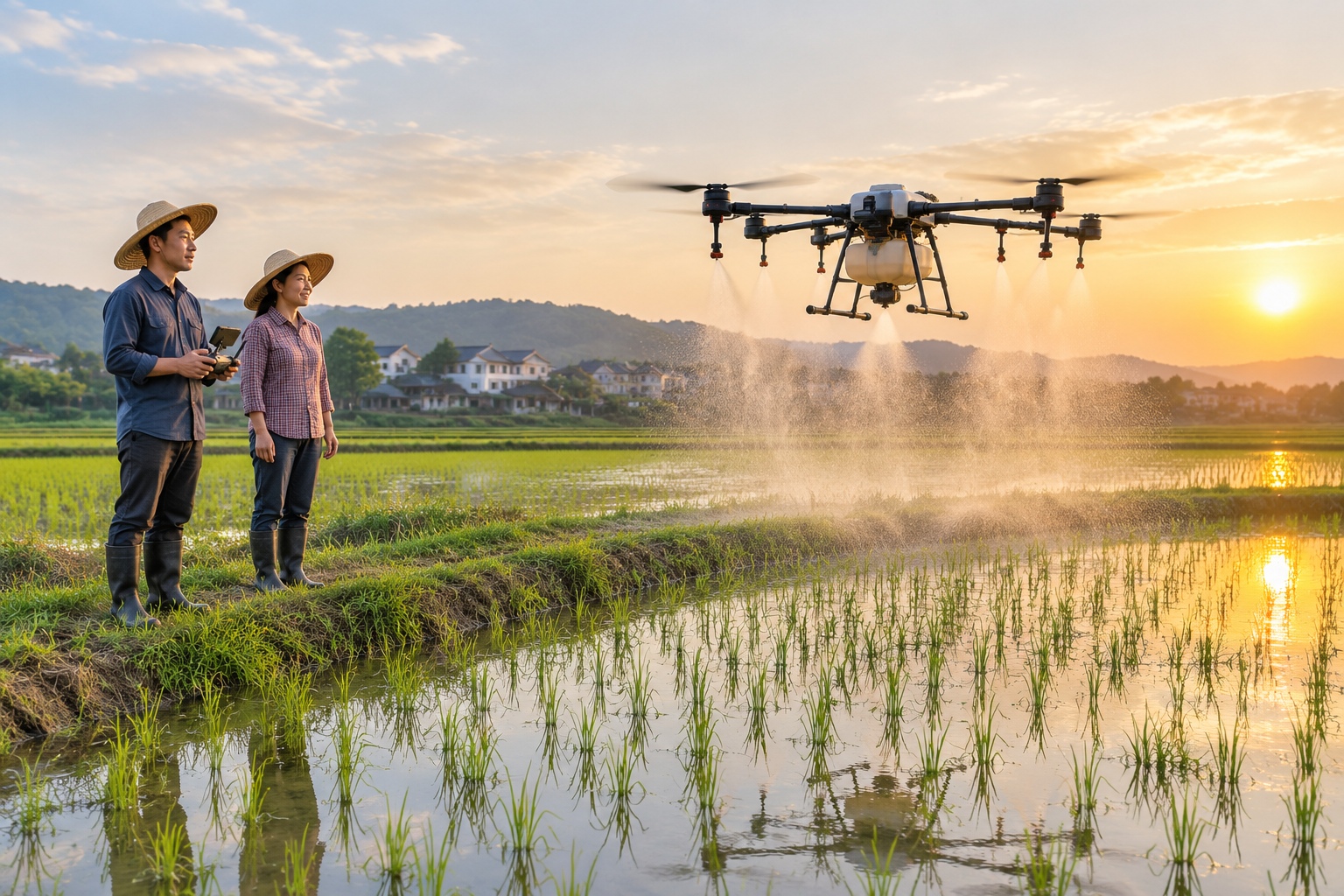
So when a grey flying wing appears behind a barrier at an airshow, the crowd does not see an alien object. They see a familiar category of machine — the thing that sprays the fields, films the wedding, delivers the parcel — scaled up and dressed for a different job. That familiarity is part of why the “new three musketeers” framing lands with a domestic audience. It sits awkwardly with the other half of the story, though: the same country has spent years tightening rules on drone registration, flight approvals and no-fly zones around airports. Enthusiasm and regulation grew up together.

What to watch next
Three things would move the Attack-11 from “impressive” to “consequential,” and all of them are observable in public. More appearances alongside different crewed types, not just the same parade trio. Export marketing, which tends to follow a decision to declassify performance figures. And any sign of a carrier-capable variant, a subject of recurring speculation that Chinese sources have not confirmed.
Until then, the most accurate thing a visitor at Zhuhai can say about the grey aircraft with no windows in front of them is the thing that makes it interesting. Nobody sits inside. Everything else is still being worked out, mostly where the public cannot see.
Start the discussion at forum.chinacomes.com