

Three days, no visa, one question
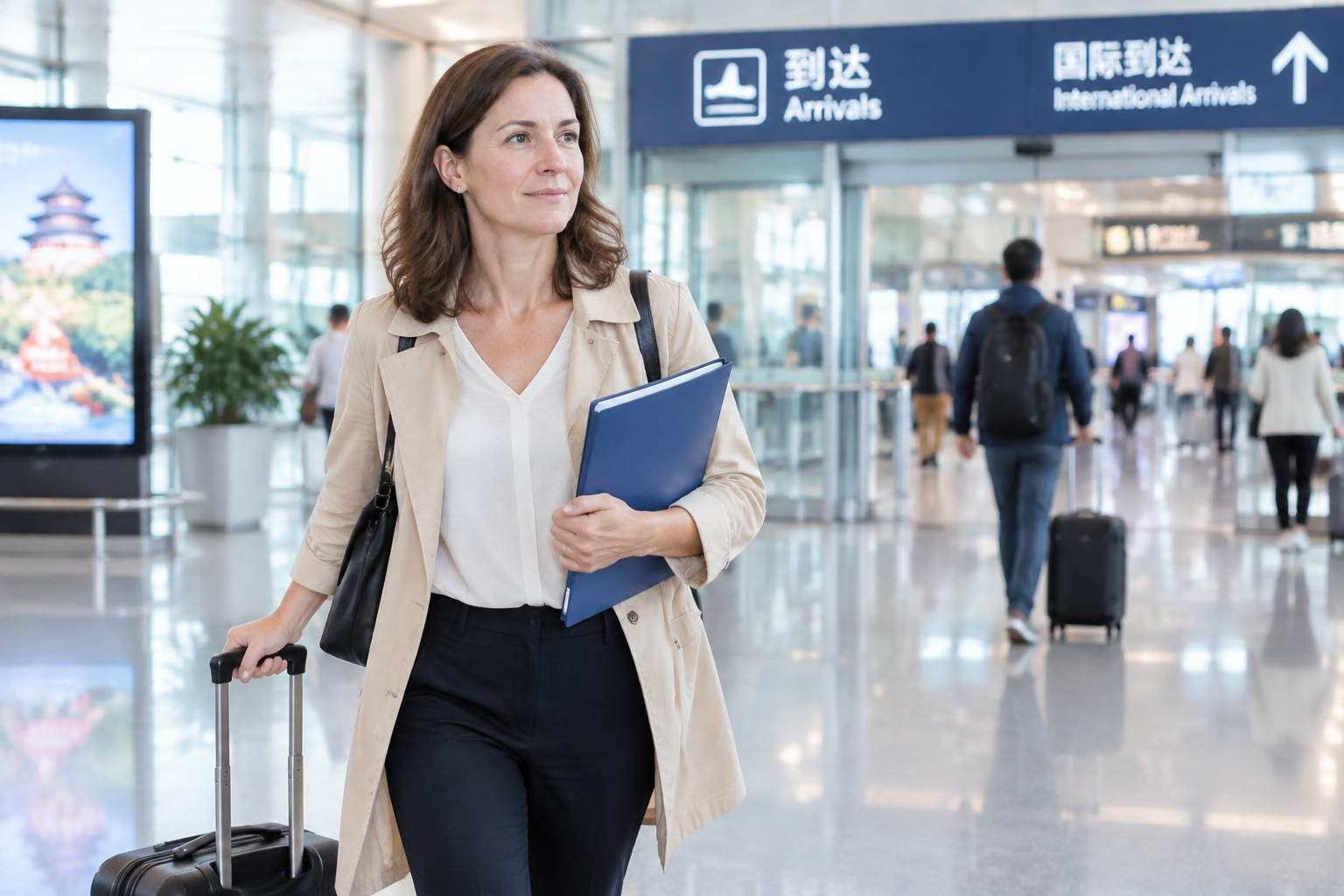
Alexandra packed light for China: one carry-on, a folder of training materials, and a small box of French chocolates for her hosts. She was not coming as a tourist. She is a trainer for a large French education group, and her 72-hour trip had three purposes: visit a vocational school, run a teacher workshop, and attend an international education forum.
Not long ago, that kind of trip began with a visa application—forms, appointments, waiting, usually a month of lead time. Alexandra travels on a French ordinary passport, and France is one of the countries covered by China’s visa-free entry arrangement for short business, tourism, and family visits. The visa page was gone. The question was not. It had simply changed from “Can I get in?” to “Can I do anything useful in three days?”
The interesting effect is not in tourist numbers. It is in the tempo of business. A trip to China used to be a project: approve it, schedule it, go. Now a partner can send an email on Friday and ask, “Can you come next week?” That sounds like a travel ad. In business, it is closer to a change in gear.
What a visa-free arrival actually feels like
At the border, the officer asked the usual questions: purpose, length of stay, where she would sleep. She said meetings, a workshop, three nights. He stamped her in. No visa in the passport. No interview. The line moved.
“The absence of a visa did not make China feel smaller,” she told me later. “It made the trip feel less like a formal project and more like a meeting.”
That is the practical gift of visa-free travel: it lowers the cost of a first look. A company can send a trainer to see whether a partnership is real. A school can invite a foreign expert for a workshop without committing to a long contract. A small team can test chemistry in person instead of over video calls.
But visa-free does not mean friction-free. The entry rules are for short visits, not employment. Alexandra came as a business visitor for meetings and a training session. If she were hired to work in China, she would need a different visa and a different process. The door is wider, not absent.
The city sets the pace before the meeting does
Her hotel breakfast was a first lesson in rhythm. By 7:30 a.m., the dining room was full of people in suits and sneakers, checking phones, eating congee and eggs, talking in low voices. Outside, delivery riders were already weaving through traffic. Office workers poured out of a metro station. The city did not stroll into the day. It switched on.
Then she walked into the school meeting room, and the speed changed.
There was tea. There were introductions. The principal gave a short speech about the school’s history and its industry partners. Alexandra had expected to start with slides. Instead, she was asked about her own training background, her work in France, and why she had come all this way for three days.
“The city is fast,” she said. “The room is slower. But it is not wasting time. It is deciding whether to trust you.”
That is a useful distinction for foreign readers. China’s big cities can feel compressed: high-speed trains, instant payment, same-day delivery, meetings stacked back to back. But business relationships often begin with a deliberate pause. Tea, small talk, a tour of the workshop—these are not delays. They are due diligence in a social key.
Inside the vocational school: where the real work happens
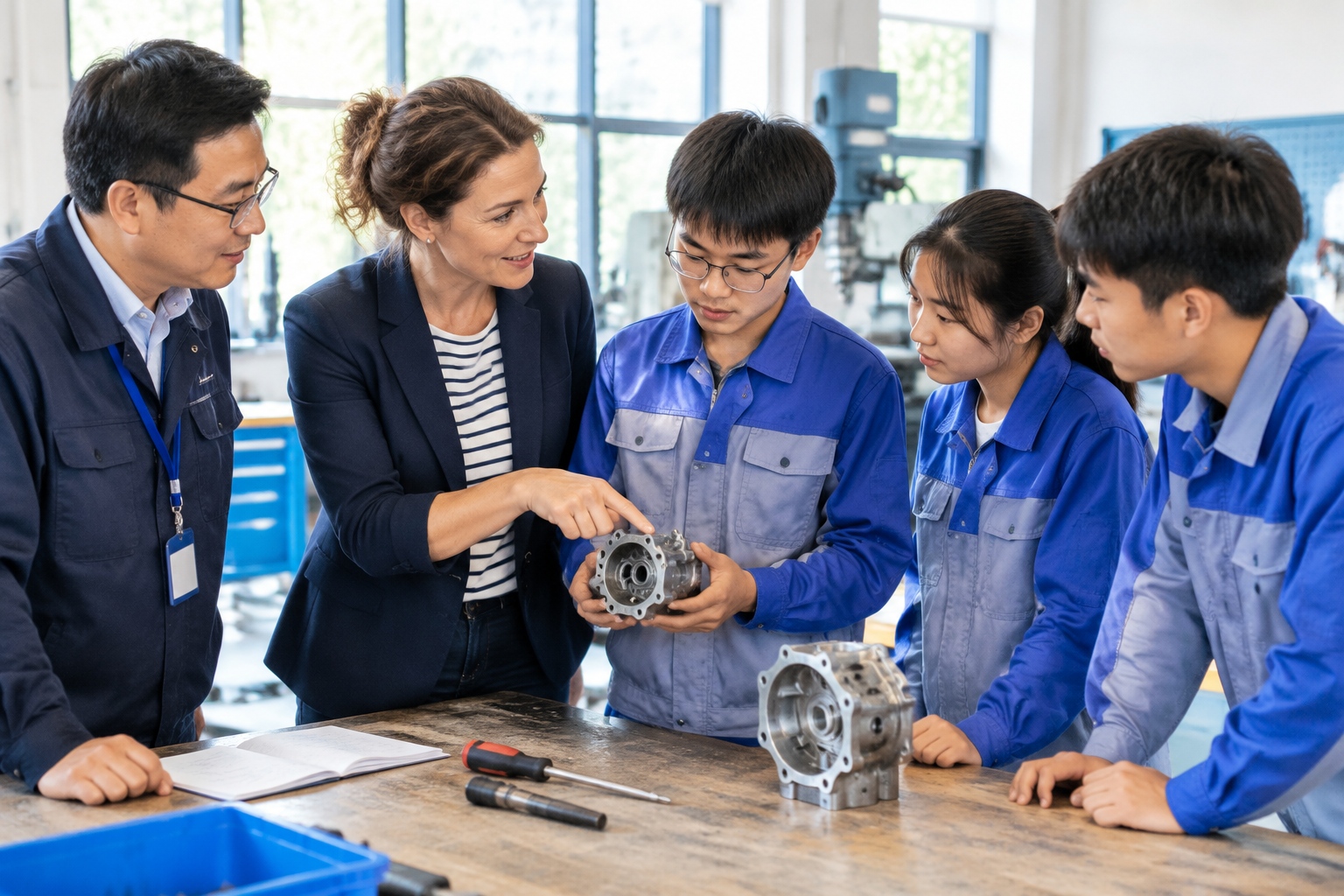
The school sat on the edge of Shanghai, in a district of wide roads, new apartment blocks, and industrial parks. In the workshop, the smell of oil and metal cut through the summer air. Students in blue uniforms stood around a training bench. A robot arm moved through a set of programmed motions. A teacher pointed at a part and asked, in English, whether the French apprenticeship system would work here.
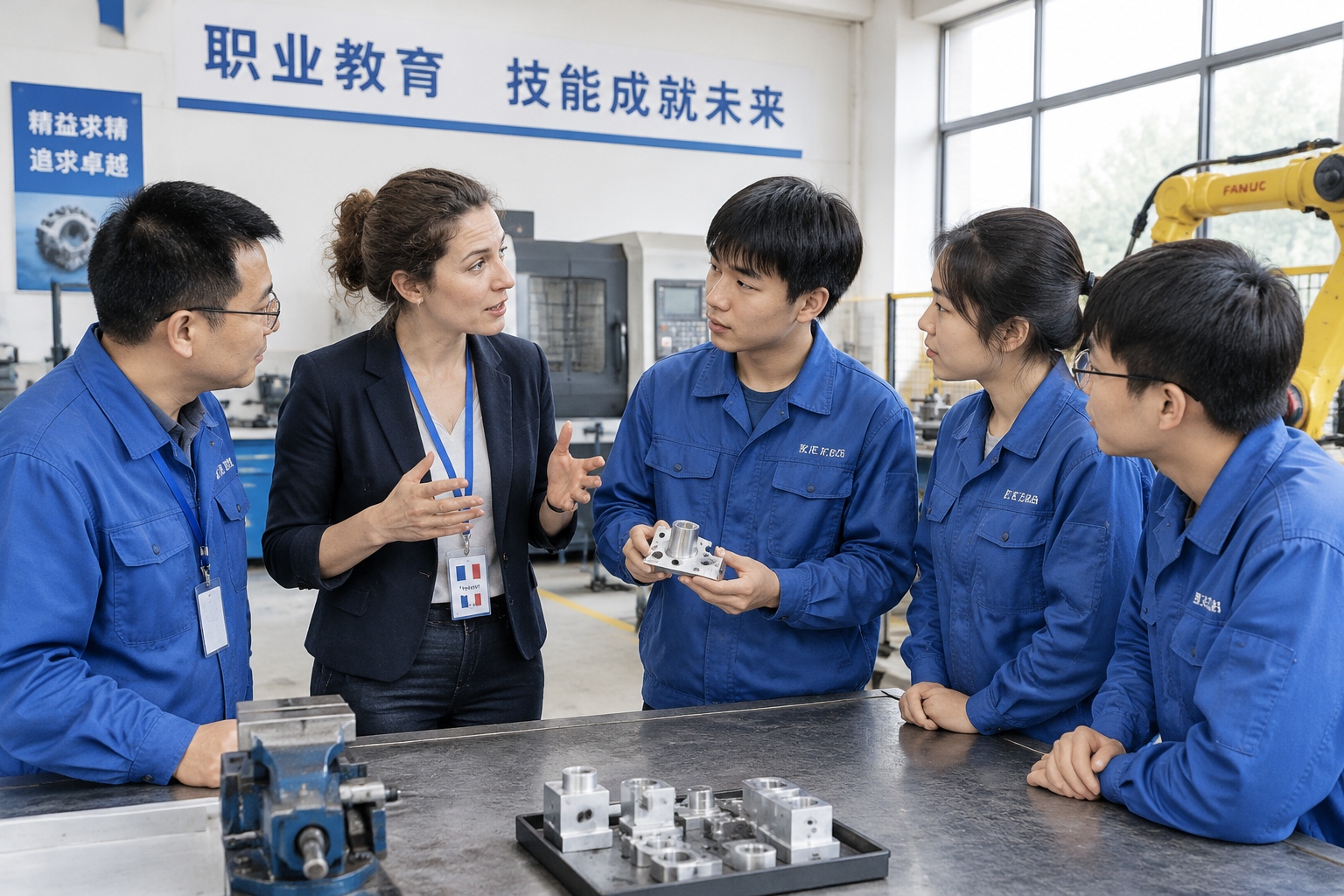
Alexandra ran a 90-minute workshop on competency-based training. A young Chinese teacher, Ms. Chen, translated and quietly corrected terms. When Alexandra described how French students rotate between school and company, Ms. Chen gave a local example: a student who spends two days a week at a nearby manufacturer, then returns to class with questions the textbook cannot answer.
“Our students are practical,” Ms. Chen said. “They will trust the method if they see it work on our machines.”
That sentence stayed with Alexandra. It is one thing to translate a curriculum. It is another to rebuild it around local equipment, local employers, and local students. The school wanted an international benchmark, but it did not want a French template dropped on the floor. The teachers wanted modules they could use on Monday morning.
This is where face-to-face matters. In a video call, Alexandra would have presented a deck. In the workshop, she could see the machines, the students’ questions, and the teachers’ constraints. She could tell which parts of her method would travel and which would need to be rebuilt. She left with three concrete ideas for a pilot, not a signed contract.
The forum, the QR codes, and the small pilot
The next day, she spoke on a panel at an international education forum. The room was full of school leaders, edtech companies, and training providers. There was simultaneous interpretation, a row of microphones, and the particular hush of a conference hall where everyone is checking everyone else.
After the panel, the real forum began. People clustered. QR codes appeared. WeChat groups were created before the coffee got cold. Business cards still exist, but they are almost decoration. The working contact is a phone number inside a group chat.
Alexandra met a software company that sells training simulations, a principal from another province, and an HR manager from a manufacturing firm. None of them offered a contract. One of them used a phrase she would hear again: “我们先做一个小试点。” Let us do a small pilot first.
For a foreign trainer, that phrase can sound like a polite maybe. It is not. It is risk management. Chinese partners often want to see a visible test before a larger commitment. Who will run the pilot? How long will it take? What does success look like? Who signs off? The answers matter more than the handshake.
This is where a short trip earns its keep. In three days, Alexandra could meet the people who would actually run the project, not just the ones who sign the agreement. She could ask the awkward questions in person: Who owns the curriculum? How are teachers paid for extra training? What happens if the pilot fails? Those questions are easier to ignore in a video call.
Dinner is not a break from the meeting
On her last night, her hosts took her to a restaurant with a round table, a lazy Susan, and more dishes than anyone could finish. There was tea, fish, a plate of greens, and a toast that began with “Welcome to China” and ended with a question about her company’s projects in France.
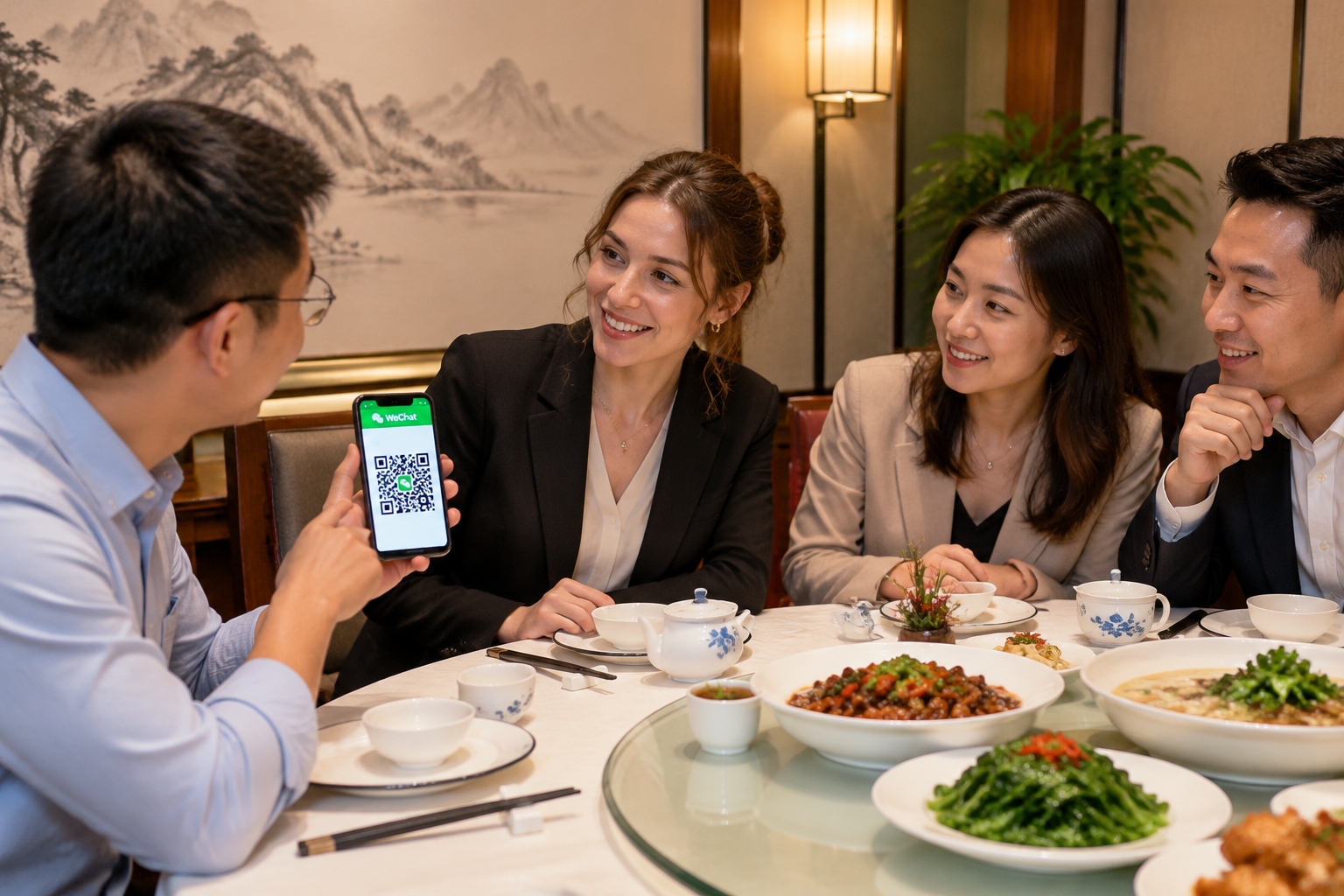
Dinner was not a break from the meeting. It was another room of the meeting. The conversation moved from curriculum to families, from travel to the Chinese teachers who study in France, from food to the pace of change in Shanghai. Alexandra asked how decisions get made. Her host laughed and said, “First we eat. Then we decide.”
There is truth in the joke. In China, social time is often where trust is built and where ambiguity is tested. A partner may not say no directly. They may say “we will study it” or “let us keep in touch.” That can be frustrating for a French visitor, who is used to a clearer yes or no. But it is also a signal: the relationship is still open. The next move should be concrete.
Alexandra learned to end the dinner with a small ask: a 45-minute call next week, a short written proposal, a date for the pilot. “In France, a no can be direct,” she said. “In China, a no can sound like a maybe. But a good partner will respond to a clear next step.”
What visa-free travel changes—and what it doesn’t
Visa-free entry shortens the distance between curiosity and a visit. It does not remove the distance between two working cultures.
What it changes: the speed of a first trip. A trainer can come for a workshop. A founder can visit a factory. A school can test a partnership without a year of planning. It also makes room for luck—the chance meeting at a forum, the unexpected question in a workshop, the dinner that turns a contact into a colleague.
What it does not change: language, trust, follow-up, and the legal rules around work. A 72-hour visit is not a substitute for a work permit. It is a first date, not a marriage.
That is why the policy should be read alongside China’s longer-stay channels. Beyond short visits, China has been expanding pathways such as the K visa for young science and technology talent and broader talent endorsements. The point is a ladder: a short visit can lead to a pilot, a pilot to a contract, a contract to a joint program. The first rung is lower now. The rest still require paperwork.
Back in Paris, the follow-up begins
Alexandra flew home with a folder of notes, a WeChat group that would not stop buzzing, and a to-do list. The real work started after the plane landed. She sent a short proposal in English and Chinese. She asked for a 45-minute call. She waited for the school to check with its industry partners.
That is what face-to-face business after visa-free entry looks like. It is not a magic shortcut. It is a way to make the right questions visible sooner. The 72 hours did not produce a contract. They produced a decision to continue.
“The visa-free door opens,” Alexandra said. “The deal still has to be built—sentence by sentence, meal by meal, prototype by prototype.”
Start the discussion at forum.chinacomes.com