


Monday, 7:42 a.m.: the trip starts before the first meeting
At 7:42 on a Monday morning, Elena Valls is standing near the coffee counter in the arrivals hall at Shanghai Pudong International Airport with a carry-on, a printed A4 sheet, and a phone at 18 percent. She has flown from Barcelona, will fly to Hong Kong on Thursday, and has 71 hours on the ground. In her bag: three lighting samples, a folded contract draft, and a pair of safety shoes. She is here to find out whether a Chinese supplier can move a new LED driver from prototype to production by September.
She is not on a tourist visa. She is using China’s 240-hour visa-free transit policy, which lets eligible travelers from 54 countries enter through participating ports without a visa for up to 10 days, as long as they are transiting to a third country or region and stay inside the permitted area. A three-day business trip fits easily inside that window. The policy is not a work visa and not a residence permit. It is a short door, opened for a specific purpose: transit.
At immigration, the officer asks for her onward ticket and hotel booking. She shows the Hong Kong flight on her phone and a printout of her Shanghai hotel. The stamp takes less than a minute. The line moves faster than she expected. The harder part is the hour after: payment, connectivity, and the decision about how to get into the city.
The first hour: payment, data, and one small decision
Elena linked her Visa card to Alipay before leaving Spain. That matters. In Shanghai, mobile payment is the default for coffee, metro tickets, taxis, convenience stores, and factory canteens. A foreign card can work, but not every card, and not every small shop. She also carries 400 yuan in cash, split between her wallet and suitcase. She has not needed it yet. She will probably need it once.
Her phone works because she bought a travel eSIM before the trip. International roaming is another option. Airport Wi-Fi is fine for a few minutes, but not for a day of maps, messages, and Didi rides. She opens Didi, the Chinese ride-hailing app, switches the interface to English, and types the address of a hardware incubator in Zhangjiang. The app gives a price range and a plate number. The driver calls through the app’s built-in translation. They meet at Gate 3.
She could take the metro. Line 2 from Pudong Airport to Zhangjiang takes about 50 minutes with a change at Guanglan Road, and it costs a few yuan. It is reliable, clean, and cheap. But she has a 10:30 meeting and a sample case. She chooses Didi. The ride takes 38 minutes and costs 176 yuan. The car smells faintly of lemon air freshener. The driver plays a traffic radio station. Elena watches logistics warehouses, wet trees, and new apartment blocks slide past. This is not the China of postcards. It is a working landscape.
Day 1: the goal is not to sign; it is to shorten the list
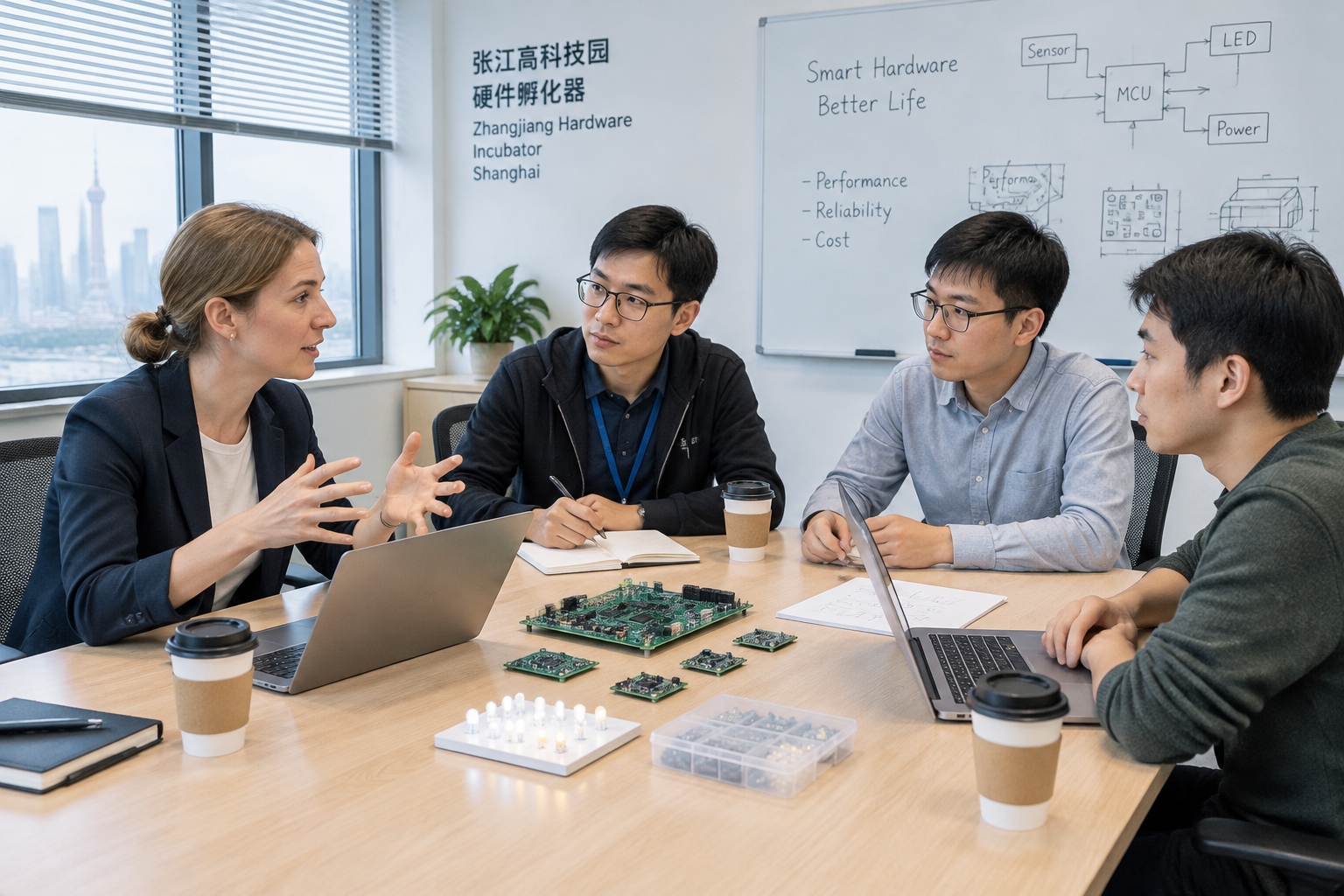
The incubator is on the fourth floor of a building that also houses a noodle shop and a dental clinic. The meeting room smells of coffee and warm electronics. A young engineer places a circuit board on the table. The general manager, Ms. Chen, speaks fast English and draws on a whiteboard. They spend 90 minutes on heat dissipation, certification, and the gap between a lab sample and a production run.
Elena does not try to close the deal. She tries to shorten her list. By lunch, she has a second prototype timeline. By 2 p.m., she has seen the test lab and met the quality manager. By 4 p.m., she has a WeChat group with five people and a shared folder with drawings. The first day produced no contract. It produced a schedule, a contact map, and one clear question: can this team handle a 3,000-unit run in September?
That evening, she eats noodles near the hotel and answers emails from Barcelona. The time difference is awkward but useful. Her colleagues are at lunch. She sends photos of the test report and a voice note. By the time she sleeps, Barcelona has already replied.
Day 2: the factory floor decides more than the slide deck
On Tuesday, a Didi takes her to Songjiang at 7:50 a.m. The car passes logistics parks, wet streets, and rows of low factories. At 8:35, she is standing in a lighting components plant with the smell of warm plastic and machine oil in the air. The general manager, Mr. Zhou, does not start with a PowerPoint. He walks her to the injection molding line.
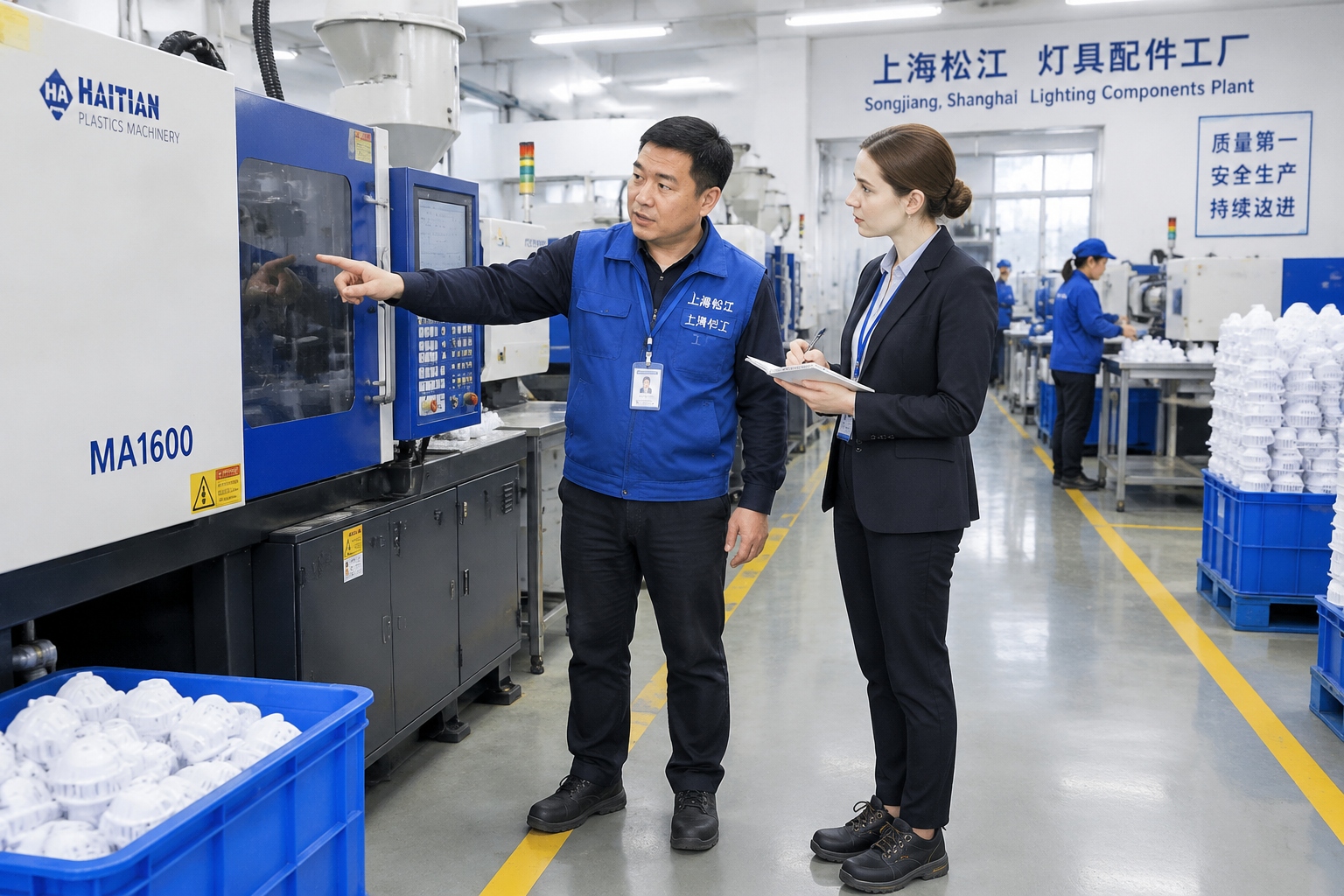
The line is running. Workers in blue vests trim plastic parts from a mold. A quality inspector checks a batch under a bright lamp. Elena puts on safety shoes and walks the floor. She asks about mold lead time, scrap rate, and the fixture used for the driver housing. Mr. Zhou answers some questions directly and avoids others. That is useful too. A factory visit is not only about capacity. It is about seeing how people answer when the answer is not in the brochure.
Lunch is in the canteen. Metal trays, braised pork, tomato and egg, rice, and weak tea. The room is loud. The conversation is not small talk. They talk about the payment schedule, the first article inspection, and who will pay for the third round of tooling. Nothing is signed. But the project moves from email to a shared plan.
In the afternoon, Elena takes photos of the QC station and sends them to her colleague in Barcelona. He replies within 12 minutes, which is lucky: it is early morning there. They agree on a compromise. The supplier will adjust the fixture and send a short video by Friday. Elena will send a revised purchase order draft by Monday. The three-day trip is already doing what a month of email could not do: it is making the next step specific.
Day 3: close the loop before the flight
On Wednesday, she crosses the city to Hongqiao for a 9:30 meeting with a logistics provider and the supplier’s export manager. The conference room has a wall of samples and a whiteboard covered in Incoterms. They review the draft contract, the inspection clause, and the shipping schedule. Elena’s flight leaves at 6:40 p.m. She leaves the meeting at 2:15, which feels early until the taxi hits the elevated road.
At the airport, she has 90 minutes before boarding. She checks in, drops her bag, and buys a bottle of water with Alipay. The WeChat group already has 11 unread messages. A video of the new fixture is waiting. The supplier has sent a revised price sheet. Nothing is finished. But the relationship has a shape now.
The practical details that make or break 72 hours
Pack carry-on only if you can. A three-day visa-free trip is not the moment for a checked bag and a lost hour at the carousel. Load Alipay or WeChat Pay before you fly, link a card, and keep a few hundred yuan in cash as backup. Use Didi in English if you do not speak Chinese; the app handles the address and the payment. Screenshot everything: onward ticket, hotel booking, invitation letter, factory address in Chinese, and the phone number of your host. Keep a paper copy of the address too. Battery banks are not optional.
Book meetings with buffers. Shanghai is not small, and a 45-minute buffer is realistic. Do not schedule two factory visits in opposite suburbs on the same day. If your permitted area includes neighboring provinces, a high-speed rail day trip can work, but check the stay area before you book. Business cards still matter. Add people on WeChat immediately, before the meeting ends. Accept that lunch is a meeting. If you need a full legal review or a bank account, three days is not enough. Use the trip to decide who you will send the contract to.
What three days can and cannot buy
In 72 hours, a foreign business traveler can verify that a supplier exists, see a line running, meet the person who actually makes decisions, test whether communication works under pressure, sign an NDA or a memorandum, and move a relationship from email to WeChat. That is not small. In manufacturing, trust often starts with a face, a factory floor, and a shared problem.
What three days cannot buy is deep due diligence, a finished legal review, a local bank account, or a long-term work permit. Those require a different process. China has also been expanding channels for longer-term talent and tech exchange, such as the K visa for young foreign science and technology talent. The visa-free transit is the short door. The K visa and work permits are the long corridor. A sensible trip uses the short door to decide whether the long corridor is worth walking.
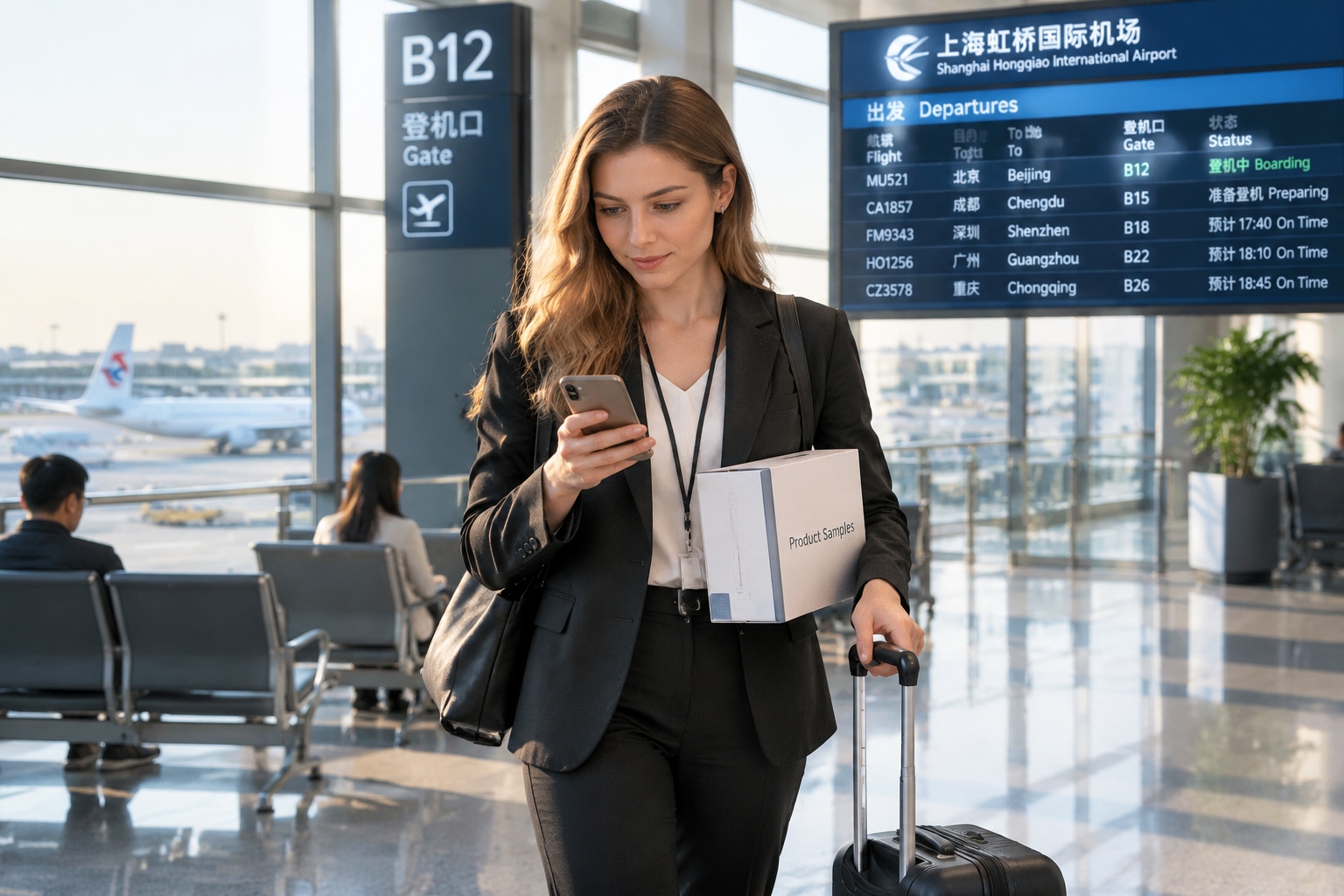
On Thursday afternoon, Elena stands at the departure gate with her carry-on at her feet. The sample box is inside. Her phone is at 61 percent. The group chat is still moving. No contract has been signed. But a fixture will be adjusted, a video will arrive on Friday, and a purchase order draft will leave Barcelona on Monday. Three days did not close the deal. They made the deal possible to close.
Start the discussion at forum.chinacomes.com