

A suitcase that is not packed yet
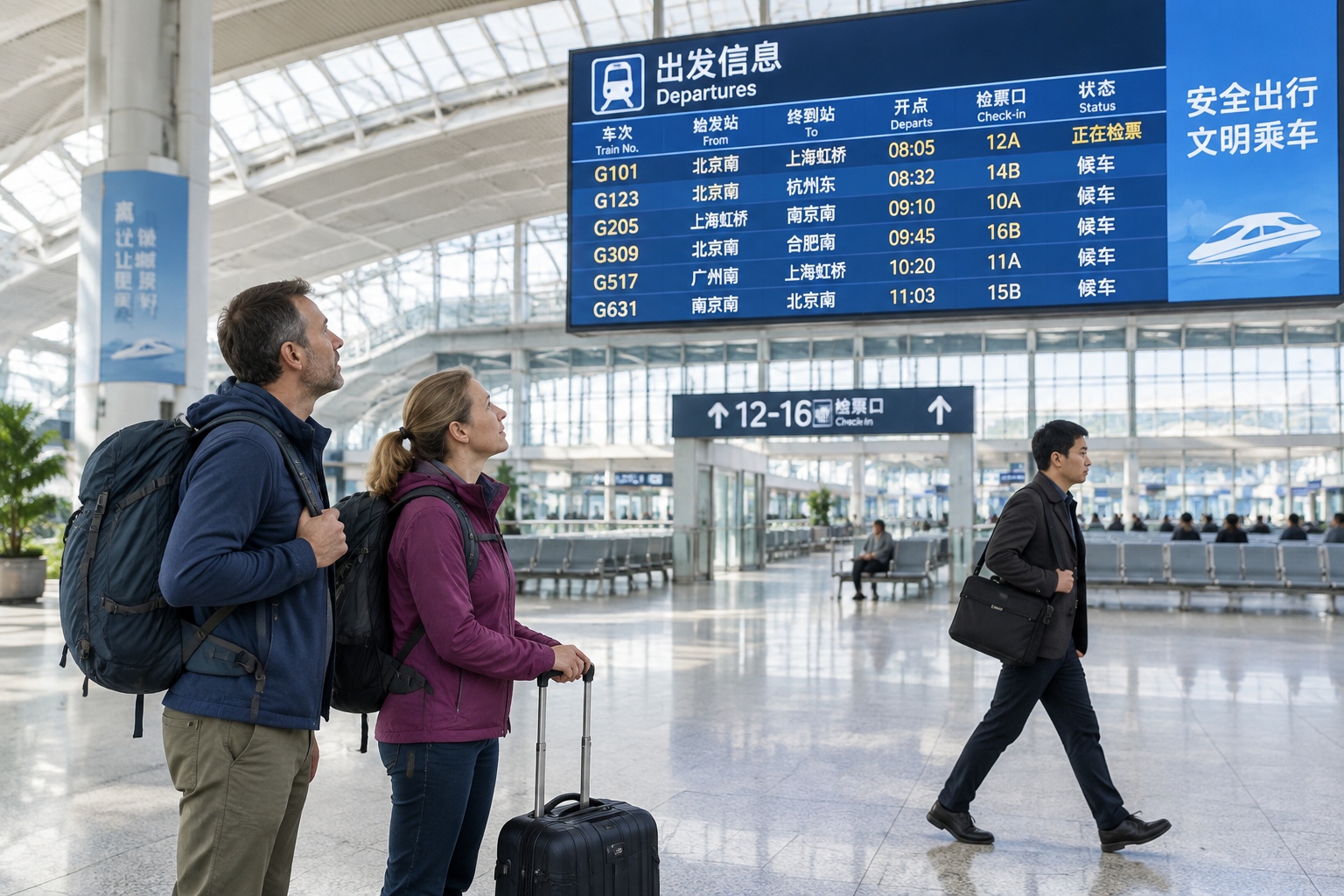
At nine on a Tuesday morning, in a hotel lobby a short walk from Shanghai’s People’s Square, a couple from Valencia are arguing quietly about a train ticket. They have four nights left in China. Their original plan had them flying home tomorrow.
They landed in Guangzhou eleven days ago. Since then: two nights in Guilin, a morning on the Li River, three nights in Shanghai, and a booking on the 8:05 to Hangzhou that they are now trying to push back by two hours because they want one more breakfast at the stall around the corner. After Hangzhou comes an overnight train to Xi’an, and they fly out of Beijing. Four cities, one internal flight, a great deal of tea.
Six years ago the same couple did the standard version of a China trip: Beijing, Shanghai, home. Six days, two hotels, three internal flights. They remember the Great Wall and almost nothing in between.
What changed is not their budget or their appetite for adventure. It is a rule most of them never read closely.
The rule behind the extra days
China’s 240-hour transit visa-free policy lets citizens of more than 50 countries enter without a visa if they are travelling onward to a third country. A London–Shanghai–Bangkok routing qualifies; a simple London–Shanghai–London round trip does not. In exchange for that routing rule, you get ten days on the ground, and you are allowed to move across roughly two dozen designated provinces rather than being confined to the city you flew into.
That last detail is the one that quietly rearranged everyone’s itineraries. A ten-day window that only covers Shanghai is a long city break. A ten-day window that stretches from Guangdong to Beijing is a trip.
The numbers followed. In the twelve months to the end of 2025, China recorded 40.6 million foreign entries, up 27.2 percent year on year; the share of travellers using the 240-hour rule rose 60.8 percent against the pre-expansion baseline. In the first half of 2026, around 18 million foreigners entered visa-free, the clear majority of all foreign arrivals.
Then came the more interesting statistic. Average stay length for visa-free visitors climbed from 2.1 days in 2019 to 4.7 days. Seventy-two percent now move between cities, and six in ten cross a provincial border. Bookings from Spain at one point ran eight times their earlier level; Italy, four times.
Why the map suddenly opened up
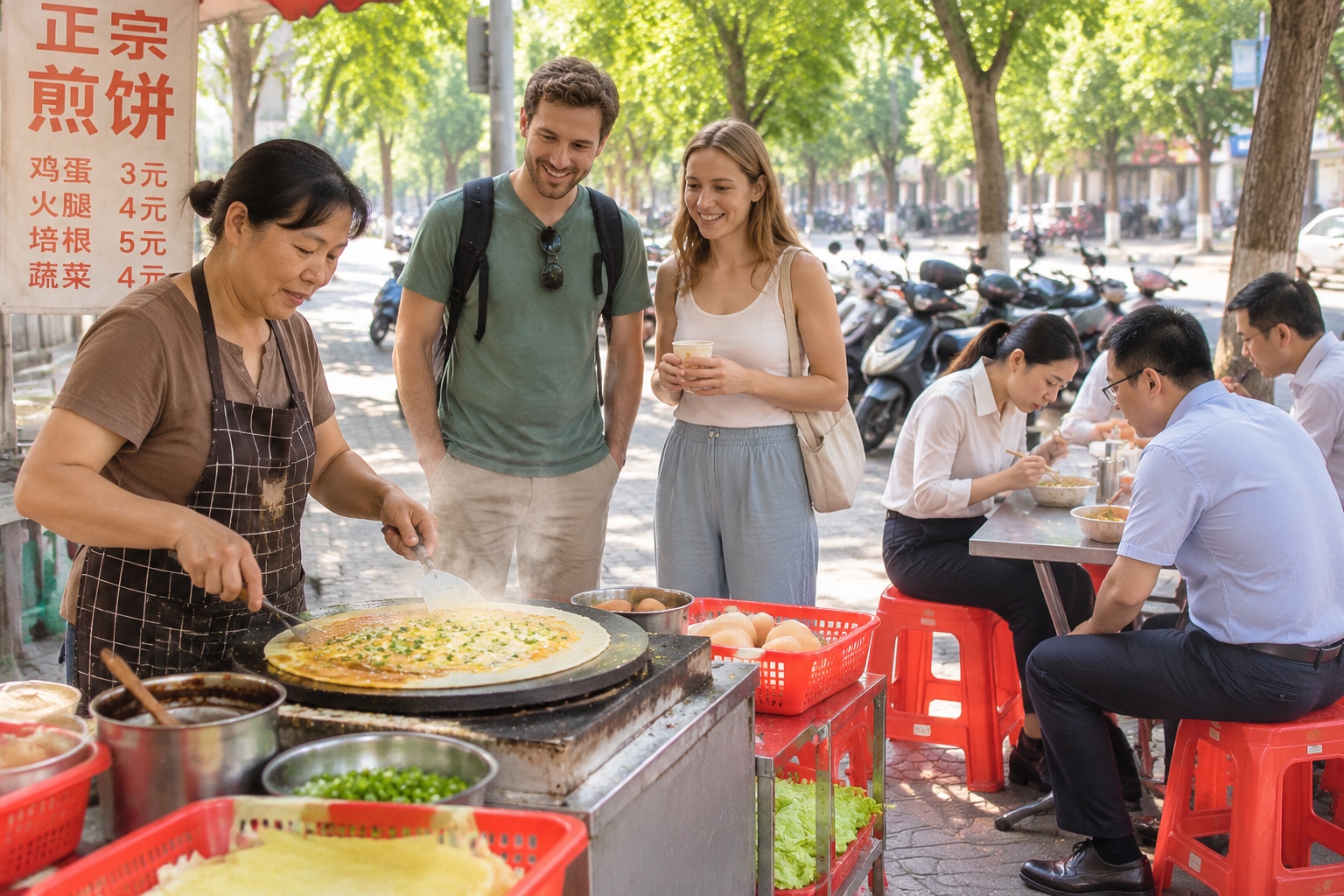
Part of the answer is infrastructure that Chinese travellers stopped noticing years ago. The high-speed rail network now runs past 45,000 kilometres, and it connects city centres, not airport peripheries. You arrive fifteen minutes before departure, walk through a gate, and get on. Shanghai to Hangzhou is under an hour. Guangzhou to Guilin is about two and a half. Beijing to Xi’an is four and a half. Chengdu to Chongqing is barely over an hour.
For a visitor with ten days, that changes the arithmetic completely. In the old two-day model, every city transfer cost you a half-day of airport rituals, so you picked two cities and stayed put. Now a three-city trip is not more stressful than a one-city trip — it is often less so, because the train itself is part of the sightseeing.
Two smaller things helped. Foreign cards now link to Alipay and WeChat Pay, so a coffee no longer requires a local friend. And translation apps have become good enough that a menu with no English is an inconvenience rather than a wall.
Where the extra hours actually go
1. The second city
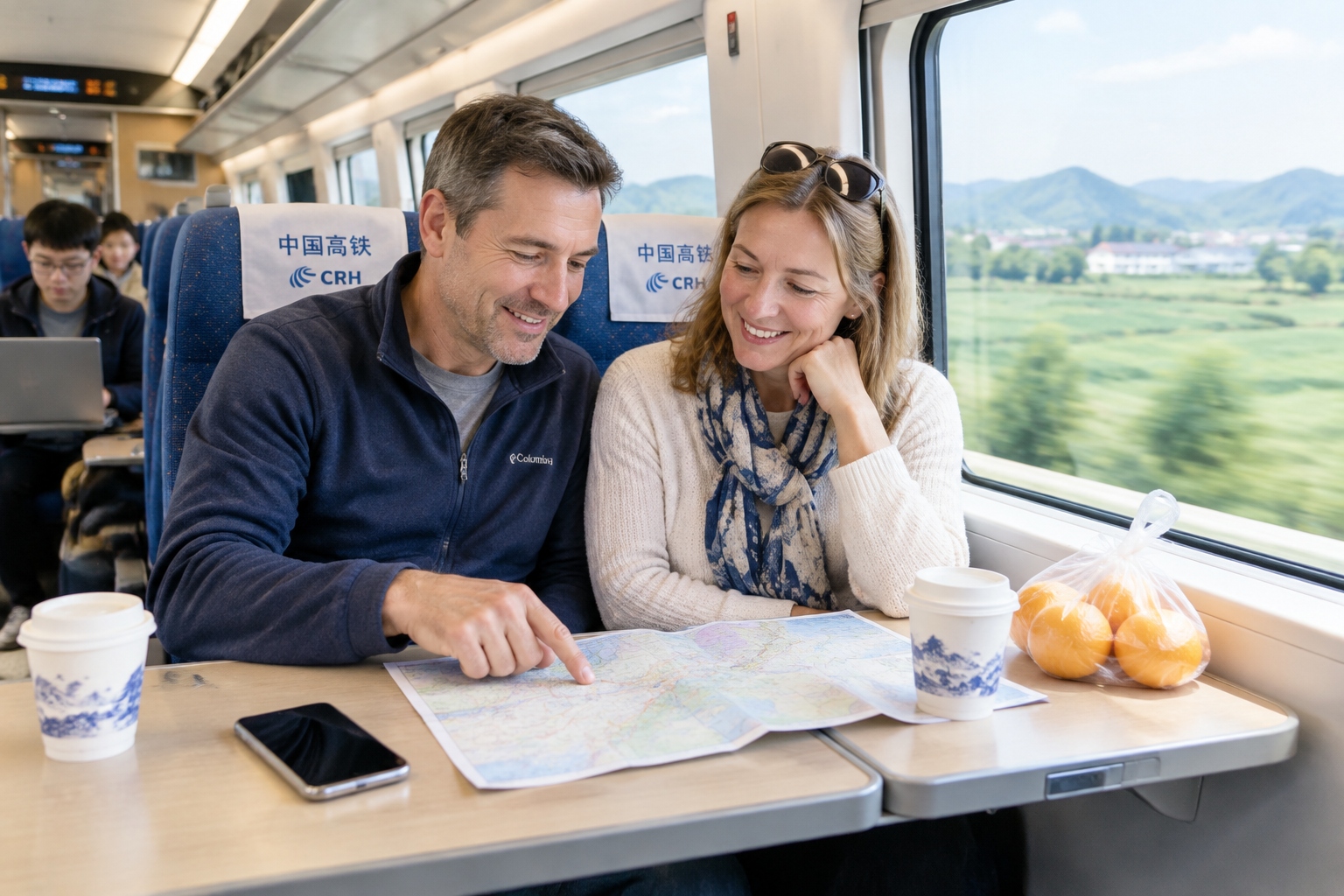
Ask the couple in Shanghai what they liked most and they do not say the Bund. They say a wet market in Guilin at seven in the morning, and a noodle shop in Hangzhou where the owner drew a map on a napkin. The ten-day visa made places like Guilin, Quanzhou, Datong and Chongqing reachable as destinations rather than as day trips from a capital.
This is where the 72 percent figure comes from. It is not that tourists are more adventurous; it is that the second and third cities have become logistically cheap to add.
2. The unlisted hour: ordinary life
A two-day stay is a checklist. You see the wall, the palace, the skyline, and you leave with photographs of things built to be photographed. A five-day stay has dead time in it, and dead time is where a country actually shows up.
On a Wednesday in Chengdu, I watched a retired German engineer spend forty minutes in a park watching men play cards on a stone table, then buy a bag of oranges from a cart, then sit in a teahouse for two hours doing nothing at all. He told me this was the first time in three trips to China that he had felt bored, and that he had enjoyed it.
That is what the extra time buys: a second breakfast at the same stall, a haircut, a metro ride to a neighbourhood nobody recommended, an hour in a supermarket reading labels.
3. The shopping leg
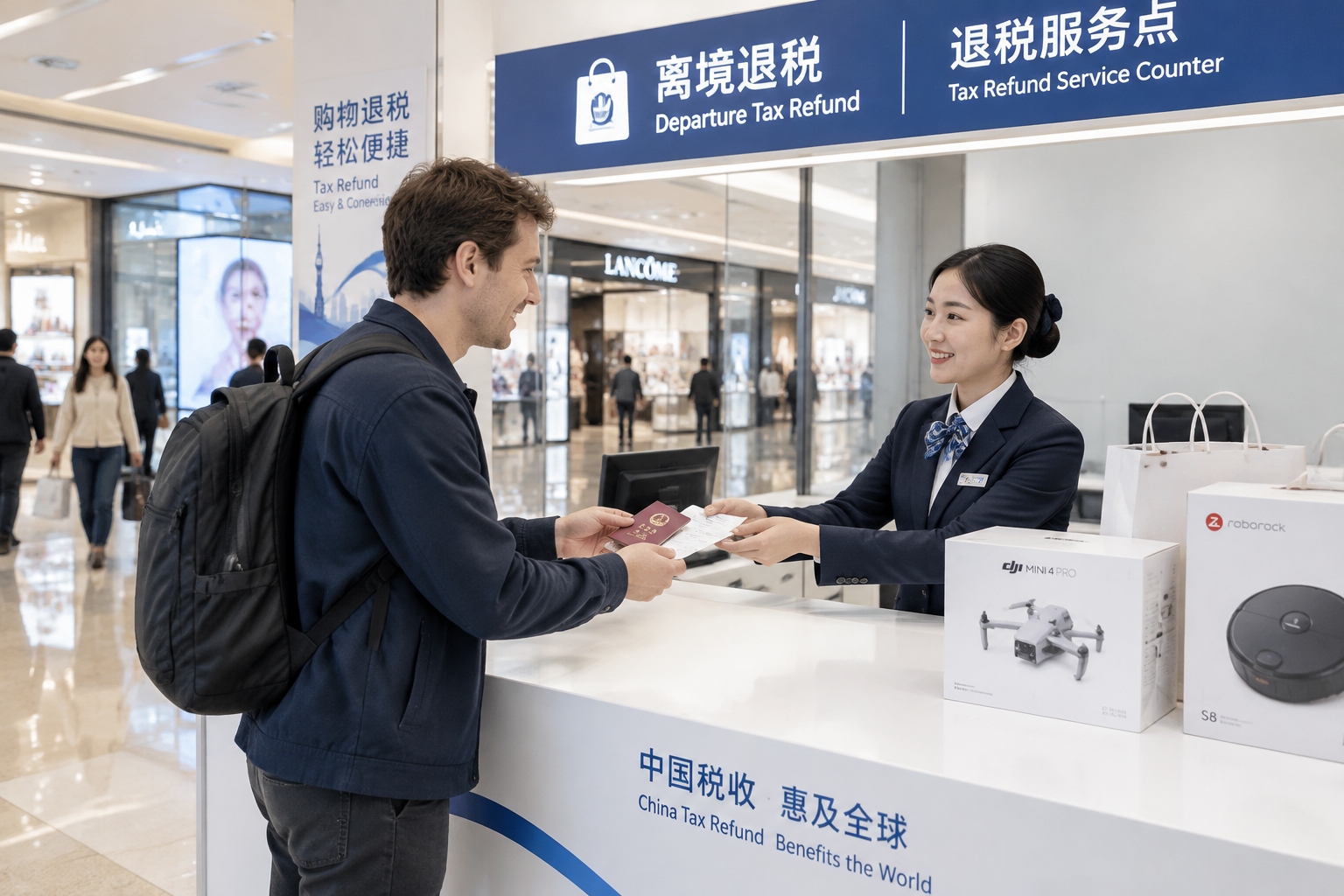
Some of the extra hours are spent indoors, in malls, at a counter. Departure tax refunds processed in the first three quarters of 2025 rose 229.8 percent year on year, and more than 60 percent of the refunded money was spent again before the traveller left the building.
The shopping list has shifted too. It used to be silk, tea and porcelain. Now it is a drone, a robot vacuum, a phone, a smartwatch, a folding electric bike, cosmetics — things that are cheaper or simply not sold at home. A Shenzhen electronics mall on a Saturday looks, in places, like a multilingual export desk.
What still goes wrong
It would be misleading to describe this as frictionless. Payment apps sometimes reject a foreign card during verification, and small vendors still prefer cash. Some hotels, especially outside big cities, are unclear about whether they accept foreign guests, and the registration paperwork can stall a check-in. Booking apps for trains and attractions frequently assume a Chinese ID and a Chinese phone number. English signage thins out fast once you leave the coastal hubs.
And timing matters more than most visitors expect. The first week of October and the Lunar New Year week turn the best-laid rail itinerary into a standing-room problem.
None of this is exotic. It is the ordinary friction of travelling in a country whose systems were designed for its own residents first. What has changed is that the friction is now navigable within a ten-day trip rather than fatal to it.
Why this matters beyond tourism
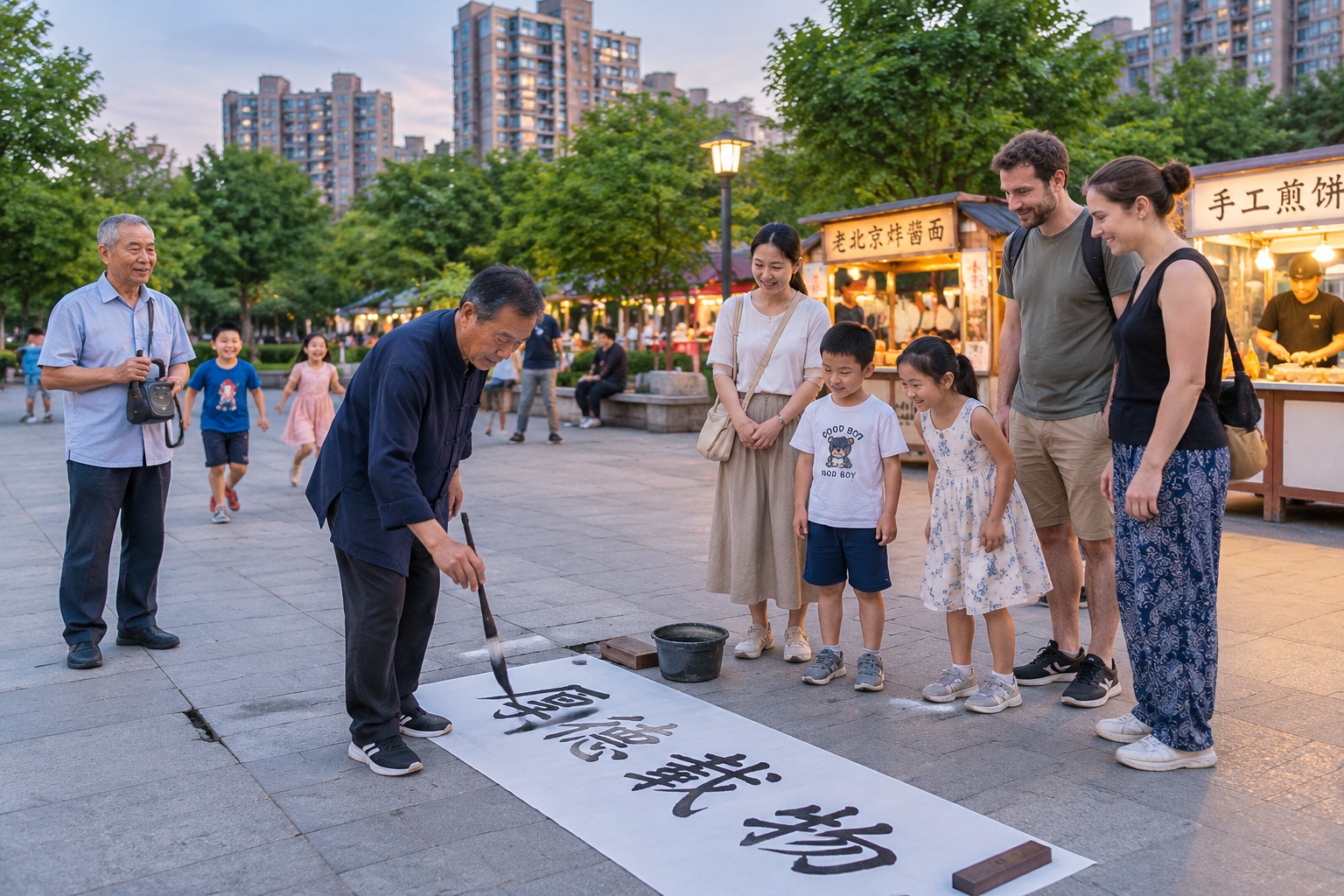
For Chinese cities, the visitors arriving under this policy are a new kind of customer: fewer in number than domestic tourists, but higher-spending, longer-staying, and willing to go places that have never had an international hotel. Cities that were a footnote in guidebooks are now building refund desks, English menus and small walking maps.
For everyone else, the more significant effect is slower. A person who spends two days in China sees a skyline and forms an opinion. A person who spends ten days waits in a pharmacy, misses a train, eats dinner at a table with strangers, and comes home with something closer to a picture of the place.
If you have the ten days: a shape that works
One reasonable routing, using trains for the middle: land in Guangzhou, two nights in Guilin with a day in Yangshuo, fly to Shanghai for three nights, an hour to Hangzhou for one or two, overnight or daytime train to Xi’an for two, train to Beijing for two, fly home from Beijing. Or swap the southern leg for Chengdu and Chongqing, which are one hour apart and impossible to do properly in two days.
Practical notes: book long-distance trains a week or two ahead and always carry your passport, which is your ticket. Keep a few hundred yuan in cash. Install Alipay and a map app before you land. And leave one day empty on purpose.
The number worth paying attention to
The headline is that the average stay doubled. The more telling detail is what a doubled stay contains: a morning with nothing scheduled, a second visit to the same park, a conversation with someone who is not paid to be nice to you.
That is the difference between a destination and a country. For years, China was very good at being the first. It is now, in a modest and slightly disorganised way, becoming the second.
Start the discussion at forum.chinacomes.com