
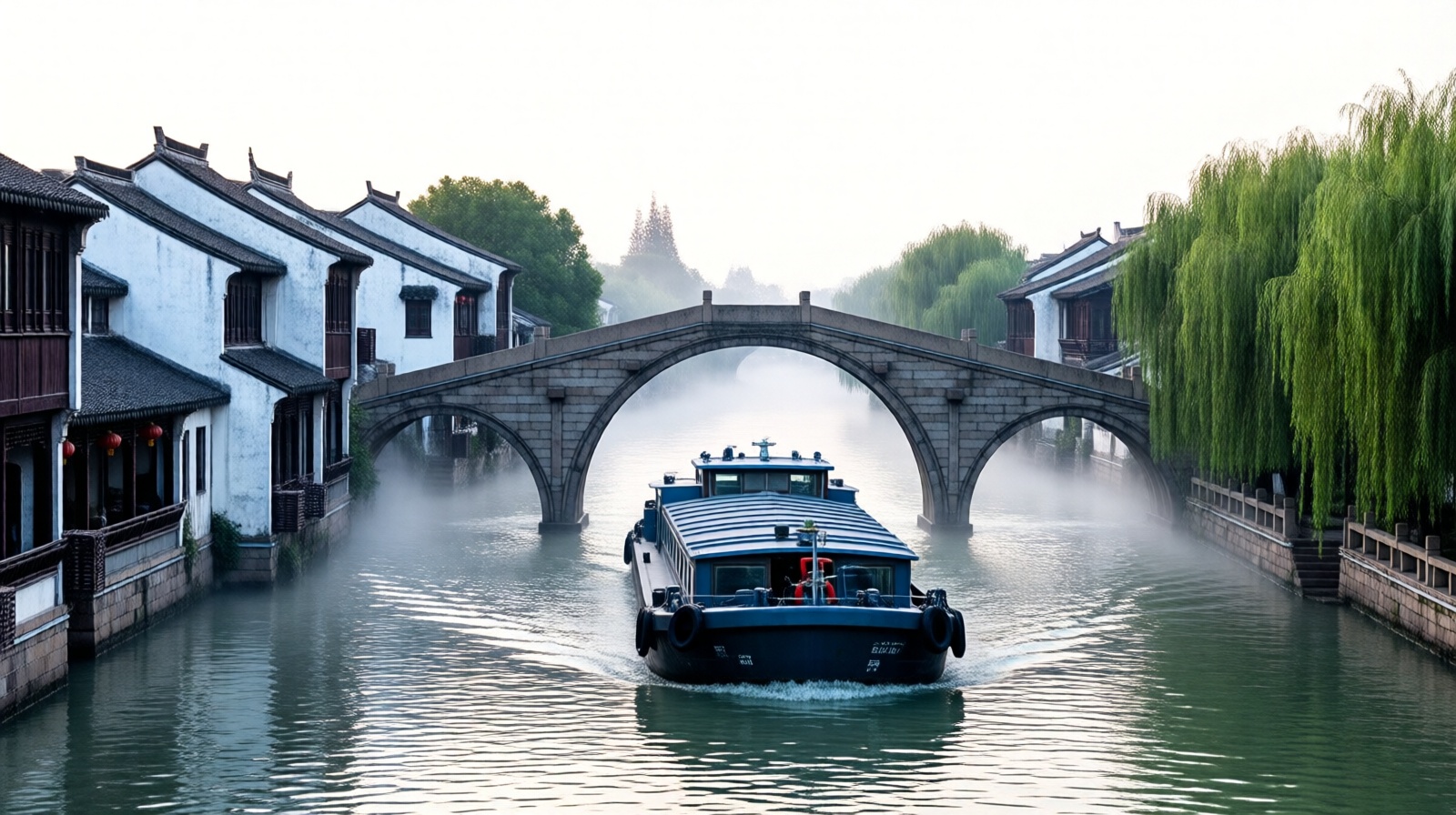

A Canal Unlike Any Other
On a misty morning in Suzhou, a French tourist named Marie stands on a stone bridge over the Grand Canal, watching a barge loaded with grain glide silently beneath her. “I’ve seen the Suez Canal from a cruise ship,” she says, “but this feels completely different. It’s quieter, older, and somehow woven into the daily life of the city.” Marie’s observation captures the essence of a waterway that defies easy comparison. While the Suez and Panama canals are engineering marvels of the industrial age, the Grand Canal is something else entirely: a living artifact of an agricultural civilization that has shaped China for over 2,500 years.
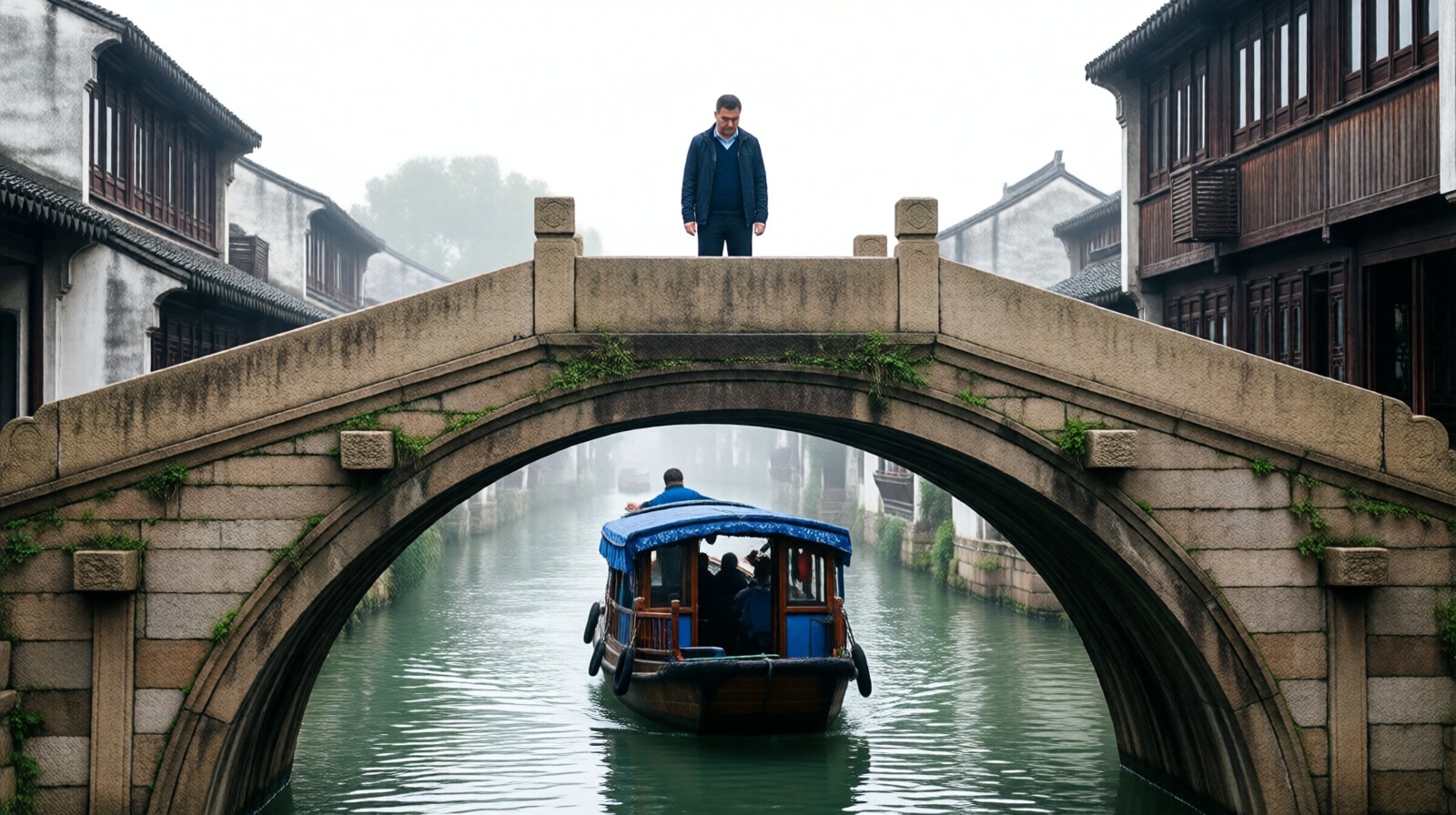
The Grand Canal in Numbers
Stretching 1,776 kilometers from Beijing in the north to Hangzhou in the south, the Grand Canal is by far the longest artificial river in the world. Its construction began in the 5th century BC, with major expansions during the Sui (581–618 AD) and Yuan (1271–1368) dynasties. At its peak, it moved over 400,000 tons of grain annually, linking the fertile Yangtze River Delta to the political capitals of the north. For centuries, it was the economic backbone of imperial China—a role that no other canal in the world has ever played.
Comparing the World’s Great Canals
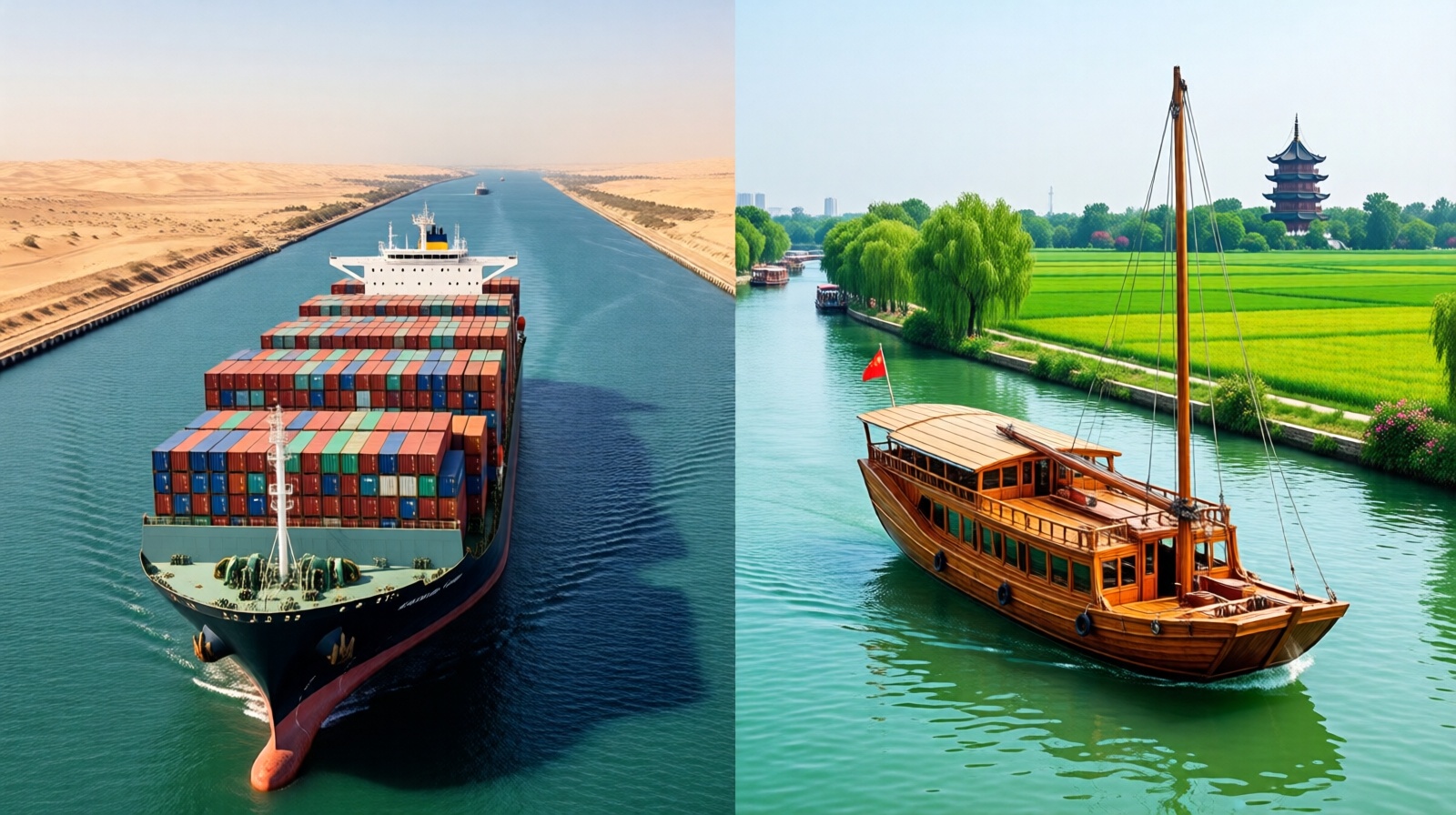
To appreciate the Grand Canal’s unique character, it helps to set it alongside the two other most famous canals on the planet: the Suez Canal (opened 1869) and the Panama Canal (opened 1914). Both were built to shorten maritime routes for global trade. Suez connects the Mediterranean to the Red Sea, cutting the Europe-Asia journey by thousands of kilometers. Panama links the Atlantic and Pacific, saving ships from rounding Cape Horn. They are flat-water canals that rely on locks to traverse elevation changes. Their purpose was industrial: speed, efficiency, and profit.
The Grand Canal, in contrast, was built for agricultural integration and political unity. It is a contour canal that follows the landscape, using natural rivers and lakes for much of its course. It has no massive locks—instead, it uses weirs, sluices, and a sophisticated system of water management to maintain flow. While Suez and Panama were dug by European colonial powers using modern machinery (or tens of thousands of laborers under harsh conditions), the Grand Canal was hand-dug by millions of Chinese peasants over centuries. It is not a shortcut between oceans; it is a spine that connected a continental civilization.
A Canal of Agriculture, Not Trade
Perhaps the most striking difference is the Grand Canal’s relationship with agriculture. The Suez and Panama canals are surrounded by desert and jungle, respectively—they brought water only as a byproduct of their operation. The Grand Canal, however, was designed to irrigate fields along its banks. It transported grain tax from the south to the north, but also supplied water for farming, drinking, and flood control. In the words of historian Patricia B. Ebrey, “The Grand Canal made it possible for the north to support a large population that could not be fed by local agriculture alone.” This function has no parallel in any other major canal.
Moreover, the Grand Canal spawned entire cities. Ports like Yangzhou, Suzhou, and Hangzhou became thriving commercial and cultural centers because of the waterway. Today, the canal region is one of China’s most economically dynamic areas, contributing a significant share of the country’s GDP. The canal itself is now a UNESCO World Heritage site (inscribed in 2014), recognized for its technological innovations, cultural landscapes, and continuous use.
Why the World Should Care
The Grand Canal’s heritage faces threats similar to those affecting other ancient waterways: urbanization, pollution, climate change, and neglect. As China modernizes, parts of the canal have been narrowed, polluted, or replaced by highways. Yet preservation efforts are underway. The Chinese government has invested billions in cleanup and restoration, and UNESCO has encouraged a holistic management plan. But this is not China’s responsibility alone. The Grand Canal is a waterway of outstanding universal value, belonging to all humanity.
When Marie, the French tourist, learns that the Grand Canal is older than most European cathedrals, she is amazed. “In Europe, we preserve old buildings,” she says, “but here you preserve a whole river. It’s like the Rhine being built by people.” That comparison is apt. The Grand Canal is China’s Rhine—except it predates the Rhine’s canalization by over a millennium. It is a testament to human engineering, social organization, and the timeless human need to move water where it is needed.
A Call for Global Stewardship
International cooperation can help safeguard the Grand Canal. Knowledge exchange with other countries that manage historic waterways—such as the Canal du Midi in France or the Rideau Canal in Canada—can bring best practices for water management, tourism, and heritage conservation. Scholars and tourists alike can contribute by visiting responsibly, supporting local communities, and spreading awareness. The Grand Canal is not a relic; it is a working waterway that still carries cargo, irrigates fields, and offers a glimpse into China’s past and present.
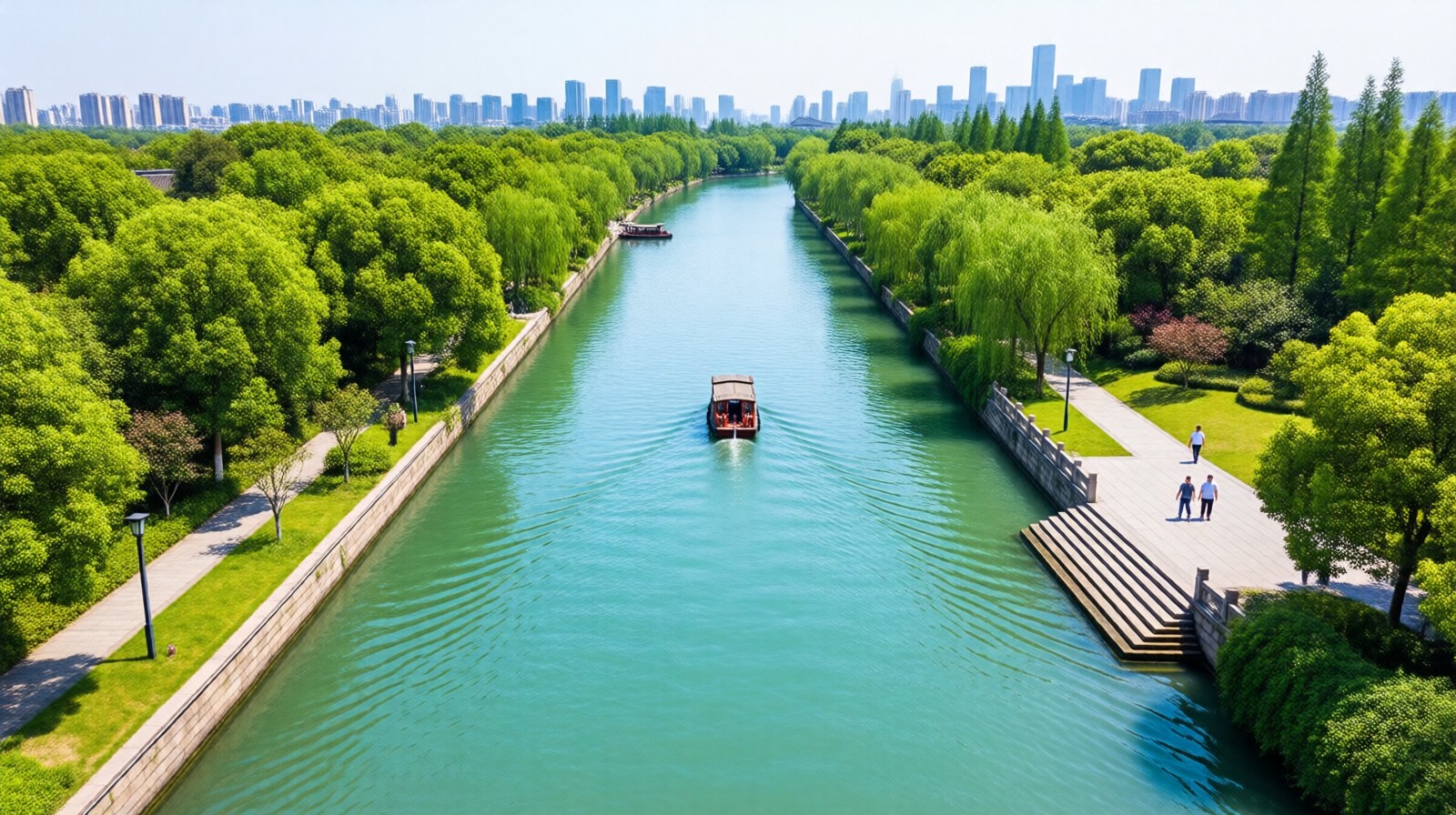
As the world becomes more interconnected, the stories of our shared heritage matter more than ever. The Grand Canal reminds us that civilizations are built not only on oceans but also on rivers—and on the canals that connect them. It is China’s gift to the world, and it deserves the world’s care.
Start the discussion at forum.chinacomes.com