
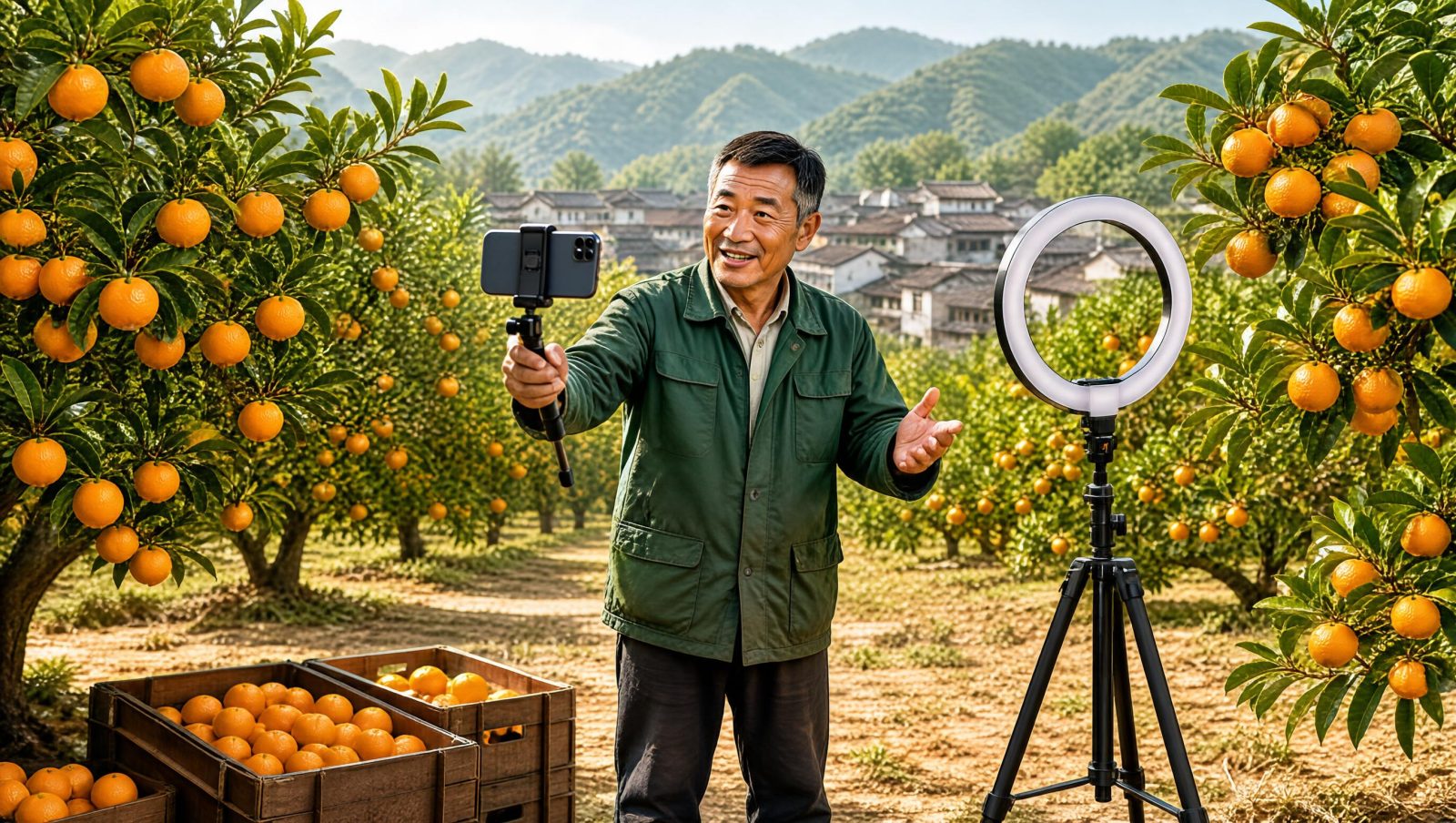

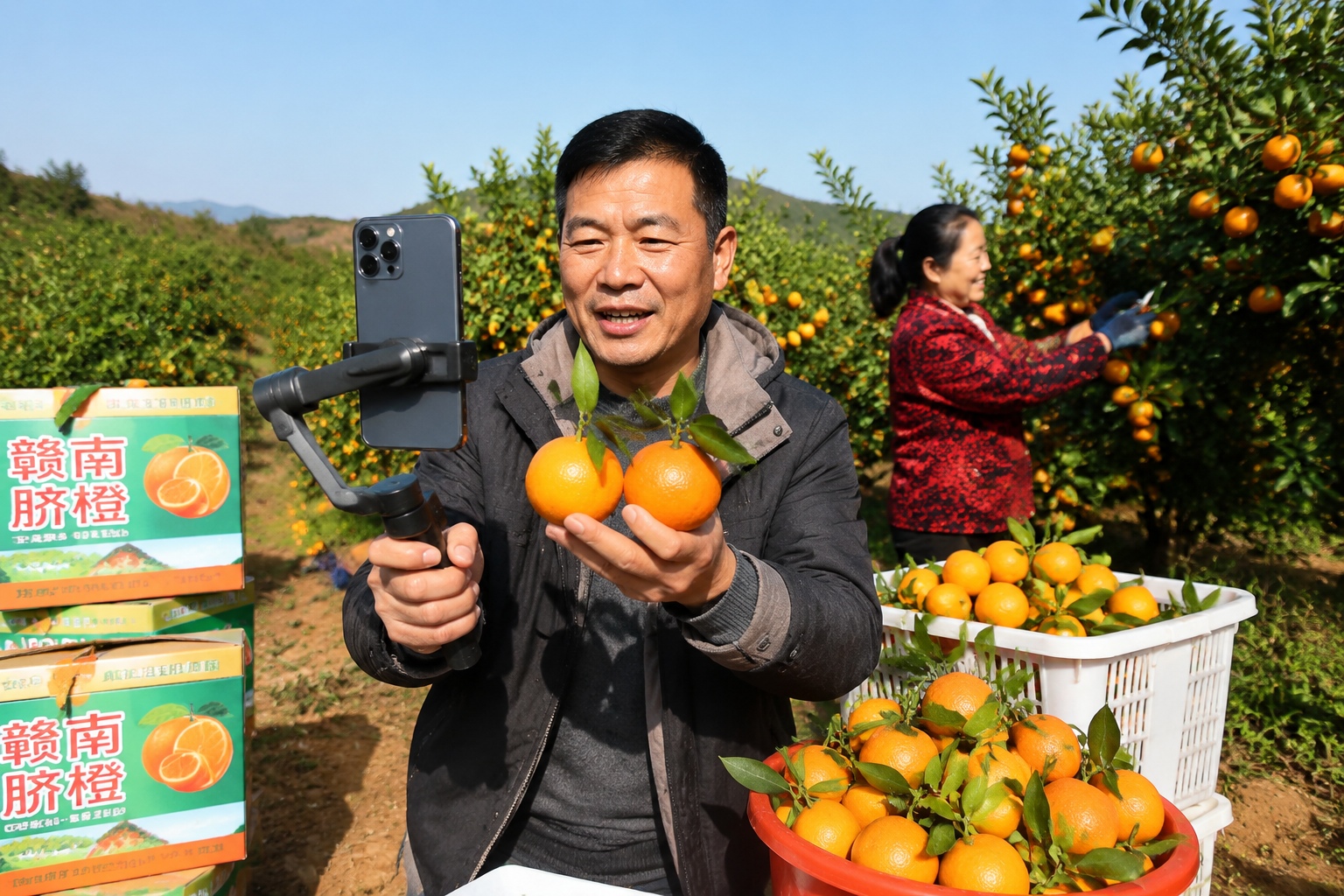
In a tangerine grove in Sichuan’s Meishan county, farmer Liu Qiang is not done with his day. He attaches a smartphone to a selfie stick and begins to talk to a small camera: ‘Look at this fruit. We picked them this morning. Should I cut one open for you?’ Within minutes, comments pour in. Customers ask about sweetness, pesticide residue and shipping times. Liu walks along the trees, answering while holding the fruit near the lens. By the time he ends his session, he has sold more than 300 boxes, bound for cities like Shanghai, Beijing and Nanjing. ‘Two years ago, I waited for a purchaser to come and offer a price,’ he says. ‘Now I talk straight to the consumers.’
Liu is one of tens of thousands of Chinese farmers selling agricultural products through livestreaming on apps such as Douyin and Kuaishou. The practice has turned into a quiet revolution in rural commerce, allowing smallholders to bypass layers of middlemen and reach an urban consumer base of hundreds of millions. According to the Chinese Ministry of Commerce, online retail sales of agricultural products reached 587 billion yuan (about 82 billion USD) in 2023, more than double the figure in 2019. While not all of that is live-transaction-based, a large share now involves live-streamed selling.
The Rise of Farm Livestreaming
In apps that dominate daily digital life in China, farmers have become entertainers and spokespersons at once. Some show how to catch a fish with a net; others slice ripe watermelons in the field. What matters is authenticity. Unlike trained hosts, they offer direct knowledge about the crop, the local weather and the reason why the taste is special. ‘We have one thing professional hosts don’t have: we live in the place where the food is grown,’ says Liu.
Success is not merely about the camera. Since a city customer has many choices, trust becomes the currency. Many farmers film their fertilisation routines and show their identity cards, proving they are actual producers. A QR code on each package links to a short video of that farm. This transparency acts as a strong selling point.
Behind the Live Screen: Understanding the Logistics Revolution
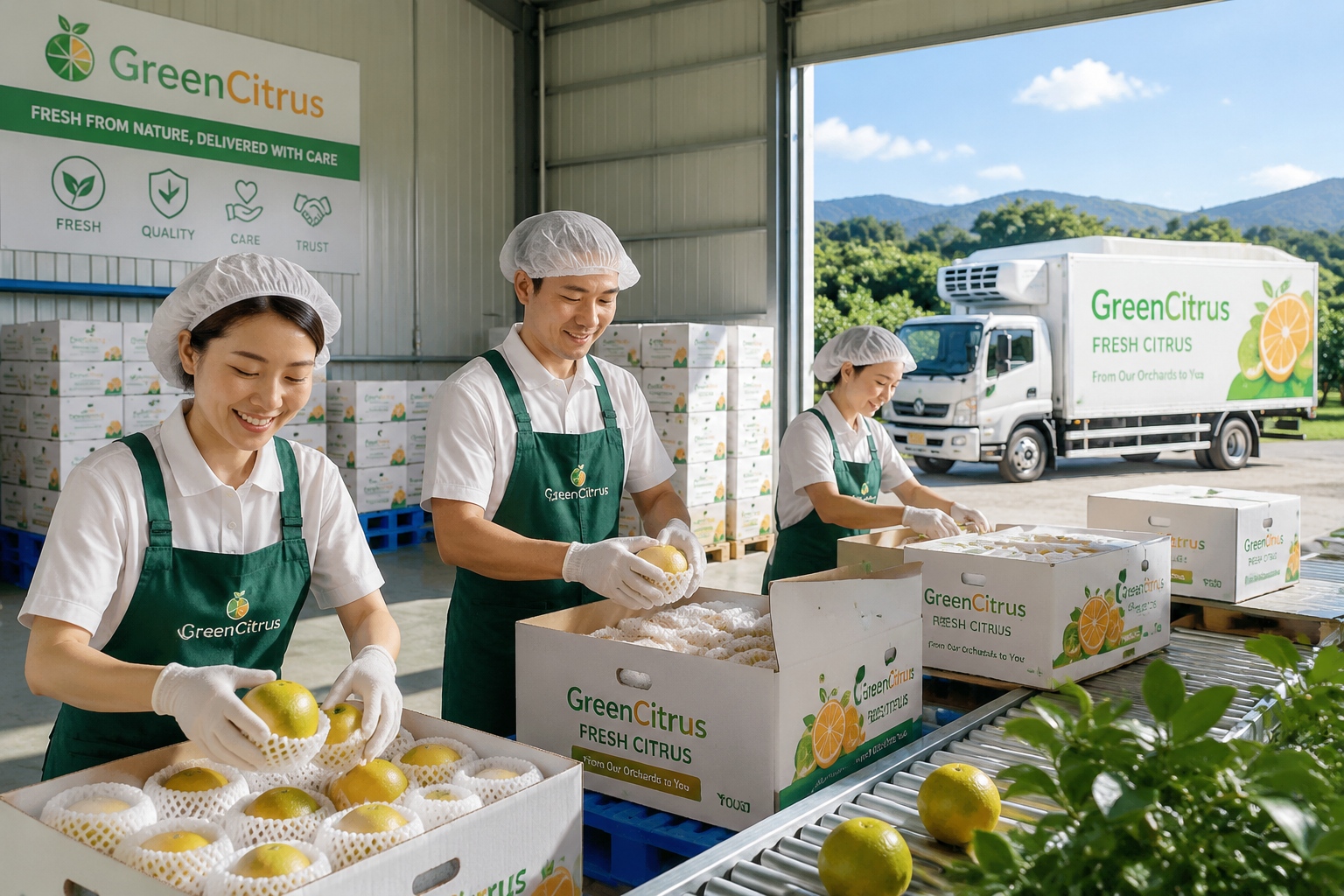
The digital transaction is only the first half of the story. A live room may sell 2,000 boxes in an hour, but those goods need to leave the mountain fast. To answer that demand, China has developed an extraordinary network of rural commerce logistics. In Liu’s county, a local packing facility sits directly by the orchard. Under its metal roof, dozens of workers grade the tangerines, wrap them in protective foam and pack them into corrugated boxes bearing the name of the village cooperative. Couriers from China Post or Shunfeng Express collect parcels each afternoon and take them to a county sorting center.
From there, temperature-controlled trucks speed toward regional hubs, where goods are flown or sent along overnight rail routes. A box picked at three in the afternoon may reach a buyer in Shanghai by the next evening. The average delivery time for online agricultural orders has dropped to about 48 hours. For specific items, it can be under 24 hours.
The backbone is a national push for ‘e-commerce into villages’, which extends broadband and postal networks into rural towns. Combined with over 100 million cubic meters of cold storage built over the last decade, this infrastructure has changed the meaning of ‘fresh’. Even strawberries from remote provinces now travel across the country in specially sealed containers.
The Battlefield: Where Competition and Quality Control Meet
If logistics is the silent machine, the live-streaming arena is loud and ruthless. At any given hour, thousands of live rooms are dedicated to selling bananas, garlic or tea leaves. To hold attention, streamers need a hook. A farmer may employ popular music, give away tasting packs, or display a dramatic harvest operation. Some streamers use costly ads to push their rooms into the platform’s feed.
This contest is not without risks. Product quality is not consistent in nature. One batch of fruit can be sweeter or slightly larger than another, and customers may feel disappointed. In fresh food, refund rates tend to be higher than for packaged goods. A minor issue highlighted online can damage a new account almost instantly. ‘Good livestreaming is not the same as good selling,’ says Zhang Wei, a researcher of e-commerce in Chengdu. ‘It requires you to manage expectations. If you overpromise, you will fail.’
Moreover, market costs have risen. To appear in the recommendation feed, farmers may pay for traffic. Cooperative marketing agencies take a cut of 15 to 30 percent. Some packaging costs more than the fruit itself. This pressure forces farmers to become tight accountants, not only growers.
Deeper Changes: Rural Economies and New Identities
Despite those pains, the positive effects have reached far beyond the sales graph. The demand for local farm content has created a wave of jobs in rural packing houses, customer-service stations and video studios. In many villages, elderly farmers now receive technical help from young content creators. Young people who once moved to the cities see a reason to return.
Li Na, 25, left Hulan for Chengdu to study video editing. When her father grew grapes and wanted to start a live stream, she came home. ‘In the beginning, my father was shy in front of a camera. Now he teaches viewers how to prune the vines,’ she says. ‘He uses the word “I need to grow quality” more often than before.’
Local governments have noticed. Provinces now sponsor training in livestreaming basics, provide shared broadcasting rooms at e-commerce industrial parks, and give subsidies for packaging costs. It is in their interest: each successful farm live room supports not only the family, but also the local logistics staff and packers. A 2023 survey by the Chinese Academy of Social Sciences suggested that one agricultural livestream room can create about three extra jobs in the surrounding community.
This digital transformation is also changing the way farmers perceive themselves. Instead of a person at the mercy of wholesalers, a farmer can be a brand, a storyteller and a service provider. They learn to respond to feedback, understand consumer preferences and take responsibility for customer satisfaction. The sense of autonomy is a notable change. ‘I used to plant whatever the purchaser asked. Now I plant what the market wants,’ says Liu, and in that sentence he summarises something the Chinese countryside has rarely seen: a direct voice in the economic conversation.
Still Evolving
The livestream battlefield is still developing. Digital divides remain—older and poorly educated farmers often feel left out. Small villages may lack transport volumes to fill daily courier routes. Some streamers have left the field because they could not handle the emotional stress or financial miscalculations. But the overall direction is not reversing.
For a nation that used to picture farmers as people tied to soil and local markets, the new image is different. The farmer who feeds the country is now also speaking with the country. A consumer in Beijing may watch a man in a Sichuan orchard wipe sweat from his forehead before eating a fresh tangerine. That small moment—the connection between field and screen—is a reminder that technology, when supported by the right infrastructure, can bridge enormous distances and produce something meaningful.
Start the discussion at forum.chinacomes.com