

It’s Not Facebook. It’s WeChat Moments.
Imagine a social network where your boss, your mother, your ex-colleague, your landlord, and your high school math teacher all sit in the same room, scrolling through everything you post. That’s WeChat Moments (朋友圈, péngyǒuquān) for millions of Chinese users. It’s part of WeChat, the super-app that nearly everyone in China uses for messaging, payments, reading news, and even booking hospital appointments.
For outsiders, Moments can feel like a mix of Instagram, Facebook, and a neighborhood bulletin board. But it has its own set of unwritten rules that are easy to trip over if you don’t know them. I’ve talked to a dozen Chinese users, and they all agree: getting these rules right matters more than getting likes. Here’s a breakdown of how it really works.
Who Gets to See What: Visible Range and Groups
The first rule of Moments is also its most powerful feature: you choose who sees each post. Unlike Facebook, where you might have a vague list of “friends,” WeChat lets you assign every contact to a group—Family, Work, College Bros, Climbing Buddies, You Name It. Then, when you post, you can choose to share with a specific group, exclude a group, or make it visible to everyone.
A 28-year-old product manager in Beijing told me: “I have a group called ‘No Work.’ When I post feel-good stuff on weekends, I exclude my boss and clients from that group. It’s not that I’m hiding something bad—I just don’t want my boss to think I’m not working hard enough or that I have too much life outside work.”
For many, the default is not “public to all friends.” Instead, people often adjust visibility based on the content. Travel photos? Family and close friends. Achievements at work? Colleagues and industry peers. A late-night rant? Just the “Safe” group, often with zero members.
If you’re new to WeChat, don’t be offended if you see only a thin line and “Friend Only Shows Recent 10 Moments” on someone’s profile. That’s not a personal rejection—it’s the platform’s default privacy setting, and many users keep it that way.
What People Post: Food, Travel, and Wins
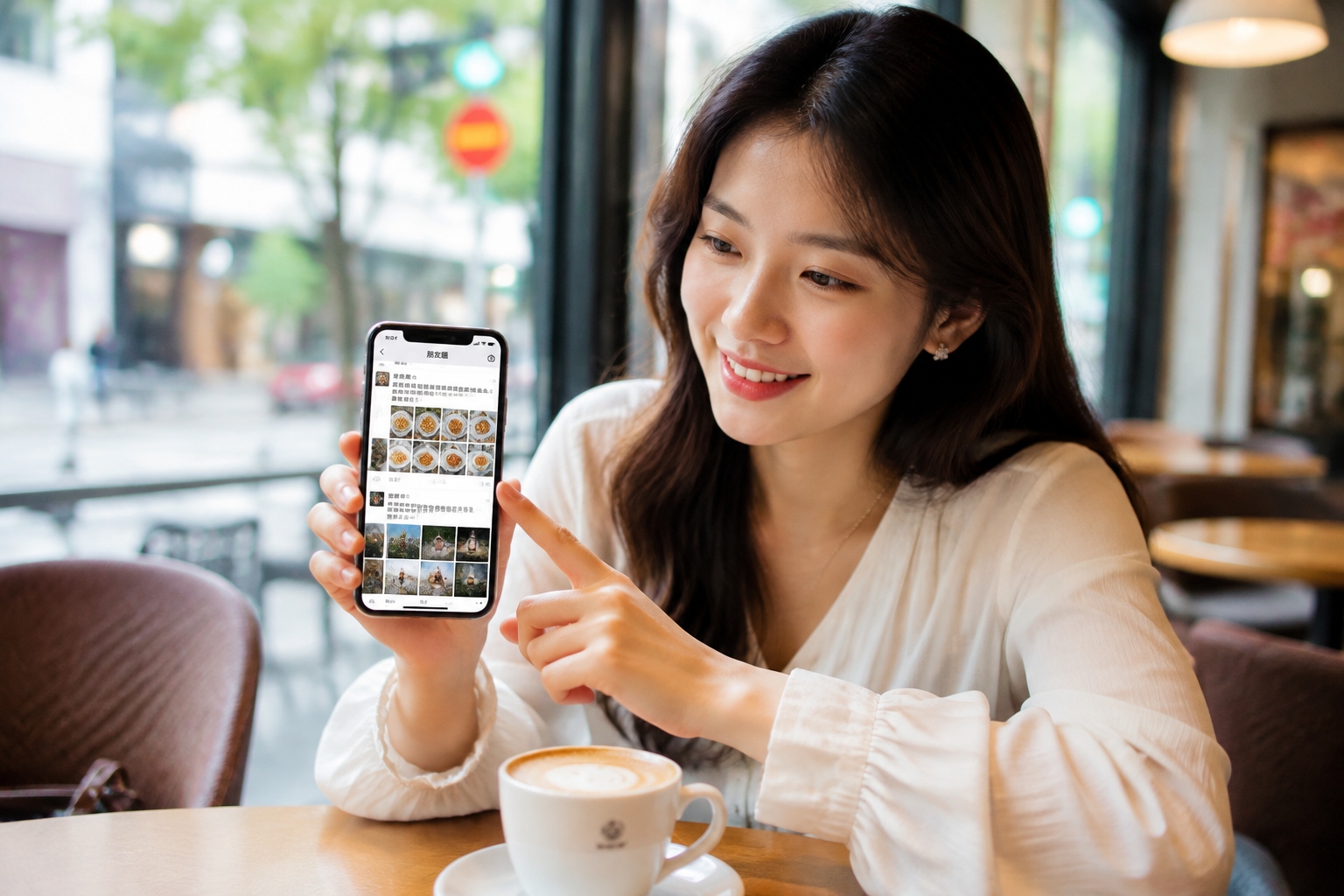
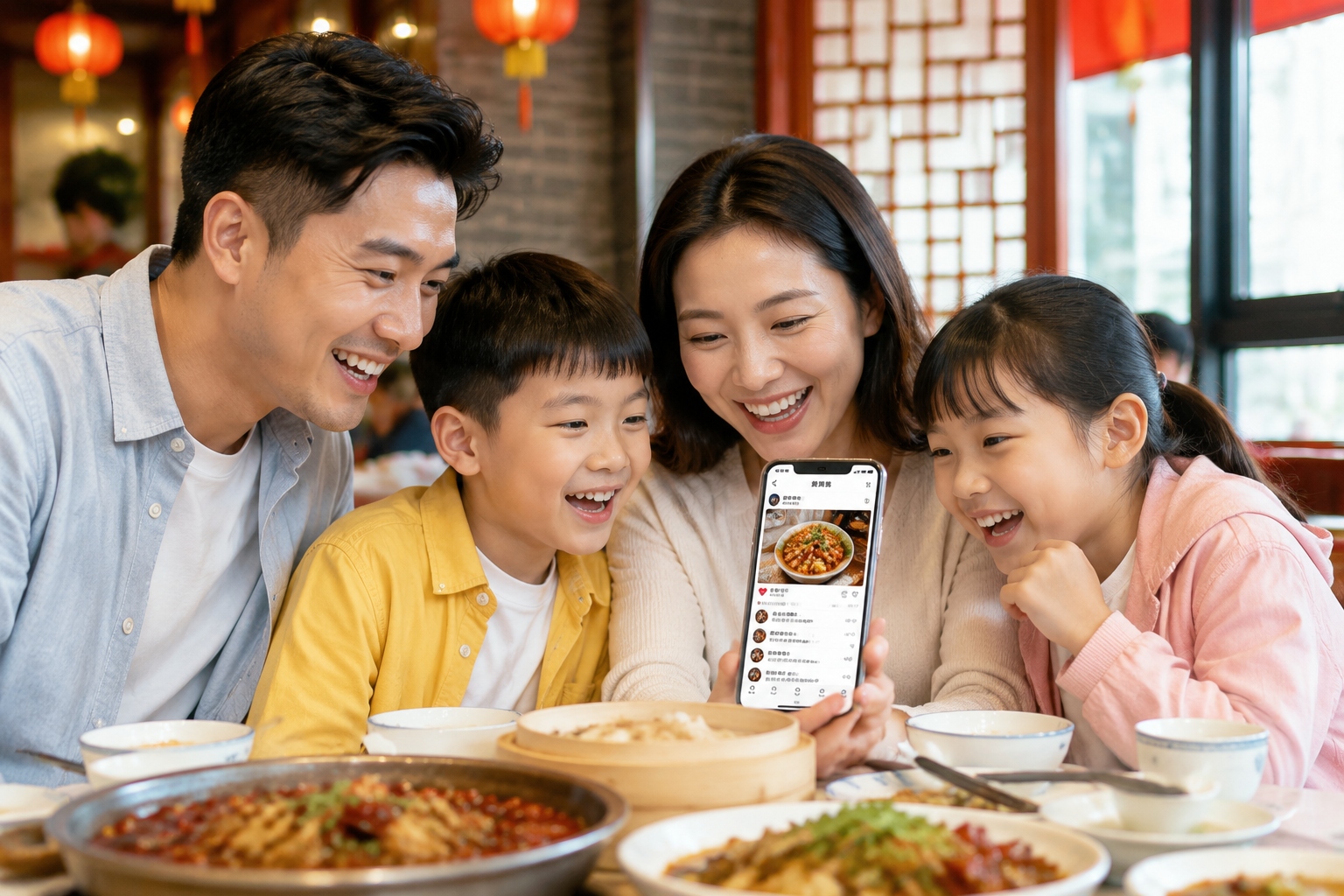
Scroll through any Chinese person’s Moments and you’ll notice some recurring themes. Food is the undisputed king. From a steaming bowl of noodles at a street stall to a meticulously plated tasting menu in Shanghai, food photos are the safest and most popular content. Why? Because food is positive, neutral, and universally liked. It doesn’t invite controversy.
Travel is right behind. But not just any travel—it’s often a string of impeccably curated shots: temples, waterfalls, or a hand holding a coffee cup with the Great Wall blurry in the background. For young urban Chinese, traveling is both a hobby and a lifestyle statement. It says, “I have the time, money, and taste to explore.”
Work achievements also make frequent appearances: a promotion, a new project, an award, or a company milestone. These posts are usually framed with humility—think “So thankful for my team” or “Luck more than skill.” But they’re still wins. Sharing a success is acceptable as long as you don’t boast. The trick is to be proud but not arrogant.
And then there are the everyday posts: kids, pets, new gadgets, funny memes, and social causes. Some people post about charity campaigns or local events, which helps build an image of being socially responsible.
At its core, Moments is about projecting a life that is positive, harmonious, and well-rounded. It’s less about raw authenticity and more about curated positivity.
The Don’ts: Politics, Complaining, and Too Many Selfies
Just as important as what you should post is what you absolutely should not. The golden rule: avoid anything that disturbs the harmony.
Politics is the biggest no-go. Except for official celebratory posts (like National Day), most Chinese users steer clear of political commentary. One engineer from Shenzhen put it bluntly: “I have friends with all kinds of views. Posting about politics would start a fight or get me in trouble. There’s no upside.” It’s not just about censorship; it’s about social harmony. People prefer to keep their opinions to themselves to avoid conflict.
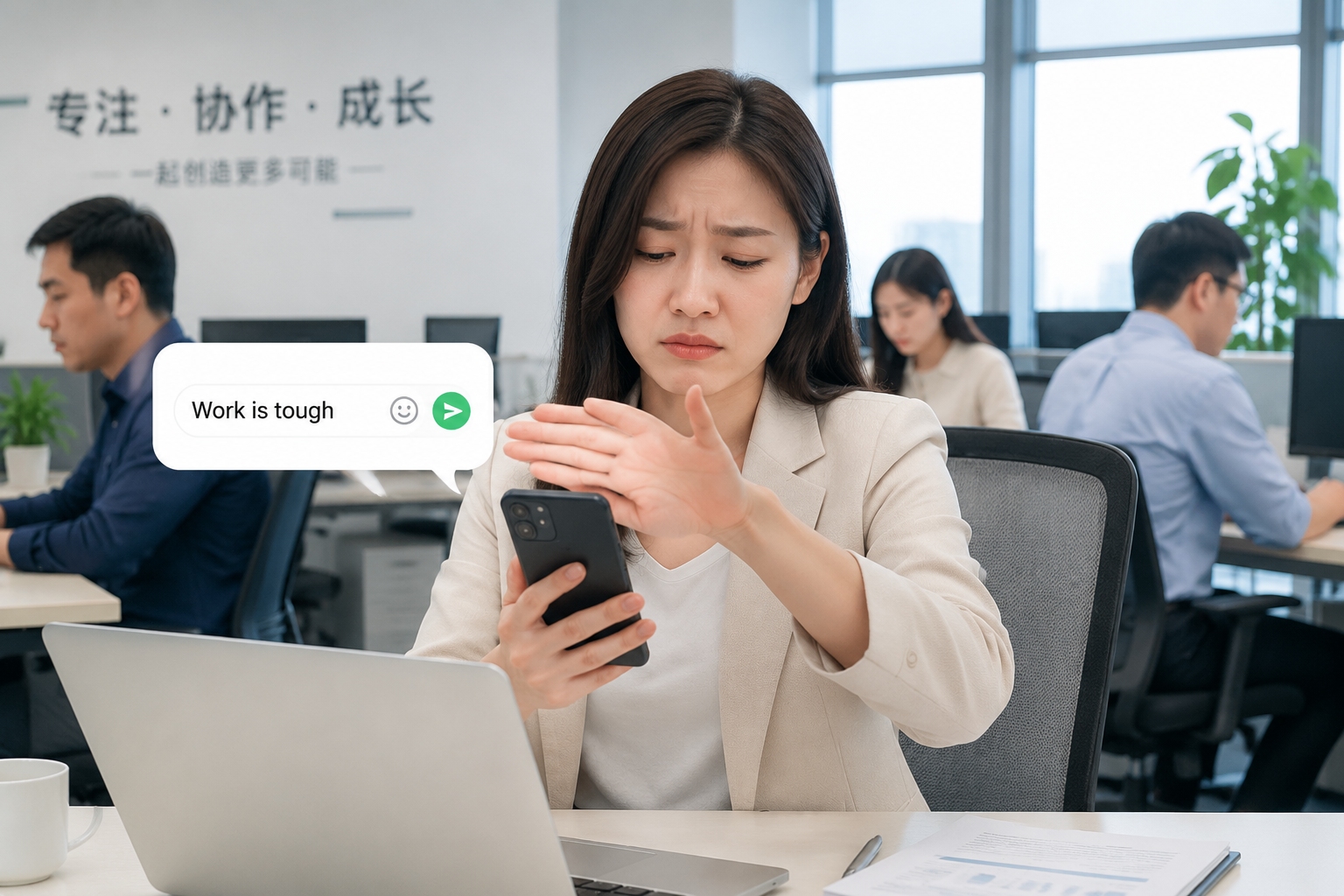
Complaining is frowned upon too. A long rant about a difficult boss, a bad breakup, or a traffic jam will likely get a few “care” emojis, but it also makes people uncomfortable. A 34-year-old teacher said, “When I see someone constantly complaining, I think they have bad emotional management. I might mute them.”
Overly frequent selfies are a third risky area. Posting a polished selfie every now and then is fine—it shows you care about your appearance. But stuffing your Moments with a daily mirror shot? That signals vanity or, worse, a lack of real-world significance. “We have a saying: if you’re good-looking, post once; if you’re not, post twice to attract attention,” joked a university student in Chengdu. All in good humor, but there’s a real cultural preference for modesty.
The Give-and-Take of Likes and Comments
If you think Instagram’s like economy is complex, wait until you see the reciprocity rules of Moments. Liking isn’t just a tap; it’s a subtle social currency. When a friend posts something, you like it to show you care. But your like also creates a soft obligation. They might feel they should like your next post too.
Commenting is even more loaded. A comment like “So beautiful!” or “Did you try their special dish?” is seen as relationship maintenance. But ignore the nuance? If a coworker posts about their child’s award, and you don’t at least give a thumbs-up, you risk being perceived as hostile or indifferent. On the flip side, commenting on a boss’s post with excessive flattery can be seen as sycophancy. There’s a thin line between being supportive and being a brown-noser.
An interesting quirk: sometimes people like each other’s posts just to keep the connection alive, even if they don’t care about the content. One user in Guangzhou told me, “I have colleagues I haven’t spoken to in years, but I like their Moments occasionally. It’s like saying ‘I’m still alive and I don’t hate you.’”
This exchange isn’t cold calculation. It’s a way to maintain social bonds in a culture where directness can feel rude. The like button is a form of social glue, and abstaining is noticed.
Why So Many Are “Three Days Visible”
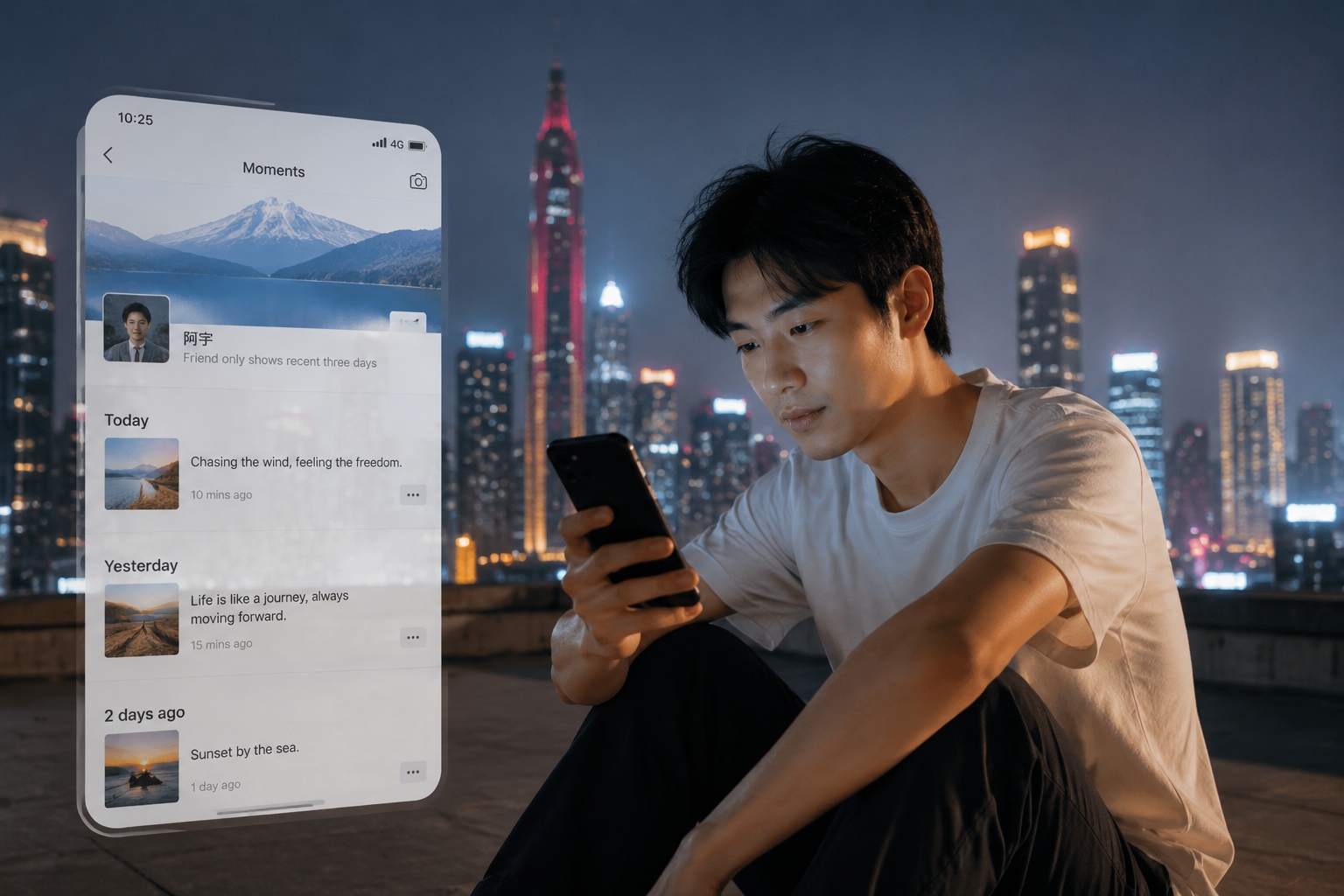
You’ve probably noticed that many Chinese users set their Moments to allow only the last three days of posts. This feature, introduced in 2017, has become a default for millions. Why?
First, it’s a privacy shield. In a world where your boss and your dad are on the same app, you don’t want them digging through your old photos of your college party phase. Three days gives you a clean, presentable façade.
Second, it creates a sense of “freshness.” As a 27-year-old marketer in Shanghai put it: “If you can see my old posts, you know me too well. With three days, I can control the narrative. You only see what I want you to see right now.”
Third, it reduces social pressure. You don’t feel as if you’re being judged on how coherent your life story is. You can post a bad photo today, and in three days it’s gone—no need to delete it or worry about future employers scrolling through a decade of your online life.
This trend is so widespread that some see it as a sign of “social fatigue.” The Chinese internet is fast-paced, and the constant performance of a perfect life can be exhausting. The three-day limit is a gentle rebellion against having to curate an endless album.
Moments vs. Instagram: Different Mediums, Different Rules
Comparing Moments to Instagram helps explain why it feels so different. On Instagram, you’re typically broadcasting to a loosely connected group of followers, many of whom you don’t know personally. The goal is personal branding, aesthetic cultivation, and often, going viral.
On Moments, the audience is your real-life network: coworkers, relatives, clients, and old classmates. There’s less concern with polish and more concern with appropriateness. Instagram users might post a moody, melancholic photo with a cryptic caption. On Moments, that same photo might make people worry or think you’re unstable. So you smile, add a filter, and write “Sunny Saturday!”
Instagram has an explore page that pushes content from strangers. Moments has no such feature. It’s a closed loop, designed to strengthen existing relationships, not build new publics. You don’t get likes from strangers; you get them from people you have to see at the next family dinner.
This also means that your “friends” on WeChat are different from your followers on Instagram. You might have hundreds, but they’re the ones you interact with in real life. That shifts the whole social dynamic toward politeness and conflict avoidance.
How to Navigate Moments as a Foreigner
If you’re new to WeChat and want to fit in, here are a few practical tips:
1. Start with food. Posting a picture of a delicious meal—with a nice background, a bit of light editing—is the safest way to break the ice. It’s non-threatening and usually gets you a handful of likes.
2. Keep complaints out. Even if you’re having a rough day, resist the urge to vent on Moments. Save it for a private chat or an anonymous forum. Outside of that, a carefully worded, lightly humorous complaint about a universal issue (like Monday mornings) is acceptable, but keep it light.
3. Respect the “three days” rule. If someone’s Moments are hidden, don’t take it personally. It’s not about you—it’s their privacy policy.
4. Don’t be creepy. Liking old posts can be seen as stalking. Stick to recent posts.
5. Use groups wisely. If you have Chinese friends, consider setting up your own groups (e.g., “Work,” “Family”) and take advantage of the “close friends” feature. It lets you share more freely without worrying about offending your boss.
6. When in doubt, post less. In China, a silent account is often better than a weird post. People will assume you’re busy, not that you’re hiding something.
Conclusion: A Window into Chinese Social Logic
WeChat Moments may have its quirks, but it’s a fascinating mirror of broader Chinese social values: harmony, face, and reciprocity. The food photos, the cheerful captions, the three-day limits—they’re not just digital behavior. They’re ways of maintaining relationships in a society where group cohesion matters more than individual expression.
Once you understand the unwritten rules, Moments becomes a great tool for getting closer to your Chinese friends. Like their posts, leave kind comments, and you’ll be amazed at how quickly the relationship warms. And if someone doesn’t like your post? Don’t worry. It’s probably not personal—they might just be saving face by limiting their interactions.
So go ahead, take that photo of your dumplings and share it. Just don’t complain about the dumpling price in the caption.
Start the discussion at forum.chinacomes.com