
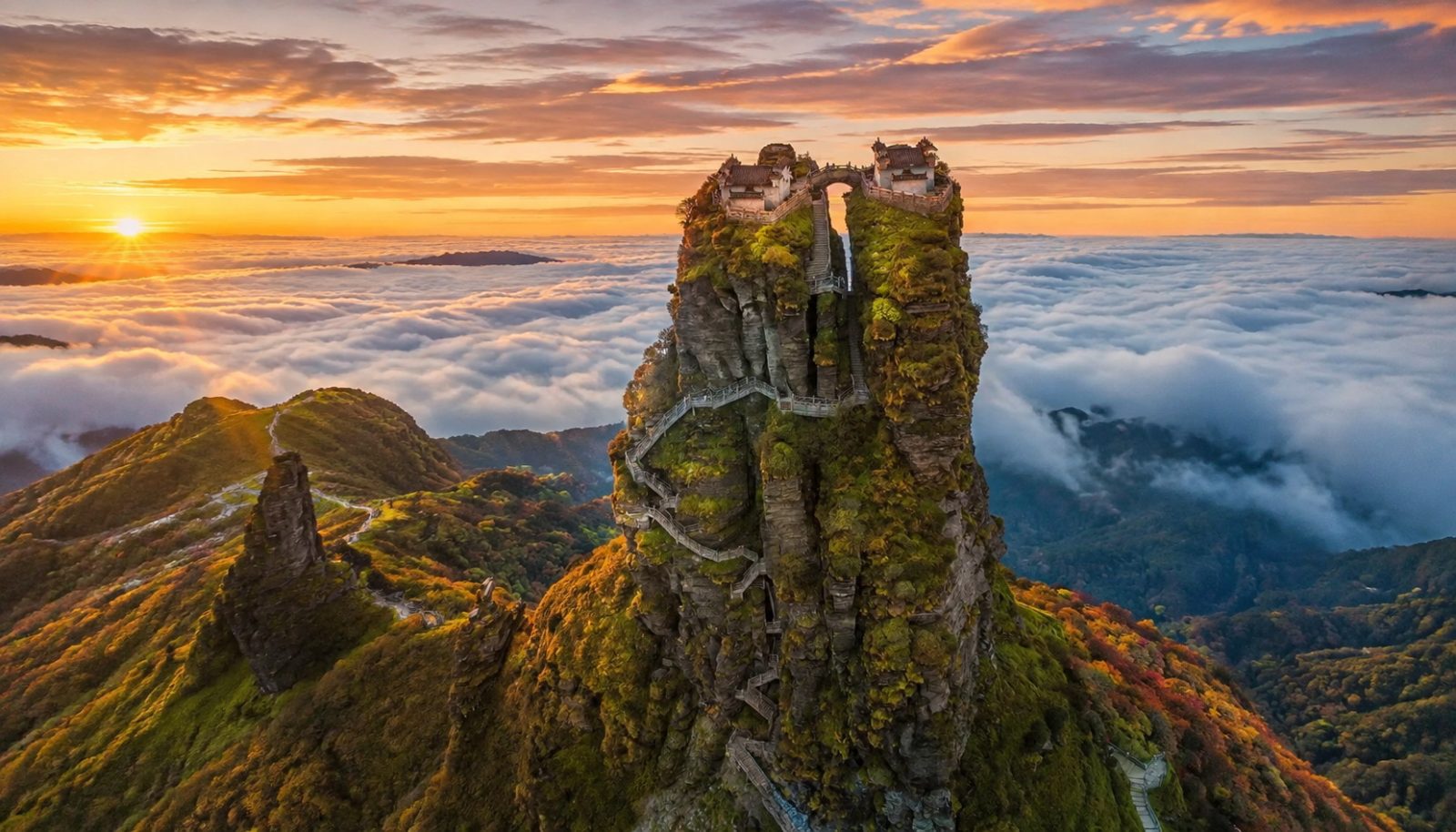

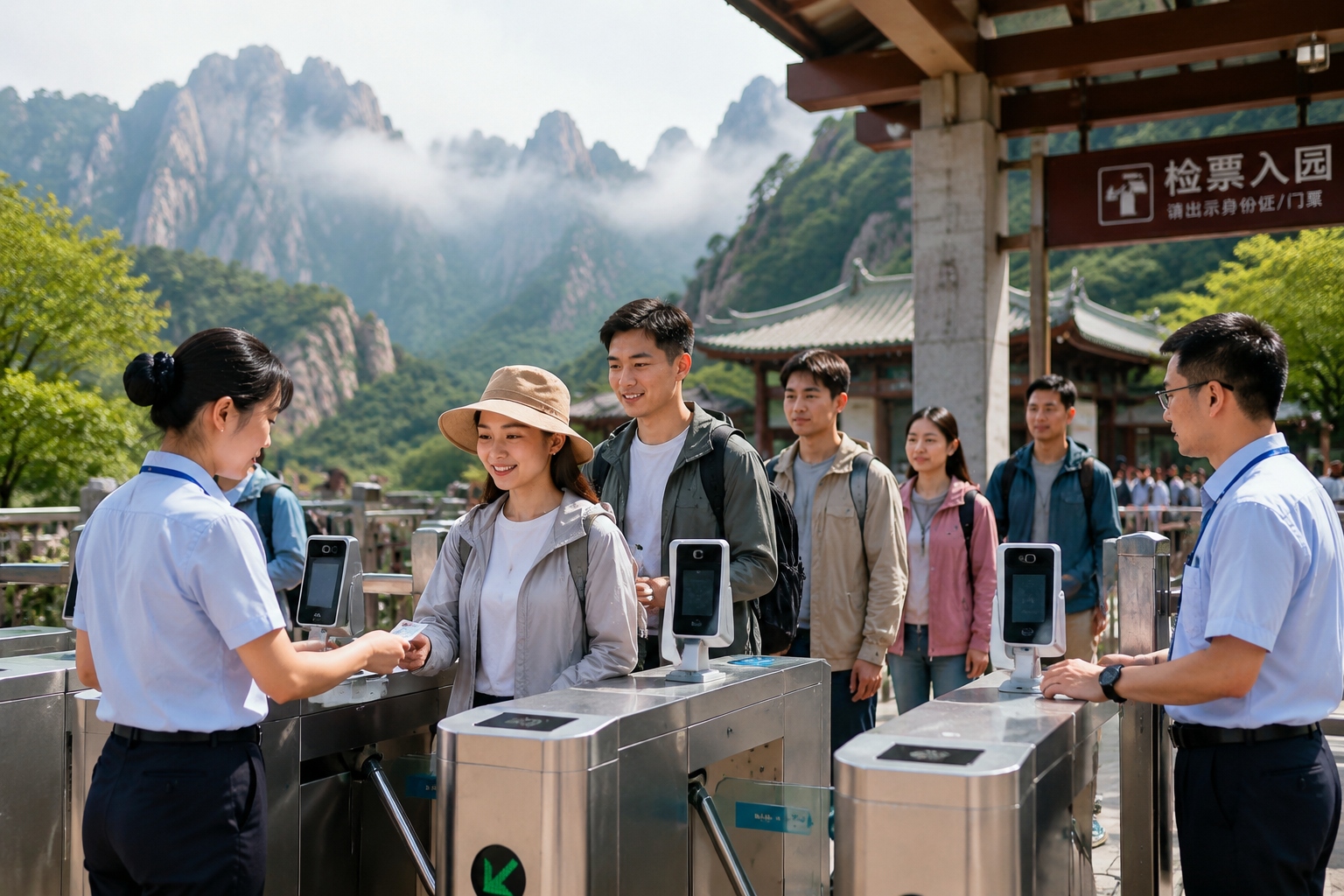
It’s 6:30 in the morning, and you’re standing in a line at the eastern gate of Fanjingshan, China. Around you, Chinese travelers are sipping tea from thermos flasks and checking their phones. Staff scan ID cards at the turnstiles. Through the thin mist, you can just make out the silhouettes of two massive stone pillars – the Red Cloud Golden Summit. This is not just a nature hike. It’s a carefully controlled operation, and once you understand how it works, it becomes one of the most rewarding climbs you’ll do in China.
Step 1: Getting to Fanjingshan
Fanjingshan sits in Guizhou province, in the southwest of China. The nearest airport is Tongren Phoenix Airport, with flights from Shanghai, Guangzhou, Shenzhen and even Beijing. From there, it’s about an hour’s drive to the scenic area. Alternatively, high-speed trains stop at Tongren station. From Tongren, you can catch a tourist shuttle bus to the eastern gate in Jiangkou county. It takes about 1.5 hours.
Most travelers start from the eastern gate, which is the main entrance with better infrastructure. If you’re more adventurous, there’s also a western gate in Yinjiang county, but it leads to a longer and rougher trail. For this guide, we’re focusing on the eastern gate, which is where the majority of first-time hikers go.
Step 2: The Ticket Quota System
Here’s the thing that surprises many international visitors: you can’t simply arrive and buy a ticket at the window. Fanjingshan limits the number of daily visitors, and during peak season, it often sells out days in advance. To get in, you have to book online through the official WeChat account or a travel platform. The system uses your Chinese ID card number, so if you’re using a foreign passport, you may need to arrange the ticket through your hotel or a local travel agency. This takes extra planning, but it’s not impossible.
As of now, the park entrance costs around 100 RMB. The shuttle bus inside the park is another 20 RMB, and the cable car is another 160 RMB round trip. Expect prices to vary slightly. I’d recommend budgeting about 300 RMB per person if you take the cable car – which most hikers do.
The sense of control is part of the experience. It’s how Fanjingshan avoids the gridlock that many scenic spots in China face. For every thousand visitors, the mountain remains wild.
Step 3: Cable Car or 8,000 Steps? Two Paths Up
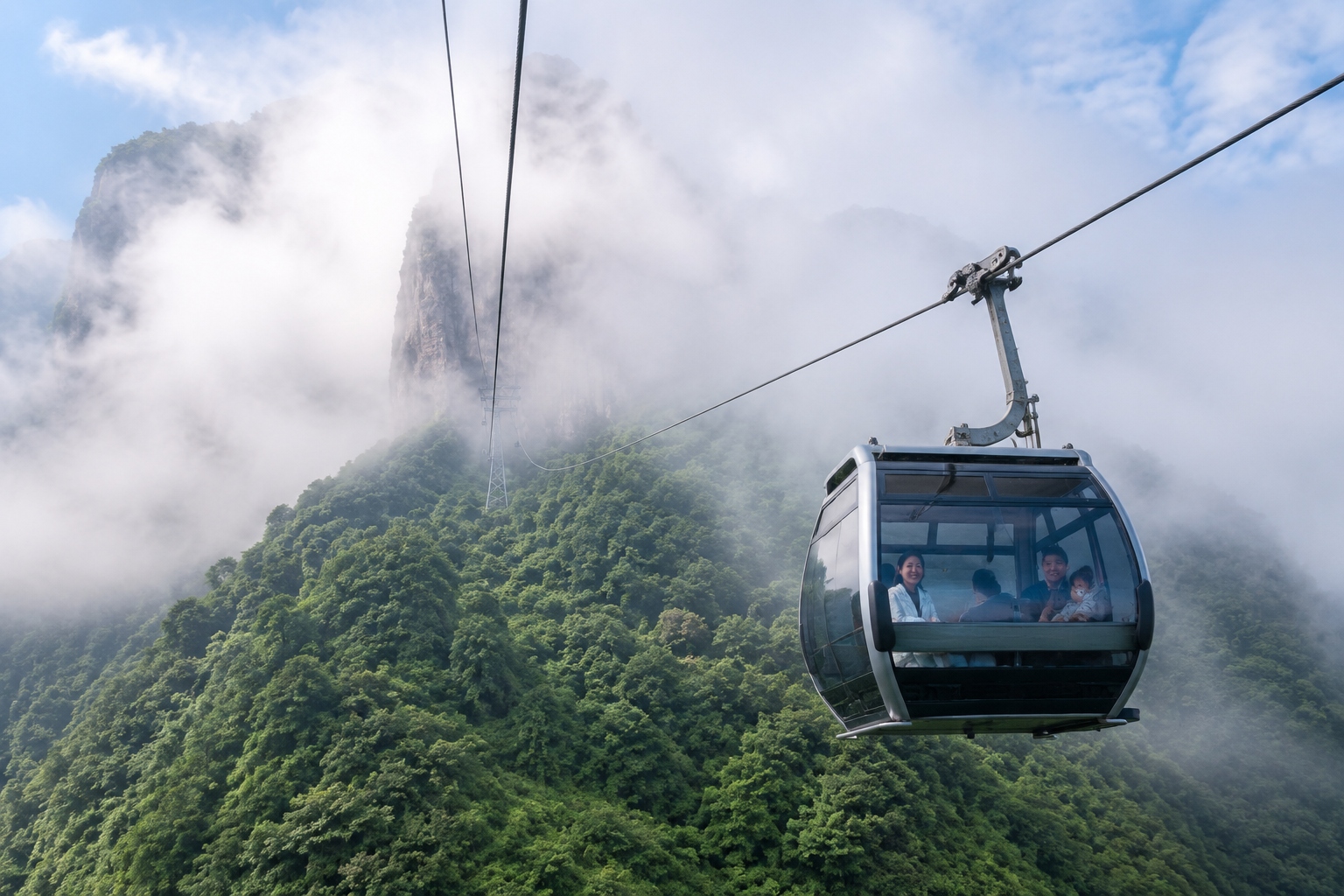
There are two ways to gain altitude on Fanjingshan. The first is the cable car, which lifts you from around 800 meters to about 2,100 meters in 20 minutes. Once you step out, you’re still a good 30-minute walk from the main attractions like Mushroom Rock. The second option is walking the entire way from the base – up about 8,000 stone stairs. Locals call it the "ladder to heaven." It takes most people 4 to 5 hours to climb and another 2.5 to 3 hours to descend. It’s a serious leg workout.
Which should you choose? If you’re here for the adventure, walk up. The trail passes through subtropical forest, crosses small streams, and gives you time to adjust to the altitude. If you’re short on time, or traveling with family, take the cable car. Even with the cable car, you still need to hike for about an hour on the top. For most visitors, the middle ground works: take the cable car up, then hike the remaining trails, and think about walking part of the way down if you still have energy.
The cable car ride itself is an experience. You float over dense forest, and if the fog rolls in, for a few minutes you can’t see anything at all.
Step 4: The Hike: Mushroom Rock, Old Summit, and Red Cloud Golden Summit
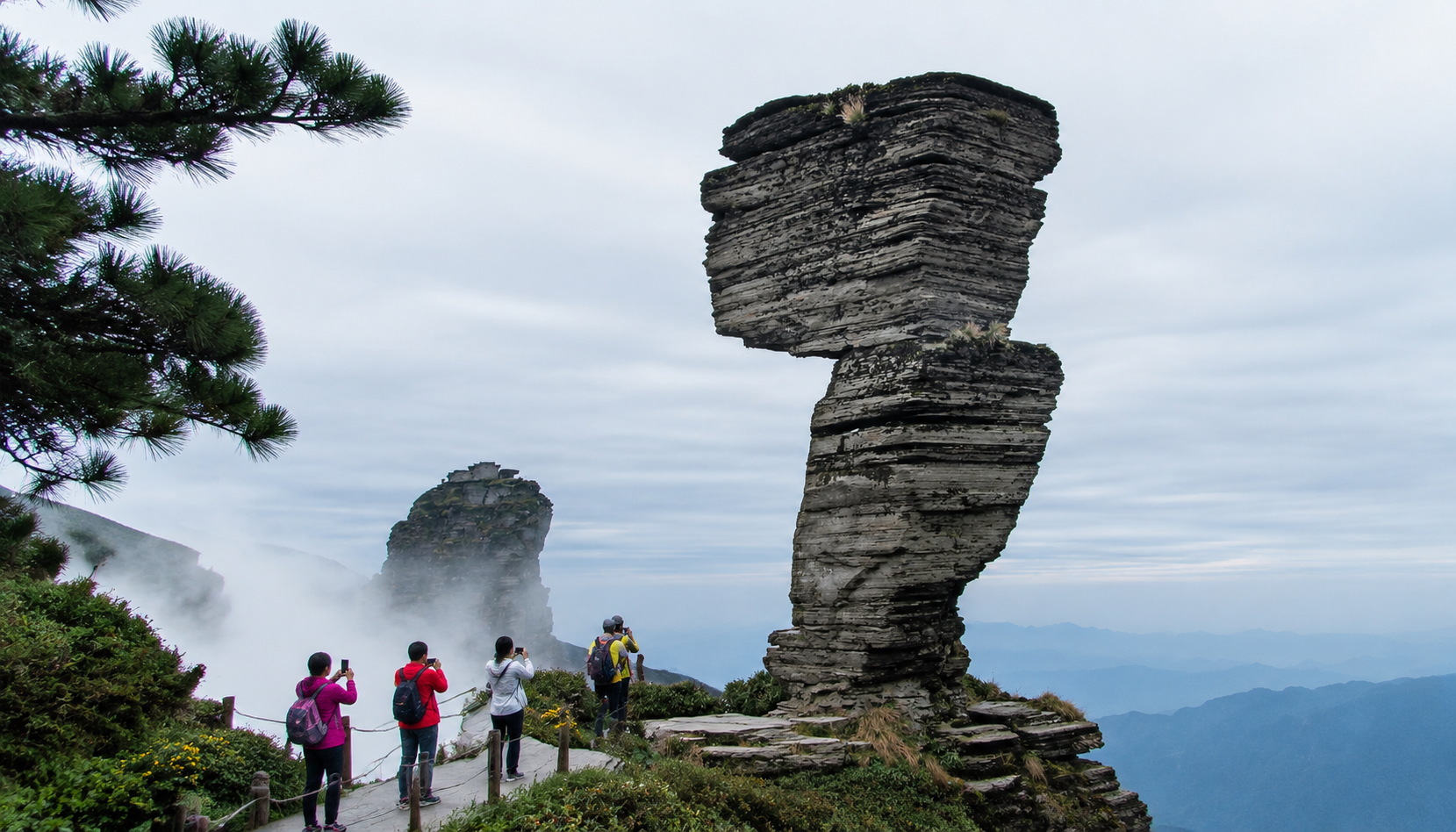
After you exit the cable car, the well-maintained wooden boardwalk leads through a misty forest of conifers and rhododendrons – though in autumn, it’s mostly bare rock. About 30 minutes later, you arrive at the famous Mushroom Rock, a stacked boulder that looks like it’s about to fall. It’s the most photographed spot on the mountain. When the wind blows away the clouds, you get glimpses of the full valley below.
The main event is the Red Cloud Golden Summit, a pair of colossal rock pillars connected by a stone bridge. The summit itself is reached by climbing narrow, almost vertical stairs cut into the rock. You’ll wear a safety helmet provided by the park – very common in Chinese mountainous attractions – and hold onto chains on your way up. On busy days, you’ll be in line for at least an hour just to get onto the pillar. The effort is worth it: from the top, the view makes you feel like you’re standing above an ocean of clouds. To the east, the smaller ancient summit, known as Old Summit, is a quieter gem if you have time for another climb.
Remember that the mountain trails are one-way during busy periods, so pay attention to signs. The whole loop – from cable car to Mushroom Rock, the two summits, and back – can be done in about 3 hours, taking it slow.
Step 5: Packing and Practical Notes
Because the mountain is 2,500 meters above sea level, the weather is unpredictable even in summer. It can be sunny at the bottom and freezing at the top. Always carry a light but warm windbreaker, or hire a padded jacket at the base. Rain is common, so buy a cheap poncho from the stalls near the entrance. Don’t bring an umbrella; it won’t help when the wind is strong.
Wear sneakers with good grip, not canvas shoes. The stone steps can be slippery, especially after rain. Bring water and some snacks – trail food inside the park is expensive. You’ll also want to keep your passport with you, because that’s the only document that allows you into the park if you hold a non-Chinese ID.
Altitude sickness is rare at this height, but you’ll notice your breath getting short when climbing the stairs. Slow down, drink water, and you’ll be fine. Many Chinese visitors carry small oxygen canisters – a fun cultural touch if you’re feeling uncertain.
One more thing: the park has food stands at the base and near the cable car. You’ll find instant noodles, grilled potatoes and candied fruit. Not gourmet, but it keeps you going.
Final Thought: The Controlled Wildness of Fanjingshan
There’s a weird beauty to the way Fanjingshan is managed. The timed tickets, the queues, the safety helmets and plastic ponchos – all of this can feel far from an untamed hike, but it’s also exactly what keeps the mountain from being destroyed by its own popularity. The contrast is striking: you line up behind 200 other hikers, and then you wind up on a rock edge where the next step is a sea of clouds.
After the descent, you’ll be exhausted but also strangely calm. The ticket system starts to make sense. You’ve just climbed one of the most unforgettable UNESCO World Heritage sites in China, and now you can talk about the queue as part of the story. If you’re ready to put in a little preparation, Fanjingshan will give you a day you won’t forget.
Start the discussion at forum.chinacomes.com