

Introduction
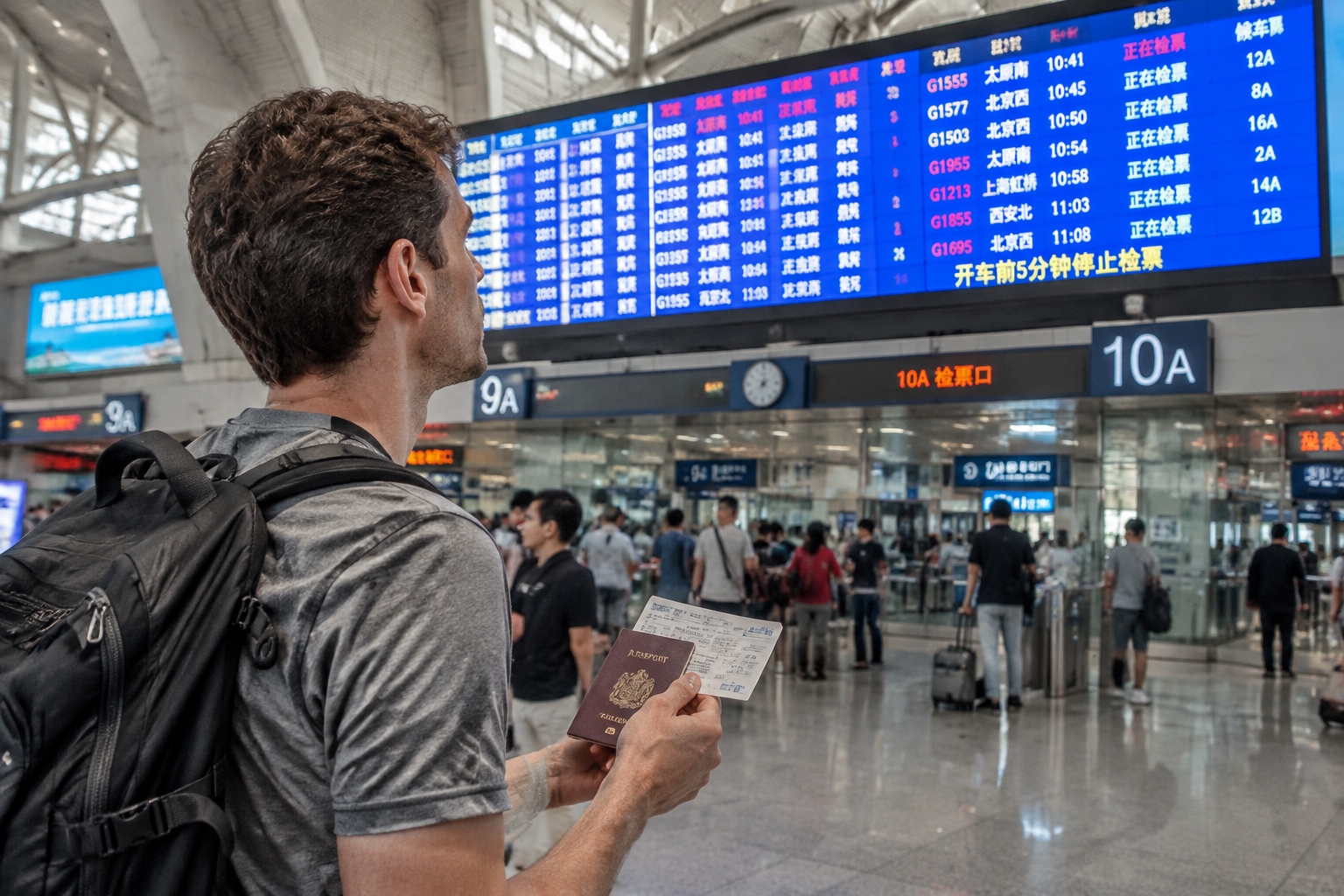
When Mark, a British traveler, first tried to buy a high-speed train ticket in Beijing with his passport, the ticket machine kept showing an error. He joined the queue at the manual counter, handed over his passport, and walked away with a paper ticket in two minutes. That small ordeal sums up a key rule for visiting China: your passport works, but you need to know where to use it.
This guide explains how to use your passport for trains, flights, and long-distance buses across China. It covers everything from online booking to station procedures, plus a few things that can trip you up.
Trains: Booking on 12306 and Boarding with a Passport
How to book a train ticket with a passport
China’s official train booking system is called 12306. You can use the website or the app, but the interface is mostly in Chinese. Many travelers prefer platforms like Trip.com or Ctrip for an English interface. They charge a small fee, but they also handle passport verification for you.
If you book directly on 12306, you can register as an individual using your passport number. The system may ask you to verify your identity at a station counter before your first trip. That verification can be done in advance or on the day, but it’s faster to do it early.
Collecting paper tickets at the station
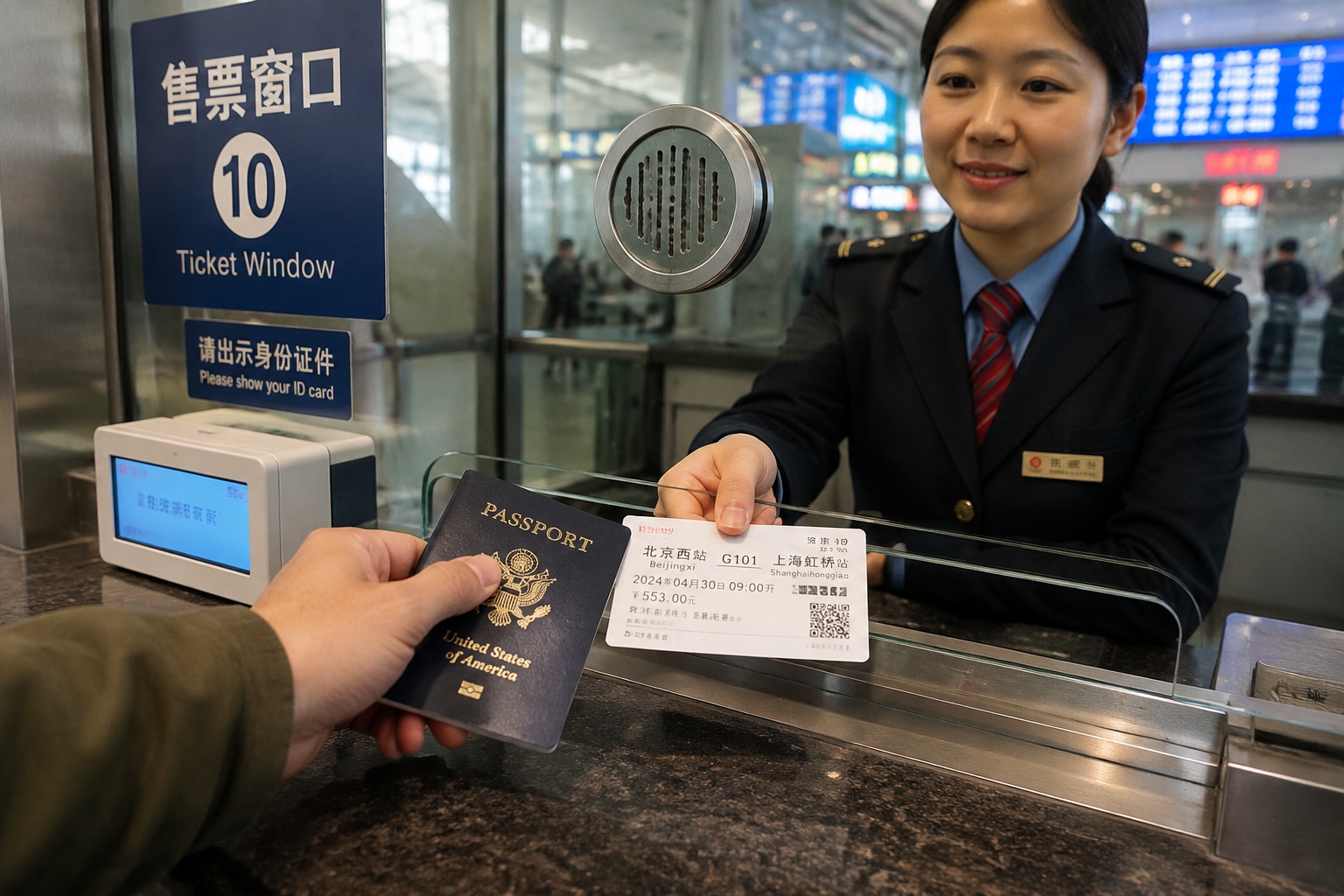
Even though tickets are linked to your passport, you often need a paper ticket to board. Your passport itself is not always accepted at the automatic gates. Go to the manual ticket window or the designated “passport” counter. Present your passport and the booking confirmation (a screenshot or email works). The staff will issue a paper ticket, which you then insert into the gate.
In major cities, some stations have self-service machines that accept passports. Look for the logo that says “Passport” or ask staff. When in doubt, the manual queue is the safest bet.
Going through security and the ticket gate
At most stations, you go through security screening before entering the waiting hall. Your passport and paper ticket are checked at the gate. The process is quick but can be crowded during holidays. If you arrive 90 minutes early for a high-speed train, you’ll have plenty of time to figure out any snags.

Flights: Passport, Check-in, and Security
Booking flights with a passport
Domestic flights in China can be booked with your passport on airlines’ official websites or third-party apps like Trip.com. The key is using the exact name and passport number listed in your passport. Make sure there are no typos; otherwise, you may be denied boarding.
Airport check-in and security
At the airport, use the counter check-in, not an automated kiosk. Most kiosks only read Chinese ID cards. Present your passport to the agent, and they’ll print your boarding pass. Security checks are thorough: take out laptops and liquids, just like anywhere else.
Pro tip: Some airports, like Daxing in Beijing, have facial recognition gates. If a machine fails to read your passport, simply show it to the human staff nearby. They handle passports all the time.
Long-Distance Buses: Does Your Passport Work?
Real-name ticket purchase
China requires real-name registration for long-distance bus tickets. Your passport is a valid ID for this. You can buy a ticket at the bus station counter or through apps like Ctrip. Some small stations may not have handled foreign passports before, but they can still issue a ticket.
Boarding procedures
On the bus, the driver or attendant may check your ID against the ticket. Just show your passport. It’s that simple. The only challenge is communication: many bus stations have limited English signage. Have your destination written in Chinese, and you’ll navigate it easily.
Border Areas: Passport vs. Frontier Pass
If you’re planning to visit border regions such as Tibet, Xinjiang, or parts of Yunnan, you might need a frontier pass, not just your passport. The frontier pass is a separate permit for Chinese citizens and foreigners. In most border areas, your passport plus a Chinese visa covers you, but in sensitive zones like the Tibet Autonomous Region, you need a Tibet Travel Permit, which your tour operator arranges. For Xinjiang, some areas are off-limits without special approval.
In short: your passport identifies you, but local regulations add layers. Always check with a local travel agent or the tourism office before heading to these areas.
Common Questions and Practical Tips
What if my passport doesn’t have a visa?
For domestic travel, you don’t need a visa stamp beyond your entry visa. A passport valid for more than 6 months is typically accepted.
Can I use an electronic printout?
Some stations accept the booking confirmation email for entry. In practice, it depends on the station. Keep a screenshot or printout of your booking. It’s also wise to keep your passport on you at all times, as hotels and buses may ask for it.
Useful apps and phrases
Download a translation app like Pleco or Google Translate. Learn the Chinese phrase “wō yòng hùzhào” (I use a passport). It helps.
Most importantly, give yourself extra time, especially at train stations. Even if everything goes smoothly, you’ll appreciate a relaxed start to your journey.
Start the discussion at forum.chinacomes.com