

Standing Still at 6:30 a.m.
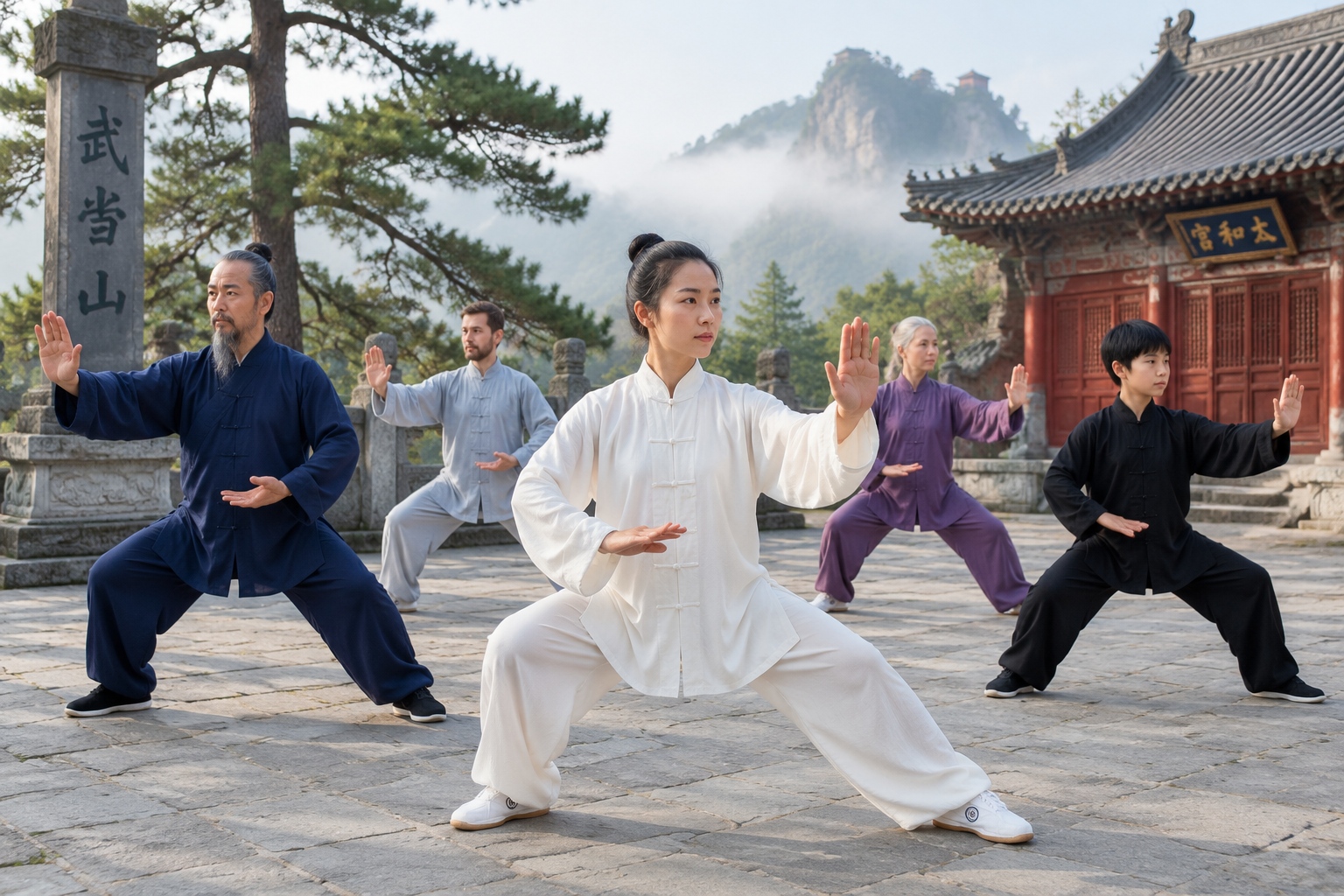
On my first morning at a small school halfway up Wudang Mountain, I stood in a stone courtyard with eleven other people. No one spoke. The fog was so thick I could barely see the pine trees at the edge of the yard. An old man in a gray jacket—our teacher, Master Liu—adjusted my elbow by two centimeters. “You are thinking too much,” he said. “Just stand.” That was day one. I had come for a week to learn Tai Chi.
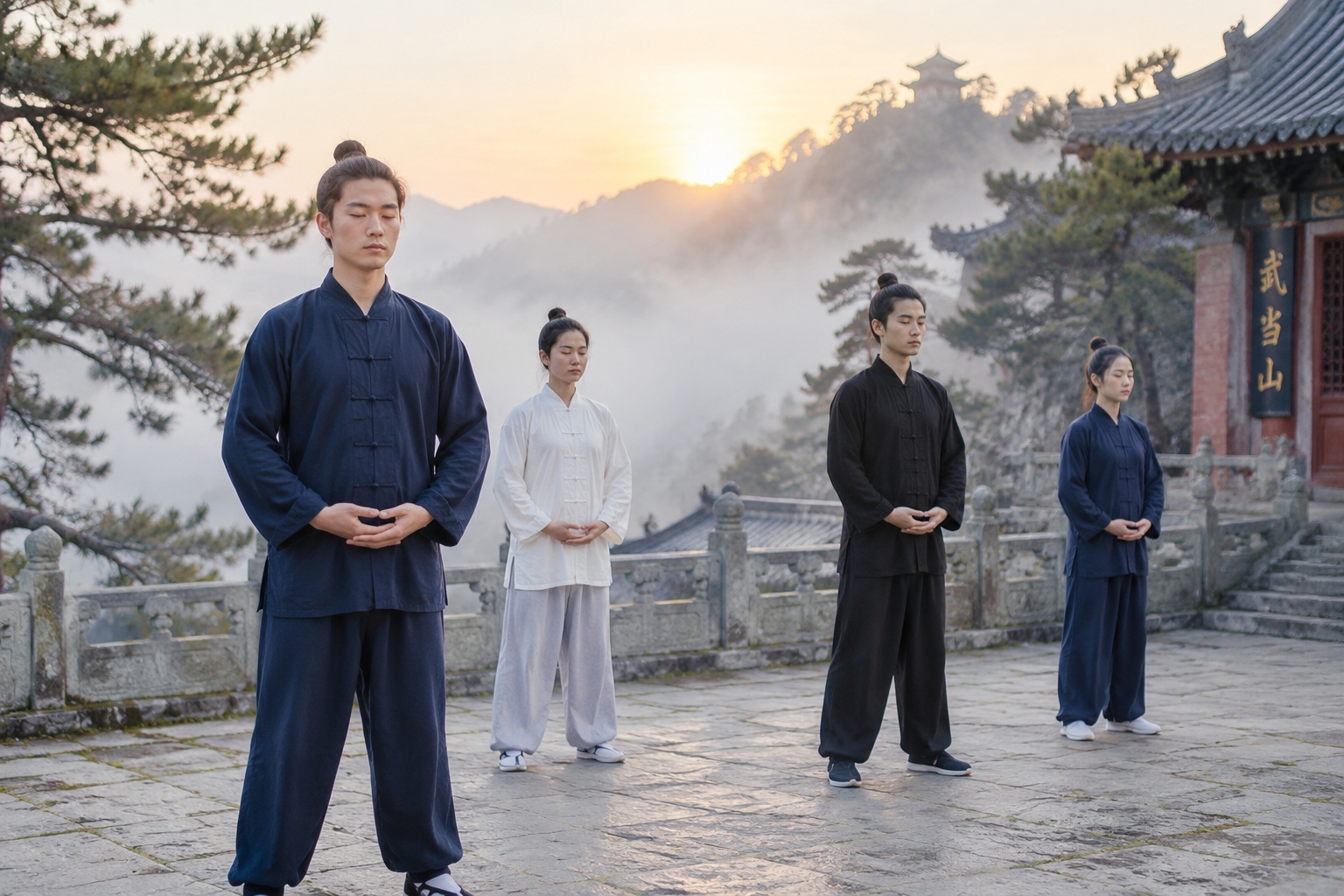
If you are not familiar with Tai Chi (Taiji), it is often described as slow-motion exercise. That is only half true. It is a martial art with roots in Taoist philosophy, built around balance, relaxation, and the idea of yielding instead of forcing. Wudang Mountain, in Hubei province, is one of its legendary birthplaces. I wanted to see what a beginner could actually learn in seven days.
Why Wudang Mountain?
Wudang is a UNESCO World Heritage site, about four hours by train from Wuhan. It is a mountain of temples, mist, and narrow stone steps. Unlike Shaolin Temple, which is associated with kung fu, Wudang is known for internal martial arts—Tai Chi, qigong, and sword forms. The landscape itself is part of the experience: you practice with the sound of wind in the pines and the smell of incense from a nearby shrine.
There are dozens of small schools and guesthouses on the mountain. Some are polished and commercial. Others are simple: a shared kitchen, a few dorm beds, a teacher who has been practicing for thirty years. I chose a place with fifteen students, no website, and a black dog named Hei.
What a Week Actually Looks Like
My schedule was roughly the same every day. It was not a vacation. But it was not boot camp either.
Morning: Standing and Form
6:30–7:30 a.m. — Standing meditation, called zhan zhuang. You hold your arms as if hugging a tree and try not to move. It sounds easy. It is not. Your legs shake. Your shoulders creep up. The teacher walks around saying “relax” in Chinese.
7:30–8:30 a.m. — Breakfast: rice porridge, steamed buns, pickled vegetables, boiled eggs. Everyone eats together at a long wooden table.
9:00–11:00 a.m. — Form practice. We learned the first section of the Wudang 13-form, a short sequence of movements with names like “Opening the Door” and “Cloud Hands.” For a beginner, it is like learning a slow dance where every step has a purpose. The teacher breaks down each move: where your weight goes, where your eyes look, when to breathe in, when to breathe out.
Afternoon: Push Hands and Theory
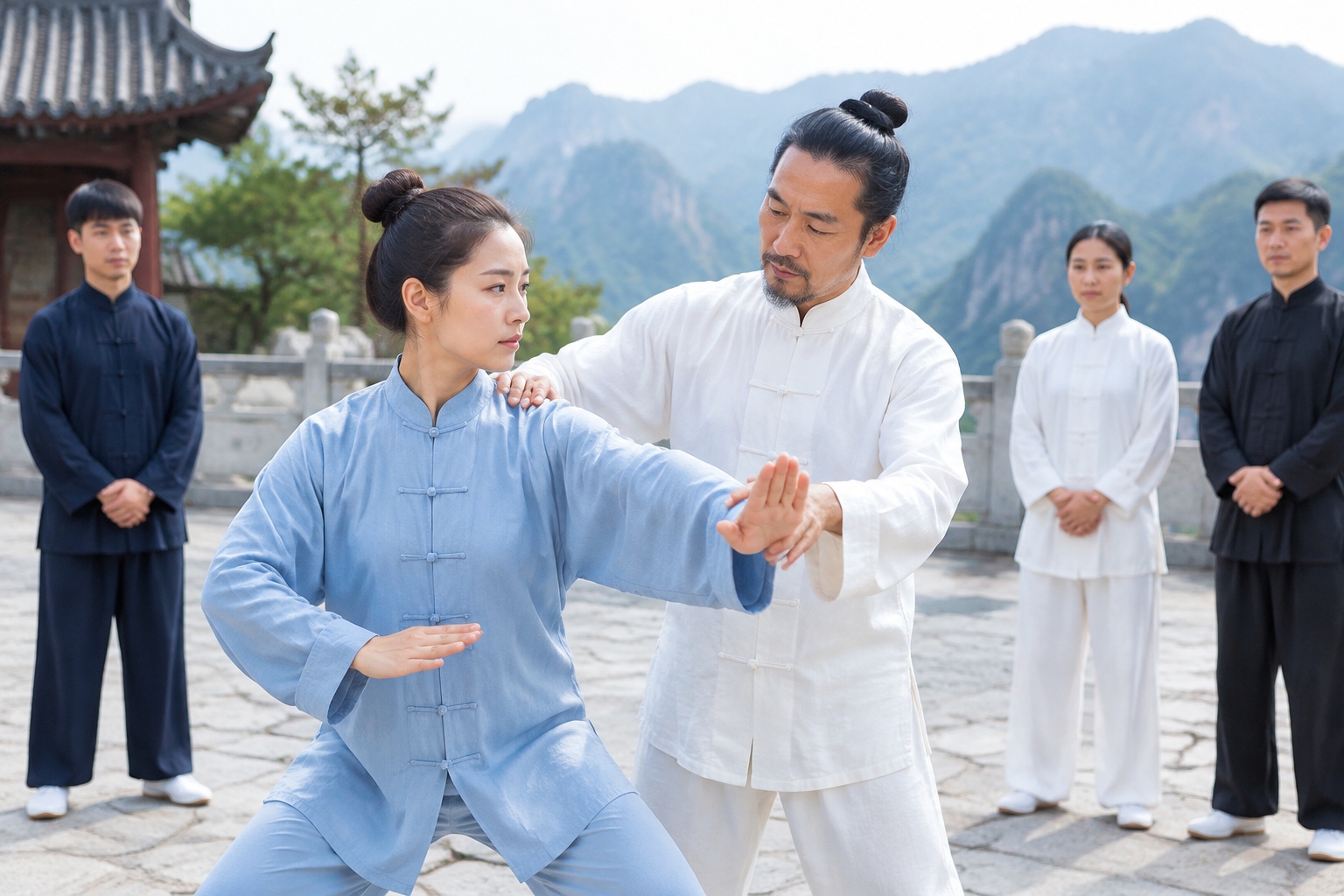
11:00 a.m.–12:00 p.m. — Push hands (tui shou). Two people stand facing each other, arms lightly touching, and try to sense the other’s balance. The goal is not to push hard. It is to stay relaxed and redirect. I was terrible at it. My partner, a retired teacher from Wuhan, kept smiling and saying “song” — relax.
12:00–2:00 p.m. — Lunch and rest. Some people nap. Others read or walk to a nearby temple.
2:00–4:00 p.m. — Either more form practice, or a theory class on Taoist ideas like yin-yang, wu wei (effortless action), and qi. The teacher does not lecture. He tells stories and asks questions.
4:00–5:00 p.m. — Qigong or free practice. Then dinner. Evenings are free. Some students go down to the village for noodles. Most go to bed early.
What You Can Realistically Learn in Seven Days
Let’s be honest. A week will not make you a Tai Chi master. You will not learn a full 108-move form. You will not win a push-hands competition. But you can learn more than you might expect:
- How to stand still without tension for 20 minutes.
- A short sequence of 8 to 13 movements that you can practice at home.
- Basic weight shifting and breath coordination.
- How to yield instead of resist when someone pushes you.
- A handful of Chinese terms: qi (energy), dantian (lower belly), song (relaxed).
What you won’t learn: how to fight, how to teach, or how to achieve enlightenment. That takes years, maybe decades.
The People You Meet
My classmates ranged from 22 to 65. There was a software engineer from Shenzhen who said he came because “my mind is too fast.” By day four, he could stand still for 30 minutes. He looked genuinely surprised. There was a German backpacker who had never done Tai Chi before. A French woman who had been traveling for six months. A Chinese-American college student trying to reconnect with her grandparents’ culture. A retired teacher from Wuhan who came every year.

Most people were not martial arts fanatics. They were tired, curious, or both. Some stayed for a week. Others stayed for a month. The mix of Chinese and foreign students made the evenings interesting—we compared notes on work, family, and why we had come.
The Hardest Part Is Not the Moves
The hardest part is the stillness. Your legs burn during standing meditation. Your mind wanders. You want to check your phone. The teacher says “relax your shoulders” fifty times a day. Also, the pace is slow. If you are used to fast results, this can be frustrating. But that is the point. Tai Chi is not about doing more. It is about doing less, better.
What It Costs and How to Get There
From Wuhan, take a high-speed train to Shiyan (about 3 hours), then a taxi or bus to Wudangshan (30–40 minutes). Most schools offer packages that include a room and three meals. Prices range from 200 to 400 RMB per day ($28–$55). Some places are cheaper, some more expensive. English-speaking teachers exist, but many only speak Chinese. A translation app helps. A week is enough for a taste. A month is better if you want to go deeper.
What You Take Home
I left with sore legs and a short form I can practice in my living room. But more than that, I left with a habit: when I feel scattered, I stand still for five minutes and breathe. That is not a dramatic transformation. It is just a small, useful thing. And it came from a week on a mountain where people have been doing this for centuries.
If you are curious about Tai Chi, or about a China beyond the big cities, Wudang Mountain is a good place to slow down. You won’t become a master. But you might learn how to stand.
Start the discussion at forum.chinacomes.com