
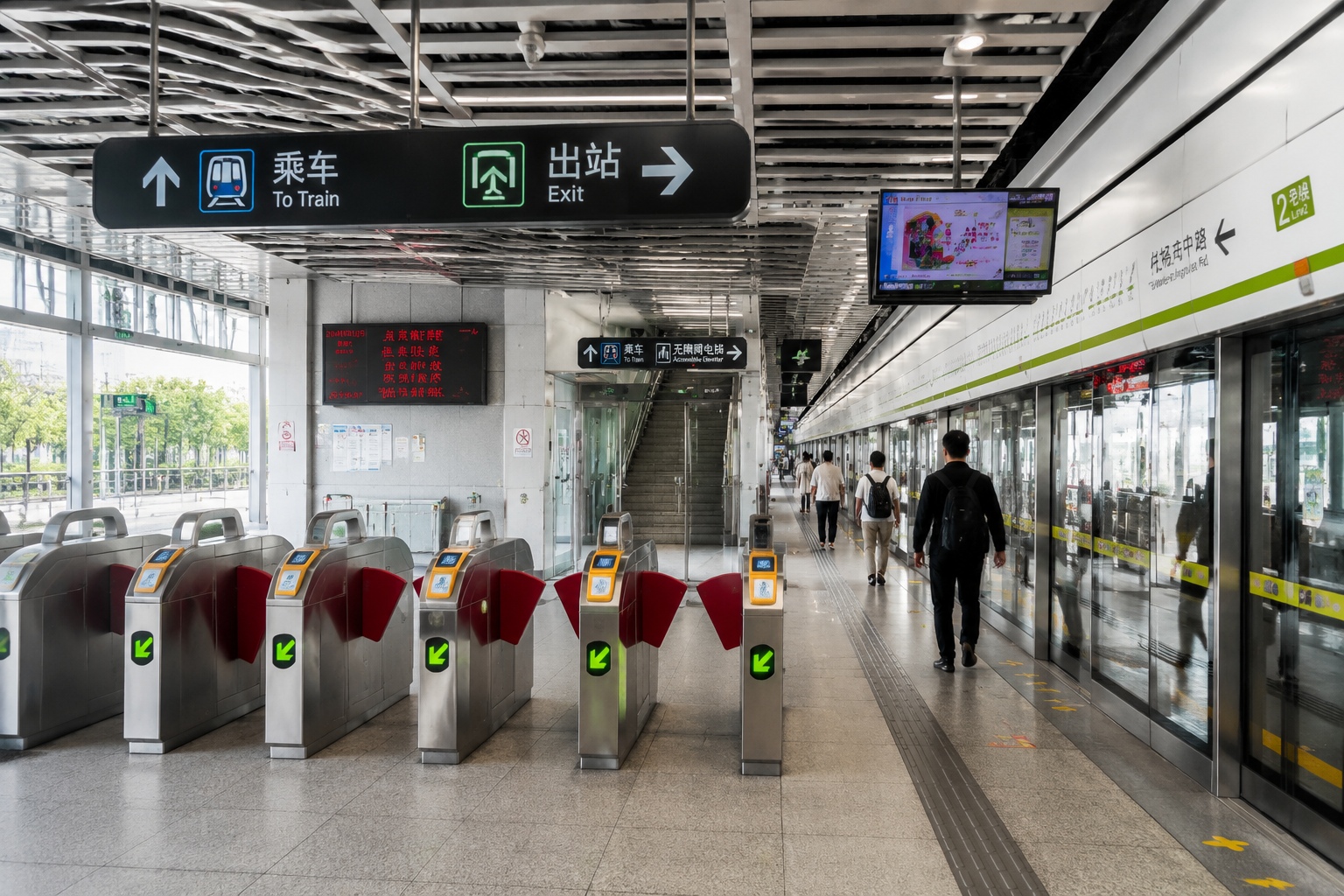

Why Subway Survival Skills Matter in China
If you’ve ever stood inside a Shanghai metro carriage at 8 a.m., you know it’s not just a commute—it’s a choreographed dance. Millions of people move through these underground arteries every day, and the system runs with a rhythm that can feel intimidating at first. But once you learn a few unspoken rules, the subway becomes the easiest way to explore any Chinese city.
Step 1: Getting Through Security Checks
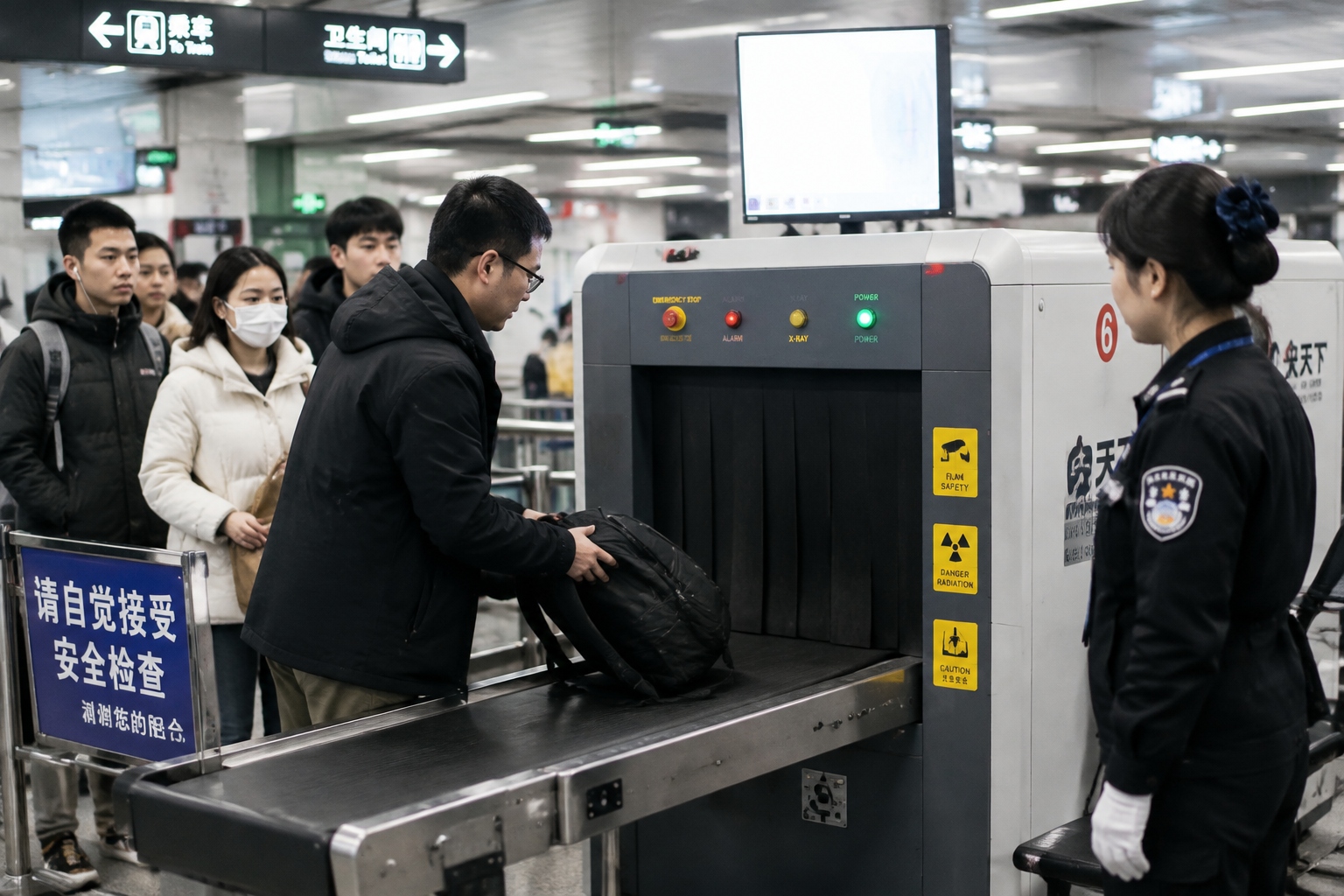
Unlike many metro systems abroad, Chinese subways screen every passenger and their bags before you enter the paid area. It’s quick, but you need to follow the flow.
Baggage Inspection 101
As you approach the station entrance, you’ll see a conveyor belt and an X-ray machine. All backpacks, purses, and shopping bags go through. Loose items in your hands? You can keep them, but they may ask you to put small bags on the belt too. There’s usually a tray, just like at airport security, but the whole process takes seconds.
The Liquid Rule
If you’re carrying a water bottle, be ready to take a sip in front of the inspector. They just want to confirm it’s not flammable. You’ll often see people drinking from their bottles before stepping through the scanner. It’s normal—don’t be surprised.
Peak Hour Lines
During rush hour, security lines can stretch outside the station. In big hubs like Beijing’s Guomao or Shanghai’s People’s Square, expect a 5–10 minute wait. Don’t cut in line—the crowd is generally orderly, and jumping ahead will earn you stares.
Step 2: Navigating Long Transfers
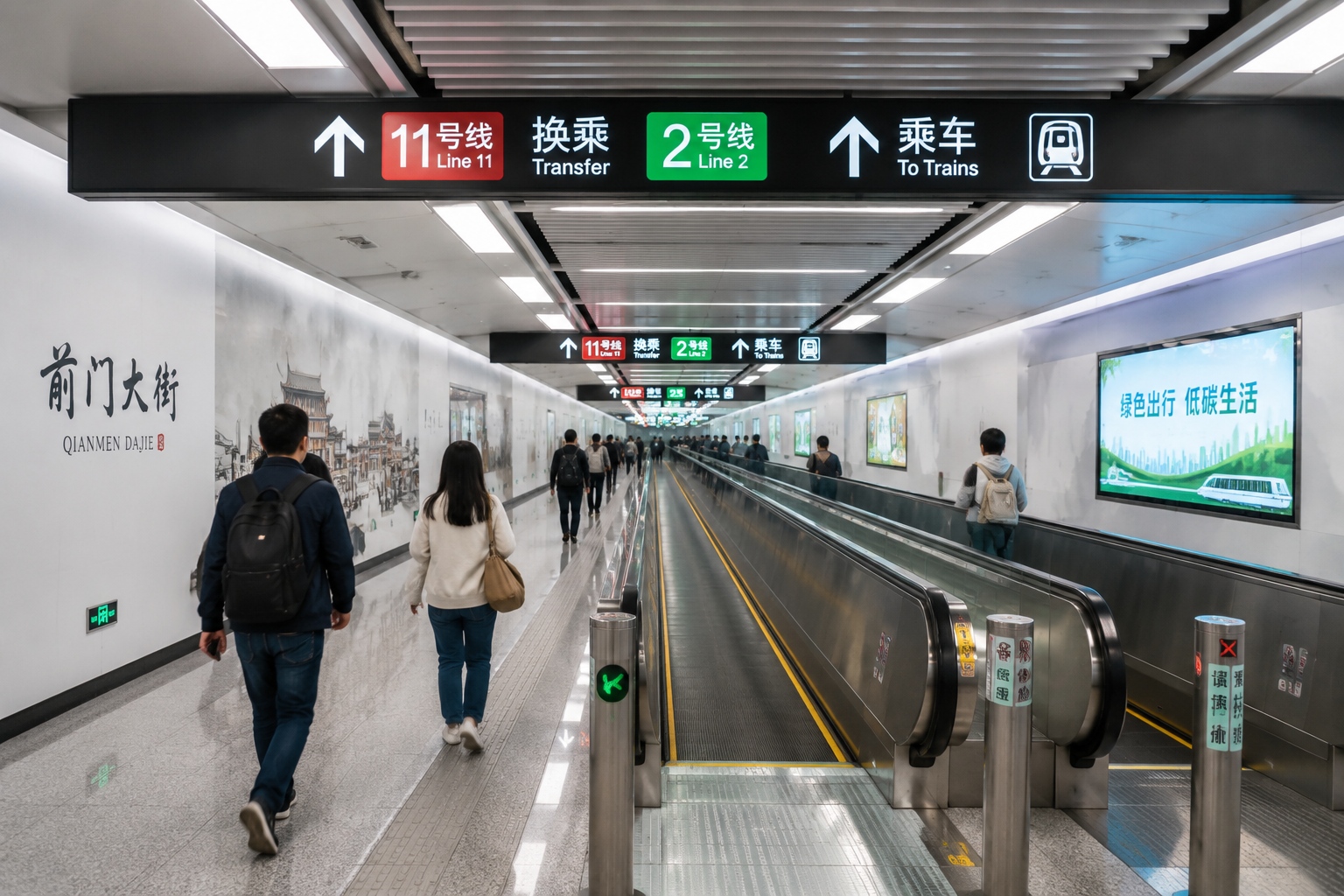
Chinese metro networks are huge. A transfer between lines can involve walking 10–15 minutes. This is normal. The stations are designed with long corridors, escalators, and moving walkways, but you’ll still get your steps in.
Read the Signs
Follow overhead signs in Chinese and English. They’ll tell you the direction and estimated walking time. For example, “Transfer to Line 2, 500m” means you have a decent trek ahead. Don’t rush—everyone else is walking at a brisk pace, but you can take your time if you’re not in a hurry.
Know Your Exit
Exits in Chinese subway stations are labeled with letters (A, B, C, D) and sometimes numbers. Before you exit, check the station map to choose the right exit for your destination. Getting out at the wrong exit might add an extra 10 minutes of walking above ground.
Step 3: Peak-Hour Positioning
Morning rush hour (roughly 7:30–9:30 a.m. on weekdays) is intense. To avoid being pushed, learn the train door strategy.
Stand to the Sides
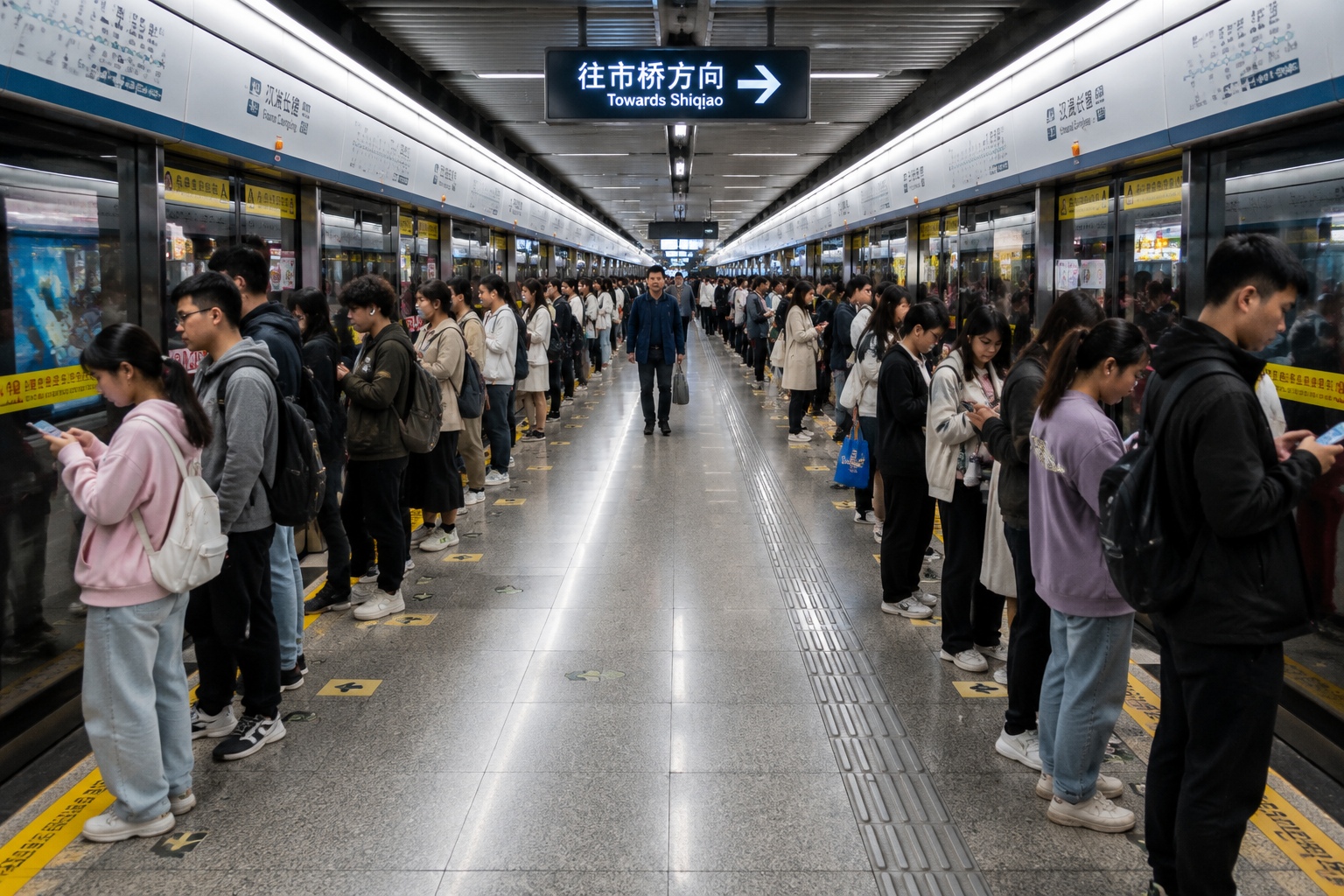
When waiting on the platform, stand on either side of the doors—not directly in front. This lets arriving passengers exit smoothly, and you can slip in right after. The center of the carriage is often less crowded than the area near the doors, so move inward if you’re going a long distance.
Watch the Backpack
If you’re wearing a backpack during peak hours, take it off and hold it by your feet. This is a sign of respect for others’ personal space, and it also prevents you from accidentally whacking someone when you turn around.
Step 4: The Queue Philosophy
Chinese commuters are surprisingly disciplined about queuing, even when it looks chaotic. The secret is painted on the floor.
Follow the Markings
Every door has a set of colored lines or arrows on the platform. Passengers form two lines on either side, leaving the middle open for people to get off. Don’t join the middle—you’ll block the flow and get annoyed looks.
First Off, Then On
This rule is non-negotiable. Wait for everyone to exit before entering. Even if the train is packed, people will squeeze out first. Don’t step on or shove—it’s a subtle dance that requires patience.
Step 5: Modern Etiquette on the Train
Chinese subway etiquette has evolved quickly, and most locals follow these unwritten rules:
No Loud Phone Speakers
Years ago, it was common to hear people playing videos or games without headphones. That’s changing. Younger city dwellers are more conscious of noise. But you’ll still see some people with their phone speakers on. If it bothers you, just move to another carriage. It’s not worth a conflict.
Where to Put Your Bag
During busy times, avoid placing your bag on the seat next to you. If the seat is empty and the train is packed, someone will gesture for you to move it. When standing, hold your bag in front of you or place it at your feet—never let it swing into others.
Bonus: Practical Tips for Visitors
- Buy a transit card or use your phone: Alipay or WeChat Pay can scan QR codes at the turnstile. Download the metro app for the city you’re in.
- Learn two characters: 出 (exit) and 进 (enter). You’ll see them everywhere.
- Toilets: Most stations have public restrooms, but they’re often outside the paid area. Ask staff or look for signs after you exit the turnstile.
- Trains run until about 11 p.m., but hours vary by city. Check the last train time if you’re out late.
Final Thought
The subway is more than just a way to get around—it’s a window into how China works: orderly, fast, and full of people navigating tiny trade-offs every day. Once you learn the rhythm, you’ll feel like a local in no time.
Start the discussion at forum.chinacomes.com