

The First Visit, Reimagined
Most first-time visitors to Guilin, in southern China, have the same instinct: hop on a boat along the Li River, snap photos of the odd-shaped limestone peaks, and check off a bucket-list destination. But while the scenery remains as spectacular as ever, something has changed.
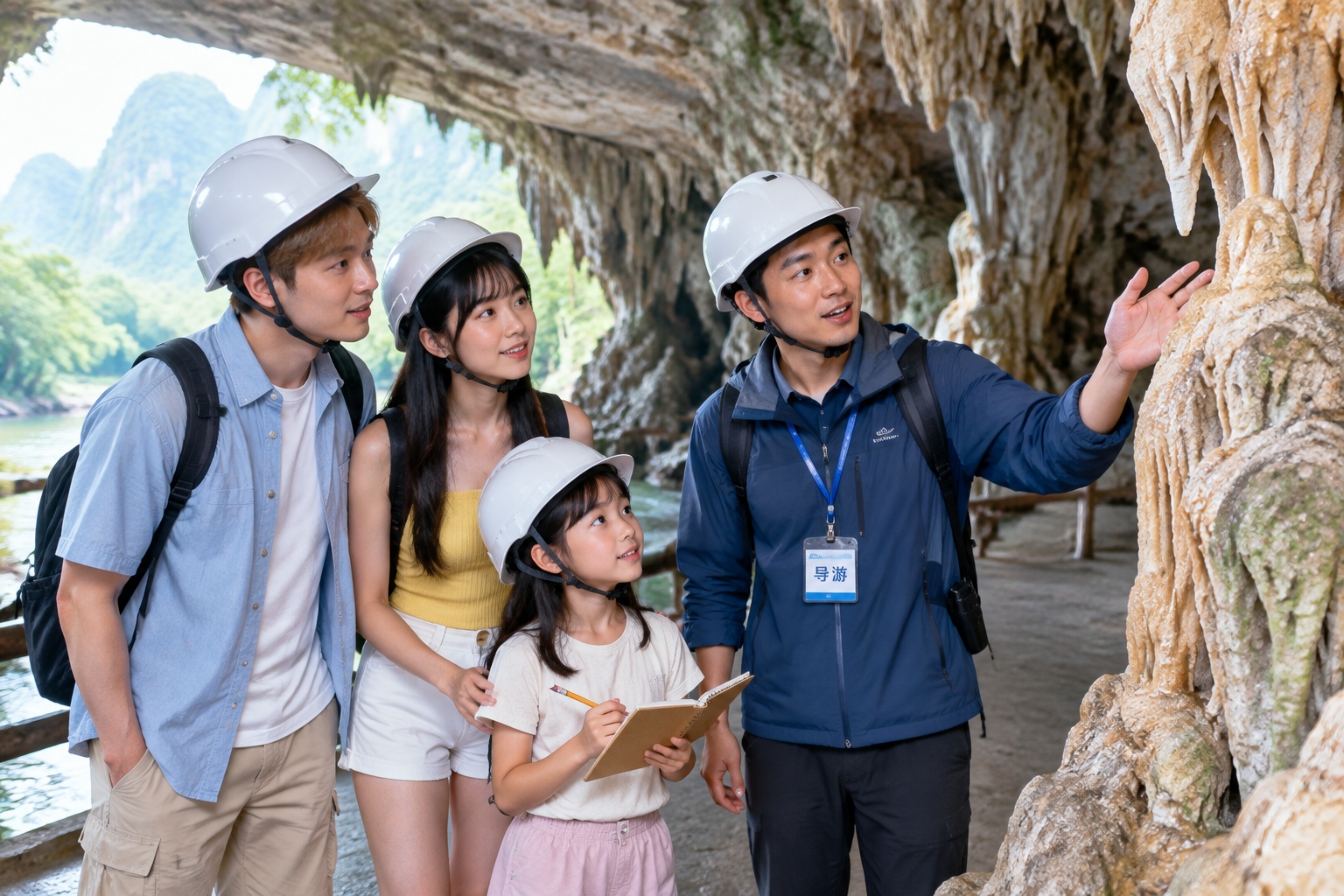
I met a family from Chengdu on a recent trip. They weren’t just sightseeing. The parents were spending their mornings learning traditional Chinese medicine at a wellness center, while their ten-year-old daughter was in a geology workshop exploring a nearby cave. “We’ve seen the postcard views,” the mother told me. “We came back for experiences that help us slow down and learn something.”
Why Guilin Is Reinventing Itself
Guilin’s tourism industry has long relied on its natural wonders. But in recent years, the Chinese travel market has shifted dramatically. A growing number of domestic travelers, especially families, middle-aged professionals, and retirees, are looking for more than snapshots. They want wellness, education, authenticity, and meaningful engagement with places.
The pandemic accelerated this shift. With international arrivals briefly frozen, Guilin turned to domestic visitors, many of whom wanted outdoor, low-density experiences. The local government and businesses responded by building a new tourism ecosystem that pairs the region’s stunning geography with activities that promote health, learning, and cultural exchange. This is not an abandonment of the classic Guilin experience — it’s an extension of it.
Wellness: Finding Balance Among the Peaks
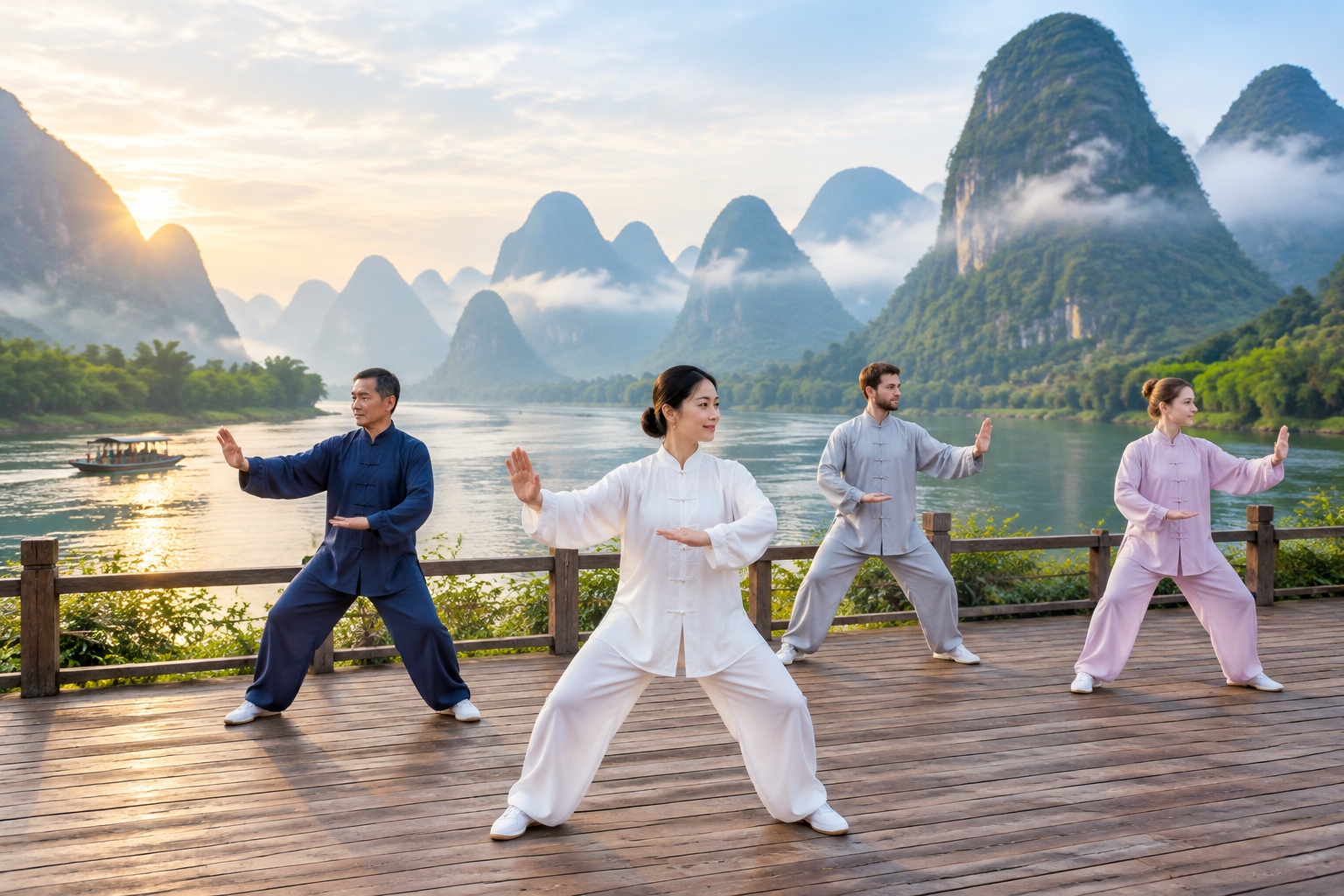
Wellness tourism in Guilin often blends traditional Chinese medicine, qigong, meditation, and forest-based therapy. The karst landscape, with its limestone caves, hot springs, and mineral-rich mud, offers a natural playground for these practices.
Take the town of Longsheng, famous for its rice terraces. A few minutes’ walk from the tourist viewpoints, you’ll find family-run guesthouses that offer herbal foot baths, bamboo-flute meditation sessions, and farm-to-table meals made from ingredients grown on the terraces themselves. The experience is simple, but it taps into a deep connection between health and place.
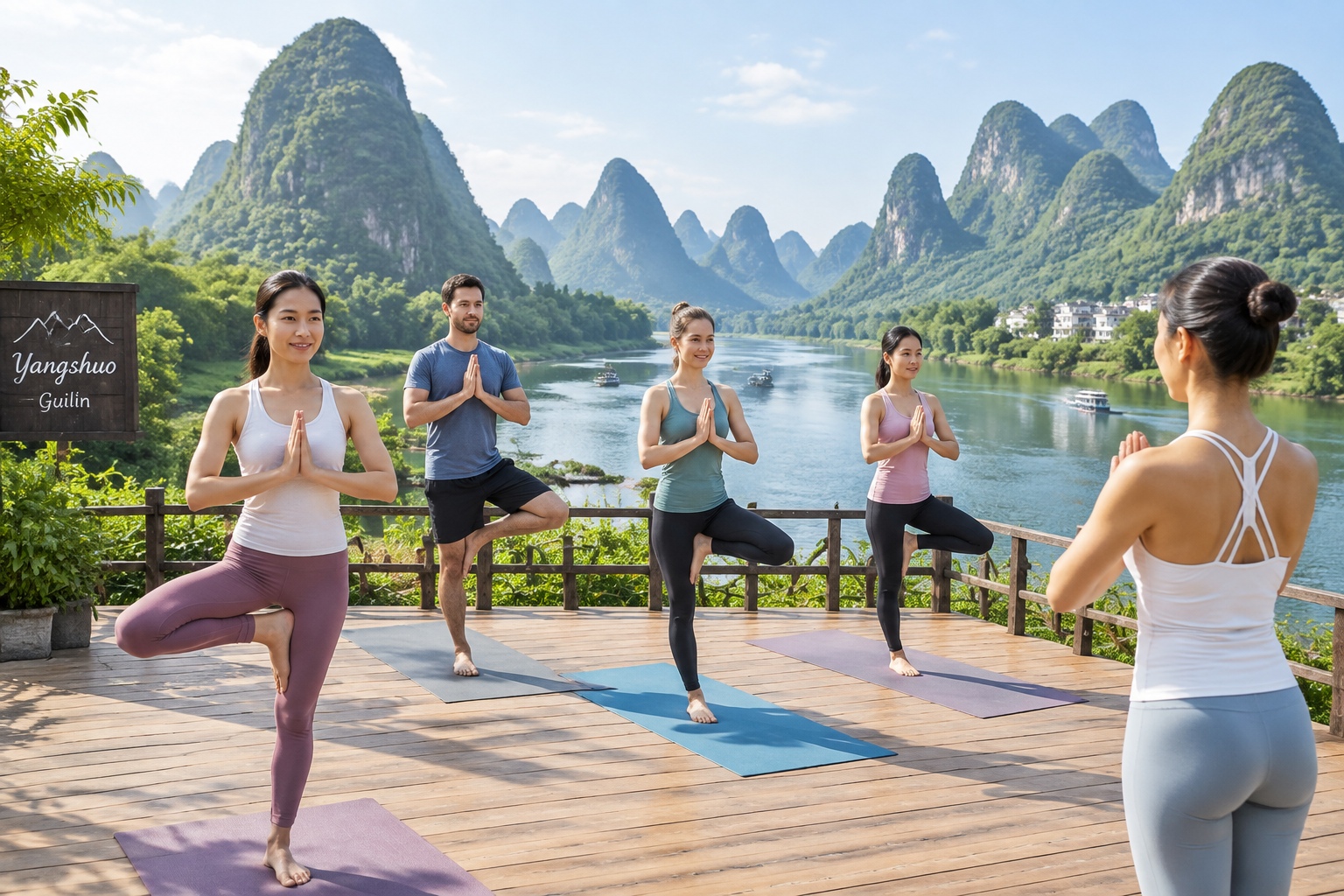
In Yangshuo, a backpacker hub that has matured into a wellness destination, I visited a retreat center where guests start the day with sunrise yoga on a platform overlooking the Li River. The course includes a hike through local villages, a cooking class using foraged ingredients, and a session with a traditional Chinese medicine practitioner. “People come here to reset,” a manager told me. “They don’t expect a resort with a spa list. They want therapy that comes from the environment itself.”
Study Tours: Learning From a Living Landscape
Study tours, or “yan xue” in Chinese, are among the fastest-growing segments in Guilin’s tourism sector. Originally meant for primary and secondary students, these tours have expanded to include university groups, international visitors, and even corporate teams looking for team-building experiences with an educational twist.
Around the Seven Star Park, for example, you’ll see groups of children collecting water samples from artificial streams, testing acidity levels, and writing field notes. A guide explained that this is a “river science” program, designed to teach kids about ecology while connecting classroom knowledge to a real, visible environment. Another popular option is a half-day workshop at a local pottery village, where students try their hands at the region’s centuries-old pottery-making technique.
For international students, the draw is different. A program run by a Guilin college takes participants to ethnic Zhuang and Yao villages, where they learn about minority languages, festivals, and traditional textile dyeing. It’s an immersive way to understand China beyond the big-city stereotypes.
Local Lives, New Opportunities
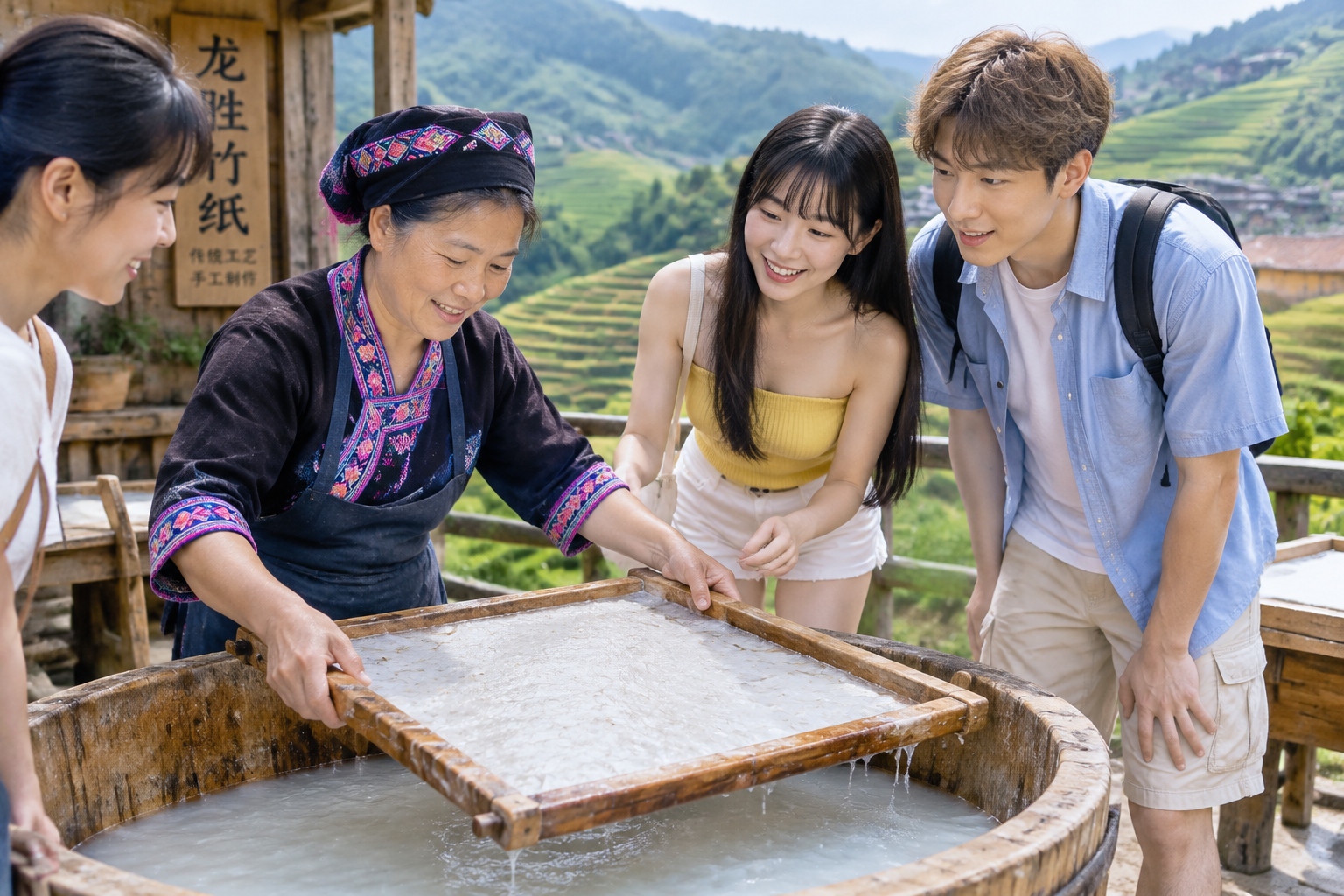
This shift is not just good for tourists. It’s changing the economics of local communities. In the village of Banyan Tree, a resident who used to sell bottled water to hikers now runs a small workshop where visitors learn to make bamboo paper. A former farmer in Longsheng has converted his home into a homestay that offers rice-planting experiences alongside stays. His family takes guests through the terraces, explaining the crop cycle and the region’s ancient irrigation system.
These micro-entrepreneurs often benefit from training and loans offered by tourism cooperatives. The result is a more diversified income base for families that once depended entirely on agriculture or low-end tour jobs. But it’s not without challenges. Locals worry about overdevelopment, environmental damage, and the risk of turning culture into a performance. Some have responded with strict visitor limits and sustainability pledges.
Technology Meets Tradition
Digital tools are helping to shape this new tourism model. Many wellness and study tour operators now use mobile platforms to book sessions, guide visitors with GPS-based maps, and even provide augmented reality (AR) overlays that explain the geological history of a rock formation. In some parks, QR codes placed on trees help visitors instantly access plant information, turning a simple walk into a self-guided botanical lesson.
At the same time, technology is being used to protect the environment. Drones are used to monitor visitor numbers in sensitive areas. Smart waste bins coordinate with collection teams to prevent litter buildup. And a regional tourism app updates live air quality data, helping visitors choose the best times for outdoor activities.
Of course, technology isn’t the point by itself. Locals are quick to remind you that the real beauty of Guilin is the peace you feel on the river, the smell of rain on rice fields, and the kindness of a village elder who shows you how to wrap zongzi. The new tourism formats aim to make these moments accessible — not to replace them.
The Road Ahead
Guilin’s experiment offers a useful model for other destinations in China and beyond. As tourism rebounds after the pandemic, the industry is under pressure to balance growth with sustainability. Guilin’s move toward wellness and study tours is an attempt to do exactly that.
For the traveler, the payoff is simple: you come for the scenery, and you stay for the lessons, the calm, and the conversations. That’s an experience no postcard can capture.
Start the discussion at forum.chinacomes.com