

It Starts at the Gate
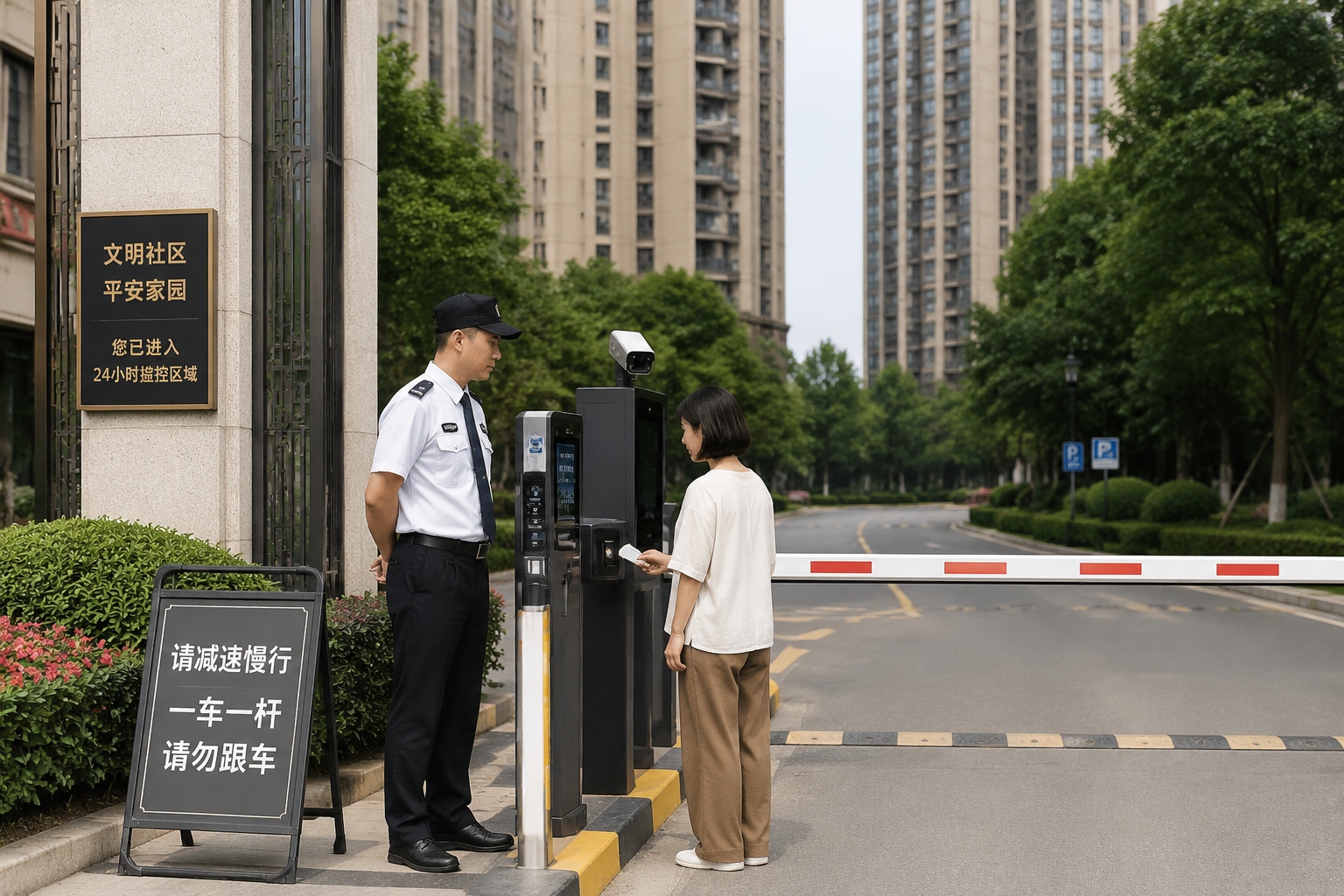
You are visiting a friend in a Chinese city. You walk up to the entrance of a residential compound, and a uniformed guard stops you. ‘Who are you here to see? Please register,’ he says. You sign your name and show your ID. The barrier lifts, and you step in.
That guard is just the first face of something much larger: the property management company. This system runs nearly every urban neighborhood in China, yet it often goes unnoticed by visitors and even by residents themselves. If you come from Europe or North America, you might be puzzled. What is this ‘invisible steward’ that manages the compound? And why does it play such a prominent role in Chinese residential life?
What Exactly Is a Property Management Company?
In simple terms, a property management company (wuye gongsi) is a service organization hired by homeowners to manage the common areas and daily operations of a residential development. It is not a government agency and it is not the same as a homeowners association in the West. Instead, it is a commercial firm that provides a bundle of services: security, cleaning, maintenance, gardening, and sometimes even social activities.
In China, almost every urban community is a ‘gated compound’ (xiaochu) with multiple buildings and a defined boundary. The property company takes care of everything inside that boundary except your own apartment. It is the operating system of the neighborhood.
These companies are typically appointed by the developer when the project is first sold. After the community matures, the homeowners can form a committee (yezhu weiyuanhui) to negotiate or replace the property company. In practice, though, many committees are weak or inactive, so the original company often stays for years.
The Daily Services: What Your Money Pays For
The monthly property fee covers a surprisingly wide range of services. Let me walk you through the most visible ones.
Security: The Gatekeeper That Never Sleeps
If you live in a Chinese compound, you will quickly get used to the security guard. The guard often sits in a booth near the main gate, watches the entry point, and operates the barrier. Residents use access cards, key fobs, or facial recognition to enter. Visitors must stop and register their name and phone number, and often leave an ID. This is a profound difference from an open American street or even a European apartment block.
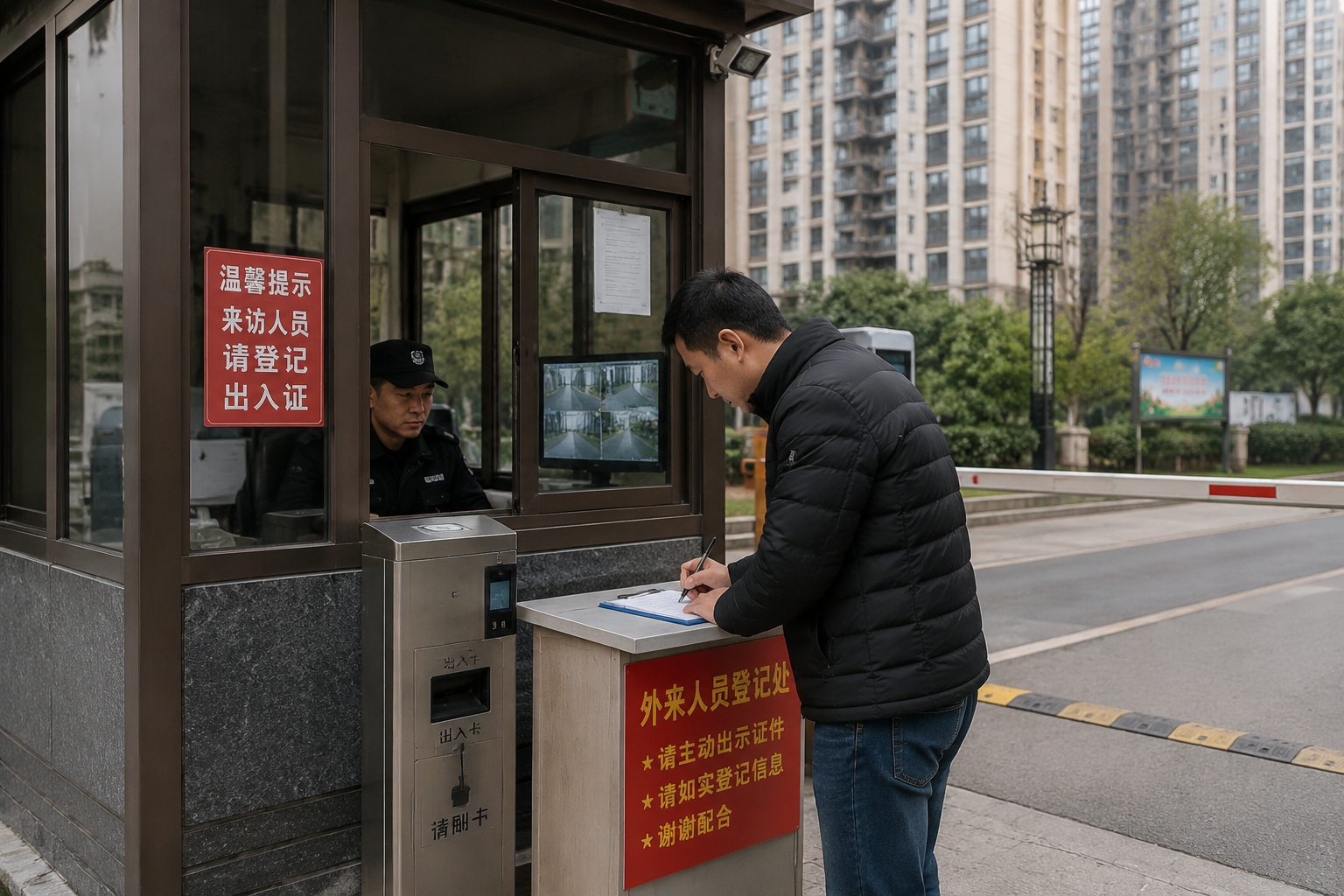
The reason for this closed-off design is partly to maintain a sense of safety and order. With hundreds or thousands of households in one area, a single controlled entrance makes it easier to manage traffic and prevent unwanted visitors. It is also a cultural norm, not just a security measure. Even in the middle of a large city, a compound is a semi-private space.
Cleanliness, Maintenance, and Landscaping
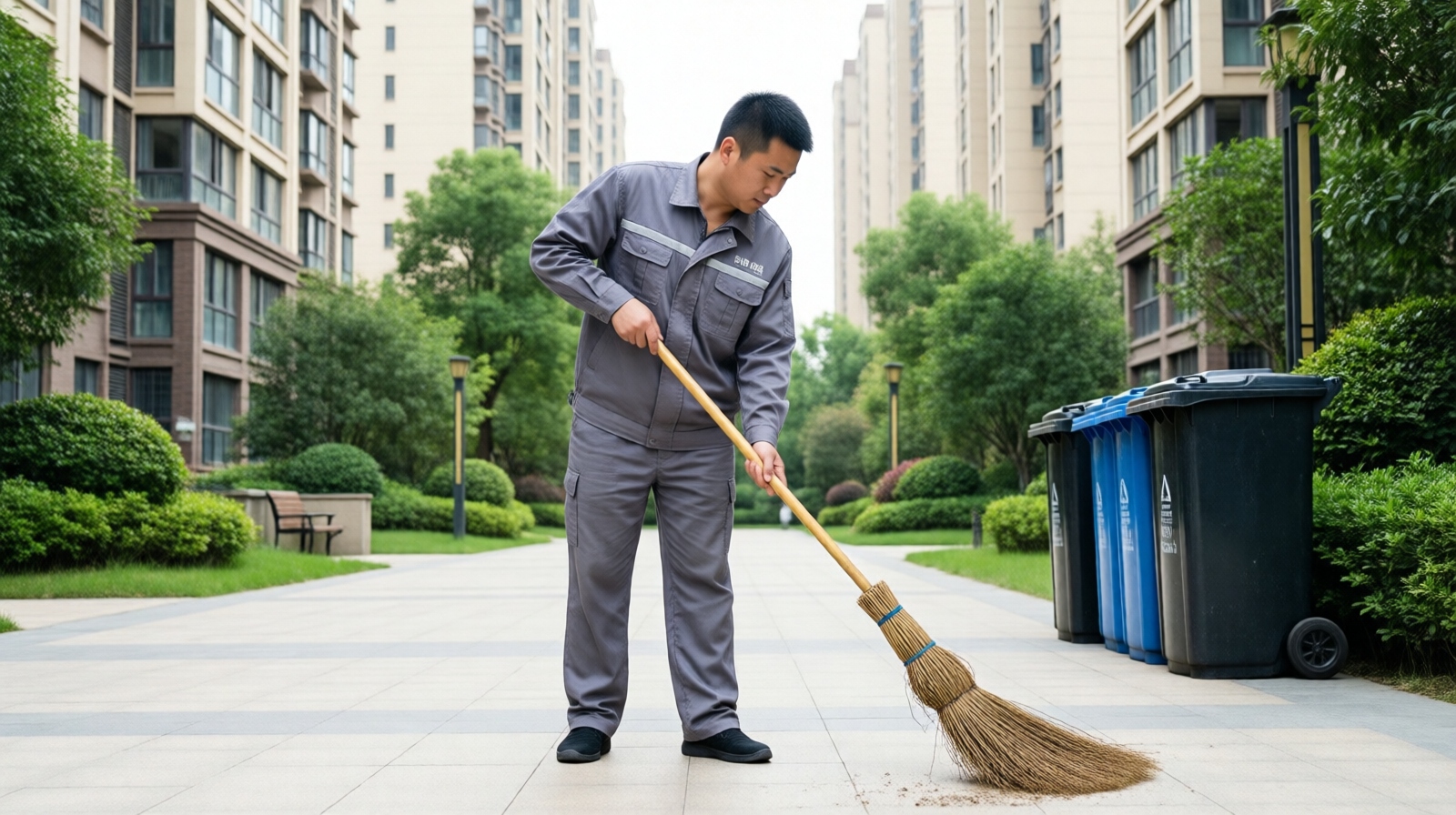
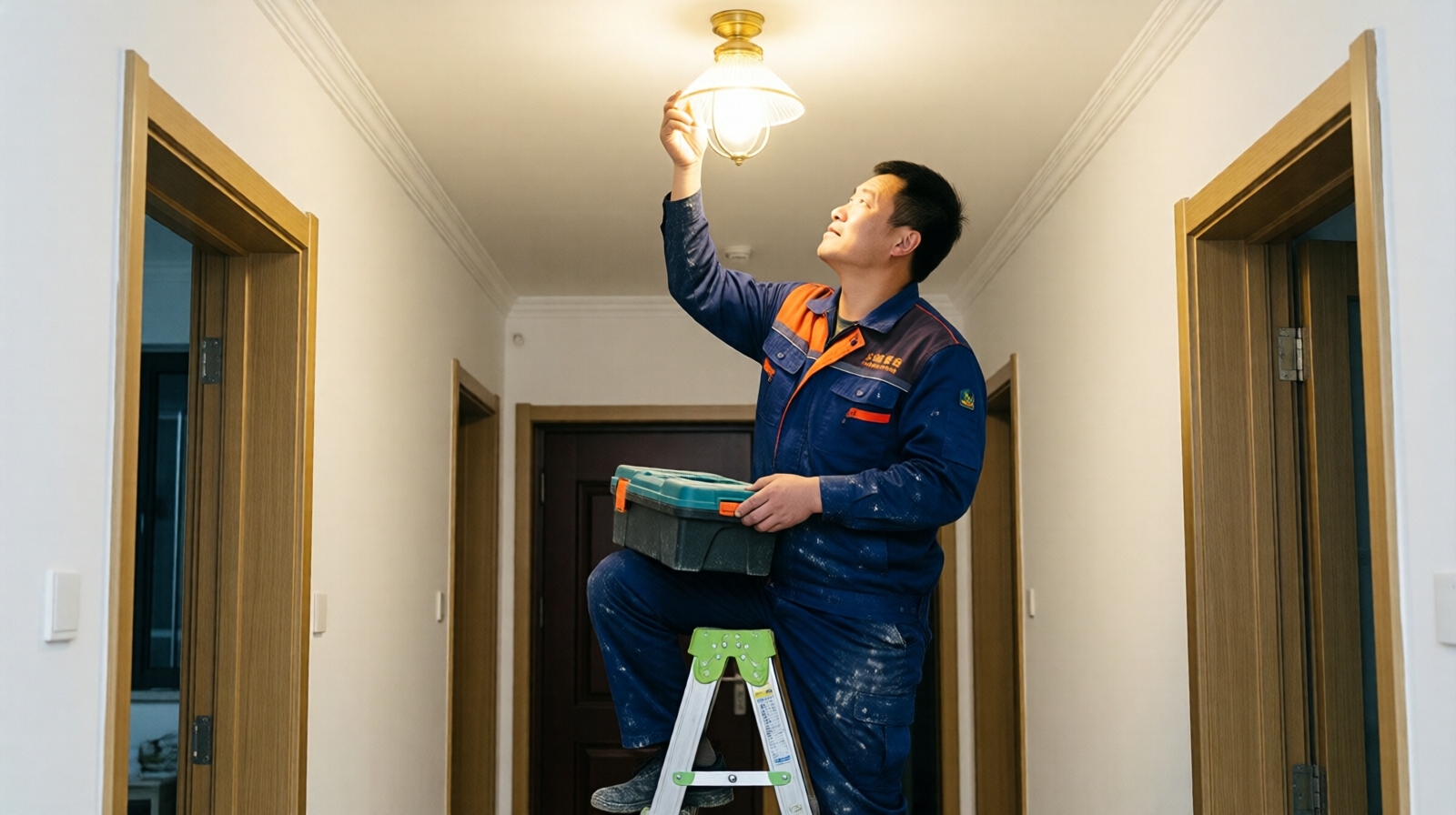
Every morning, you will see cleaners in uniforms sweeping sidewalks, mopping lobbies, emptying bins, and wiping down elevator buttons. The property company also maintains elevators, lights, and the water supply. If a pipe bursts in the corridor or a lightbulb goes out, a repair worker is dispatched quickly.
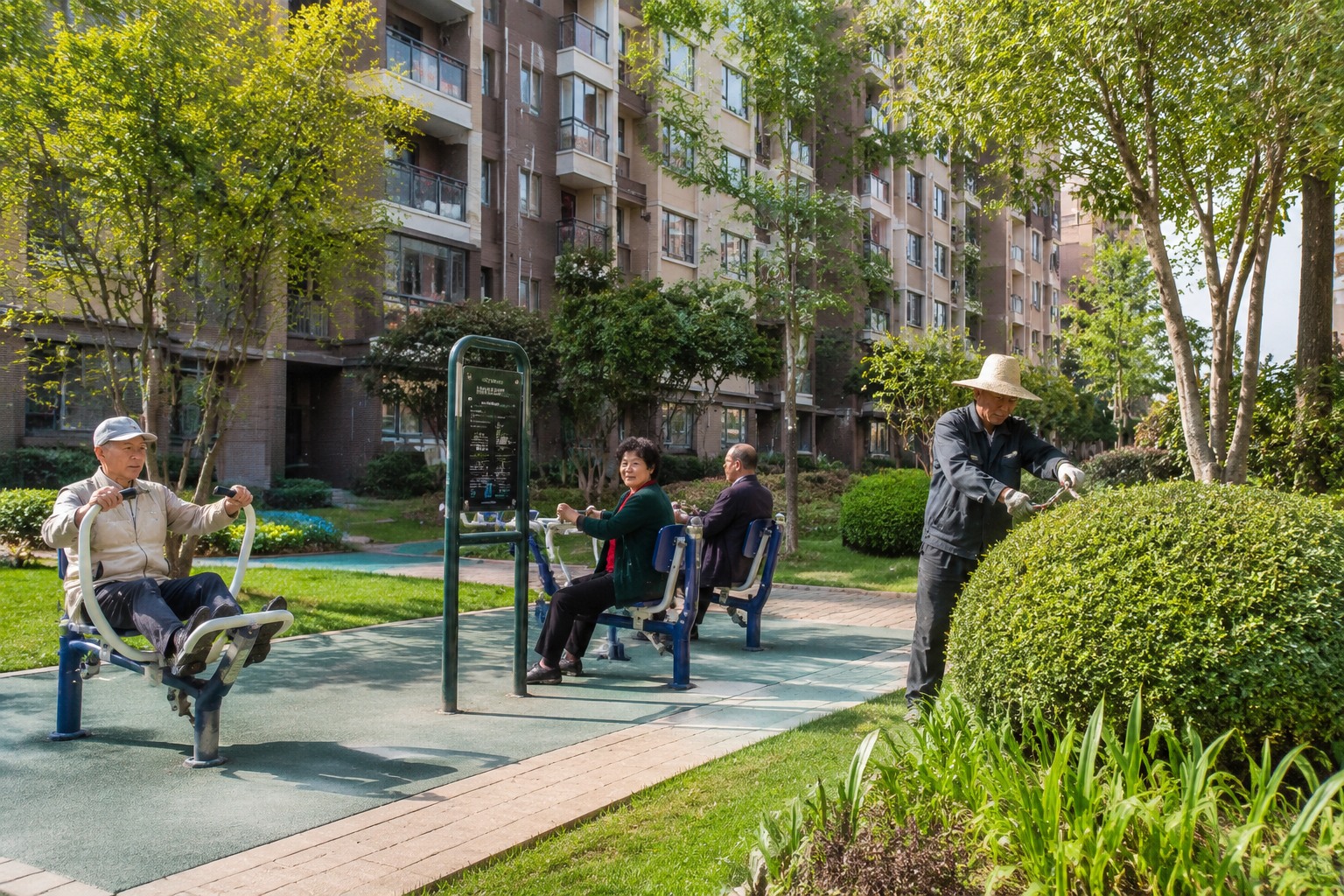
The same crew is in charge of green spaces. They prune shrubs, water the lawns, and keep the flower beds presentable. In many compounds, you will also find outdoor fitness equipment and small playgrounds, all maintained by the property staff.
This level of support is not something you see in many older cities in Europe or the US, where residents often coordinate repairs themselves or rely on a landlord. In China, the property company is expected to be proactive. When you report a problem, they are on the phone within minutes.
Property Fees: How Much Does It Cost?
Property fees are calculated per square meter of your apartment. In a typical second-tier city, the fee may be around CNY 2 to 4 per square meter per month. For a 90-square-meter apartment, that comes to 180 to 360 yuan (about $25 to $50) per month. In megacities like Shanghai or Beijing, fees may be higher, especially in upscale developments.
Compared with what you might pay in a US homeowners association (HOA), which can easily reach $200–500 per month, the cost in China is modest. But the service scope is also different. An HOA in the US often enforces rules, collects dues, and manages the community’s common areas, but it is usually run by residents as a non-profit. A Chinese property company is a for-profit business that provides direct services, and the fee is more like a subscription.
In addition to the monthly fee, a separate housing maintenance fund is set aside for major repairs, like an elevator overhaul or an exterior wall refresh. That fund is gathered when the unit is first sold and is managed under government supervision.
Daily Interactions: How to Get Along with Your Property Manager
If you move to China and live in a compound, you will interact with the property staff every day. Here are a few unspoken rules that will make your life easier.
Say hello to the security guards. They are often bored, and a simple ‘nihao’ or a smile goes a long way. The guards know who lives there, and if you are a foreigner, you will easily be remembered. Be polite, and you will find them genuinely helpful.
Follow the access protocol. Do not tailgate through the entrance without scanning your card. The guards are responsible for the security of hundreds of people, and they take their job seriously.
Report problems through the official channel. Most property companies have a phone number, a WeChat service account, or an app where you can submit repair requests. You can also call the guard booth directly. They are usually quick, but the formal channel will get you a tracking number and a clear timeline.
If you need a larger repair, such as a plumbing issue that is not inside your unit but in the building’s common pipes, the property company will handle it. Do not try to fix these things yourself; it could create a liability.
Conflicts and Resolutions: When Things Don’t Go Smoothly
It would be naive to say everything works perfectly. Conflicts between homeowners and property companies are common. You may argue about parking space, noise from neighbors, or a dispute over who is responsible for a leaking roof. In such cases, there are several channels for resolution.
First, raise the issue with the property manager. They have staff to mediate and often have the final say on small tasks. If you are not satisfied, the homeowners committee can be brought in. They negotiate with the company and can ultimately replace it, though that is a complex process.
If the problem involves public safety or a violation of local regulations, you can call the government service hotline, 12345, and a response will be routed to the relevant department. The property company also has responsibilities to report certain issues to the local authorities.
Compared to a US HOA, which often has strong enforcement powers, a Chinese property company has less authority. It cannot issue fines or foreclose on a home. It relies more on persuasion and the support of the residents’ committee (juweihui) and police, who can step in if rules are broken. This is a more collaborative, but also more diffuse, approach.
A Key Player in China’s Urban Governance
Beyond daily services, the property company plays a broader role in neighborhood governance. In China, the state is present in the form of the residential committee, but the committee is too small to manage day-to-day life. The property company acts as its eyes and hands.
When the city needs to promote a vaccination campaign, the property company posts the notice in the elevators. When the government wants to arrange a door-to-door survey, the property company helps the committee reach each household. During the COVID-19 lockdowns, property staff were on the front line, delivering food and managing checkpoints.
This arrangement might seem odd to an outsider because it blends private business with public tasks. But in a society where many basic services are delivered through residential communities, it makes sense. The property company is not just a building manager; it is an integral part of how China’s cities function.
Conclusion
If you ever live in China, the invisible steward will become a familiar presence. It is the person who sweeps the leaves, checks your access card, and fixes the light in the corridor. It is a system shaped by the country’s need for order and efficiency, and it reflects the way Chinese urbanites understand community.
Is it perfect? No. But it is a fascinating contrast to the West, where residents often take care of common spaces themselves or rely on a distant management company. In China, the property company is a daily companion. Understanding it will give you a deeper glimpse into what makes Chinese cities tick.
Start the discussion at forum.chinacomes.com