
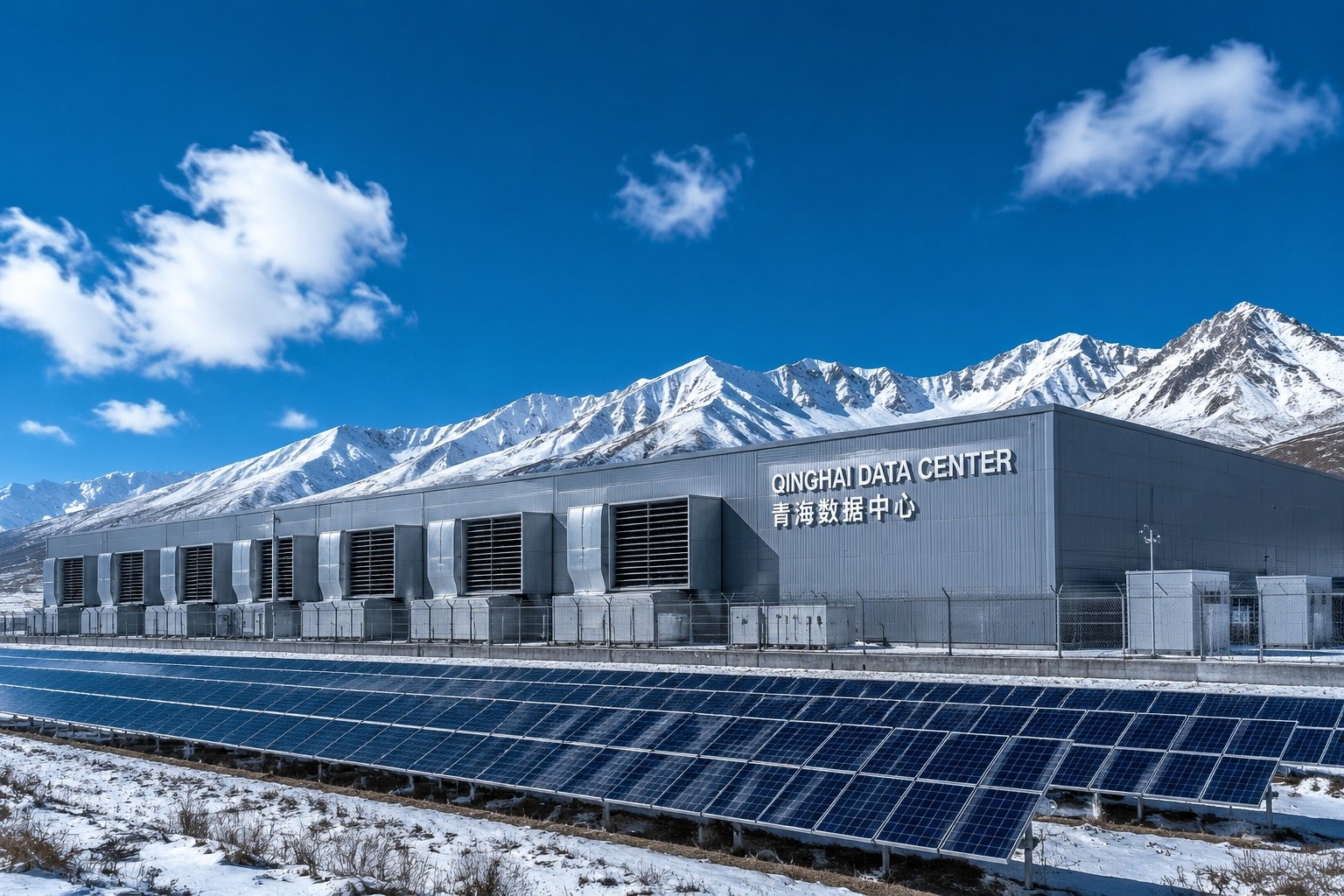

A Freezing Morning, A Thriving Digital Hub
At -15°C on a January morning, the air outside a data center near Xining—the capital of Qinghai Province—feels like a deep-freeze. But inside, thousands of servers hum along, their processors kept cool not by massive air conditioners, but by the dry, icy wind blown in from the Tibetan Plateau. This is not a scene from a sci-fi movie; it’s a growing reality in China’s western provinces, where geography and climate are becoming powerful economic advantages.
Data centers are notoriously energy-hungry. Cooling alone can account for up to 40% of a facility’s electricity consumption. So when a region offers both cold air and cheap, renewable power, it becomes an ideal place to store and process the world’s information. Qinghai has both—and it is betting its future on the digital decade.

The Natural Advantage: Cold Air as a Cooling System
Qinghai is a high-altitude province on the Tibetan Plateau, averaging over 3,000 meters above sea level. Its capital, Xining, has an annual average temperature of just around 5°C, and winter temperatures frequently drop below -20°C. Compare that to Beijing’s 12°C or Shanghai’s 17°C. For data center operators, this is a gift: the colder the ambient air, the less energy needed to keep servers from overheating.
Most modern data centers use free cooling or economizer systems that bring in outside air when it’s cool enough. In Qinghai, these systems can run almost year-round. Even in summer, nights are cool and dry, making the region naturally well-suited to server cooling. The effect is dramatic: while a typical data center in a warm climate might have a Power Usage Effectiveness (PUE) ratio of 1.5 or higher, facilities in Qinghai can achieve PUE around 1.2 or lower. That means 20-30% less energy wasted on cooling.
But cold air is only half the story.
Renewable Energy and Cheap Power
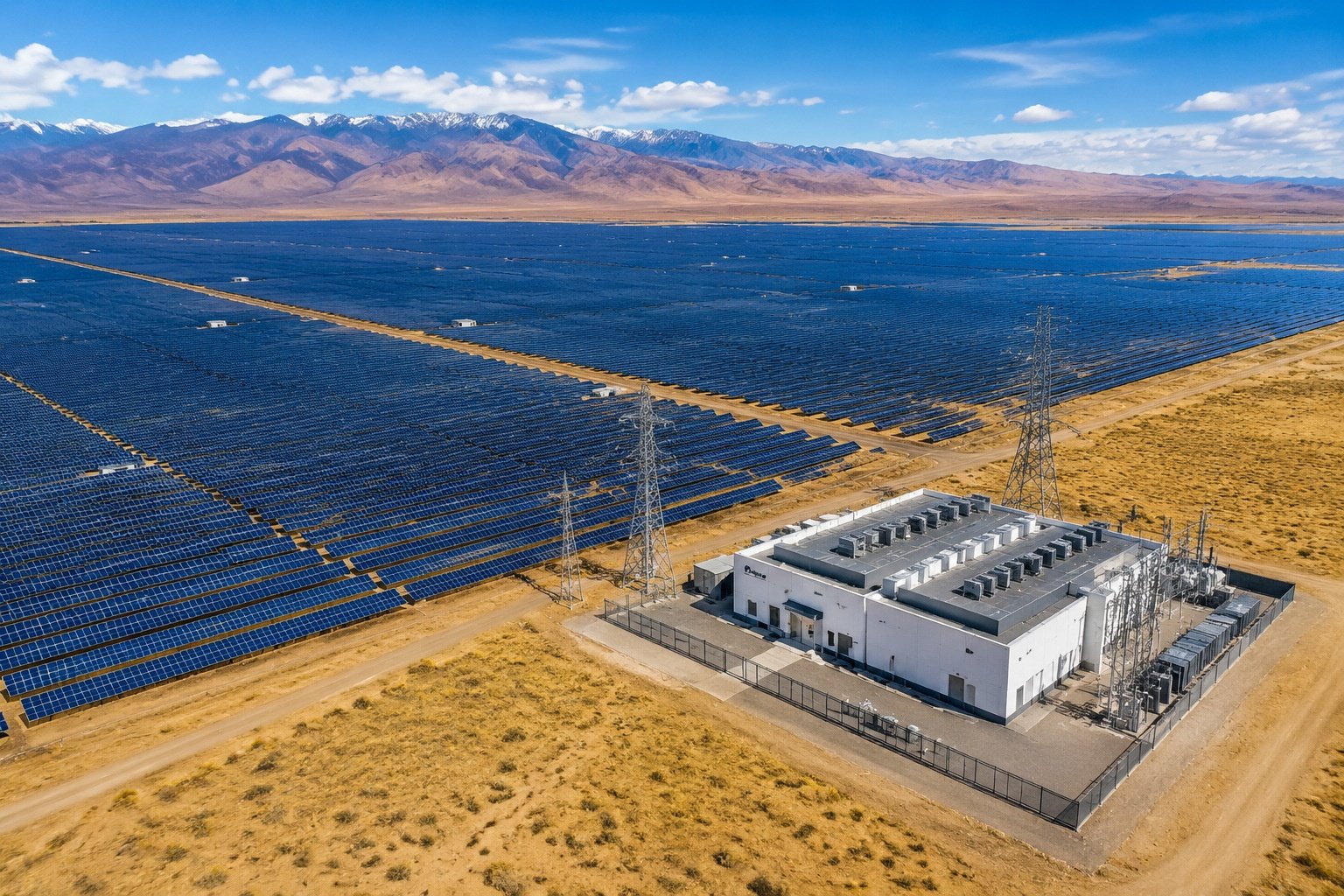
Qinghai sits on one of the world’s most renewable-energy-rich plateaus. The province has some of China’s strongest solar radiation and wind resources, plus substantial hydropower from the upper reaches of the Yellow River. By 2023, Qinghai’s installed power capacity was over 90% renewable—the highest share of any Chinese province. The sheer scale is visible from space: vast solar farms stretch across the Qaidam Basin, and wind turbines line the mountain passes.
This clean energy mix translates directly into lower electricity bills. Industrial electricity prices in Qinghai can be as low as 0.30 yuan (about 4 US cents) per kilowatt-hour, while coastal cities like Shanghai pay more than double that. For a large data center consuming tens of megawatts, that difference amounts to tens of millions of yuan in annual savings. Lower costs, combined with a green profile, make Qinghai especially attractive to companies aiming to meet carbon-neutral targets.
National Strategy: The East-to-West Computing Shift
Qinghai’s ambitions are part of a broader national project called “East-to-West Computing Transfer” (Dong Shu Xi Suan). Launched in 2022, this initiative encourages Chinese tech giants to migrate data storage and processing from crowded coastal regions to western provinces with abundant energy and cooler climates. The first batch of national hubs included Guizhou, Inner Mongolia, Ningxia, and Gansu—but not Qinghai.
That hasn’t stopped the province from moving forward. Qinghai has built its own green data center parks in places like Hainan Tibetan Autonomous Prefecture and Haixi Mongol and Tibetan Autonomous Prefecture, both blessed with intense solar exposure and strong winds. Local authorities are offering tax breaks, land incentives, and streamlined approvals to attract investment. The first movers include China Telecom, China Mobile, and several cloud service providers, who have already deployed large-scale computing capacity in the province.
What Data Centers Do in Qinghai
Many of these facilities aren’t storing consumer selfies or videos. They’re doing serious, data-intensive work: monitoring ecosystems on the Tibetan Plateau, predicting weather patterns, managing the regional power grid, and supporting scientific research. In a province where wind and solar generation can fluctuate, data centers are critical for real-time predictions and smart grid operations.
Agricultural technology is taking off too. Qinghai’s cold climate and high altitude make it a prime spot for testing drought-resistant crops and high-altitude farming systems. Local data centers process satellite images and soil data to help farmers make better decisions. The “Qinghai Cloud” platform, for instance, integrates these services into one accessible digital infrastructure.
Challenges Still to Overcome
For all its advantages, Qinghai is not without hurdles. The province is far from China’s main internet hubs, which means higher latency for real-time applications. Sending data to and from coastal cities adds milliseconds that matter for some financial or gaming operations. The high altitude also presents engineering challenges—buildings need to handle strong winds, wide temperature swings, and low oxygen levels, which can affect equipment reliability.
Perhaps the biggest issue is people. Qinghai has a sparse population, and many skilled technicians prefer to work in Shanghai, Shenzhen, or Beijing. To solve this, the provincial government is funding training institutes and offering relocation subsidies. Remote monitoring technology also helps—some data centers can be managed from thousands of miles away, which reduces the need for on-site staff.
The Lessons for the Global Digital Economy
Qinghai’s experience shows that data centers don’t always need to be built in dense business districts. In an era of skyrocketing energy costs and climate anxiety, natural advantages like cold climate and renewable power are becoming decisive factors for digital infrastructure. Norway, Iceland, and parts of Canada are following similar playbooks. But few places can match Qinghai’s combination of ultra-low temperatures, clean energy, and national policy support.
Is Qinghai the next great data center frontier? Not yet—but it’s well on its way. The province may be cold in reputation and temperature, but its digital economy is warming up fast.
Start the discussion at forum.chinacomes.com