

Introduction
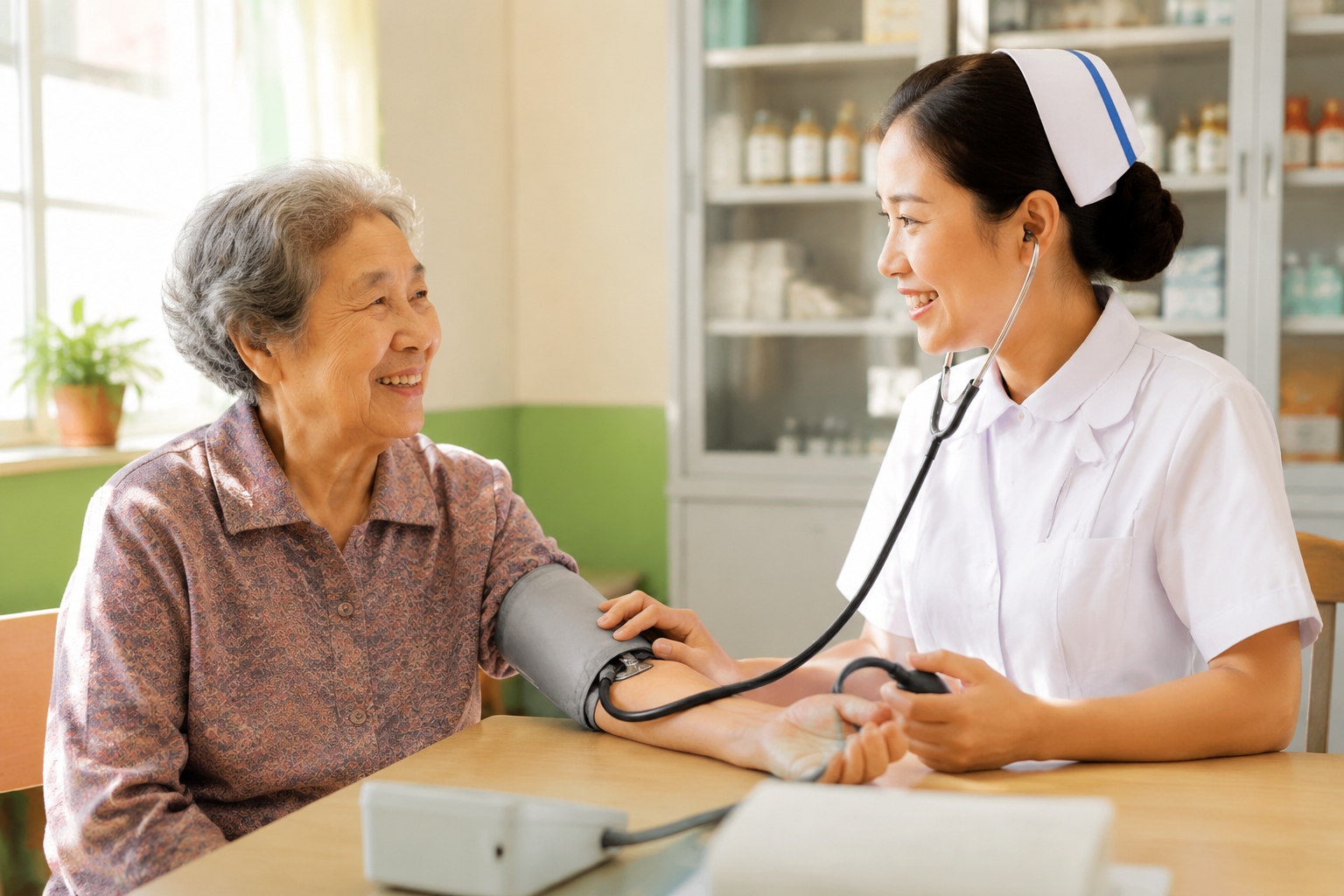
Every Tuesday morning at 7 a.m., 70-year-old Zhang Liqin walks five minutes from her apartment to the Changqiao Community Health Center in Shanghai. She sits down, rolls up her sleeve, and lets a nurse measure her blood pressure. No long lines, no paperwork. She chats with the nurse about her sleep, picks up her diabetes medication from the pharmacy on-site, and is home by 7:30. Her daughter, who lives in a different city, doesn’t worry as much because the community clinic also calls Zhang every month to check on her health. This routine is not unique. In neighborhoods across China, older adults are finding that medical care has moved closer to them—literally and figuratively.
Behind this quiet change is a nationwide effort to rewire how healthcare reaches a rapidly aging population. China now has more than 300 million people aged 60 and above, nearly a quarter of the population in the next decade. The stereotype of elderly Chinese saving every yuan for potential hospital bills is giving way to a different reality: ordinary seniors are getting preventive, affordable, and more convenient care than ever before. That doesn’t mean every problem is solved, but it does mean the picture is more hopeful than many headlines suggest.
Community Clinics: The First Line of Defense
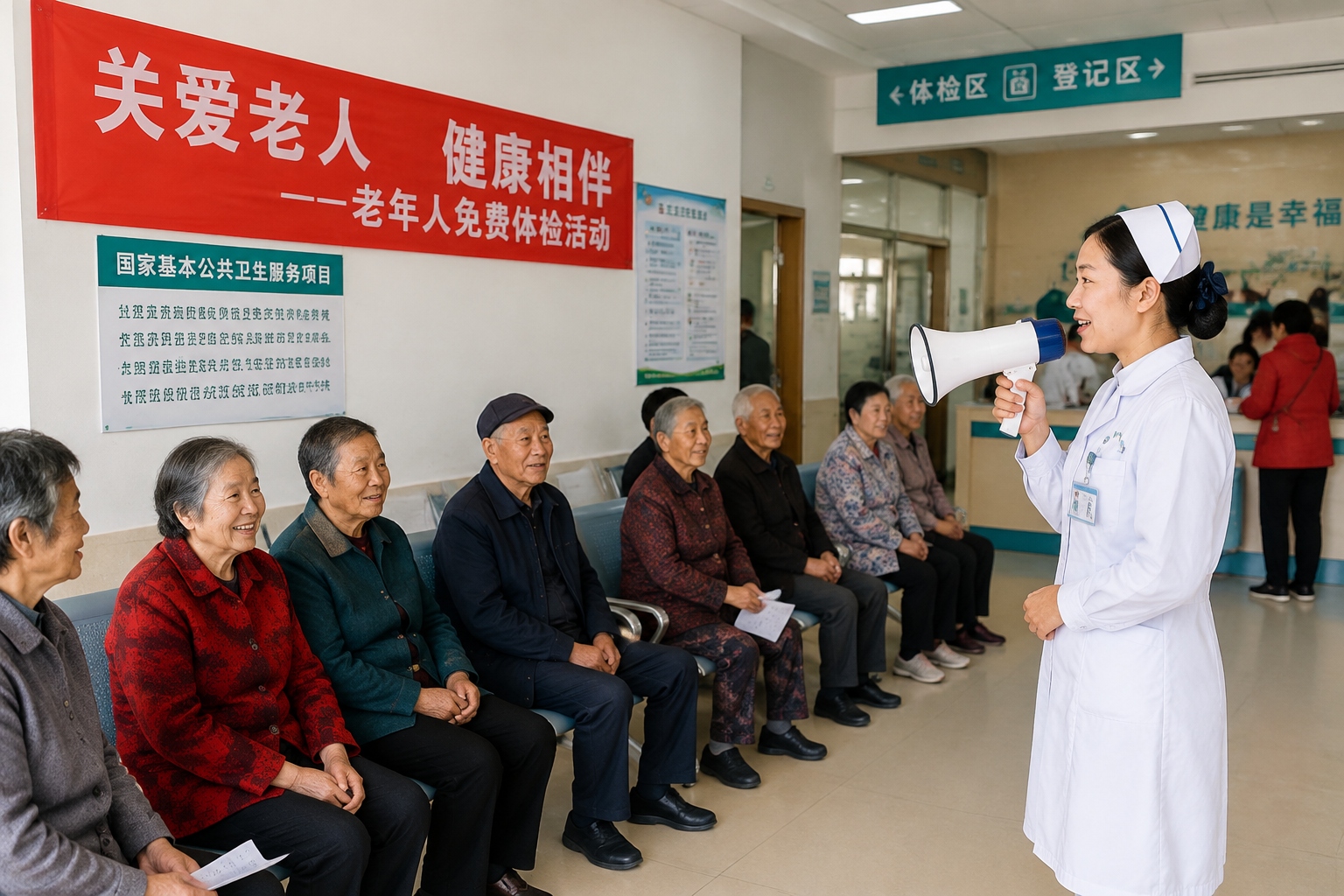
The most visible change is the rise of primary care at the neighborhood level. China has built or upgraded over 40,000 community health centers and township clinics in recent years. These aren’t just small doctor’s offices. Many have ultrasound machines, basic labs, and trained general practitioners. For seniors, the convenience is life-changing.
In Beijing’s Dongcheng District, 68-year-old Li Weiguo suffered from high blood pressure for years but often skipped check-ups because the nearest hospital was a 40-minute bus ride away. Now, he walks 10 minutes to his local health station. The doctor knows his history, adjusts his medication, and even sends text reminders. “I feel like somebody is watching my back,” Li says. This relationship between an older patient and a familiar doctor is the heart of China’s new primary-care push.
The government also introduced a family doctor contract system. More than 350 million elderly people have signed up nationally. These doctors aren’t just for emergencies—they do annual health assessments, manage chronic conditions, and offer lifestyle coaching. For an elderly person living alone, this regular contact is often the difference between a small problem and a serious crisis.
Insurance That Catches More People
Cost has always been a barrier for older people. China’s medical insurance system now covers over 95% of the population. The Basic Medical Insurance includes both urban employees and rural residents. For retirees, the government pays a significant portion of their contributions, so many don’t pay anything to stay enrolled.
But the bigger change is the rise of a serious illness insurance (大病保险) and medical aid. Serious illness insurance partially covers costs after the basic insurance cap is reached. In practice, this means a senior with cancer might pay a few thousand dollars instead of a few tens of thousands. In rural areas, the government also subsidizes premiums for low-income elders, so even the poorest households have some protection.
One specific policy worth knowing: different regions are now connecting their insurance systems, enabling elderly people to get reimbursed even when they move to live with their children in another city. A grandmother from Sichuan can see a doctor in Guangdong and her insurance will be honored there. This isn’t just a bureaucratic change; it solves a huge anxiety for millions of “migratory elderly” who follow their adult children.
Technology That Speaks the Language of Seniors
It’s easy to imagine that China’s digital healthcare excludes the old. Yet in practice, many digital tools are designed with senior users in mind. Hospitals offer face-recognition ID checks, most registration kiosks have large fonts and voice prompts, and WeChat mini-programs allow family members to book appointments on behalf of their parents from anywhere.
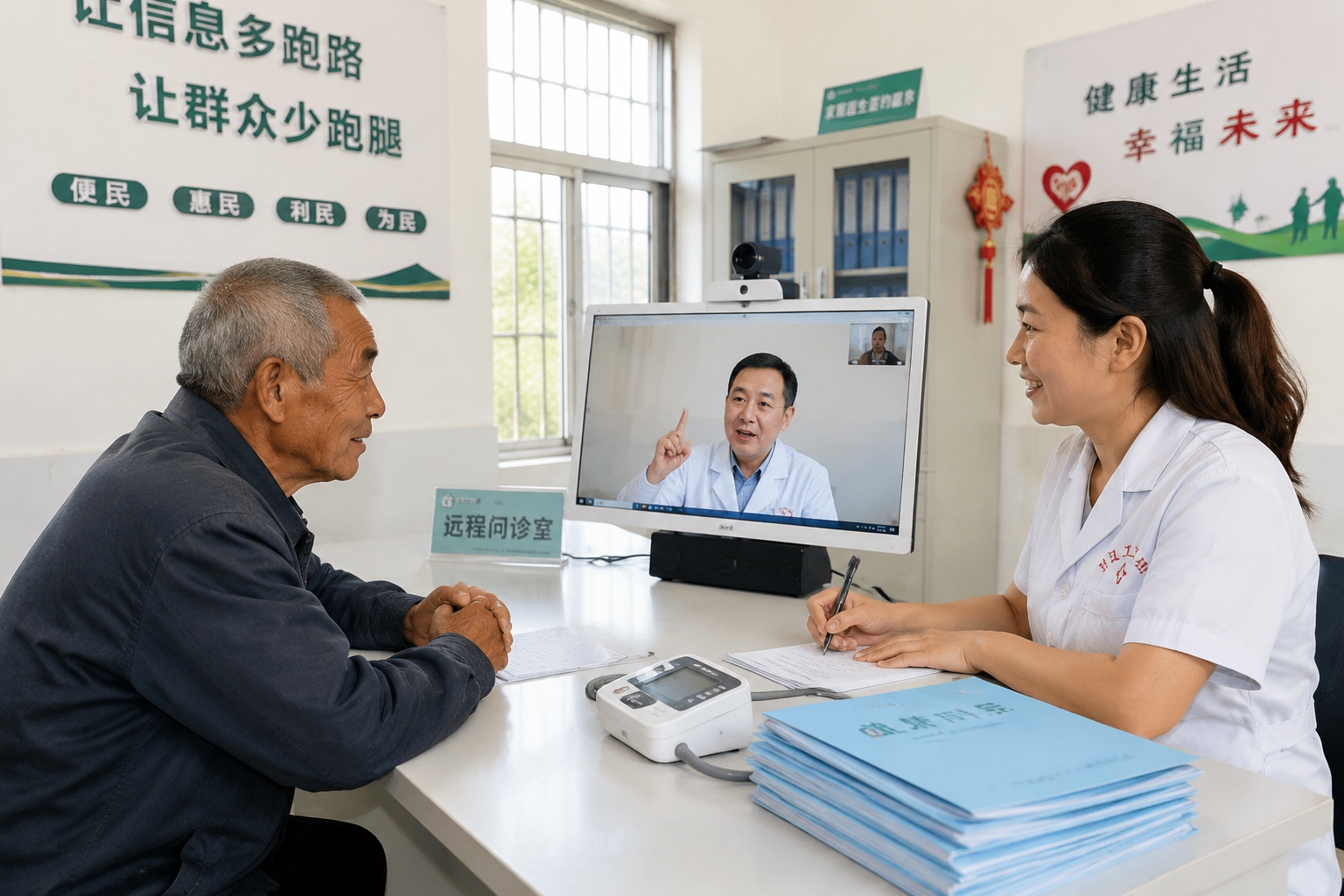
Telemedicine is especially important for rural elders. In Shanxi Province, village clinics are connected to county hospitals through video consultations. A farmer with a suspicious skin rash can get a dermatologist’s opinion without a 100-kilometer trip. During the pandemic, this model proved its worth—heart patients in remote areas continued receiving follow-ups.
Electronic health records also mean that an 80-year-old visiting a new hospital doesn’t have to retell his entire medical history. The system shares crucial data like allergies and recent test results, making the experience less stressful and safer.
From Treating Disease to Preventing It
Old-age care in China used to mean waiting until you got sick. Now the focus is shifting to prevention. Since 2009, the government has funded free annual health check-ups for all residents over 65. These check-ups include blood tests, blood pressure, heart exams, and ultrasound. In many communities, nurses personally call seniors who haven’t booked their check-up, treating it like a civic duty.
This prevention mindset is reshaping daily life. In Guangzhou, some communities have “health corners” in parks where seniors can borrow blood pressure monitors. Others run morning exercise groups led by volunteers trained in fall prevention. These small interventions are not glamorous, but they lower hospital admission rates for chronic diseases like stroke and diabetes.
In official language, the goal is called ‘Healthy China.’ But the real meaning shows up in small acts, like a doctor in a damp clinic in Yunnan teaching a grandmother how to cut salt in her cooking. That is where policy becomes personal.
What Still Needs Work
It would be dishonest to portray this as a perfect system. Healthcare access in China has clear differences between big cities and the countryside. Top-tier hospitals in Shanghai and Beijing are crowded, while some villages still face a shortage of qualified doctors. Rural elders often have to travel long distances for specialized care. There are also concerns about hidden costs for certain drugs and the quality of care in rural facilities.
The government knows these gaps. The Healthy China 2030 plan explicitly aims to strengthen county-level hospitals and attract younger doctors to rural areas. In 2023, the National Health Commission launched a program to train and deploy 50,000 medical students to township clinics over three years. Not all problems will be solved quickly, but the direction is clear.
Conclusion
When you see an elderly man in Hangzhou use his phone to show a QR code at the hospital pharmacy, or an old woman in a rural clinic receiving a video consultation from a specialist, you are looking at a quiet revolution. It’s not perfect, and it’s not equal at every point, but it is real. Chinese seniors today have more reasons to feel secure about their health than any previous generation. The community nurse who drops by, the insurance card that works in another province, the free check-up that catches a tumor early—these are the textures of a society trying to keep its promise to the old.
The road ahead is long, but the changes on the ground are unmistakable. For Zhang Liqin, the morning walk to the clinic is not a burden, it’s a ritual of trust. And that trust, built doctor by doctor, phone call by phone call, is the most significant asset China’s aging society can have.
Start the discussion at forum.chinacomes.com