

The Morning of the Sports Day
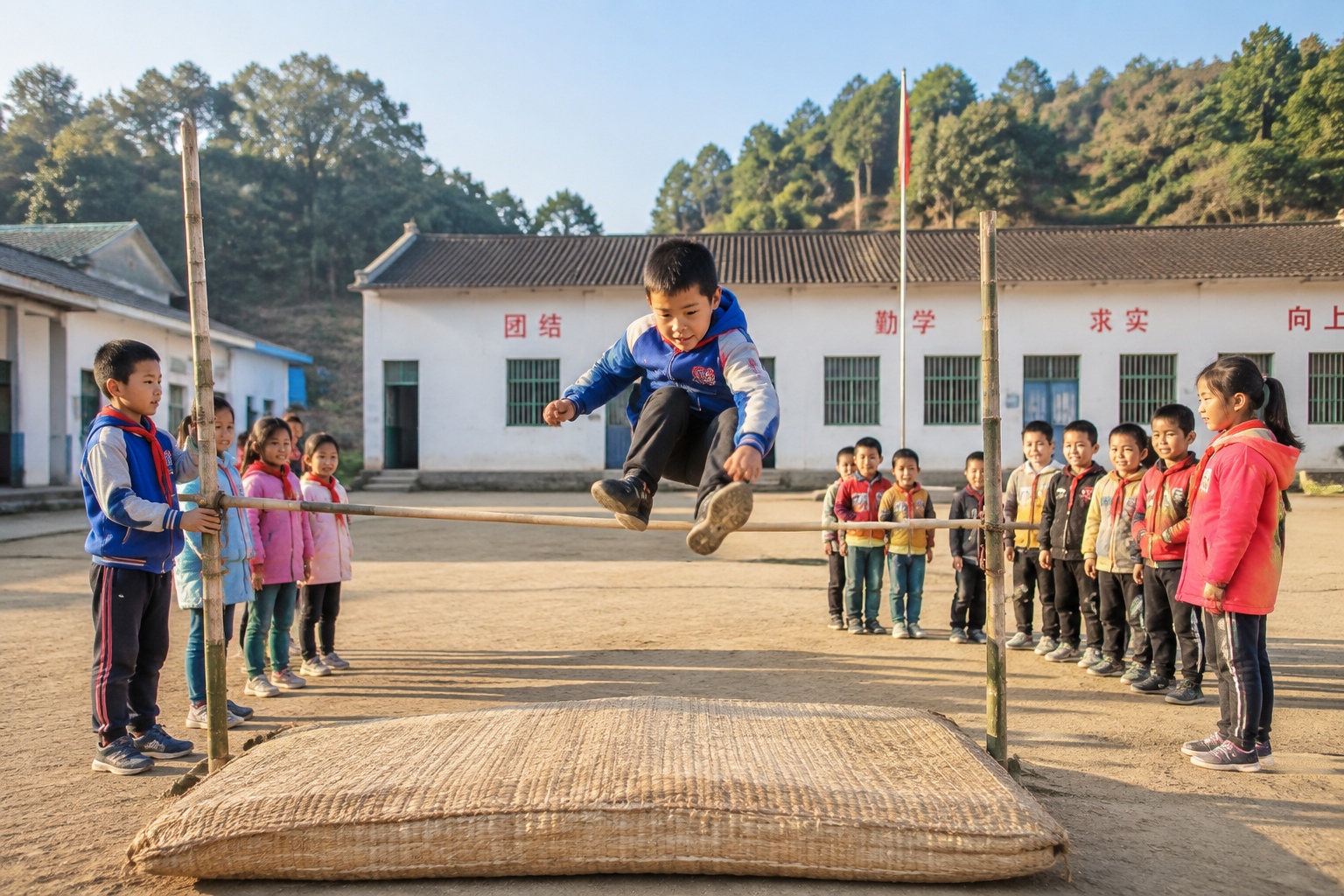
It was a bright spring morning in a small village in central China. The air smelled of soil and fresh grass. At the village primary school, the annual sports day was about to begin. There was no grand stadium, no synthetic track, no electronic scoreboard. The playground was a patch of packed earth, worn smooth by hundreds of small feet. But the children didn’t seem to mind. They stood in neat lines, wearing their brightest clothes, eyes sparkling with excitement. The children had been looking forward to this day for weeks. Some of them walked an hour to school just to practice early in the morning.
High Jump on a Straw Mat
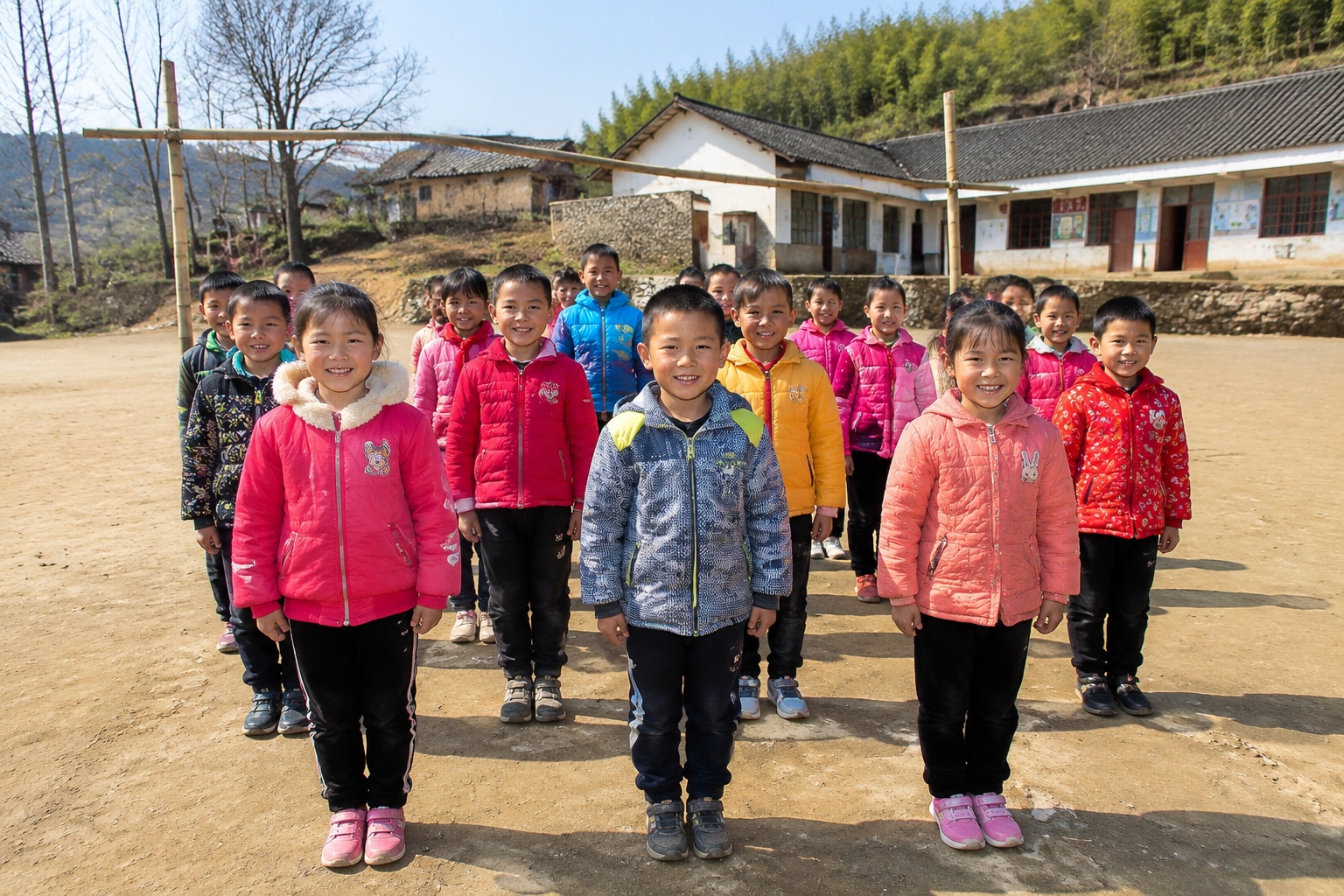
The most anticipated event was the high jump. The equipment was simple: two bamboo poles stuck into the ground, a horizontal bar made of a thin branch, and a pile of straw covered with a tattered plastic sheet. That was the landing mat. In urban schools, you’d find padded foam mats and adjustable standards. Here, the “mat” was a stack of rice straw, tied together with rope. The teacher, Mr. Wang, carefully placed the bar at a height that seemed reasonable for the young athletes. The bar was set at chest height for the 10-year-olds, but even the younger ones were eager to try. Mr. Wang adjusted it for each child, showing a patience that spoke of years of teaching.
“Don’t be afraid, just kick your legs up when you reach the bar,” he told the children. One by one, they ran, jumped, and landed on the straw, which puffed up dust and sent a few straws flying. The crowd roared with laughter and applause. Some kids cleared the bar with ease; others knocked it off with their heels. But every attempt was met with cheers. Some of the girls braided straw into their hair as they waited their turn. The littlest ones, who were too small to compete, sat at the edge of the mat, grabbing straws and making wishes.
Xiao Lin’s Turn
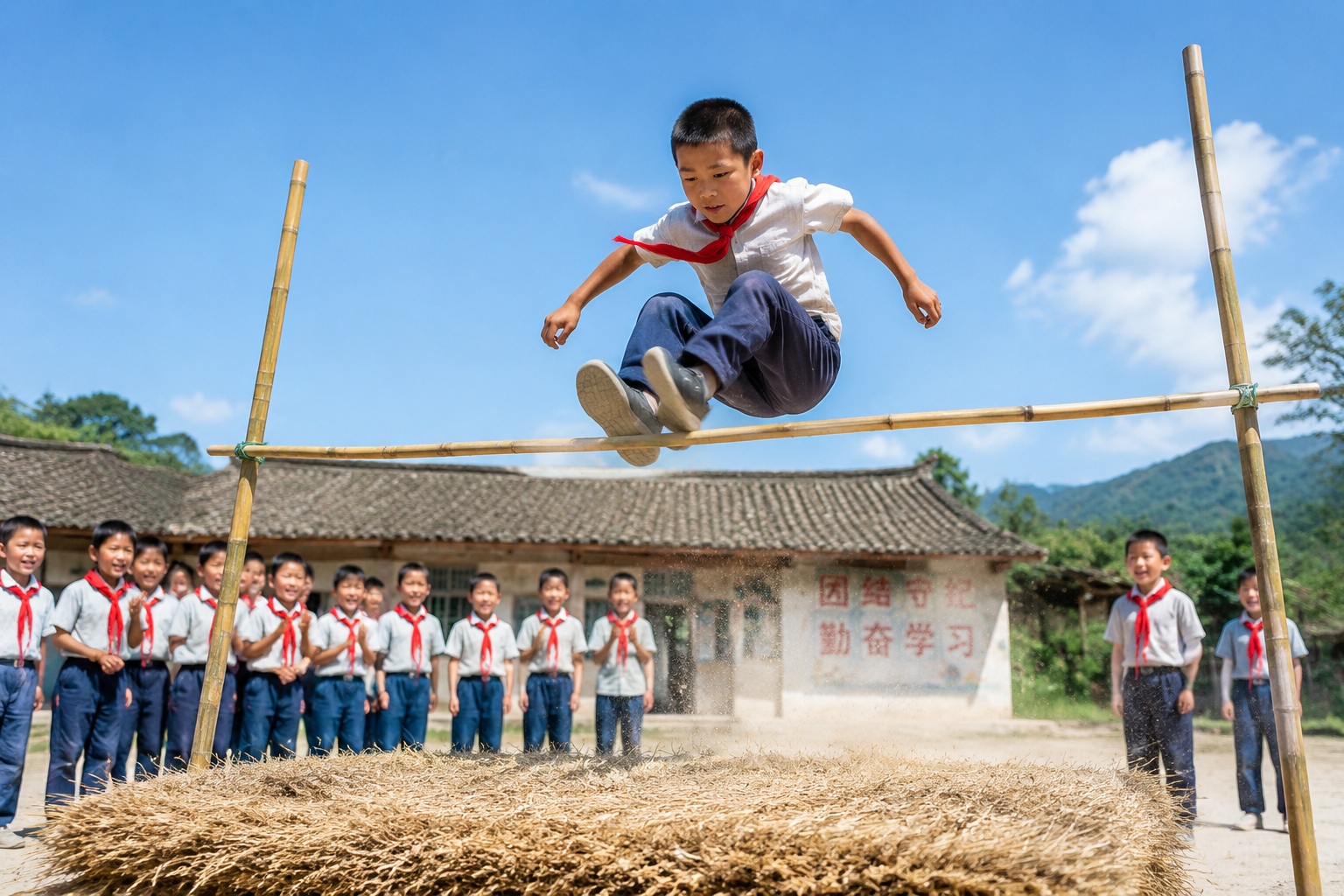
Then came Xiao Lin, a skinny boy with a shy smile. He was not the fastest or the tallest, but he had been practicing for weeks. He stood at the start line, his fists clenched. The whole class chanted his name. He took a deep breath, sprinted forward, and leaped. His body arched over the bar, but his foot clipped it, and he tumbled onto the straw. The bar fell with him. He rolled over, laughing and spitting straw from his mouth. Xiao Lin’s first jump was almost perfect. He had misjudged the distance, but his form was excellent. He took the failure with a grin, and his classmates’ laughter didn’t sting—it was part of the fun.
“Maybe you need more practice,” his friend joked. But Mr. Wang walked over and patted him on the shoulder. “That was a great jump, champion. The bar was just a little too high for you. Try again after everyone else.” Xiao Lin nodded, his eyes bright with determination. On his second try, he cleared the bar cleanly, landing on the straw with a soft thud. His classmates erupted in joyful screams. He got up, brushing straw off his clothes, and grinned as if he had won an Olympic gold.
Different Fields, Same Joy
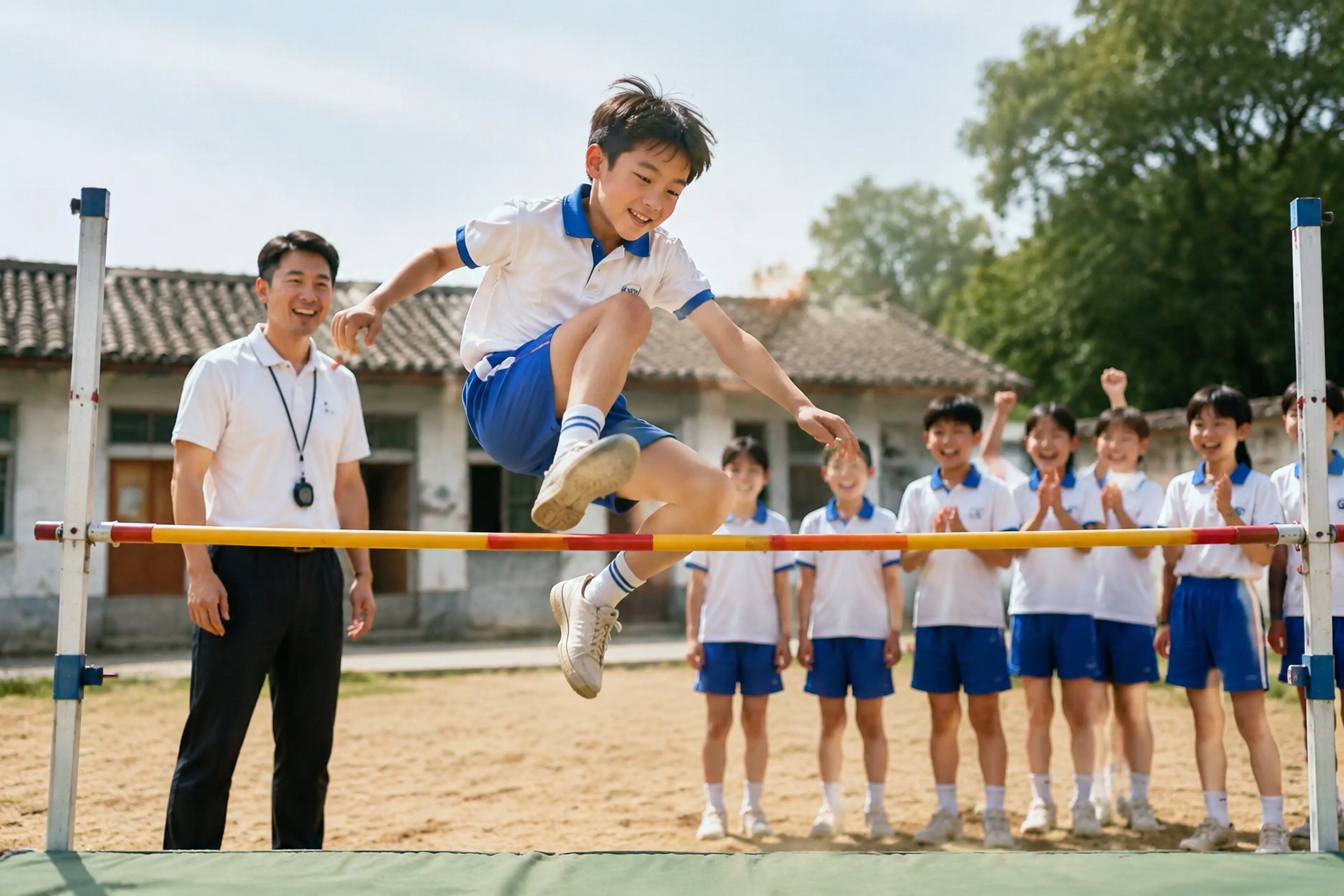
Watching this scene, I couldn’t help but think of the contrasts between rural and urban schools. In big cities, children compete on professional tracks, with colorful uniforms and high-tech timing devices. Here, there are no such luxuries. But does that matter? The essence of a sports day is not the equipment—it’s the spirit. It’s the courage to run, to jump, to try something new. It’s the laughter of children and the pride of teachers. On this straw mat, every child was a hero. In cities, sports day might be a pressure-filled event with parents filming every move. Here, it was pure play. There were no medals, just a thumbs-up from the teacher and a pat on the back. The reward was the joy itself.
Some might see the simplicity as a shortcoming. But I saw resilience. The teacher had built the high jump setup with scraps and creativity. The straw mat, which might seem crude, was actually practical and safe—it cushioned falls and didn’t cost a penny. The children, in turn, learned to be resourceful. They didn’t complain about the lack of a proper pit; they just jumped higher.
Stronger Than Concrete
This village school is one of many across China’s countryside. Over the years, the government has poured money into rural education, building new classrooms and expanding internet access. But not every school has a new gymnasium. In many places, teachers like Mr. Wang make do with what they have. Their dedication is the real backbone of rural education. They don’t wait for perfect conditions; they create opportunities with limited resources. According to the Ministry of Education, rural schools now account for over 80% of all primary schools in China. While funding has increased, challenges remain. Teachers like Mr. Wang often teach multiple subjects and act as all-around mentors.
Social organizations and volunteers also play a part. In recent months, a charity funded by urban donors had sent a shipment of sports equipment—jump ropes, basketballs, and badminton sets. The school now had more options, but the children still loved the classic high jump. “It’s our tradition,” said Mr. Wang with a smile. “No need for fancy things when you have imagination.”
A Simple Beauty
As the sun climbed higher, the sports day continued. There were sack races, tug-of-war, and a long-distance run around the village. The whole community came out to watch. Grandparents sat on benches, farmers stopped their work to cheer, and a vendor sold candies from a bicycle. It was more than a school event; it was a village gathering. The high jump on the straw mat was the highlight, a reminder that childhood joy doesn’t depend on costly infrastructure.
When I walked away that afternoon, I saw Xiao Lin practicing again, alone, moving the bar higher. He jumped, landed, and laughed. That image stayed with me. China’s countryside is full of such moments—simple, resilient, and full of hope. The straw mat didn’t look like much, but under it lay the foundations of dreams. The straw mat, after all, is a metaphor. It’s not about the material; it’s about the resourcefulness. It’s about a community that refuses to let poverty steal the magic of childhood.
Start the discussion at forum.chinacomes.com