

First Light on the Grassland
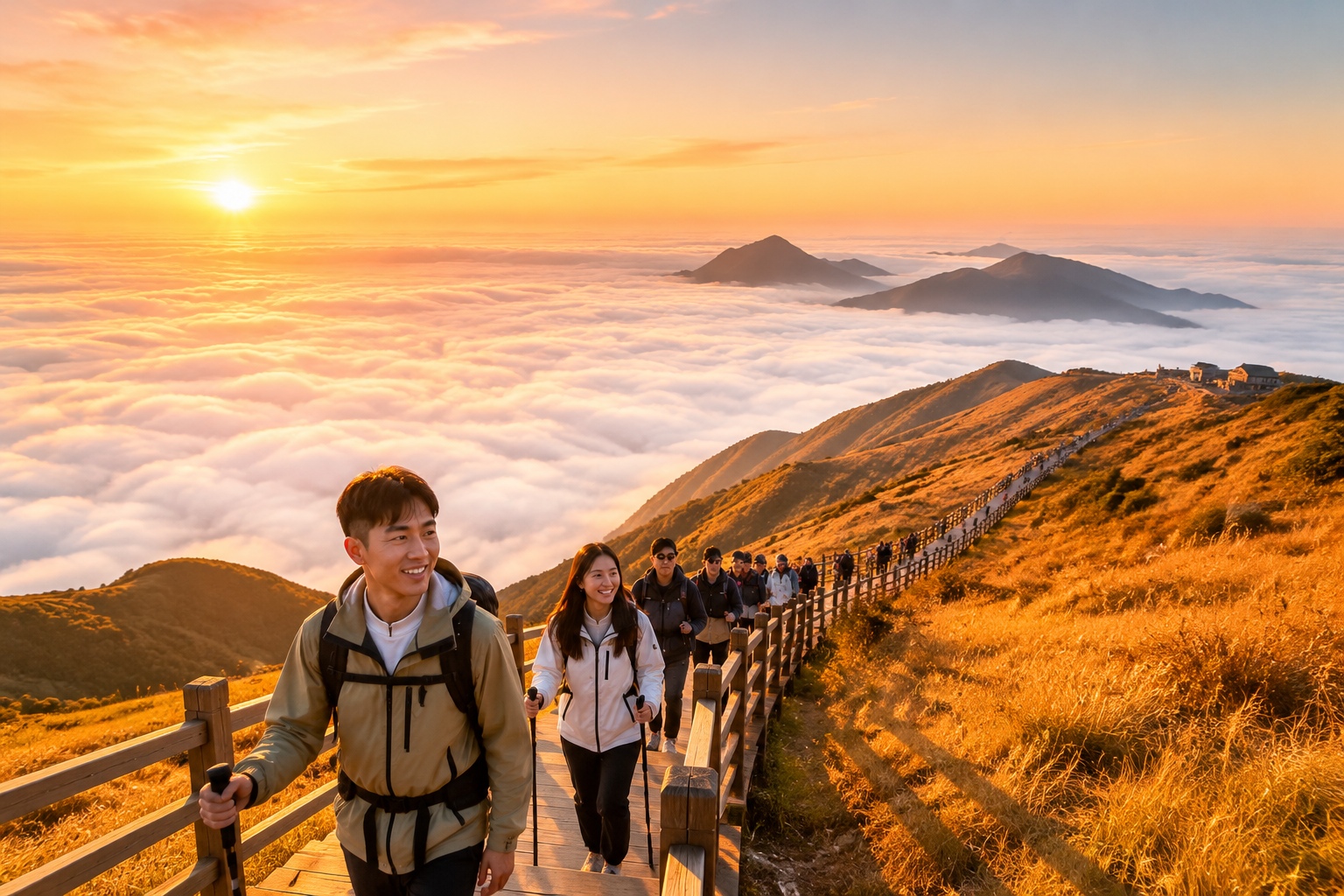
At 5:40 a.m., the ridge line began to brighten. I was standing near Wugong Mountain’s Golden Summit, ankle-deep in damp grass, listening to wind comb through the blades. The air smelled of wet earth and wild herbs. Below us, a sea of clouds stretched like a white ocean, swallowing the valleys and leaving only the peaks of neighboring ranges visible. A few hikers nearby set up tripods and waited. When the sun finally broke the horizon, the entire slope turned from gray-green to deep gold. Someone whispered, ‘It’s here.’ This was the same view I’d scrolled past in short videos dozens of times. But standing here, it wasn’t a filtered image. It was wind, light, and temperature pressing against my skin.
Wugong Mountain is not one peak but a long ridge system running between Jiangxi and Hunan provinces in southeast China. Its main summit, Baihe Peak, reaches 1,918 meters above sea level. What makes it unusual is not height — plenty of Chinese mountains are taller. It’s the alpine meadow. Above about 1,600 meters, the forest gives way to rolling grassland, carpeting the ridgeline in a way more typical of the Scottish Highlands than subtropical China. For years, this landscape belonged mostly to seasoned hikers. Then drone videos turned it into an internet sensation. Today, on a busy weekend, the trail can feel like a moving stream of people in bright windbreakers. But the mountain itself still delivers what the videos promise — if you’re willing to walk for it.
The Trail from the Base Station to the Sky
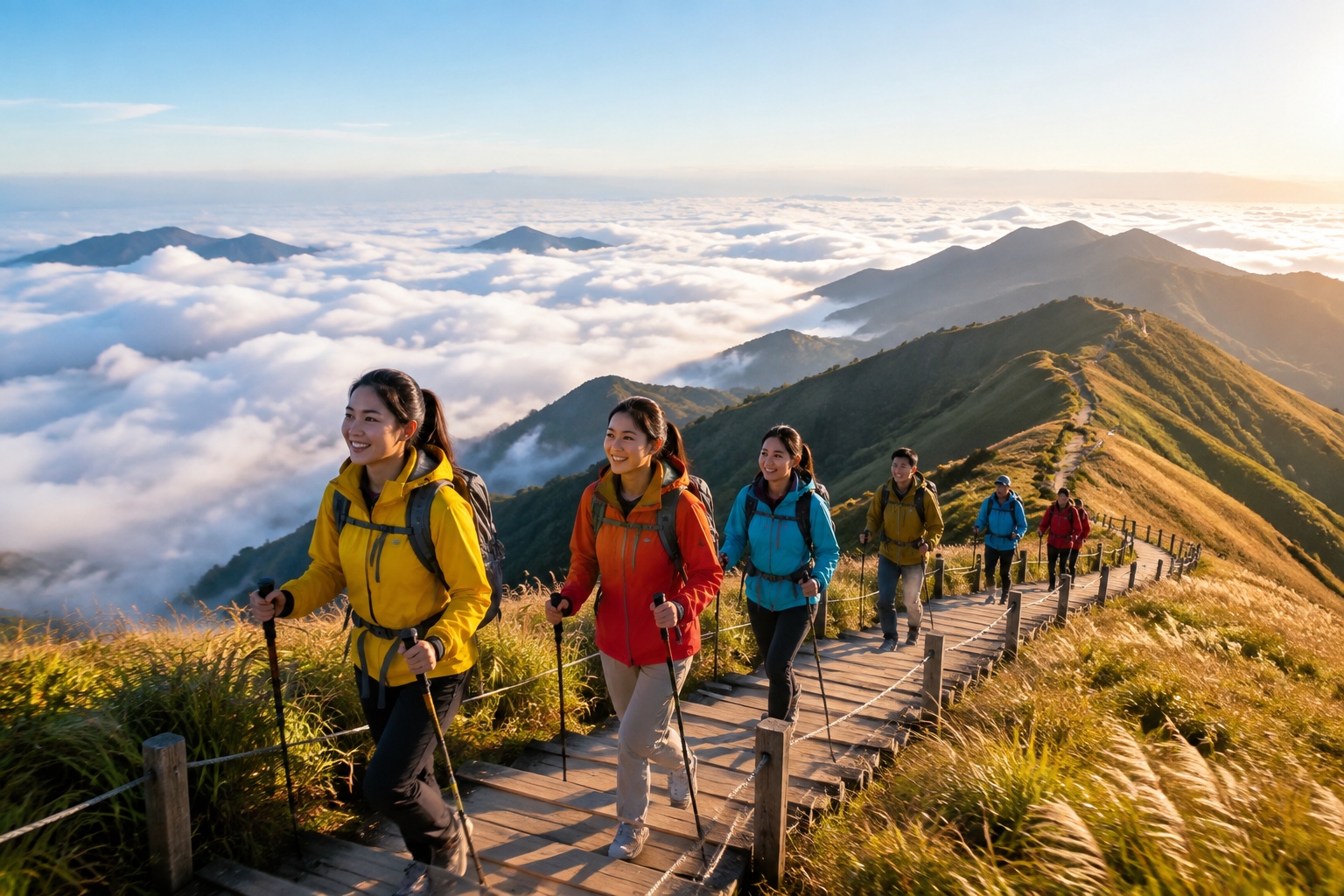
Most first-time visitors start from the Shigusi scenic area on the Jiangxi side. A cable car carries you from the foot of the mountain to Zhong’an station at about 1,200 meters, saving you two hours of steep stone steps. From there, it’s a climb of roughly 700 vertical meters to the summit. The path is well-maintained: stone staircases, chains along the steeper sections, and, near the top, a long wooden boardwalk that keeps your boots out of the fragile grass.
That doesn’t mean it’s easy. The last hour before the summit is a relentless series of switchbacks. My legs were burning, and at one point I stopped to watch a porter haul two large mineral-water bottles tied to a bamboo pole. He passed me without breaking stride. ‘Not much farther,’ he said, smiling. Local porters, many of them farmers from the villages below, move supplies up the mountain every day, and their presence is a reminder that this terrain has been crossed long before the internet arrived.
For experienced hikers, a more ambitious option is the full traverse from Fawangjie to the Golden Summit, a two-day route across the undulating grassland. That’s where the mountain reveals its quieter side: vast open ridgelines, herds of cattle roaming free, and occasional stone huts where you can rest overnight. The trail is marked, but weather can close in quickly, turning golden slopes into white nothing.
A Night Above the Clouds
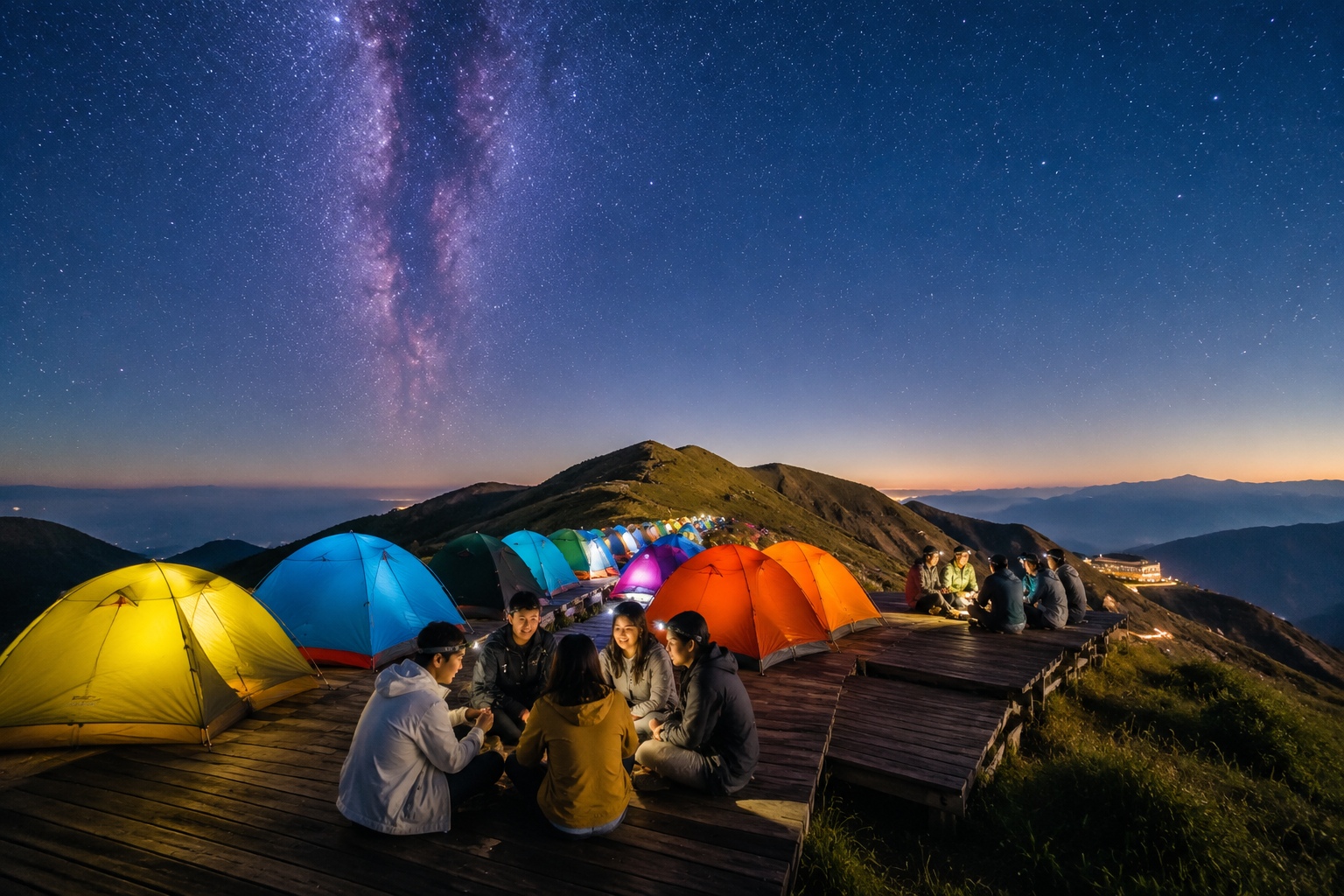
Most visitors stay one night on the mountain, and the camping scene near the Golden Summit has become almost as famous as the view itself. By late afternoon, hundreds of tents in every color have bloomed on the wooden platforms alongside the ridge. Hikers chat over instant noodles and hot tea from the mountain lodges, which also rent blankets and thick jackets. The temperature drops fast after sunset; even in summer, it can fall below 10°C.
Around 9 p.m., the crowd thins out. Someone points out the Milky Way, and a collective hush falls over the camp. A group of university students from Guangzhou starts singing pop songs, but they stop after a while, as if the dark sky deserves more quiet. At dawn, the same campsite wakes to a soft orange glow, and every tent flap opens outward, revealing people wrapped in rented green army coats, filming the sunrise.
One of the best things about the mountain’s current infrastructure is how accessible it makes this wilderness. Mountain lodges offer dormitory beds and hot water; portable toilets are stationed along major paths; there’s even a small grocery store on the summit. You don’t need to be a mountaineer to spend a night in the sky. But you do need to respect the altitude — the weather can shift from clear to violent in thirty minutes, and windproof layers are non-negotiable.
Keeping the Golden Grassland Green
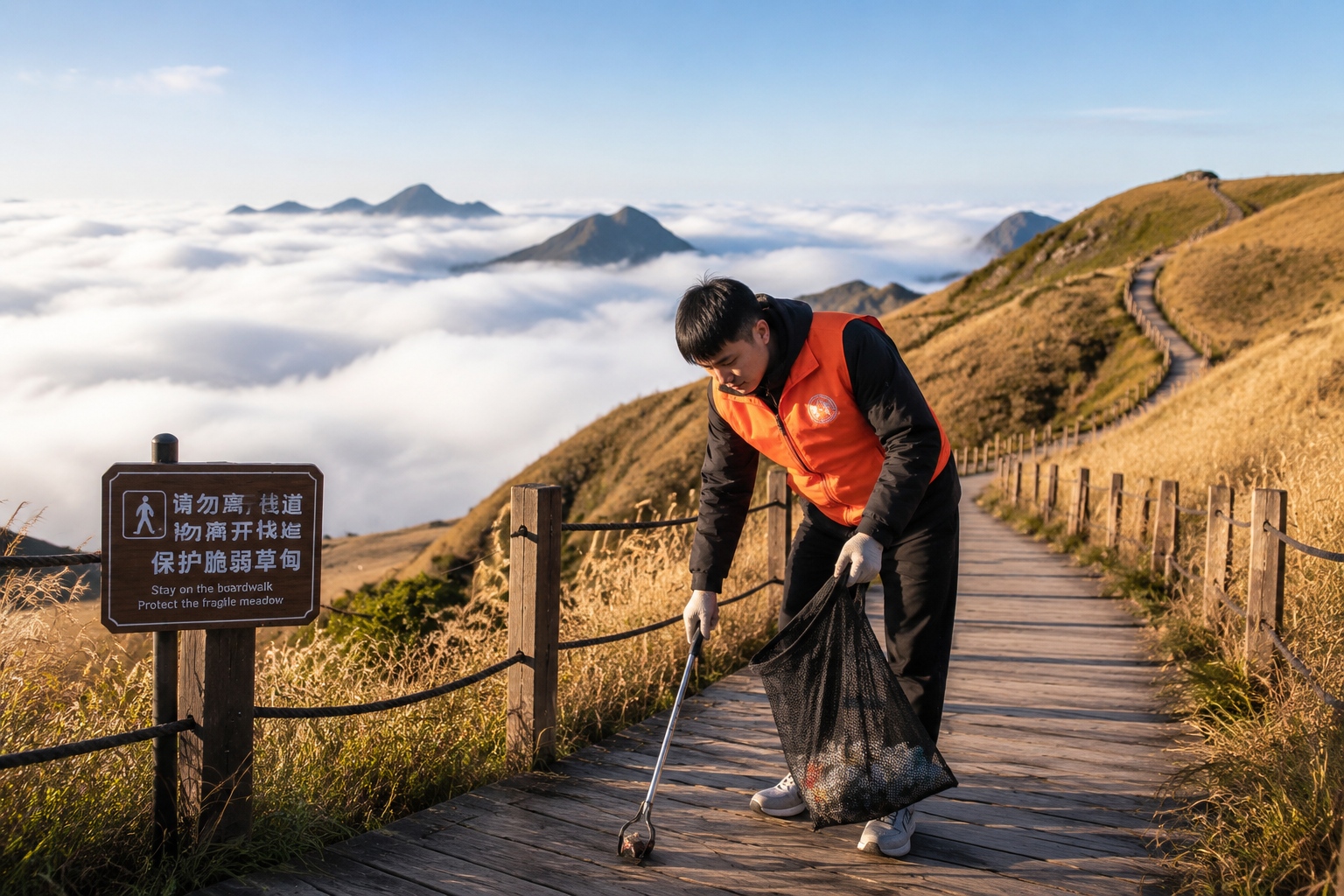
The influx of visitors has put real pressure on the ecosystem. Alpine meadows are slow-growing; a single season of heavy footfall can leave erosion scars that take decades to heal. In response, the Wugong Mountain scenic area has taken steps to contain the damage. Wooden walkways now channel most foot traffic along designated routes, and ropes and signs discourage hikers from wandering across untouched grass. Some sensitive zones are closed to the public each year, allowing vegetation to recover.
Litter is another challenge. The mountain managers have set up recycling stations at the summit, and visitors who bring their trash down can trade it for small souvenirs — a simple nudge that has made a visible difference. Volunteers from local universities also run weekend clean-up crews, carrying mesh bags of discarded bottles and wrappers down the mountain. The message is clear: we’re all guests here, and the grass needs its own space to live.
Practical Notes for Your Own Trek
If you’re planning a trip, the best months are May through October, when the grass is green and the weather is relatively stable. But Wugong Mountain is famous for rapid changes. Sunshine can turn into dense fog and rain in minutes, so bring a lightweight waterproof jacket, dry socks, and a headlamp even for a day trip. In winter, the grassland is covered in frost and rime — beautiful but icy, with certain routes closed.
Getting there is straightforward. Take a high-speed train to Pingxiang North Station, then a one-hour bus to the Wugong Mountain tourist center. From the center, a free shuttle brings you to the cable-car station. Entrance tickets cost around 70 yuan (US$10); the cable car is extra. On weekends, booking a tent or a bed in advance is strongly advised — the summit can sleep only so many people, and rainstorms occasionally force overnighters to squeeze into the lodges.
What surprised me most was how genuinely kind the hikers were to each other. A stranger handed me a bandage when I mentioned a blister. Another offered me a sip of hot tea at a windswept rest stop. The open grassland seems to dissolve the usual urban distance between strangers.
The View That Demands More Than a Like
Wugong Mountain has become famous for its images — golden grass, endless clouds, tents glowing in the dark. But those images are just the beginning. The real reward is the slog, the altitude, the wind-blown face, the smell of crushed thyme when you step off the trail, and the slow dawn that makes every earlier discomfort worth it. The mountain doesn’t care whether you came for likes or for something quieter. It simply offers the same ridge to everyone who makes the climb.
Just remember to bring your trash down, stay on the path, and leave the grass as golden as you found it. That’s how a place this fragile stays beautiful for the next person — and the next.
Start the discussion at forum.chinacomes.com