
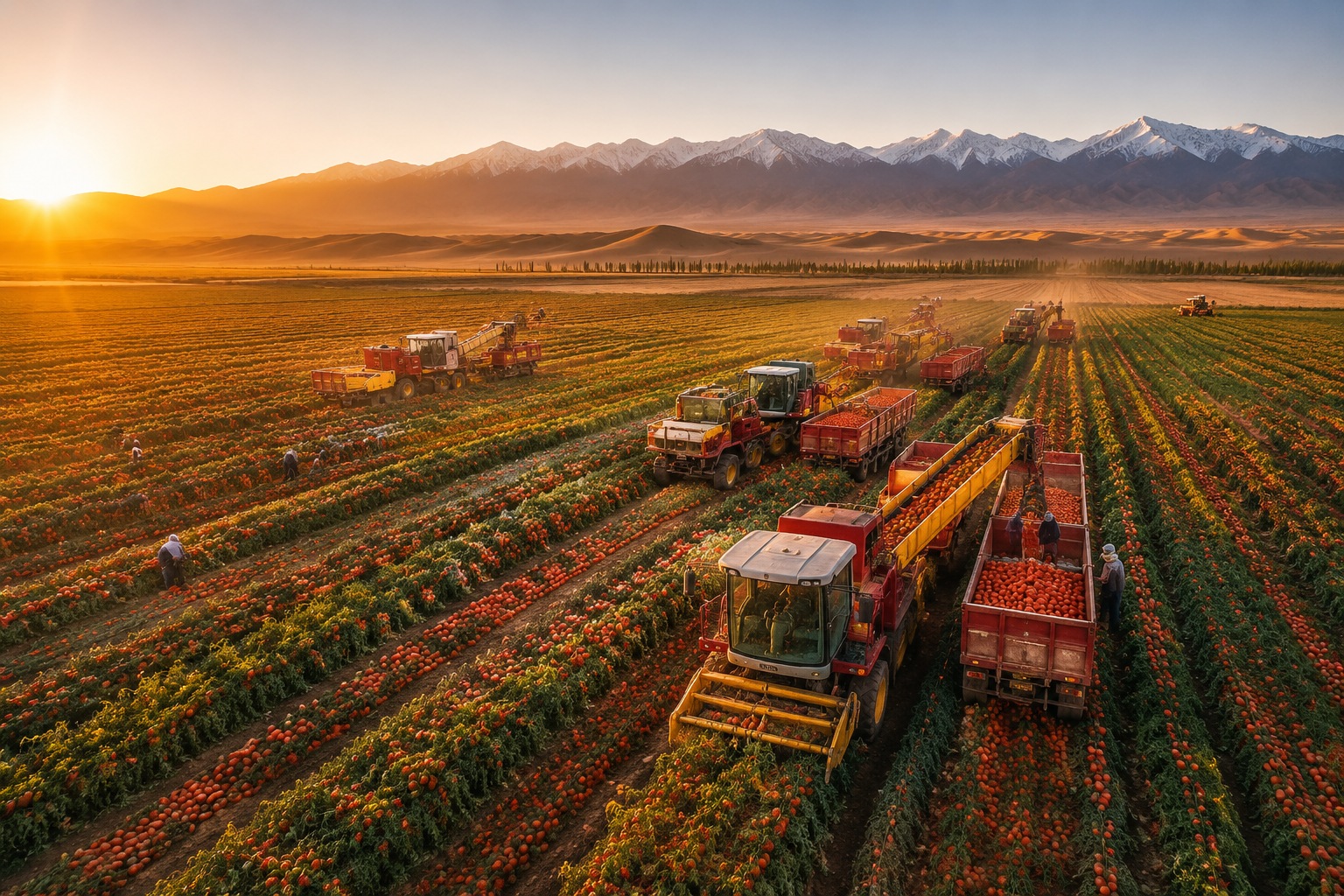

At the end of August, the parking lot of a tomato processing plant in Changji, a city north of Urumqi in Xinjiang, fills with heavy trucks. Each carries 30 to 40 tons of freshly harvested tomatoes, still warm from the sun. Drivers honk as they queue for inspection; workers take small samples to measure sugar content and color. Within an hour, the tomatoes are dumped into a water channel and begin their journey toward becoming one of the world’s most widely used canned ingredients: tomato paste.
This is the heart of a booming industry that most consumers never think about. Xinjiang produces about 80 percent of China’s tomato paste output and around a quarter of the world’s traded tomato paste. It is the largest tomato paste exporting region on the planet, outpacing California in volume. And yet, for most people, this slice of the Gobi Desert remains as mysterious as the tomatoes are common.
Why the Gobi? Nature’s perfect tomato lab
Xinjiang’s climate reads like a checklist for tomato growing. Intense sunlight during the day, cool nights, and extreme dryness combine to create conditions that tomatoes love. The region receives more than 2,500 hours of sunshine a year, and day–night temperature differences can exceed 15°C. This temperature swing makes tomatoes ripen slowly, concentrating sugars and acids. More importantly, it boosts lycopene production — the antioxidant that gives tomato paste its deep red color. Processors say Xinjiang tomatoes have lycopene levels 60 to 70 percent higher than the global average, a fact that food companies value because it means more color and nutrition per unit of paste.
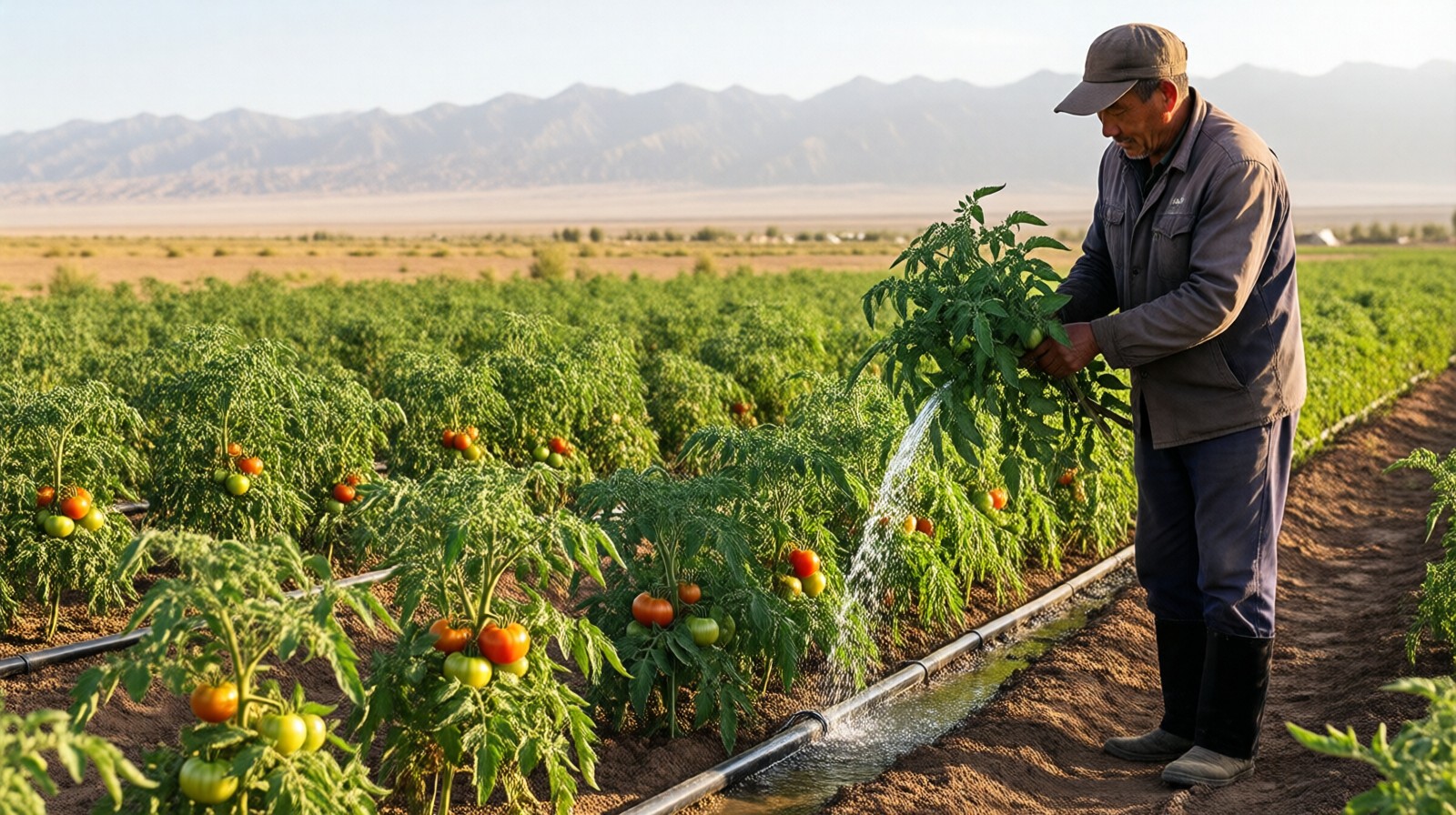
Rainfall is scarce — most of the region gets less than 200 millimeters a year — but that is not the obstacle it once was. Over the past two decades, farmers have built a network of drip irrigation pipes fed by underground water and meltwater from the Tianshan glaciers. These systems deliver water directly to the roots, dramatically increasing efficiency. In 2023, Xinjiang planted about 1.2 million mu (80,000 hectares) of processing tomatoes, yielding more than 8 million tons of fresh fruit. Most of that fruit goes to factories that turn it into paste, sauce, and juice.
The large-scale tomato processing industry began in the 1990s, when the Chinese government encouraged western regions to develop export-oriented agriculture. Initial efforts were small, but the combination of cheap land, labor, and favorable climate made the area attractive to agribusinesses. Today, the region is home to more than 120 processing plants, many with capacities that rival those in California or southern Italy.
From field to factory: a modern supply chain
What makes Xinjiang’s tomato industry competitive is not just the fruit itself, but the speed and efficiency of the entire chain. Fresh tomatoes are harvested mechanically. Once they are cut from the vine, the clock starts ticking. Trucks race to nearby processing plants, often arriving within 30 minutes. This prevents spoilage and preserves quality. ‘From field to factory in half an hour’ is a rule that processors take seriously.
The processing plants are modern, often massive. Many are operated by Chinese state-owned food groups or joint ventures with international companies. Inside, automated lines wash and sort the fruit, then crush it and heat it under carefully controlled conditions. In the ‘hot break’ method, the crushed tomatoes are rapidly heated to deactivate enzymes that could break down pectin, resulting in a thick, rich paste. The concentrated paste, with a solids content of 28 to 30 percent, is then aseptically filled into 200-liter drums. These drums are sterilized and sealed, and can keep the paste fresh for years without refrigeration.
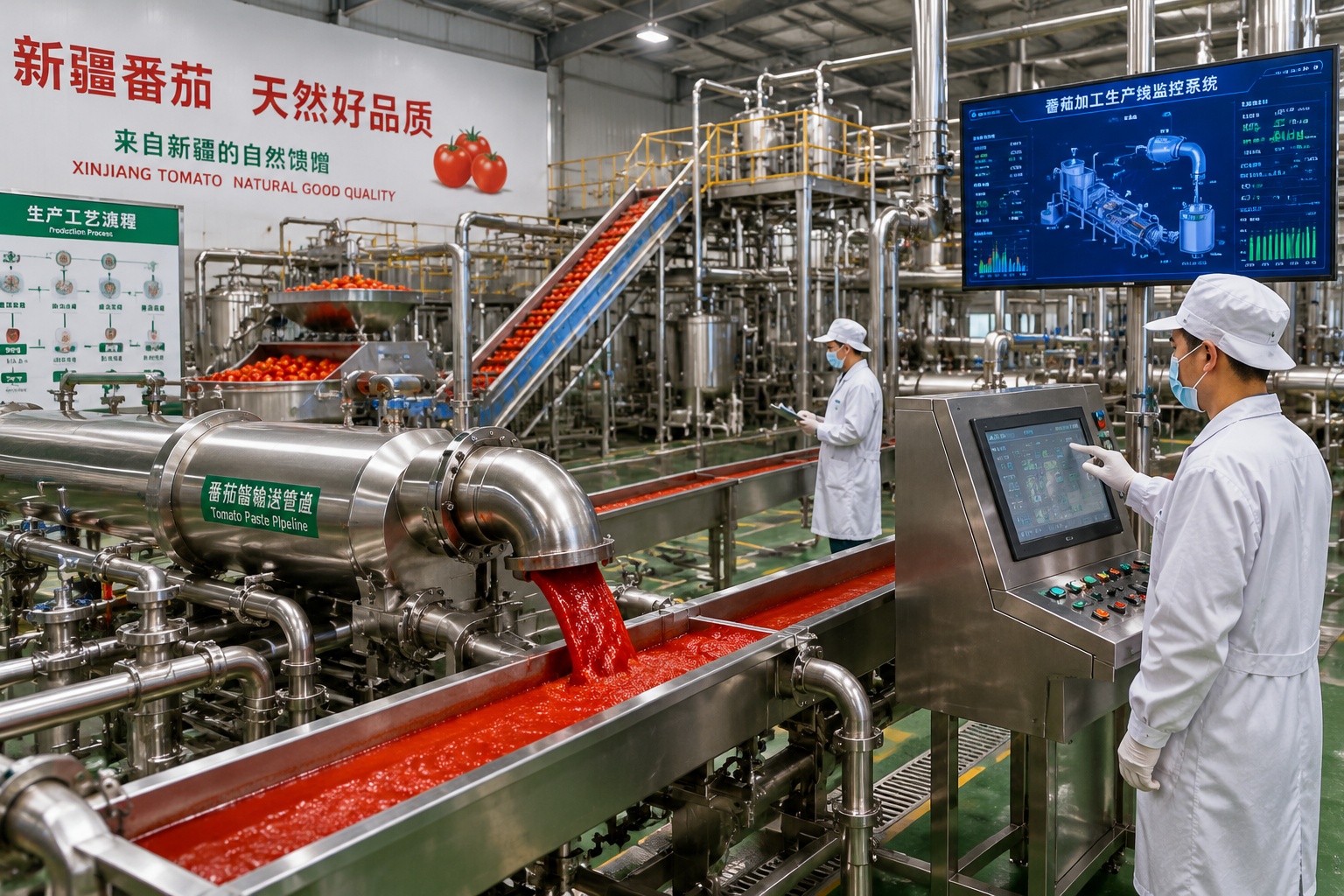
A typical factory in the region processes about 2,000 tons of tomatoes per day during the harvest season. Workers in white coats monitor control panels displaying temperatures, pressures, and viscosity. The air smells sweet and sharp. Stainless steel pipes carry the bright red liquid through the building, and at the end of the line, each drum receives a code tracking the crop year, the farm, and the processing batch. This traceability is essential for export markets where food safety standards are strict.
The entire season lasts only about eight weeks. To keep factories running at full capacity, growers and processors work from dawn to dusk. Harvesting machines, which look like enormous vacuum sweepers, cut the vines and separate the fruit of the plant. On a good day, a single machine can harvest 50 acres. This level of mechanization is one reason Xinjiang can process such enormous volumes in such a short time.
Global reach: where Xinjiang tomato paste goes
According to Chinese customs data, Xinjiang exports more than 400,000 tons of tomato paste annually, worth over $500 million. The top destinations are diverse: Italy, Russia, Ghana, Saudi Arabia, the Philippines, and many countries in Southeast Asia and the Middle East. In Italy, the paste is often used as raw material for further processing into sauces and ketchup. Its low cost and consistent quality make it an essential ingredient in global food supply chains.
Many international brands quietly source their base tomato paste from Xinjiang. They may blend it with other ingredients, add herbs and spices, and bottle it as ‘Italian’ or ‘American’ sauce. This is standard practice in the food industry — traceability is rarely advertised. But for those who track commodities, Xinjiang is a familiar name.
The logistics of getting these drums to world markets are complex. Xinjiang is landlocked, the closest major port being Lianyungang on China’s east coast, about 3,000 kilometers away. Most export cargo moves by rail to the port, then by ship. In recent years, the China-Europe Railway Express has opened faster routes to Central Asia and Russia, while rail-sea intermodal services have cut delivery times to Southeast Asia. Despite the distance, freight costs remain manageable, thanks to government subsidies and the efficiency of Chinese logistics.
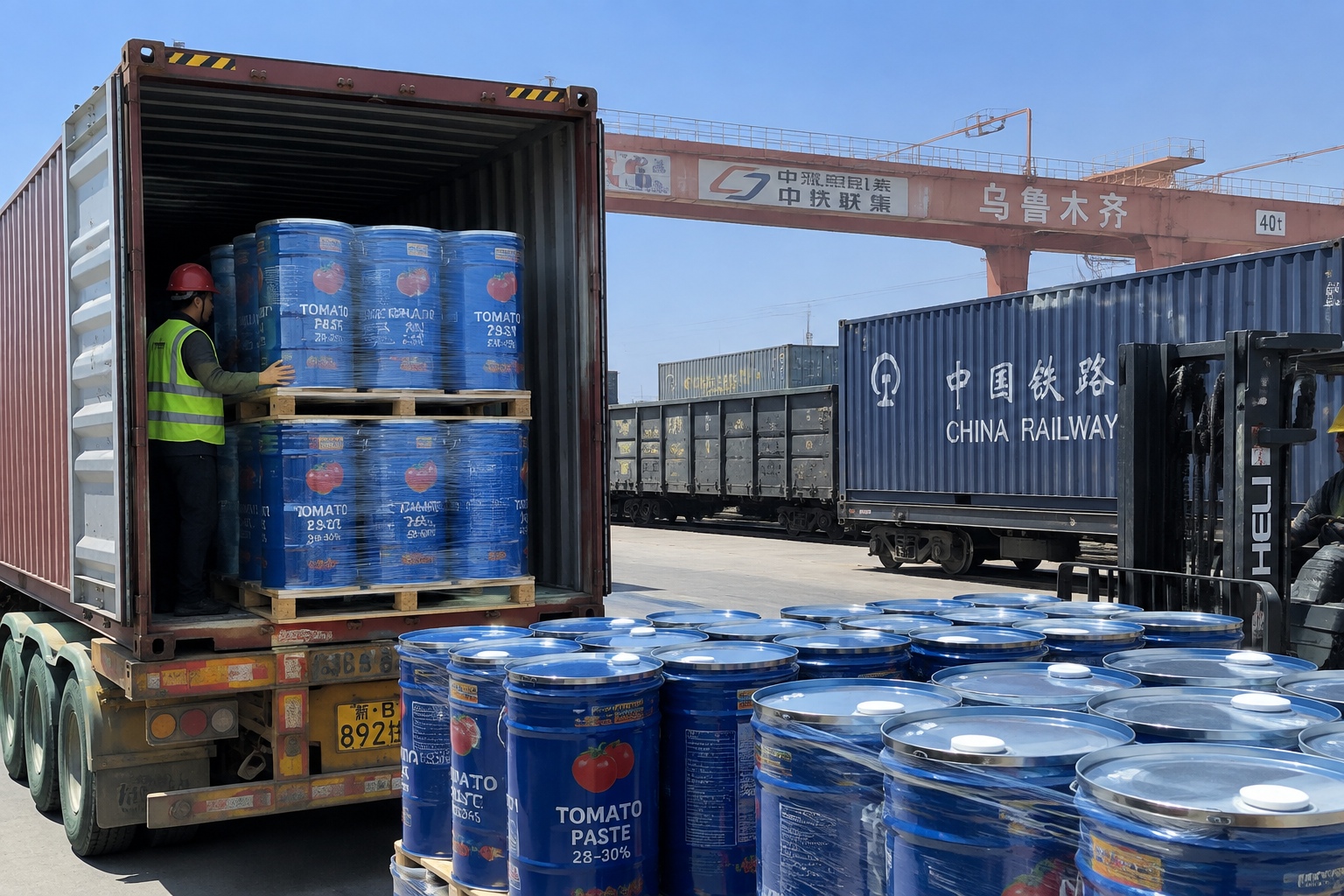
In the Middle East, tomato paste is a staple in many kitchens, and Xinjiang producers have built strong relationships with importers there. In Africa, the demand is growing as populations rise and eating habits change. In Russia, where the climate is not suitable for large-scale tomato processing, Xinjiang paste has become a trusted import. Each market has its own requirements – some prefer higher viscosity, others want specific sugar-to-acid ratios – and the region’s factory managers have learned to adapt the product to meet them.
Challenges and the road ahead
The ‘red industry’ is not without its headaches. Water scarcity is a persistent concern. Some regions have already imposed caps on groundwater extraction, forcing farmers to adopt even more efficient irrigation or switch to lower-water crops. Climate change could also affect the glacial meltwater that supplies many fields, adding uncertainty to the region’s water budget.
International competition is another challenge. California and Italy both have established tomato industries with powerful marketing and well-known brands. They also have a stronger presence in the high-value processed segment, such as organic or specialty products. Xinjiang’s exports are still dominated by bulk paste, which leaves thin margins. To counter this, some Chinese companies are starting to produce diced tomatoes, tomato juice, and even organic pastes. They are also developing consumer-facing brands that emphasize the place and the process, hoping to win share in the retail market.
There is also a perception problem. Some overseas buyers have raised concerns about labor and environmental standards, though independent audits often show compliance with international norms. The industry has invested in automation and sustainable practices, but old assumptions die hard.
Despite these challenges, the momentum shows no sign of stopping. Investment in seed technology, water-saving infrastructure, and food safety testing continues to raise the bar. In some regions, farmers are experimenting with vertical farming in greenhouses to extend the season. The goal is not just to keep exporting bulk paste, but to move up the value chain and become a recognized name in the global food industry.
A quiet giant in global food
For most consumers, a can or a jar of tomato paste is an anonymous product. It sits in the back of a cupboard, waiting for a recipe. But behind that simple package is a remarkable network of fields, farmers, pipes, and ports that spans a continent. Xinjiang, with its harsh desert climate and its people’s determination, has become the unexpected engine of that network. As long as the sun keeps shining and the irrigation pipes stay intact, the Gobi will keep producing its red gold.
Start the discussion at forum.chinacomes.com