

Following a Blue Box on the Factory Floor
On a warm morning in Dongguan, Guangdong, quality manager Yang Rui met me at the factory gate with a small challenge. “Instead of taking you to a meeting room full of charts,” he said, “let’s follow this blue plastic box until it becomes a finished shipment.” That blue box was full of aluminium parts, each stamped with a long ID number. Over the next three hours, that number would be read, tested, scanned and recorded at sixteen stations. By the time the box reached the shipping dock, it had become something much more meaningful than metal: it had become a traceable story of how “Made in China” is actually produced today.
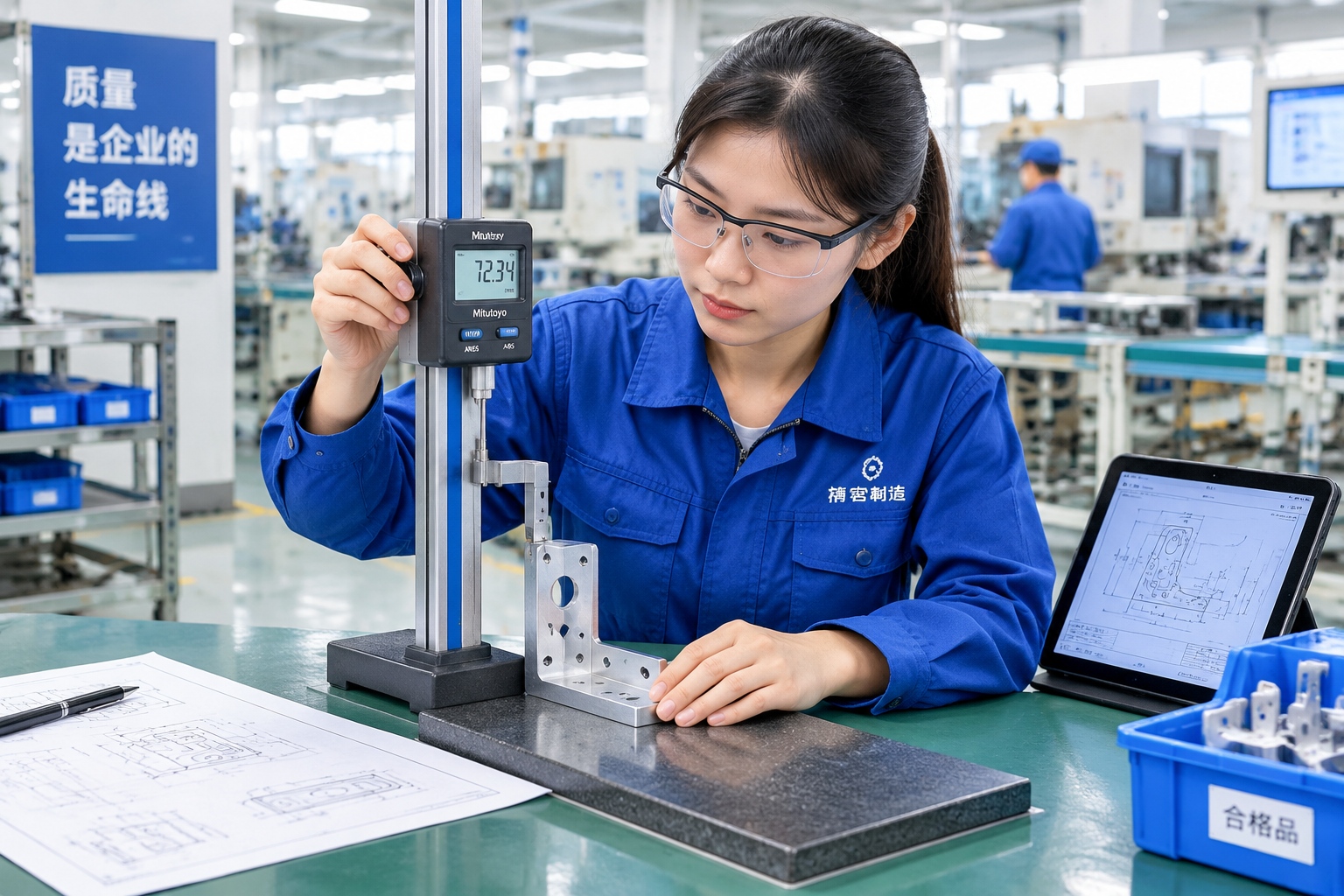
At the first station, I met Lin Xiaoqin, a quality control technician who had worked at the plant for six years. She placed one of the aluminium parts on a digital height gauge, then compared its dimensions to an engineering drawing on a large screen. “Every measurement is saved to the same database as the order,” she explained. “If a customer calls us six months from now, we can reconstruct when this part was made, which operator handled it, and which casting batch supplied it.”
The “Cheap” Label, and the Data That Quietly Changed It
It is not hard to understand why “Made in China” used to trigger suspicion. During the early export boom, many low-end factories took shortcuts to win the cheapest orders. The result was a wave of brittle toys, flickering Christmas lights and fake leather bags. That memory is real — and it still shapes how many people abroad see Chinese products today.
But that stereotype has not kept pace with reality. According to the latest ISO survey, China holds more valid ISO 9001 certificates than any other country — over 500,000 by 2022. Chinese Customs data also shows that mechanical and electrical products now make up close to 60 percent of China’s total exports. The category includes cars, solar panels, medical equipment, semiconductors and precision machine tools. These are not products that survive on cheap labour alone; they survive because factories can meet measurable quality standards.
The important shift happened not because Chinese producers suddenly grew kinder, but because global buyers demanded systems. They demanded audit trails, certifications and third-party inspections. Over time, those demands created a professional quality culture inside China’s best factories — and a competitive reason for the rest to catch up.
What ISO 9001 Actually Means Inside a Factory
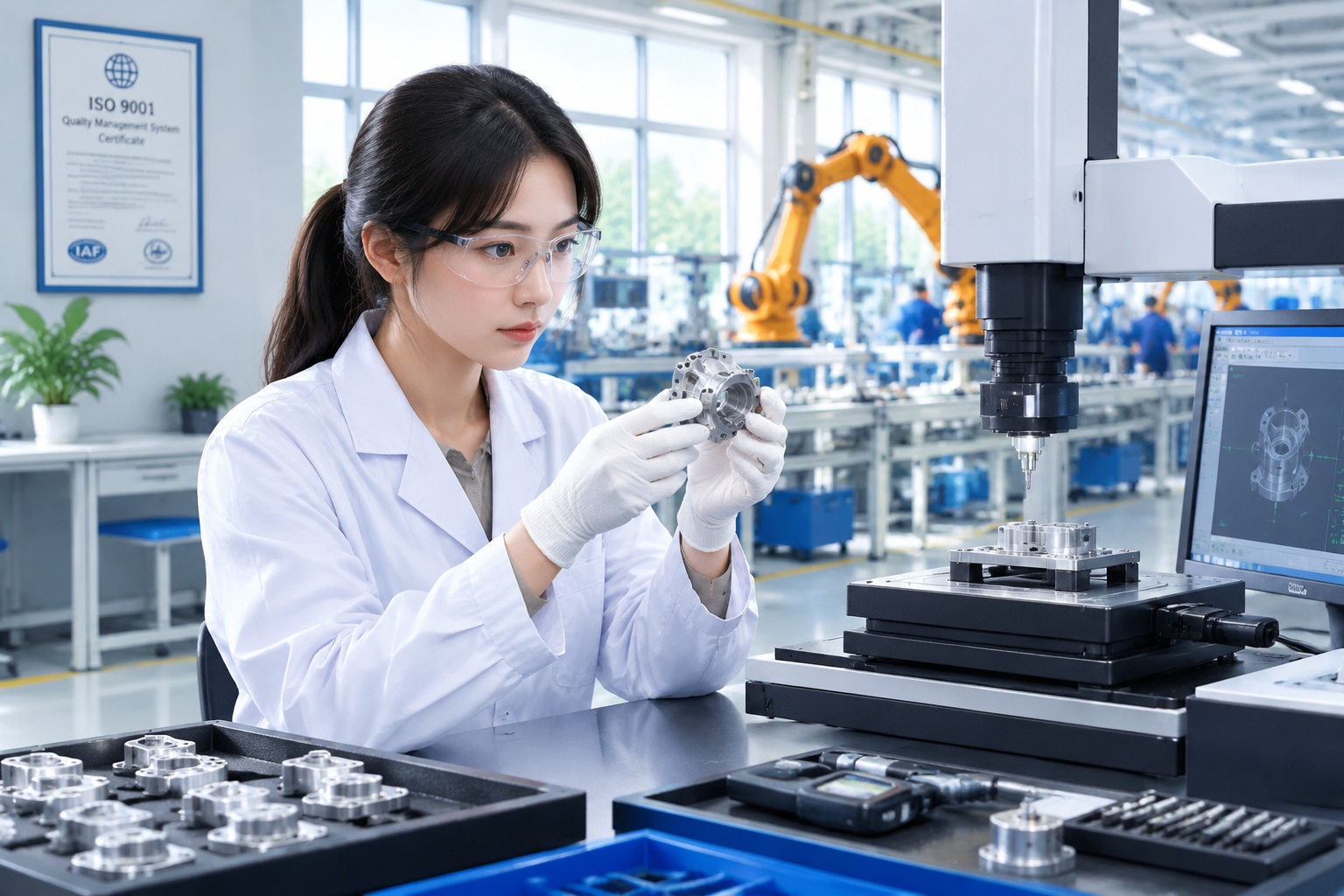
ISO 9001 is not a product guarantee. It is a process standard for quality management systems. It requires a company to define responsibilities, document its processes, measure performance, audit itself, and correct the root cause when something goes wrong. When a certificate hangs on the wall, it tells a buyer: “This factory has procedures, and it can show you evidence.”
In China, certification is verified by independent bodies such as SGS, TÜV Rheinland, Intertek, BSI and many others. These certification bodies are in turn accredited by national and international systems that share standards across borders. Auditors arrive unannounced on surveillance visits, talk to workers, follow a product through a production line and examine complaint records. If a factory fails an audit, the certificate can be suspended or withdrawn. That is why a copy of the certificate in an email is never enough for smart buyers — they check the certificate number in the certification body’s public database and often send their own auditor along.
Inside the Quality Gates: Materials, Machines, Paper Trails
Once you walk past the office walls, the real work begins. What looks like a simple manufacturing floor is actually a series of quality gates, and every gate can stop the flow if the numbers are wrong.
Incoming inspection: chemistry first
The aluminium parts in that blue box started their journey in the warehouse. Suppliers must deliver a material certificate with each lot, but the factory does not stop at paper. The IQC (incoming quality control) team samples the metal and places it in a spark spectrometer. The device reads the alloy composition in seconds, comparing elements against the purchase specification. A second group measures hardness and dimensions. If one result fails, the batch is quarantined and sent back. The same logic applies to plastics, rubber, glue and electronic components. Almost every serious factory in China now owns at least one spectrometer and a set of calibrated measuring tools.
On the line: where machines and human eyes meet
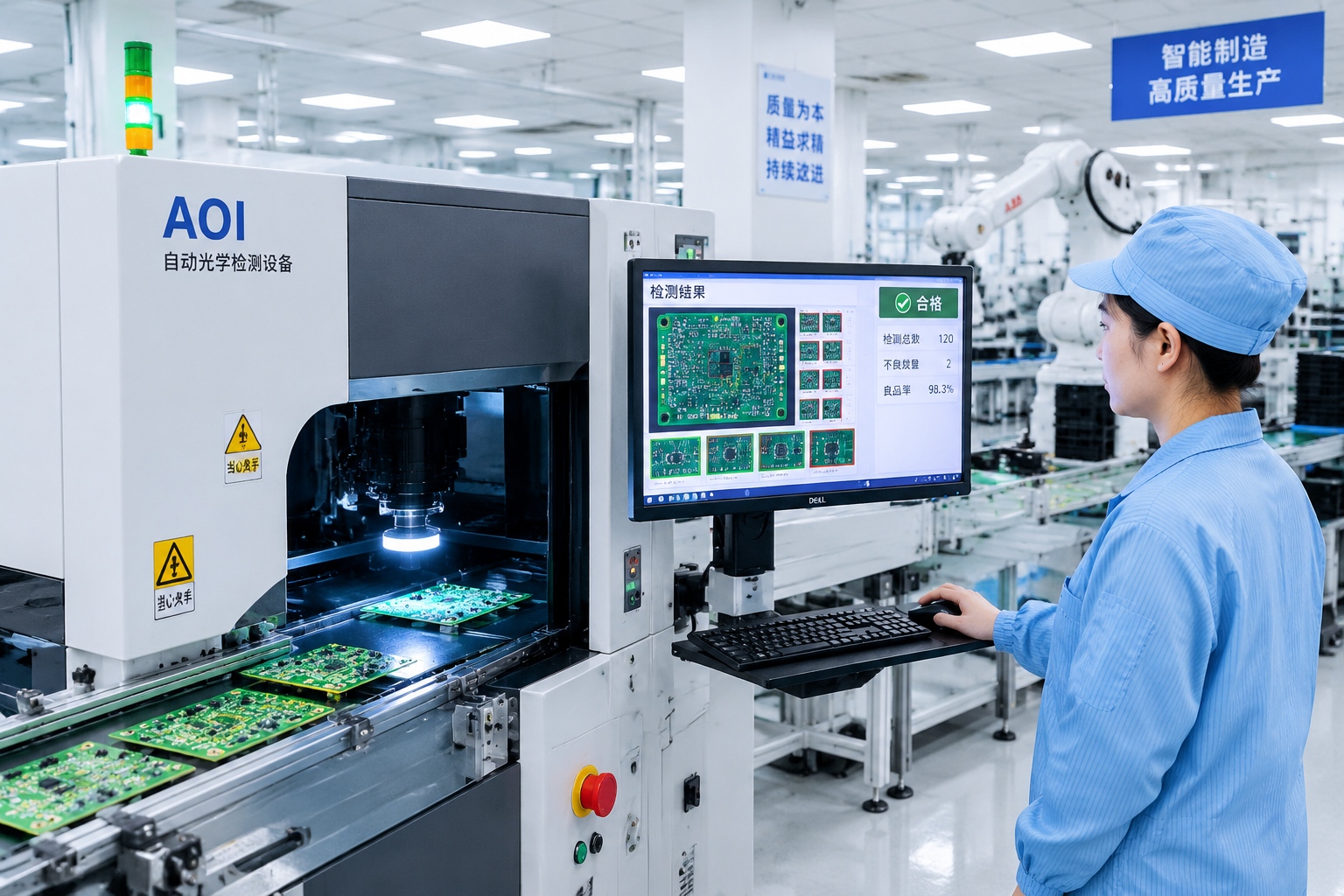
During assembly, the quality system becomes a dance between automation and careful manual checks. Vision cameras capture each circuit board at several angles, looking for missing components or poor solder joints. Torque tools record the exact force used to tighten every screw. Human inspectors still play a central role; they follow international sampling plans such as ISO 2859-1, checking a statistical number of pieces from each batch. At one station, a lab test repeated the function of a kitchen mixer 30,000 times to make sure the switch would survive customer use.
The final challenge before the container door
Finished products do not go straight into the box. Every battery, motor or appliance needing power must pass a burn-in test — some run for hours, others repeat start-stop cycles. Many factory test rooms simulate cold, heat, humidity and even rain to duplicate the conditions of the destination market. Finally, the QC department prints a Certificate of Conformity for the batch and attaches it to the packing list. This document lists the order number, sample size, test results and the standard used for inspection.
One Standard Does Not Fit All: Industry-Specific Quality Systems
Quality in China is not a single template. The deeper you go into specialised sectors, the more customised the systems become.
Consumer electronics
For smartphone cases, headphones and smartwatches, an export order normally requires ISO 9001 plus a set of client and international standards: IEC 60068 for environmental testing, for example. A brand from Europe may ask for a production sample to be dropped 1.5 metres onto concrete 10 times, or to spend 48 hours in a salt-spray chamber if it uses metal parts. The factory writes these tests into its internal control plan, and the result is recorded for each batch.
Automotive components
When parts go into cars, the standard becomes IATF 16949, an automotive quality system built on ISO 9001. This forces suppliers to measure defects not in percentages but in parts per million (PPM). A steering-gear factory in Zhejiang I visited ran with a customer target of less than 50 PPM — meaning fewer than 50 defective parts in every million delivered. To reach this, each production line used real-time statistical process control, and every component had a data matrix code read by cameras before it moved to the next step. When a problem appears, the factory receives an alert and stops the line immediately.
Medical devices and clean production
For medical devices, the foundation is ISO 13485, a quality system designed for strict documentation and risk management. In one factory I saw, operators wore full cleanroom suits, entering through air showers. The workshop itself maintained positive air pressure, so particles could not drift inside from the corridor. Each batch of sterile packaging had to complete biological testing before release. This level of control is not unusual — it is the entry ticket for exporting to Europe or North America.
“Made in China” Is a System, Not a Label
Do all Chinese factories meet these standards? No. You can still find small workshops making single-use products for markets that pay almost nothing. The same is true in Vietnam, Poland or the United States. Quality does not come from a country’s name; it comes from the buyer’s requirements and the factory’s willingness to prove compliance.
What has changed is that modern Chinese manufacturing now has a broad middle class of competent, audited, export-ready factories that know how to demonstrate quality with documents, data and repeatable processes. They welcome inspections because they understand that trust cannot be claimed — it has to be verified.
On the truck in Dongguan, the blue box was loaded beside many others. Each carried a barcode that represented a complete chain of responsibility from raw material to finished product. Yang Rui laughed as we watched the truck leave. “If a problem ever comes back,” he said, “we will find it faster than the email that complains.” That quiet confidence is the real truth about “Made in China” quality today.
Start the discussion at forum.chinacomes.com