
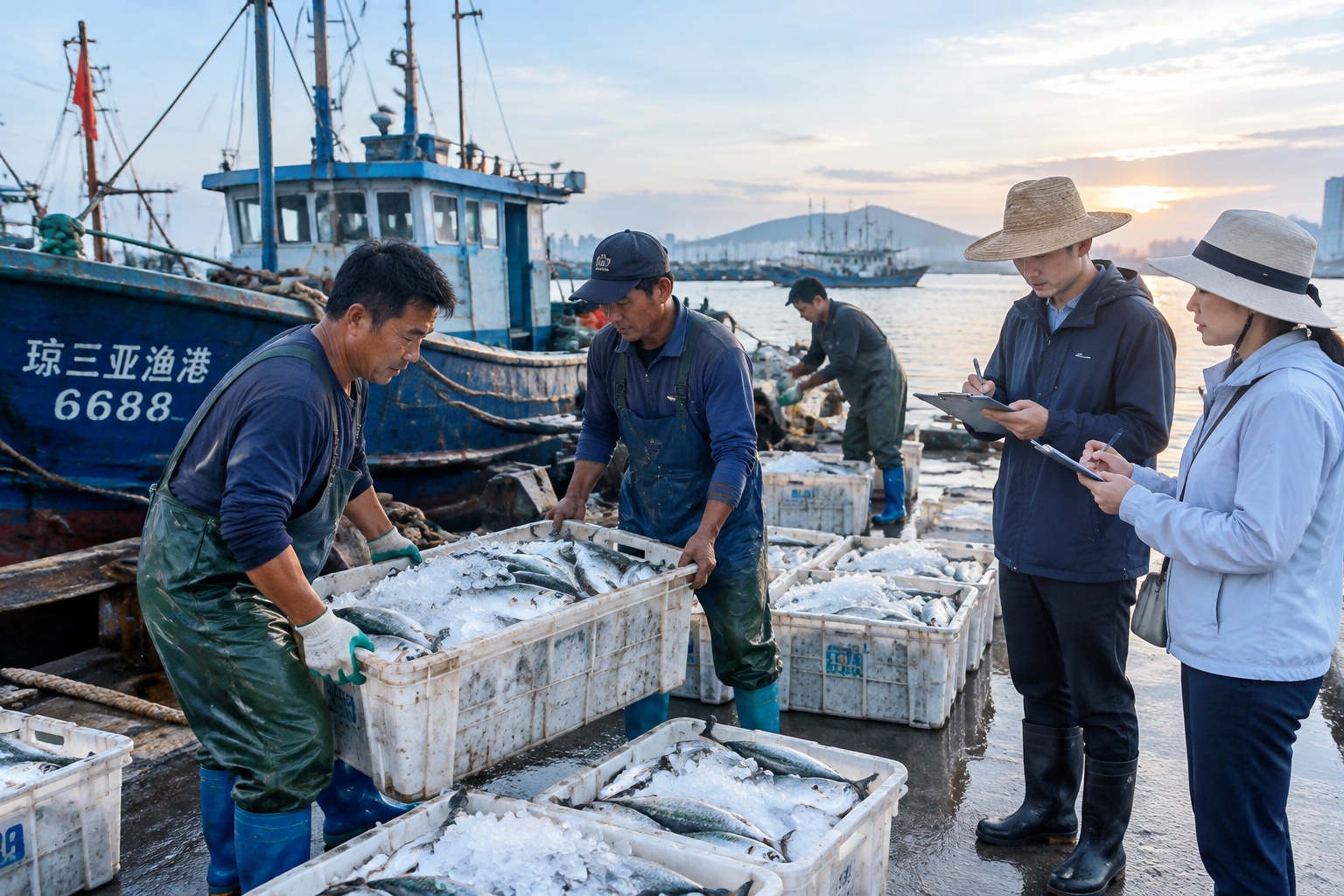

7:45 AM, Haikou: The Tea Is Already Poured
The ceiling fans are turning slowly. A middle-aged man in a faded polo shirt settles into a plastic chair, pours dark tea from a stainless steel pot into a small cup, and doesn’t look at his phone. Around him, the room hums with the clink of porcelain and the low murmur of Hainanese dialect. It is 7:45 in the morning, and the laoba cha shop — literally “old dad tea” — has been open for an hour.
This is not a café. There is no Wi-Fi password on the wall, no oat milk option. A pot of tea costs between 5 and 10 yuan (roughly $0.70 to $1.40). A plate of steamed buns or a bowl of noodles costs about the same. For the price of a single latte in Shanghai, a man can sit here until lunchtime, reading a newspaper, arguing about football, or simply watching the street.
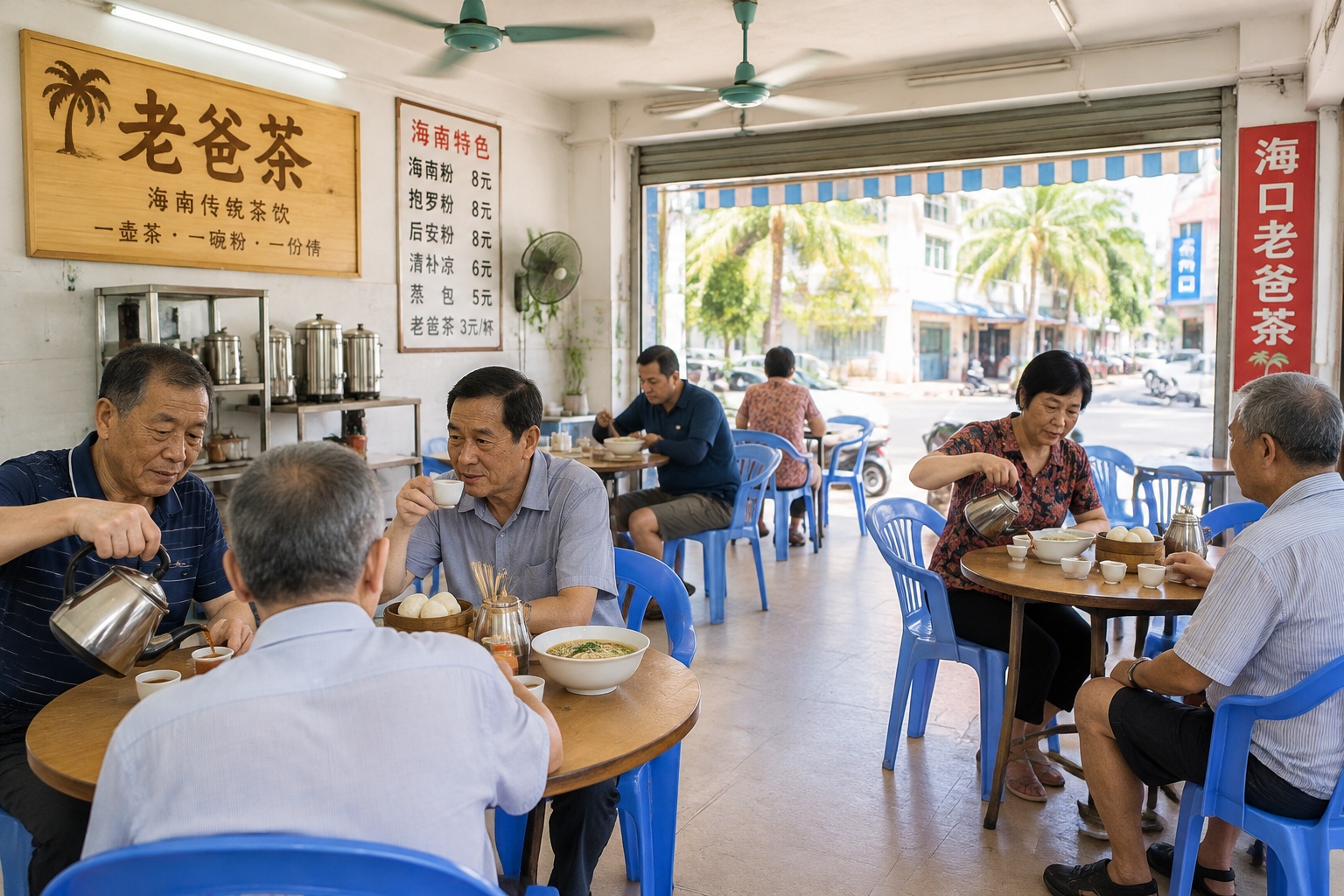
What ‘Old Dad Tea’ Actually Means
The name is affectionate, slightly teasing. Laoba — old dad — refers to the retired men who were the original regulars. But walk into any laoba cha shop in Haikou today and you’ll see a wider crowd: women in their fifties meeting friends, young delivery riders grabbing a quick bite between orders, office workers who’ve decided to start the day slowly.
The food is simple and cheap. Steamed buns with pork filling. Rice noodle rolls. Deep-fried dough sticks. A bowl of hainan fen — thick rice noodles in a savory broth, topped with peanuts, pickled vegetables, and a spoonful of minced pork. It’s breakfast, but it’s also a social contract: you stay, you talk, you refill the pot.
In a country where many cities now run on 15-minute lunch breaks and app-based everything, the laoba cha shop is a small act of resistance. Nobody rushes you. The tea keeps coming. The fan keeps turning.
5:30 AM, Sanya: The Boats Come Back
Two hundred kilometers south, the sky over Sanya is still dark blue when the first fishing boats slide into the harbor. Diesel engines cough and settle. Ropes creak against wooden docks. Men in rubber boots and long-sleeved shirts jump onto the pier and begin hauling plastic crates onto the concrete.
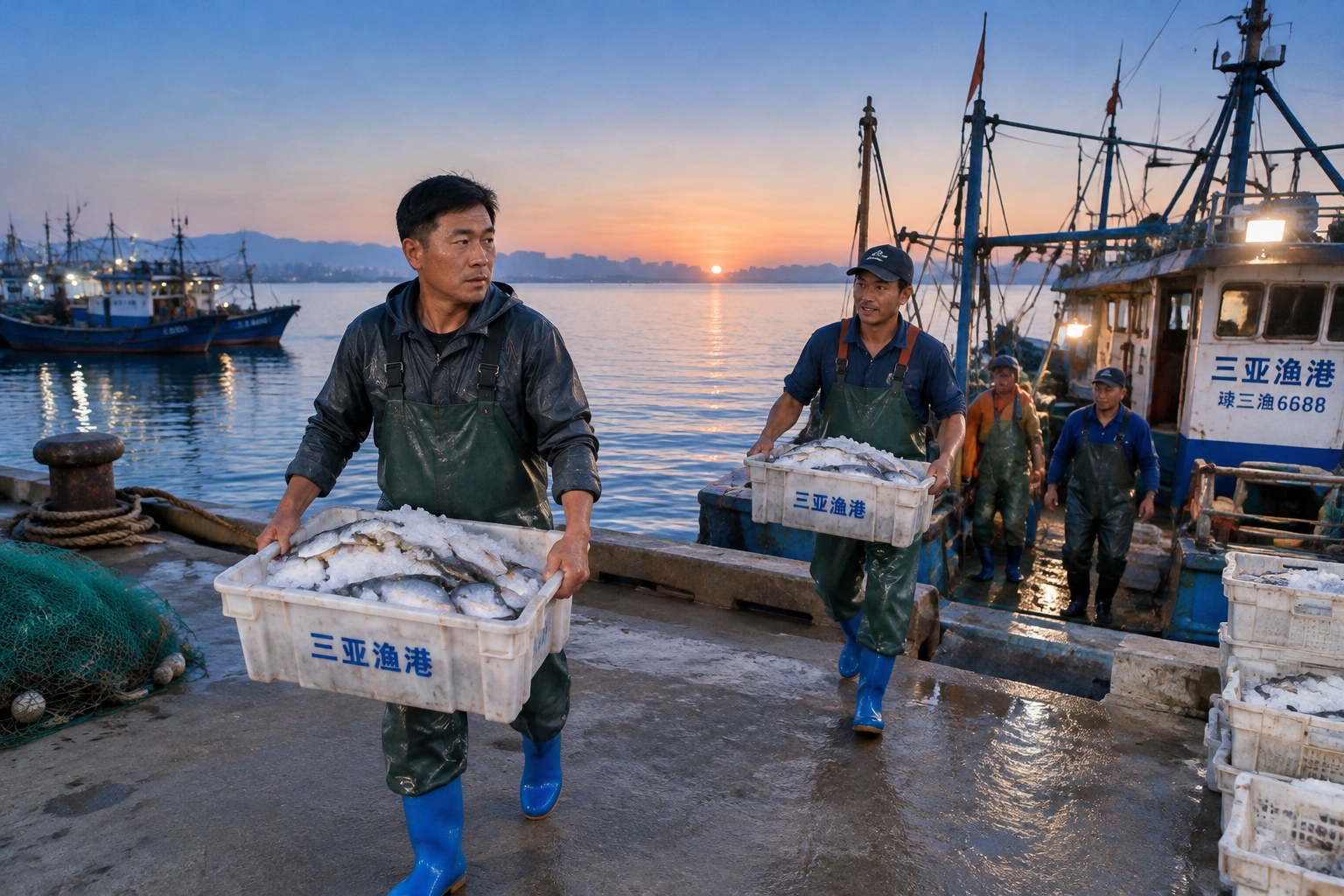
The crates are heavy with ice and silver. Groupers, snappers, squid, small reef fish with bright yellow tails. By 6:00 AM, buyers are already circling — restaurant owners in polo shirts, hotel purchasing agents with clipboards, and ordinary residents who know that the best fish disappears before the sun fully rises.
There is no auctioneer, no formal bidding system. Prices are negotiated in quick, quiet conversations. A woman in a wide-brimmed hat points at a crate of prawns. The fisherman names a number. She shakes her head. He shrugs, then lowers it by five yuan. She nods. The whole exchange takes less than a minute.
Food That Tells You Where You Are
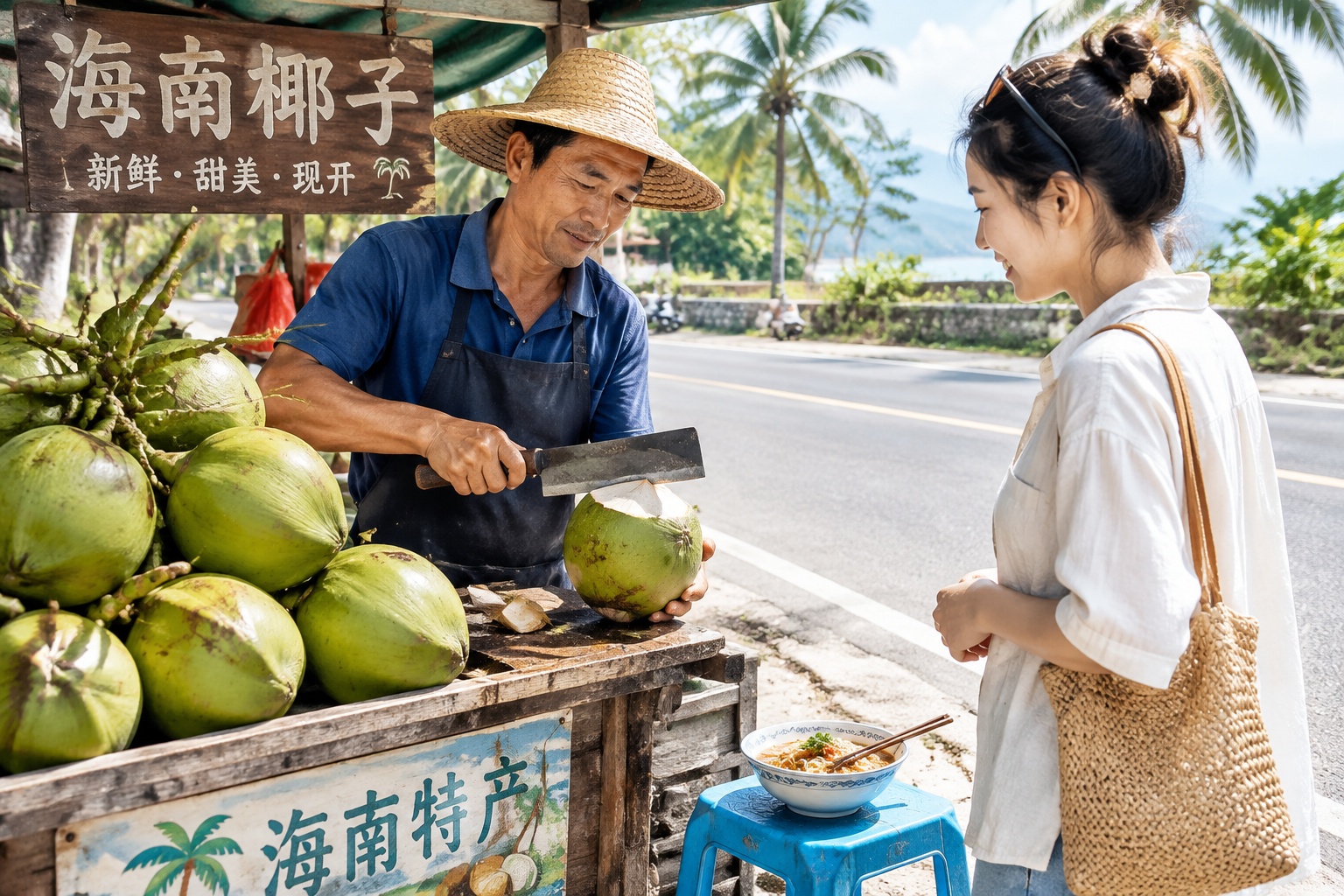
Hainan’s food is shaped by heat, humidity, and the sea. Coconuts grow everywhere — you’ll see them stacked on roadsides, their tops hacked open with a machete so you can drink the water straight. Hainan fen appears on every breakfast table, in every laoba cha shop, at every roadside stall. It is cheap, filling, and designed for a climate where heavy meals feel impossible before noon.
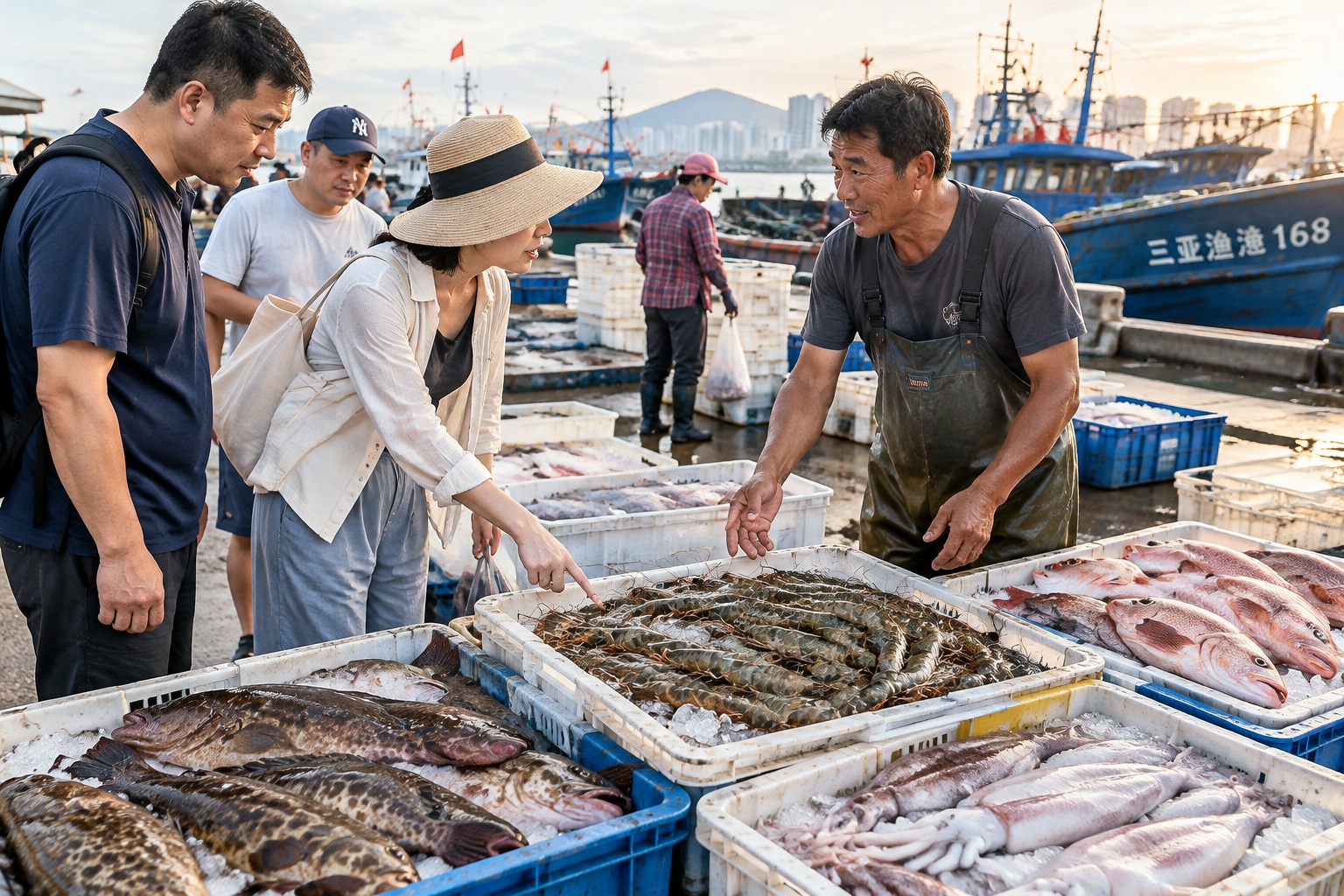
At the Sanya fish market, the connection is even more direct. What you see on the ice is what was swimming six hours ago. A restaurant owner I spoke to, a man in his forties named Chen, said he comes to the port every morning not because it’s cheaper — it isn’t, always — but because his customers can taste the difference. “Frozen fish has no memory of the sea,” he said, half-laughing. “This fish remembers.”
Two Rhythms on One Island
Tourists and locals often occupy the same island without ever sharing the same schedule. In Sanya’s resort bays, the day starts at 10 AM with a hotel breakfast buffet and ends with a cocktail at sunset. In Haikou’s old neighborhoods, the day starts before 7 AM with tea and noodles, pauses for a nap after lunch, and picks up again in the evening when the night markets open.
Neither rhythm is wrong. But they rarely intersect. A tourist who sleeps until nine will never see the fishing boats unload. A local who spends his morning at the tea shop has no reason to visit the resort pools.
What Travelers From Elsewhere Might Recognize
If you’ve spent time in a Mediterranean fishing port — Marseille, Naples, Split — the Sanya scene will feel familiar: the early hour, the ice, the quiet negotiation, the sense that this is work, not performance. The difference is the fish itself, and the climate. The heat is already building by 7 AM. The ice melts faster. The day ends earlier.
The laoba cha shop has its own echoes. It resembles the kopitiam of Malaysia and Singapore, the cha chaan teng of Hong Kong, the tea stalls of southern Vietnam. But it is slower than all of them. There is no turnover pressure, no queue system. The tea is not a product to be consumed quickly. It is a reason to stay.
That, perhaps, is the most useful thing to understand about Hainan. The island is not just a beach destination. It is a place where a pot of tea and a pier full of fish still organize the day — and where a certain kind of unhurried life has survived, not because anyone planned it, but because people kept showing up.
Start the discussion at forum.chinacomes.com