

Morning in Sock Town
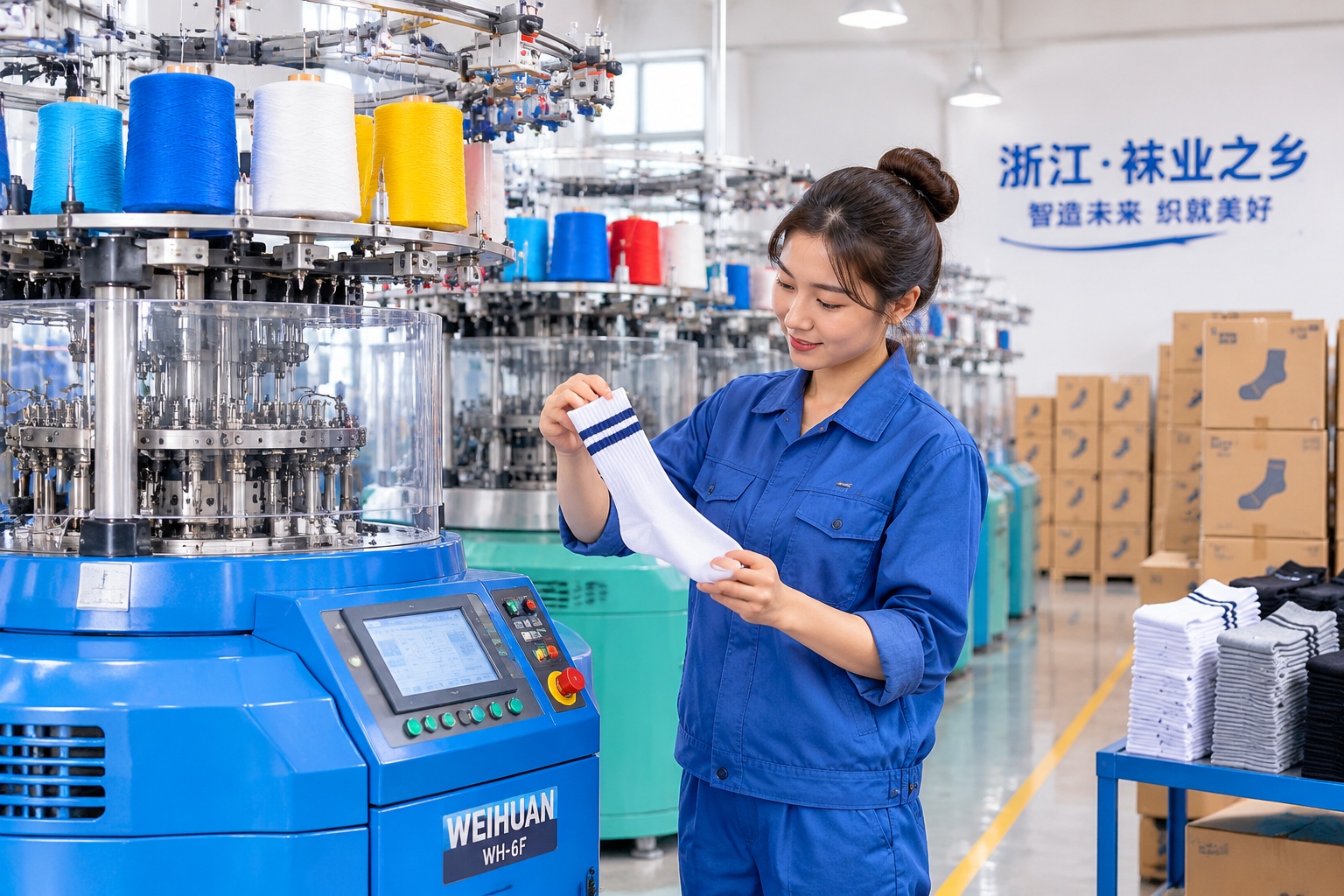
At 7 a.m., the streets of Datang, a small town in eastern China’s Zhejiang province, are already filled with motorbikes and delivery vans. Inside a three-story workshop, Shen Guoliang, a sock factory owner, checks a row of automated knitting machines. Each machine hums as it turns raw polyester into completed socks in about a minute. “We used to need one worker per machine,” he says. “Now one person can manage eight.” His phone buzzes with orders from Amazon and Tokyo department stores.
Datang produces an estimated 25 billion pairs of socks every year — that’s roughly one third of the global output. But you won’t find its name on many labels. Like dozens of other Zhejiang towns, Datang is a “hidden champion” of the “One Village, One Product” model, where a single, often unglamorous product becomes the backbone of an entire local economy.
What “One Village, One Product” Actually Means
The concept originated in Japan in the 1970s, and China adopted it widely in the 1980s. The idea is simple: each village or township develops a special product, builds a full supply chain around it, and gains economies of scale. Zhejiang, a province on China’s east coast, turned this into an economic engine. Today, the province is home to more than 500 industrial clusters, each centered on a narrow product category — ties, lighters, cashmere sweaters, electric tools, even badges.
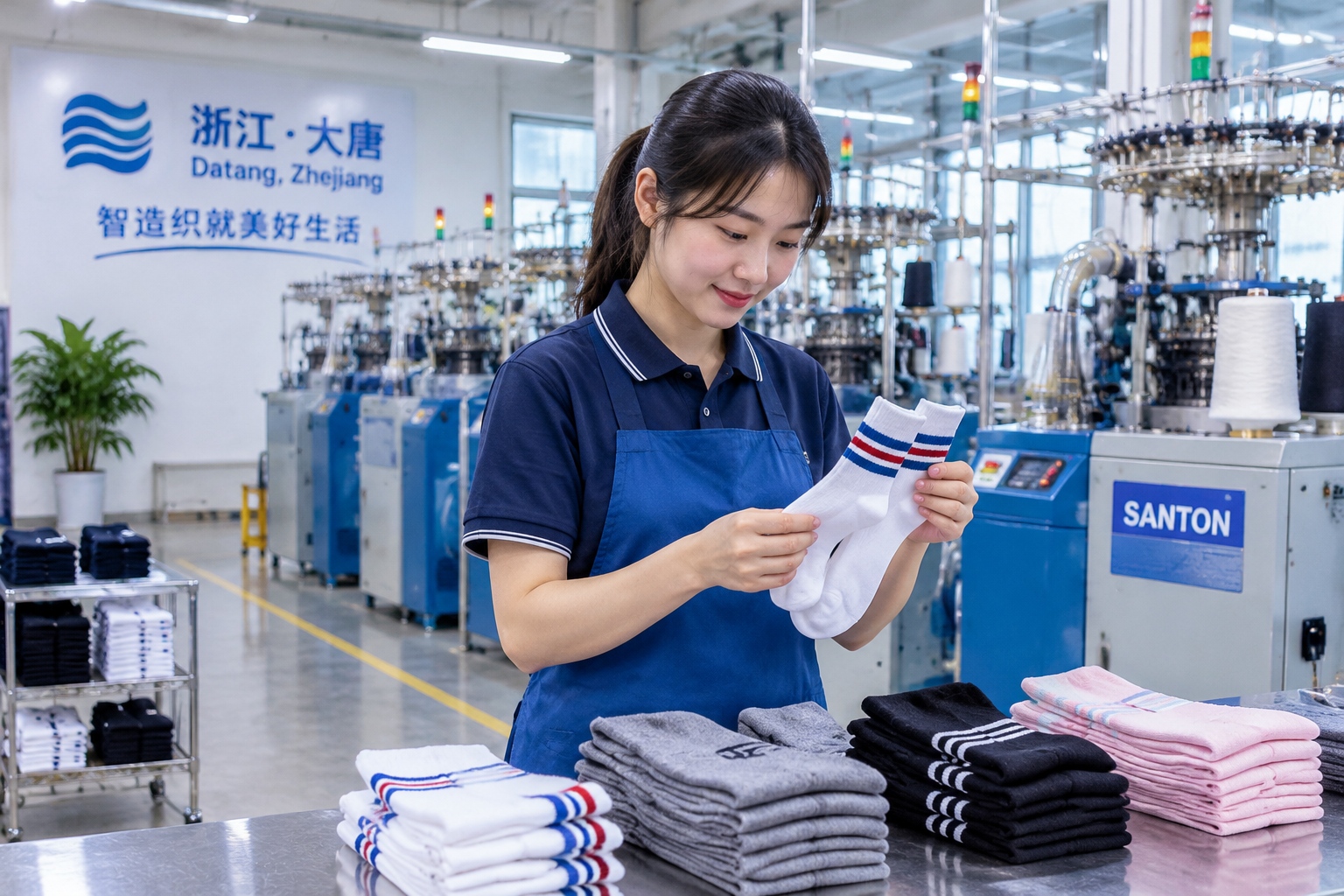
These aren’t just factories. They are ecosystems. In Datang, you can source yarn, design a prototype, order packaging, and ship a full container of socks without leaving the town. Dozens of small workshops do one tiny step: sewing toes, folding, trimming threads, or printing labels. This granular division of labor is what makes the system fast and cheap.
Why Zhejiang?
Zhejiang’s success didn’t come from central planning alone. Most of its clusters were born from local entrepreneurship. In the 1980s, as China began market reforms, farmers and small traders started making simple goods. In Datang, early entrepreneurs bought second-hand knitting machines and made socks for nearby markets. Over time, neighbors copied each other, suppliers and buyers clustered together, and word spread.
The local government played a supporting role, but not by picking winners. It built infrastructure — roads, markets, industrial parks — and allowed private businesses to grow freely. It also adapted regulations to keep new industries moving. For example, when e-commerce boomed, Zhejiang was among the first to encourage “village-level live-streaming” studios, helping small workshops sell directly to consumers.
Another key factor was geography. Coastal Zhejiang is close to major ports like Ningbo and Shanghai, making it easy to export. Early migrant workers and strong local business traditions also helped spread skills and connections.
From Manual Looms to Smart Factories
Zhejiang’s clusters have changed dramatically in the last two decades. Datang used to be a sea of manual looms. Today, many factories use digital knitting machines with AI-based quality control. Sensors detect a broken thread in milliseconds. Computer-aided design lets customers order custom socks in dozens of colors at the same price as standard ones.
In nearby Shengzhou, a town known for neckties, manufacturing has become similarly high-tech. Shengzhou produces over 60% of China’s neckties and about 40% of the world’s. Recently, some factories introduced 3D weaving that eliminates seams, and they now release small-batch designs for niche fashion brands.
The same trend appears in Yongkang, a town famous for hardware and electric tools. Its products — drills, sprayers, thermoses — fill hardware stores in Europe and Africa. Local firms have developed their own motor technology and now export high-end cordless tools, competing with German and Japanese brands.

E-commerce and the New “One Village”
Perhaps the biggest transformation today is how these towns sell their goods. Many villages in Zhejiang have turned themselves into live-streaming bases. In the village of Baiyun, near Yiwu — the world’s largest small-commodity wholesale market — young women stand each afternoon in front of ring lights, selling plastic flower arrangements to customers across the country. Their studio is connected directly to a downstairs warehouse that ships within two hours.
This shift to direct-to-consumer sales gives small workshops more pricing power. Instead of relying on international buyers, they can build their own brands on Chinese shopping apps like Pinduoduo or on global platforms like TikTok Shop. Some have even developed cross-border e-commerce teams to handle customs and logistics.
The Harder Side of Success
What the brochures don’t tell you is that “One Village, One Product” also creates risks. When an entire town depends on one product, a drop in demand can be devastating. The 2018 trade war disrupted orders for many export-dependent towns. Even today, rising labor costs, stricter environmental rules, and competition from Southeast Asia challenge the old model.
Shen’s sock factory, for instance, now pays workers 30% more than a decade ago. To survive, he has automated his production line and shifted to higher-margin products like sports-compression socks and bamboo-fiber socks. “The days of competing on price alone are gone,” he says.
There is also a social cost. Young people often leave for big cities, leaving an aging workforce. Many towns are trying to attract them back by offering modern apartments, good schools, and spaces for startups.
What Others Can Learn
The Zhejiang story is not a one-size-fits-all template. It grew from local initiative, geographic luck, and decades of trial and error. But it does offer valuable lessons for other developing regions: specialized production can create jobs and wealth, government can support without micromanaging, and a tight cluster of suppliers and knowledge is a huge advantage that can’t easily be copied.
Datang may still be known as “Sock City,” but it no longer feels like a raw industrial zone. Walk past a new community center in the evening, and you’ll see old men playing chess, women dancing in the square, and teenagers using renovated library spaces. The town has money, and it’s slowly learning to spend it on better living.
The next time you pull on a pair of cheap, colorful socks, think about the place where a thousand small decisions — about yarn, machines, logistics, and luck — come together. That is the quiet power of one market town in Zhejiang.
Start the discussion at forum.chinacomes.com