

A Small City With an Unusual Guest List
Start with the map. Taicang is a county-level city in Jiangsu province. In China, that means it answers to Suzhou rather than directly to the province, and most foreign visitors have never heard of it. It sits on the south bank of the Yangtze, roughly 50 kilometers from central Shanghai. Population: about 830,000. No airport. No famous skyline. Nothing on the tourist checklist.
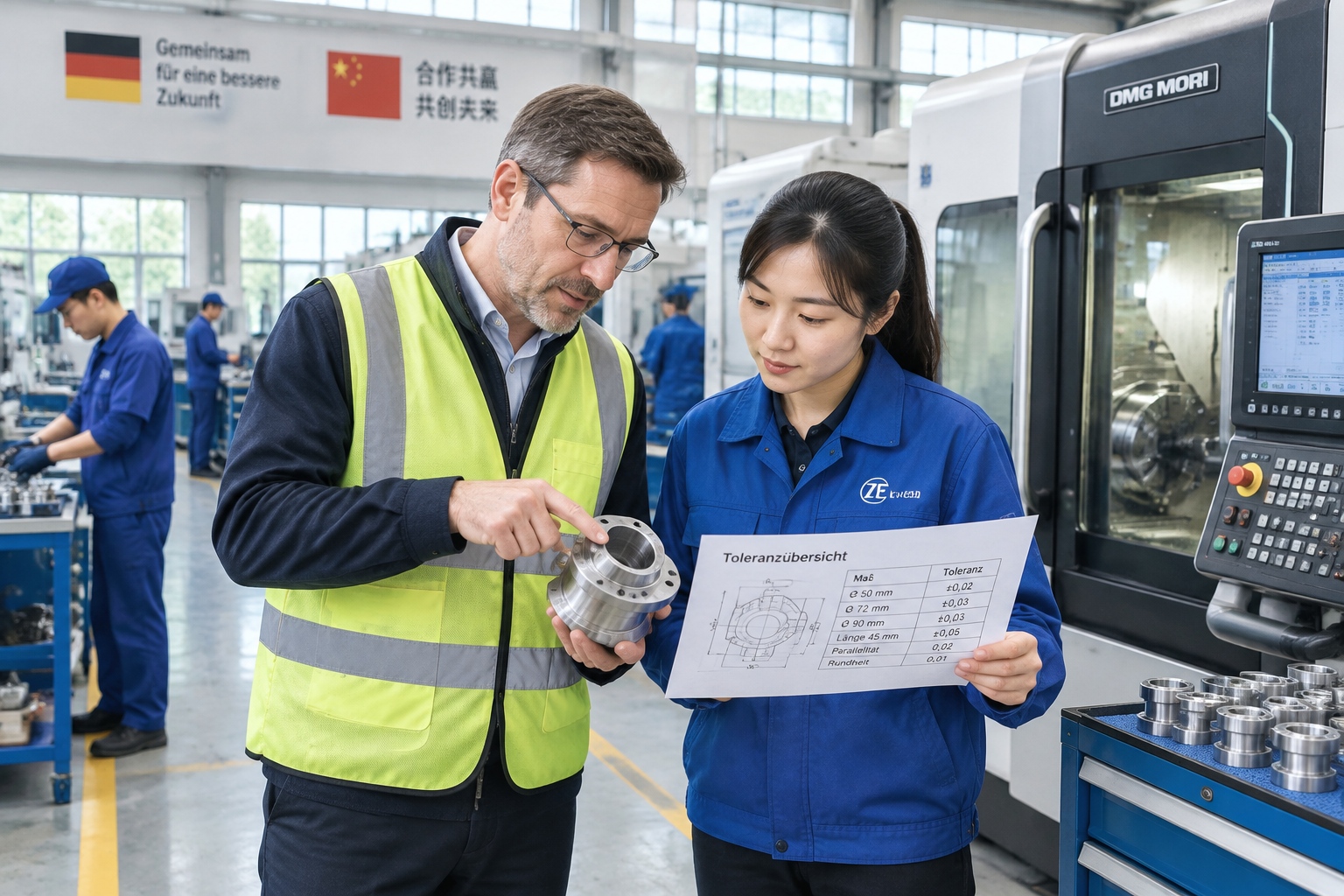
Now the guest list. More than 500 German companies have plants or offices here, including the laser machine tool maker Trumpf, auto parts supplier Schaeffler, electronics manufacturer Zollner, and Kern-Liebers, a spring and metal parts specialist that became the first German firm to settle in Taicang in 1993 and is still expanding. Local officials estimate that about one in ten German-invested companies in China is somewhere in this city.
The pitch locals use to explain it is a number, not an adjective: inside a radius of about four kilometers, a factory can reach dozens of the suppliers it needs.
First, What Is a “Hidden Champion”?
The phrase comes from the German management scholar Hermann Simon. It describes mid-sized companies that make one narrow thing extremely well — industrial springs, sensors, fasteners, laser optics, specialty coatings — and quietly hold a large share of the global market for it. They are not famous. Their customers are other factories, not shoppers.
That matters for reading this story. Hidden champions do not usually chase the cheapest labor first. They chase reliability, engineering talent, and suppliers who can show up the same day. Which is why a city of 830,000 people can matter more to them than a metropolis.
The Four-Kilometer Rule: Density Beats Cheap Land
Picture a metal part that needs three things before it can ship: a modified stamping die, a heat treatment pass, and a corrosion coating. In Taicang, those three suppliers are often a 20-minute truck ride apart, sometimes on the same industrial road. In a cheaper inland park, the same loop might be a two-day round trip — or impossible, because the specialist simply isn’t there.
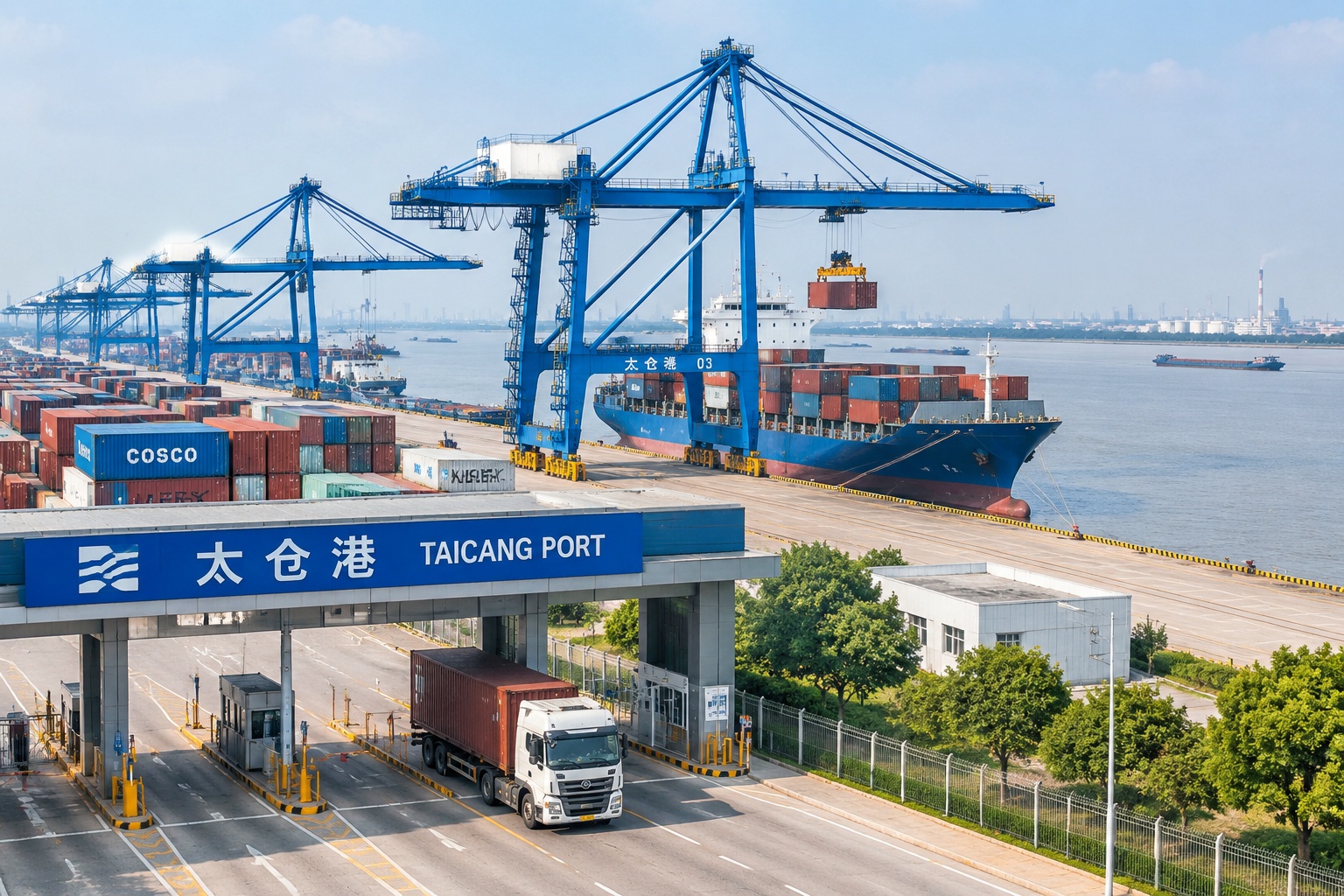
Layer on Taicang Port, a Yangtze River container terminal that handles more than 8 million TEU a year and feeds Shanghai’s deep-water terminal. A part finished in the morning can be on a ship the same day. That is the difference between a supply chain and a warehouse.
There is a second layer that is harder to copy: people. A German plant manager needs a tool shop that can read a drawing in German-standard notation, answer an 8 a.m. email, and deliver a first sample by Friday. That is a human network, not a tax policy. It took about three decades to build, which is exactly why it is hard to walk away from.
The Other Half of the Story: Apprentices
German factories at home lean on the dual system: a teenager spends about three years splitting time between a company and a vocational school, earns a small stipend, and usually has a job at the end. Taicang copied that model. Since the 2000s, local colleges and German firms have run dual-training classes together with the German Chamber of Commerce (AHK) in Shanghai. One partner school is named after Chien-Shiung Wu, the nuclear physicist born in Taicang in 1912.
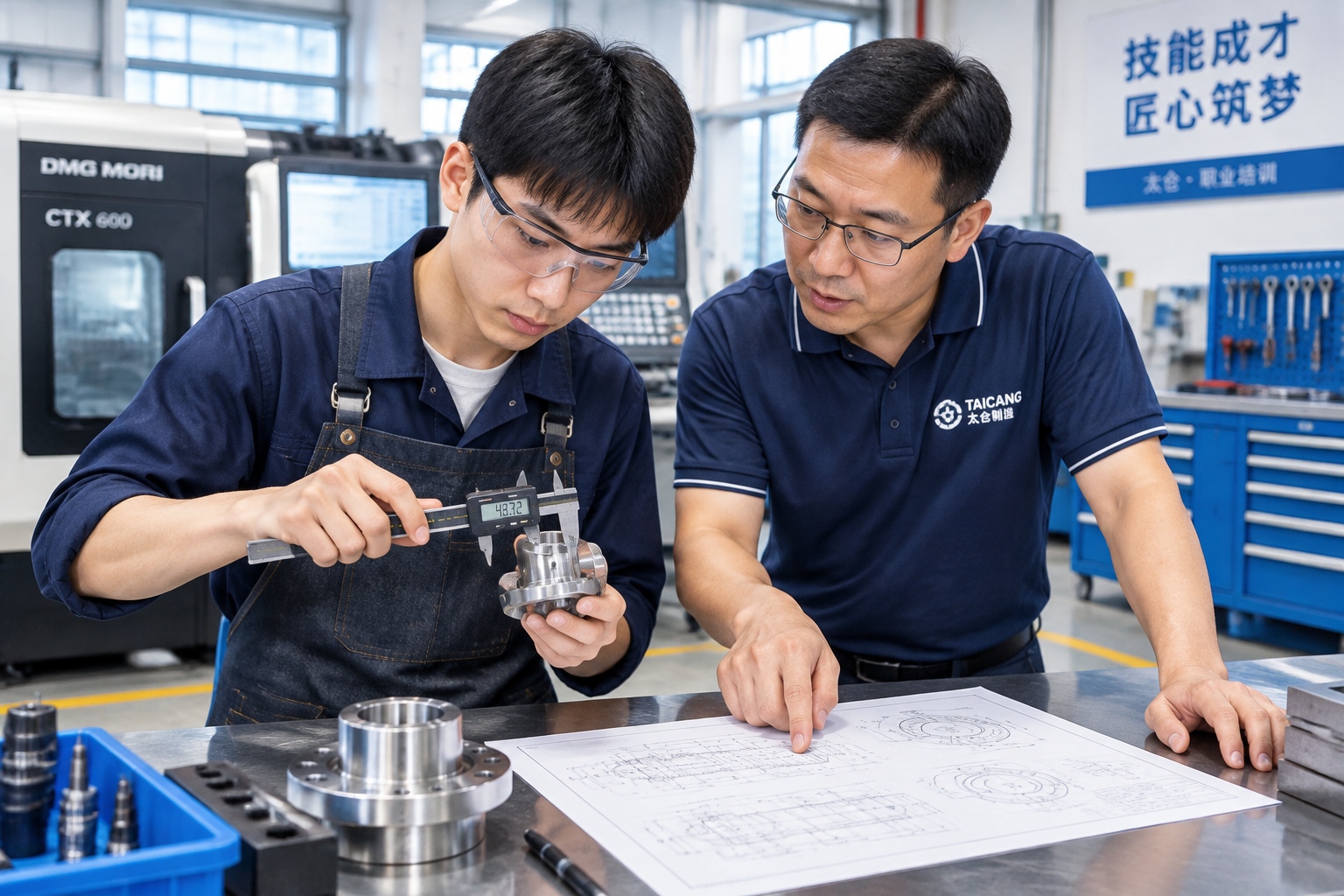
What it looks like in practice: an 18-year-old spends two or three days a week on theory and the rest on a real production line, learning to read tolerance charts and keep a CNC machine running within a hundredth of a millimeter. The company pays a monthly stipend. Many apprentices stay after graduation.
For German managers, this solves a very specific problem. Skilled workers who can hold a tight process steady are scarce in Chinese manufacturing, and job-hopping is normal. An in-house training pipeline is a hedge against that.
It is not a perfect machine. Ask around and you will hear the same complaint: plenty of young Chinese still prefer an office job, an e-commerce gig, or food delivery to fixed shifts on a factory floor. Filling apprentice slots has gotten harder, not easier.
What the City Government Actually Sells
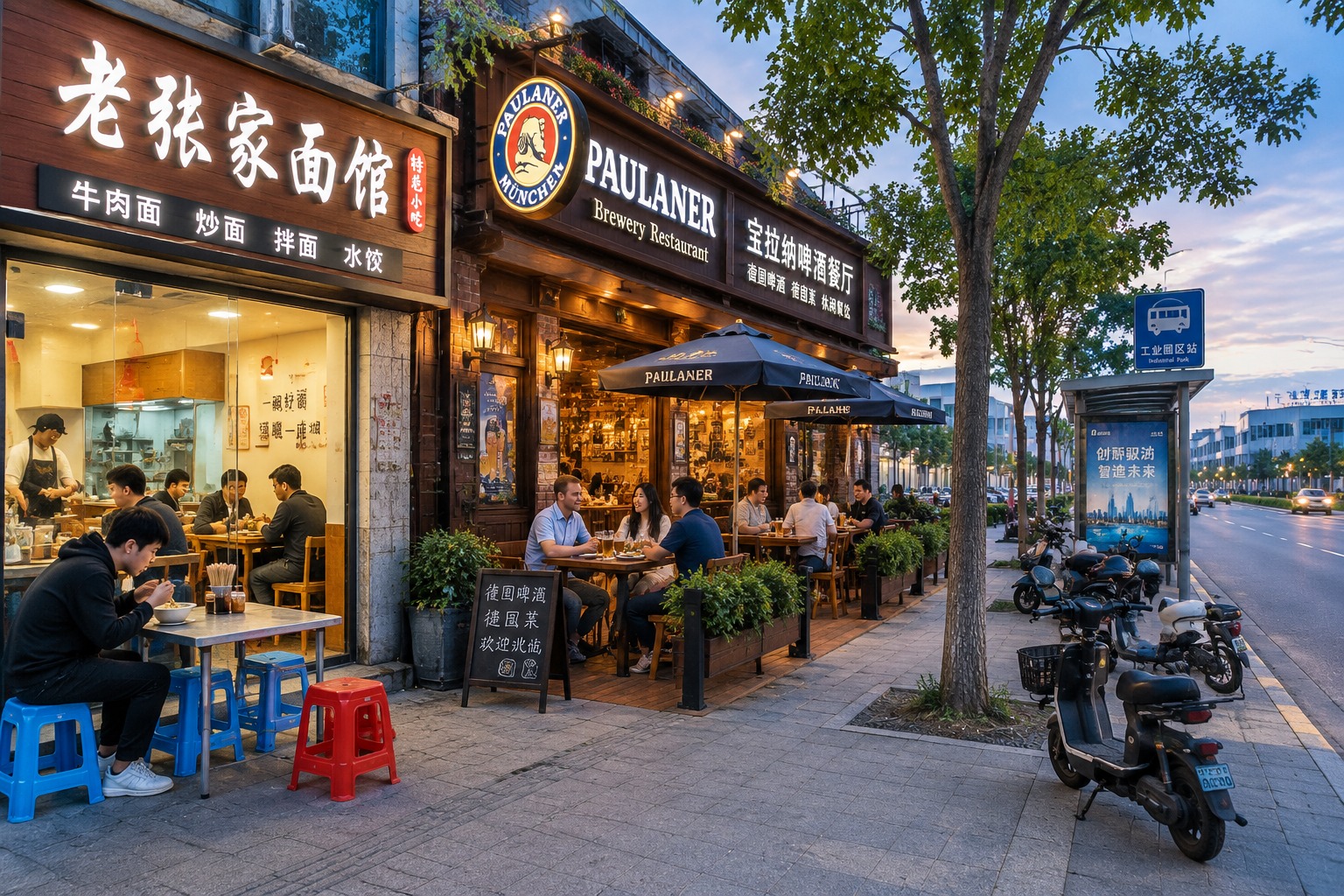
Not just land discounts and tax holidays, though those exist. The thing German managers repeat is predictability: one window for permits, help with housing for staff, a German-language kindergarten, an international school, service desks with German-speaking staff at the hospital, and a September beer festival that has run for years and is attended by locals as much as by expats.
Some of this is marketing. Some of it is real infrastructure. The useful way to read it: in a country where administrative details can feel unpredictable from the outside, a small city that turns predictability into its actual product has an edge with companies that plan in decades rather than quarters.
Why Staying Is Getting Harder, Not Easier
None of this means Taicang is a comfortable place to be a German manufacturer right now. German industry is under cost pressure globally. European politicians talk about de-risking. Chinese competitors — battery makers, EV brands, local parts suppliers — move fast and quote lower. A German supplier’s price can be double a domestic rival’s for a similar part.
Wages here are no longer low by Chinese standards. Some German firms have trimmed headcount or shifted part of their production to Southeast Asia or Mexico.
But there is a counter-current, and it is the more interesting one. The reason to stay has shifted from “cheap export platform” to “our customers are here.” For a growing number of German parts makers in Taicang, the biggest buyers are now Chinese carmakers and battery companies, and those buyers want engineering changes in weeks, not quarters. Firms that only assemble here lose the race. Firms that design here tend to stay — several German companies in the city have added local R&D teams in the past few years.
Shift Change at 7:30 A.M.
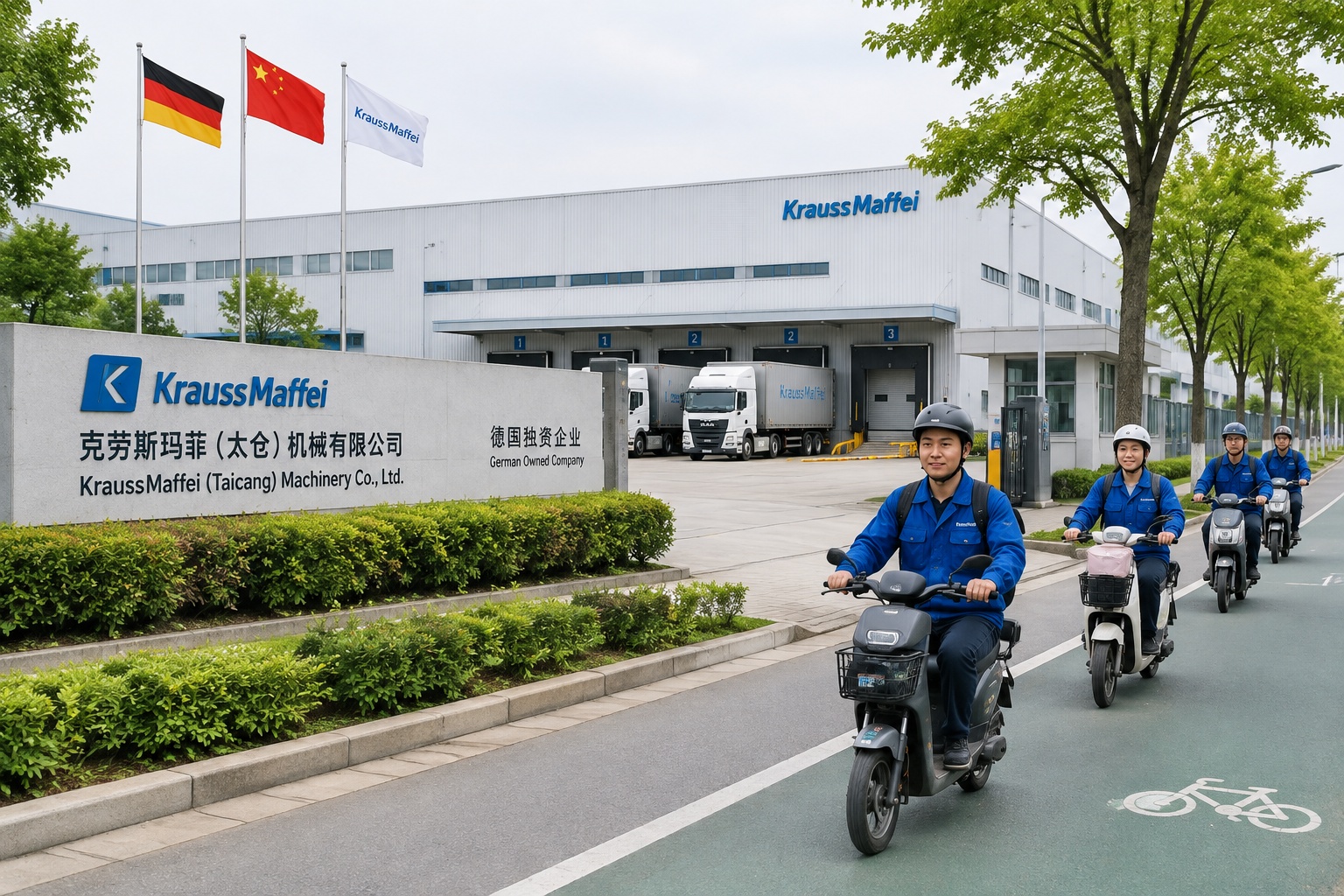
The clearest way to see what this economy means is to stand outside a factory gate in the morning. E-bikes stream in. Vendors sell soy milk and fried dough sticks from carts. Inside, the line starts at eight.
For a worker, a job at one of these plants usually means formal social insurance, overtime pay, and a wage that beats local retail or restaurant work. It also means shifts, rules, and a manager who may measure things in microns. The alternative for many young people is food delivery — flexible, no supervisor, and increasingly the default choice.
For the German side, Taicang has become a long stay rather than a posting. Some engineers have lived here for a decade, learned Mandarin, and put their children in local kindergartens. On weekends you can find mixed Chinese-German families at the riverside park, and the beer festival in autumn draws a crowd that is mostly Chinese.
A Short Playbook, If You Are Reading This From Abroad
If you want the transferable logic rather than the local story, here it is in five lines:
1. Supply chain density beats land price. The savings from cheaper rent disappear the first time a mold has to travel two days for a fix.
2. Training is infrastructure. A dual-system apprentice pipeline is slower to build than a warehouse and much harder for a rival city to copy.
3. Predictability is a product. Small cities that make permits, housing, and schooling boring win long-term investors.
4. Proximity to customers eventually outranks proximity to suppliers. That is where Taicang is being tested right now.
5. None of it is permanent. Costs rise, competitors learn, politics shift. Advantage has to be renewed.
Taicang is not a fairy tale about China, and it is not a warning either. It is an unglamorous working example of one idea: proximity compounds. Thirty years of small decisions — a die shop here, an apprentice class there, a permit handled on time — made this city expensive to leave. That is the whole trick, and it is a lot less mysterious than it sounds.
Start the discussion at forum.chinacomes.com