
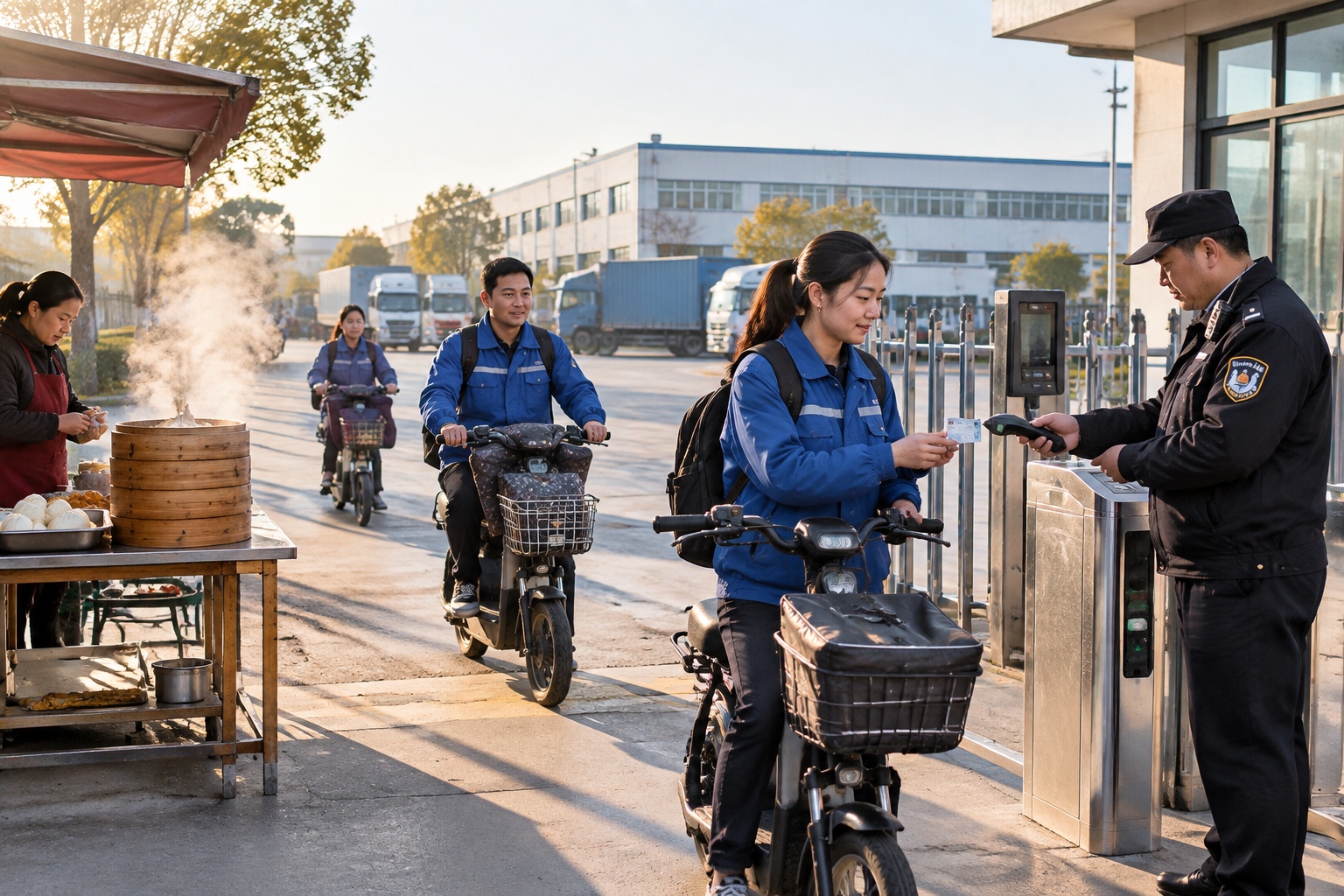

7:35 a.m. on Zhenghe Road
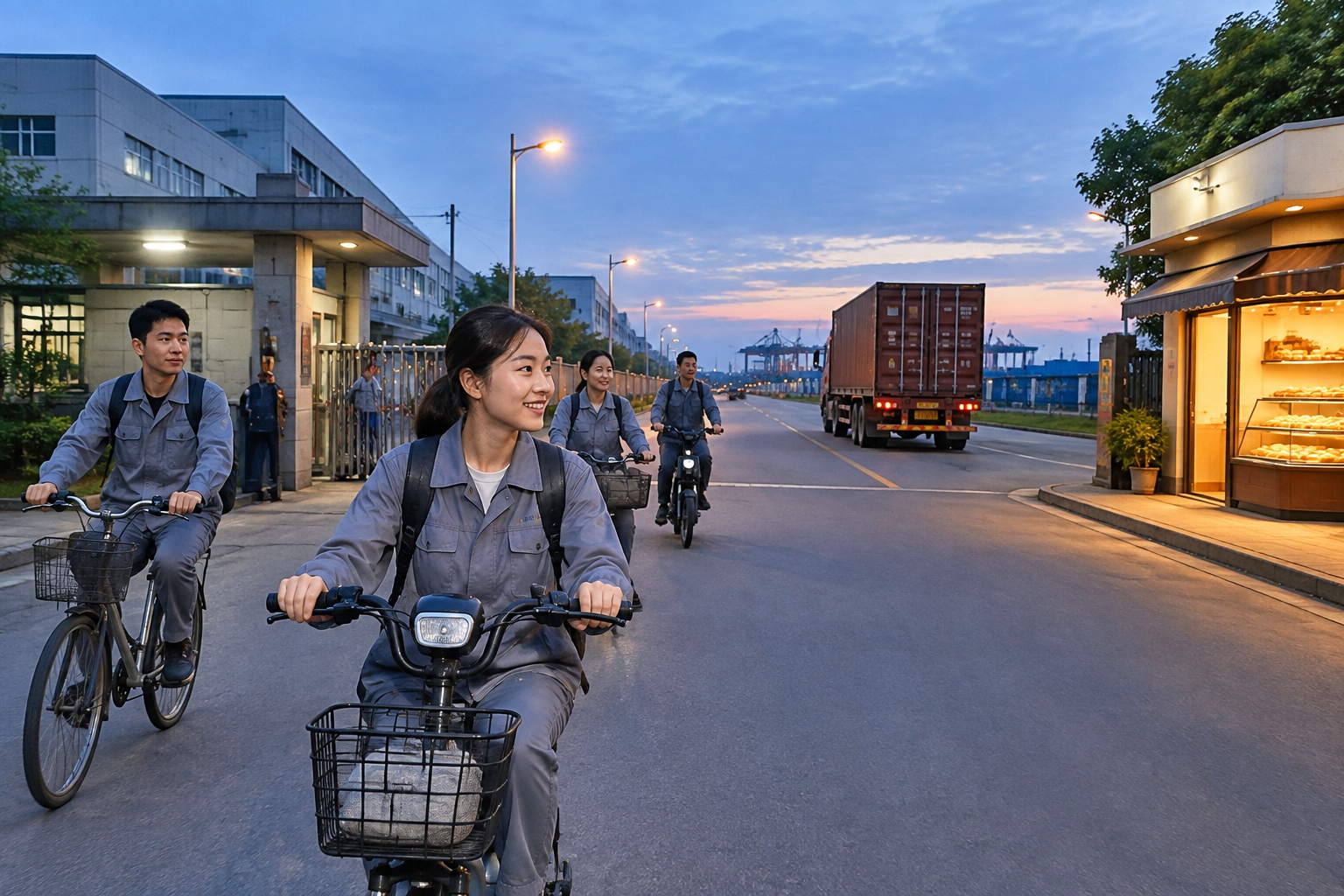
At 7:35 on a Tuesday morning, the gate of a precision-parts factory on Zhenghe Road in Taicang is the busiest place in the city. E-bikes swing in off the bike lane. A woman in a padded jacket carries a plastic bag with two steamed buns in one hand and a canvas tool bag in the other. The security guard scans badges one after another, and the reader beeps at a rhythm that sounds like a metronome. Across the street, a breakfast stall lifts the lid off a steamer; the smell of hot soy milk cuts through the oil-and-coolant air drifting out of the machining hall.
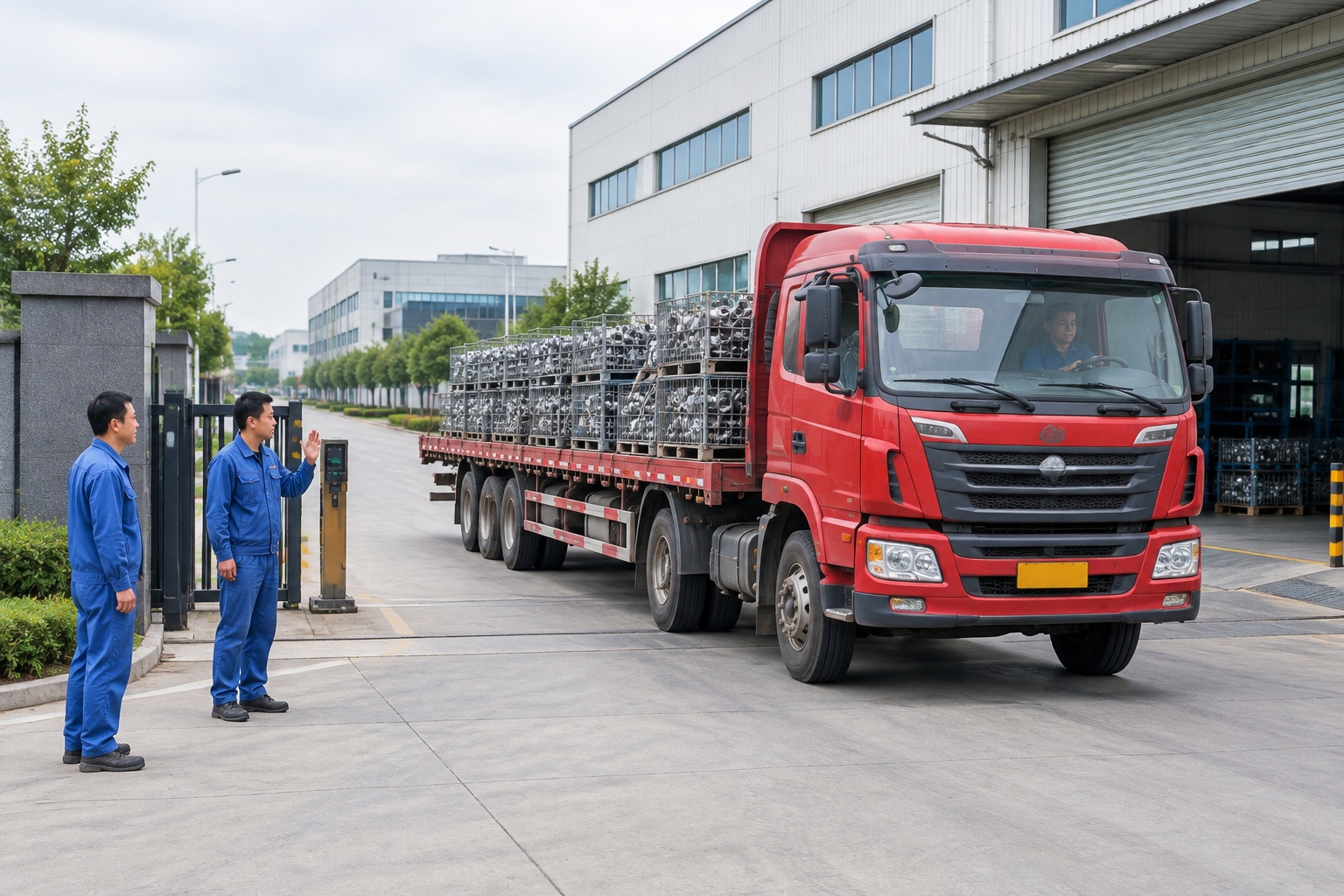
By eight the street is quiet again, except for trucks. A flatbed pulls out loaded with wire baskets of steel parts, heading two kilometres north to the plant that will heat-treat them. Six hundred years ago, this was the river town Zheng He’s treasure fleets sailed from. Today the cargo is smaller and more precise.
Taicang is a county-level city in Jiangsu province, on the north bank of the Yangtze, about 50 kilometres from downtown Shanghai. Fewer than a million people live here. It is home to more than 560 German companies — a density no other Chinese city, Shanghai included, can match.
Read that number in a brochure and it becomes an investment statistic. Read it on foot at 7:35 a.m., and it becomes a street where German-owned factories, Chinese tooling shops, calibration labs and a bakery selling pretzels sit within a few hundred metres of one another.
It started with a spring
The first German company arrived in 1993. Kern-Liebers, a family-owned spring and metal-parts maker from Baden-Württemberg, opened a small plant at a time when Taicang had almost no foreign industry and the road to Shanghai was slow. What attracted it was unglamorous: land, a river port, and a local government that answered the phone.
What brought the next 559 was less romantic still. German machine builders and auto suppliers are mostly mid-sized firms — the Mittelstand — and they choose a location by asking narrow questions. Can a tooling supplier reach us within an hour? Can we hire a technician who reads a drawing without translation? Is there a customs office that understands our paperwork? Three yeses and they stop looking. In 2016, the city’s cluster was formally designated a Sino-German cooperation zone for small and medium-sized enterprises.
The ten-minute supply chain
Follow one part. A stamped steel bracket for a car seat starts as a coil of sheet metal stored in a warehouse near the port. It is pressed at one factory, trucked 2.3 kilometres for heat treatment, sent a few streets over for zinc-nickel coating, and delivered to the customer’s receiving dock — often in the same industrial park, sometimes on the same road.
Coil to dock: about a day. In a supply chain that usually crosses an ocean twice, that is the entire point.
Suppliers here measure the advantage in hours, not kilometres. A German pump maker keeps its die-casting supplier across the road, which means an engineering change agreed on Monday morning can be in a prototype by Wednesday. A Chinese plating shop two minutes away runs a night shift specifically for one German customer’s volume. The relationships are contract-bound but also personal: the same quality manager has been dealing with the same supplier’s owner for a decade.
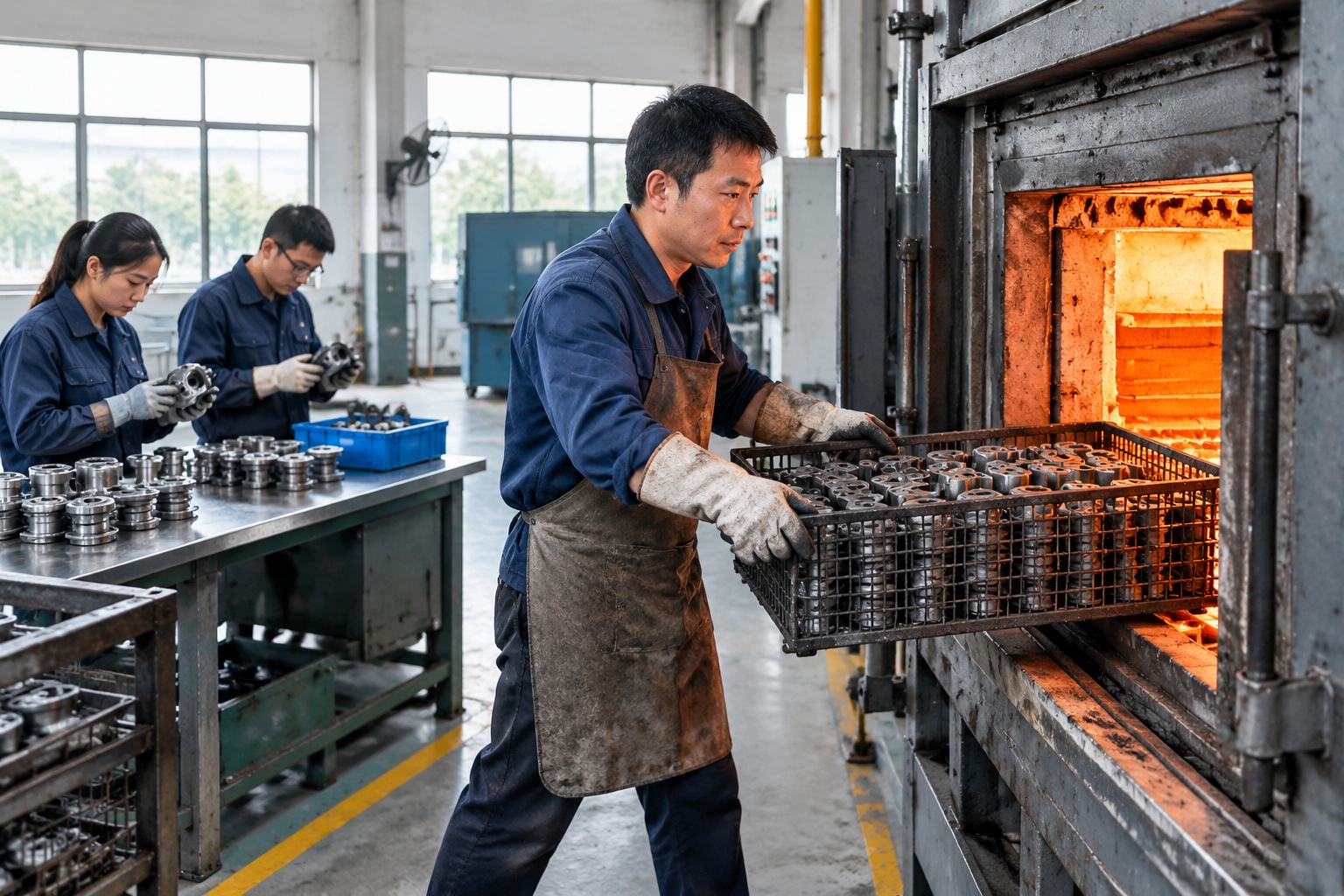
The German firms here cluster in auto parts, precision machinery, industrial automation and, increasingly, equipment for wind, solar and batteries. Bosch, ZF, Trumpf, Festo, Schaeffler, Krones and Brose all have operations in Taicang. Around them sits a second, larger layer that rarely appears in promotional material: Chinese tooling shops, plating lines, freight forwarders, calibration labs, packaging suppliers, small machine shops that will take a rush order on a Saturday.
People who work here describe the geography in human units. “If a die breaks, the guy who fixes it is closer than my lunch,” a production manager at a German-owned plant says, half joking. That density is also why many plants here came through the pandemic years better than their peers abroad: when sea freight collapsed into chaos, most of their critical inputs were still twenty minutes away by truck.
The apprentices who read German drawings
In a machine-tool plant not far from the river, a 19-year-old apprentice in a grey company jacket leans over a surface grinder, measuring a steel block to a tolerance of one-hundredth of a millimetre. Two days a week she is at a vocational school. Three days she is here, on a paid contract, working toward a certificate that carries the seal of the German Chamber of Commerce in Shanghai.
German-style dual vocational training has been running in Taicang since the early 2000s, and it is the least glamorous and most important piece of infrastructure the city built. Plant managers say the same thing in almost every interview: machines can be imported, drawings can be translated, but a technician who understands why a tolerance matters cannot be air-freighted.
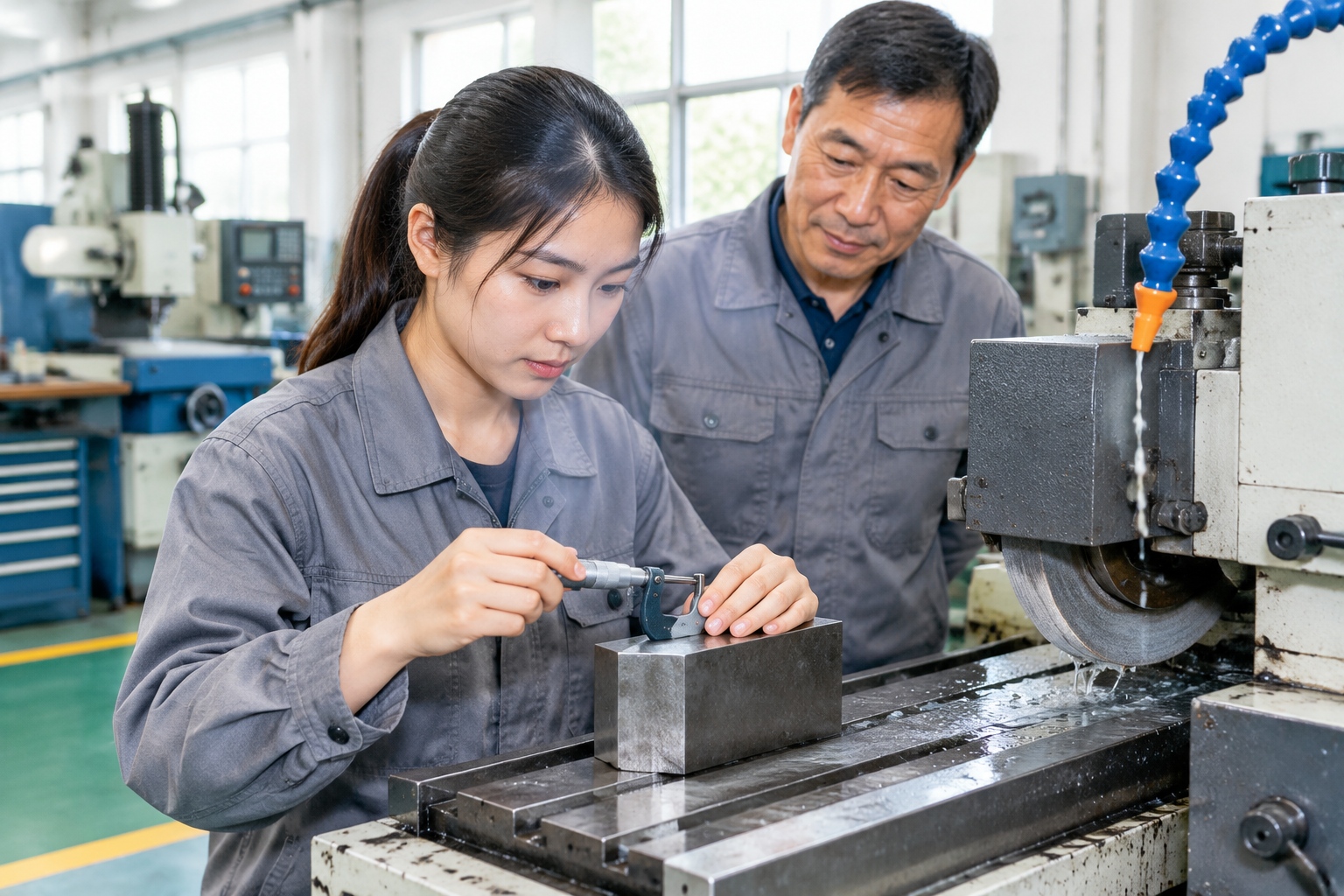
The shop floor has its own vocabulary. Workers say Späne for metal chips and Werkzeug for tooling; a supervisor’s nein is understood instantly. Some apprentices are sent to Germany for a few months. Others finish training and, within three years, take a job at a Chinese competitor paying 30 percent more — a flow of know-how that German managers complain about in private and plan around in public.
Beer, bread, and the limits of a replica
Ten minutes’ drive from the industrial parks, Taicang has built a short street modelled on Rothenburg ob der Tauber, the medieval Bavarian town, complete with a clock tower, cobbles and a bakery selling pretzels and rye bread. Most years the city holds a beer festival with a German band and long tables.
It is a replica and everyone knows it. The German engineers who use it are mostly on two- or three-year rotations; many families live in Shanghai, where the international schools are, and commute. Language is the daily friction. Chinese staff describe learning to work with a management culture that is blunt about problems and obsessive about documentation. German managers describe learning that a Chinese supplier saying “no problem” can mean something more complicated.
The electric turn
The customer names on the whiteboards have changed. A decade ago, parts made on these streets went mostly into cars with German badges. Today a growing share goes to Chinese carmakers and to battery, wind and solar supply chains — customers who want prototypes in three weeks and a price cut every year.
Not everyone is turning at the same speed. German firms selling into global platforms are shifting faster than the smaller family-owned shops whose entire business is one product line for one customer.
Down at Taicang Port on the Yangtze, car carriers load electric vehicles bound for Europe and Southeast Asia; the port has become one of China’s busiest gateways for vehicle exports. On factory roofs along the roads behind it, solar panels cover more and more surface area. Heat treatment, among the most energy-hungry steps in metalworking, is the target of steady efficiency programs.
The pressure is real. Chinese suppliers are faster and cheaper, and some German firms here have consolidated, sold, or moved lower-margin lines elsewhere. In Berlin and Brussels the word of the moment is “de-risking.” On the ground in Taicang, de-risking looks expensive: three decades of tooling shops, trained technicians, customs brokers and road networks do not relocate overnight.
What one street can tell you
For anyone outside China, Taicang is a useful test of two common pictures. One is that foreign manufacturers are packing up and leaving. The other is that everything here happens because the state decides it. Walk the street and neither holds cleanly. German firms are deeply embedded and increasingly nervous at the same time. The city government did build the parks, the training programs and the roads — and the cluster only worked because a few hundred private companies decided, one by one, that it was cheaper to stay.
At six in the evening the gates open again. The breakfast stall has long closed; the pretzel shop is doing modest trade. A container truck rolls toward the port carrying parts that were raw steel thirty-six hours ago. A young engineer walks past a sign listing the park’s tenants — thirty-odd names, half German, half the Chinese companies that make the German ones work.
Nobody here calls it a miracle. It is what happens when you put the parts closer than the people and leave them there for thirty years.
Start the discussion at forum.chinacomes.com