

Introduction
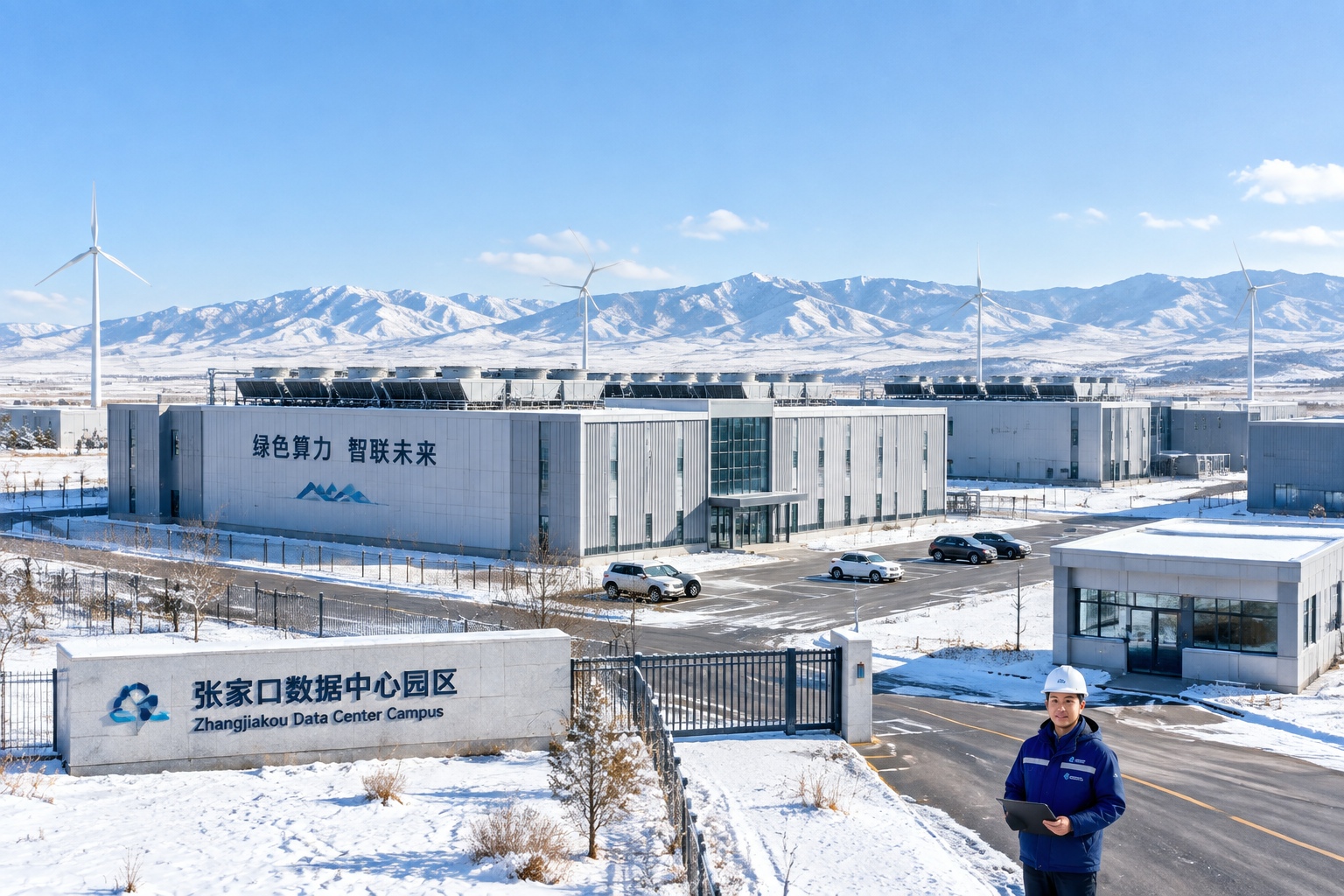
You may not have thought about it, but every photo you upload, every file you sync, and every chat history you save has to live somewhere. That somewhere might be a snow-covered plain in northern China, a place called Zhangjiakou.
Zhangjiakou is a city best known for the Great Wall and ski resorts. But over the past few years, it has quietly become one of China’s most important data storage centers. This is not a story about faceless servers. It’s a story about how geography, climate, and a changing economy came together to transform a former industrial city into a high-tech guardian of your digital life.
Where Exactly Is Zhangjiakou?
Zhangjiakou sits about 200 kilometers northwest of Beijing, in Hebei province. If you drive from the Chinese capital, you’ll pass through mountains and tunnels before the terrain opens into a wide, flat grassland. In winter, temperatures here routinely drop below minus 20 degrees Celsius. The wind blows hard across the plains, and snow can last for weeks.
For most visitors, it’s a beautiful but harsh environment. For tech companies, it’s a goldmine.
Why Cold Air Matters for the Internet
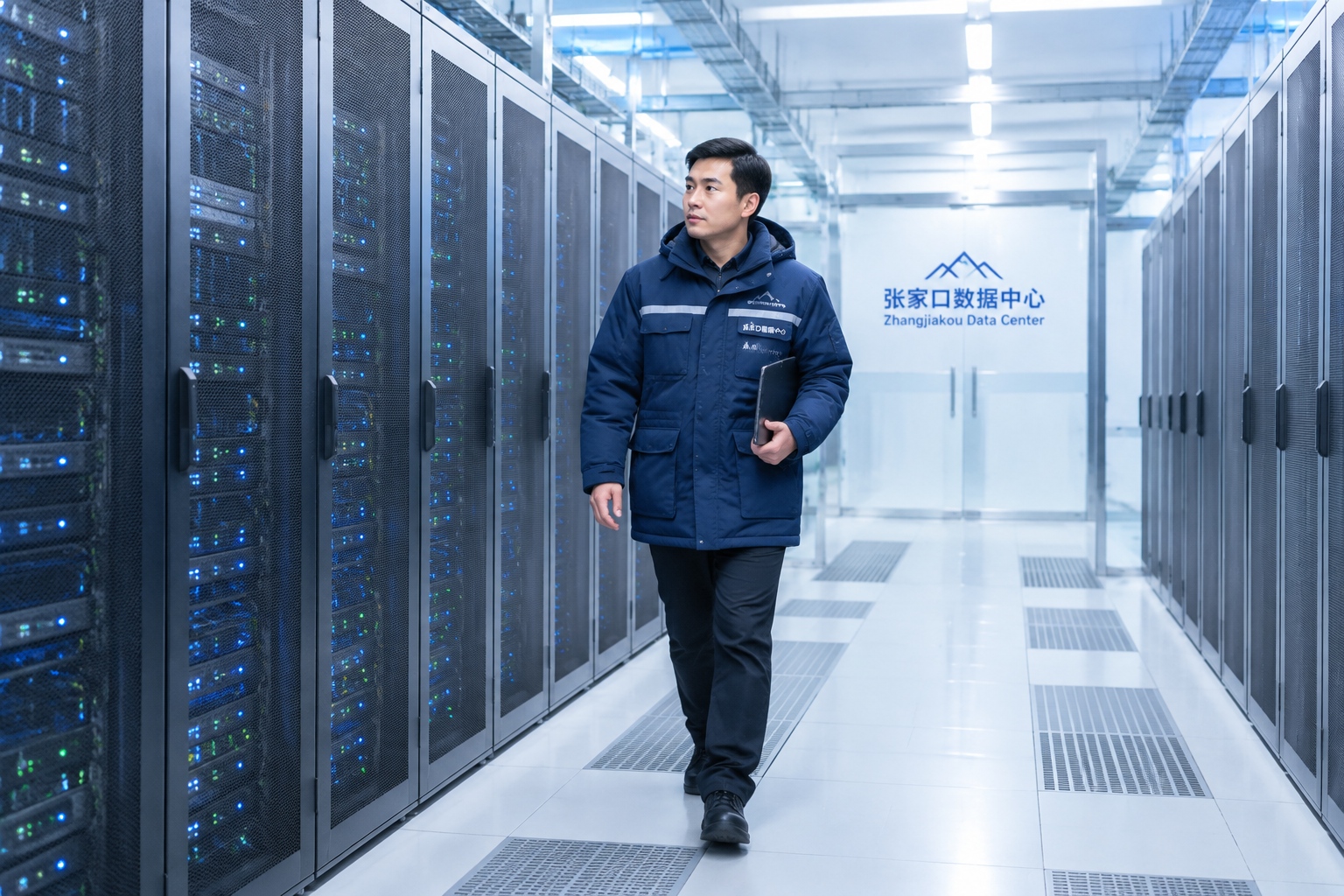
Data centers are packed with servers that generate enormous amounts of heat. Cooling them is one of the biggest operational costs. Traditional data centers use air conditioning around the clock, which consumes huge amounts of electricity. In Zhangjiakou, the cold outdoor air acts as a free, natural coolant. Many facilities are designed to draw in cold air directly, reducing cooling energy consumption by as much as 40% compared to data centers in warmer regions.
This is not a minor detail. For companies running thousands of servers, cutting energy use significantly lowers costs. It also makes the entire operation greener, which matters as China pushes toward carbon neutrality.
The Energy Story: Wind, Sun, and Server Farms
Zhangjiakou has another advantage: renewable energy. The same winds that made the city miserable for travelers power massive wind farms on the grasslands. Solar panels stretch across the hills. These renewable sources produce electricity that can feed data centers directly. In fact, Zhangjiakou has been designated as a national renewable energy demonstration zone, and many data centers here run on a substantially high share of green power.
This combination of cold climate and clean energy explains why tech giants like Alibaba, Tencent, and many cloud service providers have chosen Zhangjiakou as one of their major data hubs. The official term is “big data industry base,” and you can see it in the clusters of low-lying buildings on the outskirts of town.
Your Daily Apps, Powered by a Snowy Plain
When you stream a movie in high definition, join a live class, or upload vacation photos to the cloud, the data may travel thousands of kilometers to reach a server in Zhangjiakou. Because the city is close to Beijing, latency is low, meaning your requests are answered quickly. This matters for real-time applications like online gaming and video calls.
But it’s not just about speed. Storing data in multiple geographical locations is a standard practice for reliability. If a disaster hits one region, your data is safe in another. Zhangjiakou has become one of those safe zones. So the next time you see “redundant storage” in your cloud service settings, you might be counting on this frozen grassland.
Local residents have noticed the change. “I used to think of this town as a place people passed through,” said Wang Li, a shop owner near a new data center campus. “Now there are young engineers in our noodle shops at midnight, talking about server loads. It feels like the future arrived.”
From Steel Town to Data Hub: A Local Revolution
For decades, Zhangjiakou’s economy leaned heavily on steel, mining, and heavy industry. When those industries slowed, the city faced an uphill battle. The arrival of data centers has been like a second life.
Thousands of jobs have been created, from construction workers to network engineers. The local government has invested heavily in roads, power lines, and fiber-optic cables. New apartment complexes and shopping malls have sprouted around the data center parks. Young people who once packed up for Beijing now find opportunities closer to home.
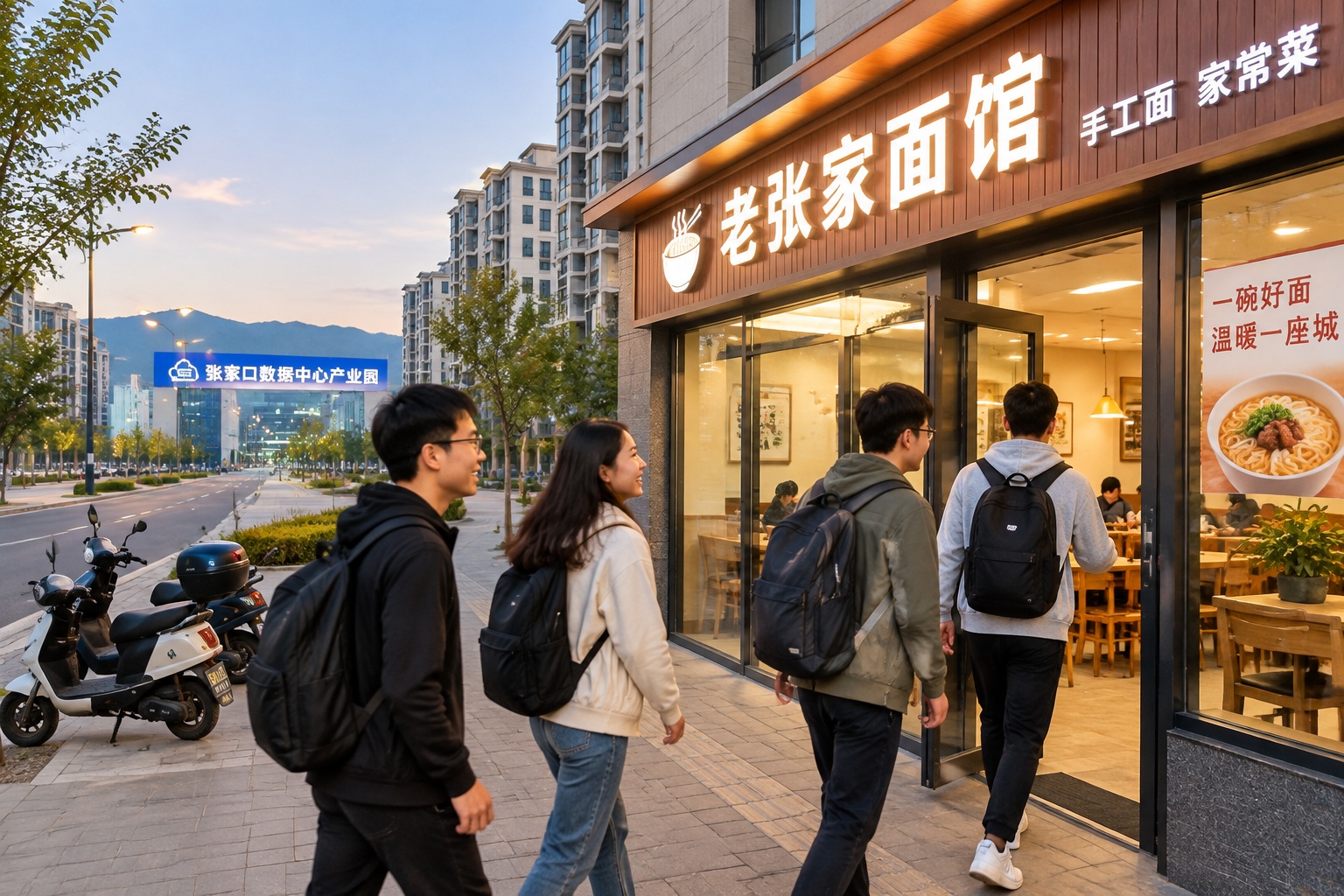
Chen Hong, a 27-year-old data center operator, returned to Zhangjiakou after working in Beijing for three years. “My job here is not so different from what I did in the capital, but my rent is a third of the price, and I can go skiing on weekends. I never thought I’d say this, but I’m proud to build the future in my hometown,” she said.
Not Without Controversy: The Hidden Costs
It would be dishonest to paint a flawless picture. Data centers consume huge amounts of electricity, even if it’s renewable. They also need water for cooling backup systems, which strains a region that already faces periodic droughts. Some residents worry that the hot, dry summer heat combined with heavy server loads could cause brownouts.
Engineers are working on solutions. Advanced liquid cooling can replace some air conditioning, and heat recovery systems can pipe warm water from servers into nearby buildings for heating. The industry is still young, and these technologies are still scaling up. But the conversation is happening, which is a good sign.
Challenges of a Harsh Climate
Building and maintaining data centers in such a cold, dry environment is not trivial. The extreme temperature range—from freezing winter nights to hot, dusty summer winds—puts enormous stress on equipment. Construction materials must be specially selected, and workers often have to deal with short daylight hours in winter.
But the very harshness is also a blessing. The dry climate prevents corrosion and reduces rust, which means servers can last longer. The low humidity also minimizes dust buildup, keeping hardware cleaner. For technicians, it’s a trade-off they accept with a laugh: “We’re not here for the weather; we’re here for our data,” one engineer told me.
Conclusion: The Invisible Infrastructure of Your Digital Life
Zhangjiakou’s transformation is a reminder that the internet is not a cloud floating somewhere abstract. It is physical infrastructure built in real places. The reason your online experience feels smooth, your backups are safe, and your streaming rarely buffers is partly because a cold city in northern China decided to become a machine for the digital age.
The next time you open your favorite app, spare a thought for Zhangjiakou. Your data might be sleeping there, under the snow, watched over by engineers and cooled by the same wind that once made this frontier town so difficult to reach. It’s an unusual idea, but so is the whole story of the internet.
Start the discussion at forum.chinacomes.com