

Prologue: The Rolling Pin and the New Year
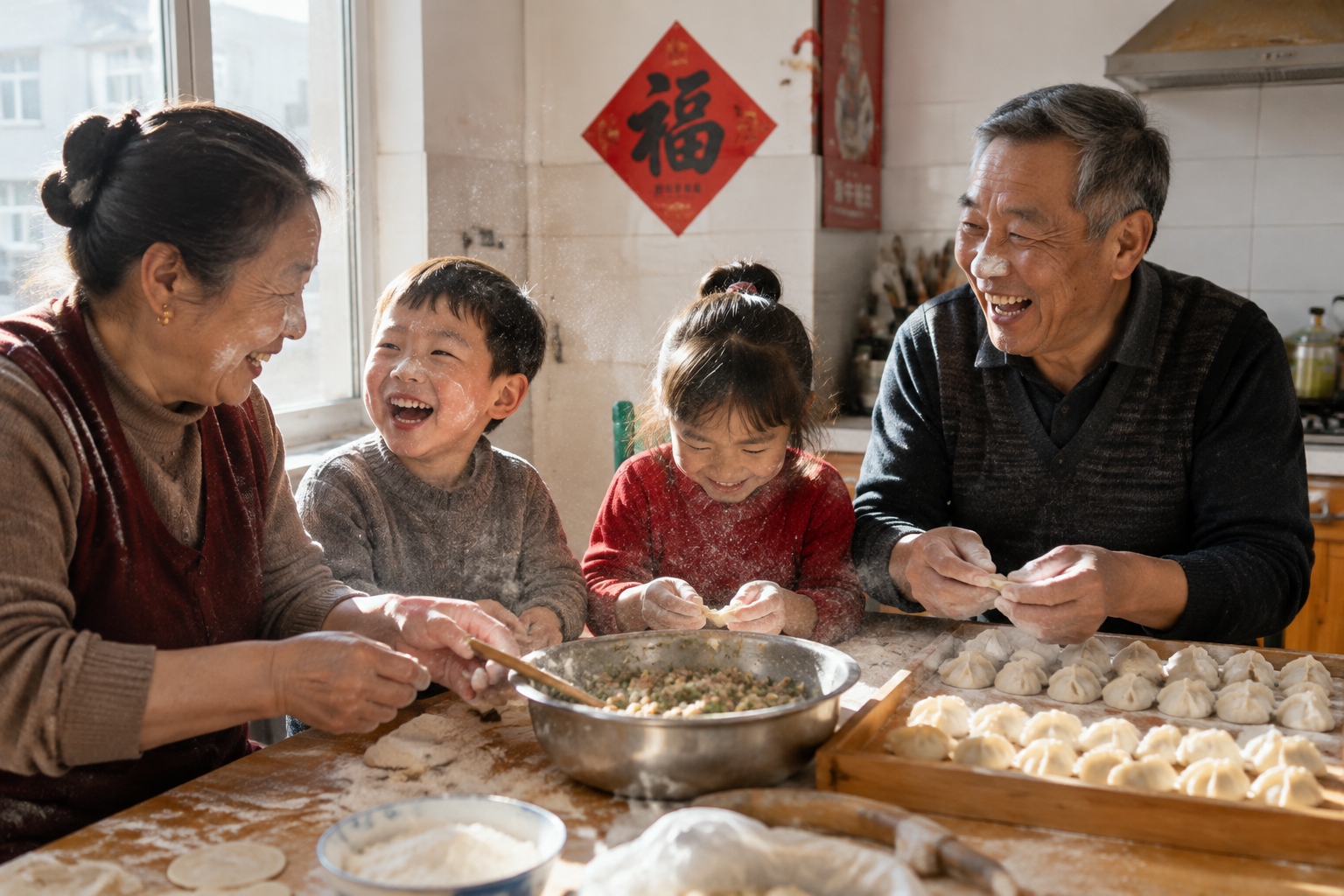
Every year, as the Lunar New Year approaches, my grandmother would clear the kitchen table and bring out a well-worn wooden rolling pin. She’d dust the surface with flour, then press the dough into a long rope, snap off tiny pieces, and roll each one into a thin, perfect circle. For me, the sound of the rolling pin against wood was the real announcement that Spring Festival had begun.
This scene in my childhood home in Harbin is repeated in millions of households across northern China every year. But one thing many outsiders don’t realize is that the Spring Festival table looks very different depending on where you are in the country. From hearty dumplings in the northeast to the elaborate, layer-by-layer poon choi in Guangdong, each region brings its own flavors to the feast. And in those differences, you’ll find both ancient traditions and fresh changes.
Northern Dumplings: A Personal Memory of Home
In the north, dumplings are the undisputed star of Chinese New Year’s Eve dinner. My family makes jiaozi from scratch — a scene of controlled chaos. My father kneads the dough, my mother chops the filling, usually pork and Chinese cabbage, though sour cabbage is also a favorite in the northeast. We kids would be ordered to wash the coins, three of them, which would then be hidden in random dumplings. Whoever bites into one is said to have good luck for the coming year.
The act of wrapping is itself a family ritual. As we sit around the table, fingers flying, stories flow — about the year past, about relatives, about hopes for the next 12 months. Some say dumplings resemble ancient gold ingots, a symbol of wealth and fortune, which is why they’re eaten at midnight to welcome the new year.
This year, my cousin in Beijing sent me a video of her toddler smashing a dumpling with his sticky fingers. The dough splattered, the room laughed, and for a second I felt like I was there. That’s the thing about dumplings: they don’t just fill your stomach; they tie you to everyone who has ever made them with you.
Southern Poon Choi: Layers of Wealth and Kinship
Travel south to Guangdong, and the signature dish changes completely. The poon choi, or “basin dish,” is a festival favorite in Hong Kong, Shenzhen, and nearby villages. Traditionally, it was served in a large wooden or metal basin, filled with layers of prized ingredients: dried oysters, mushroom, fatty pork, fish balls, and braised vegetables, all simmered in soy-based sauce. The order matters — the most valuable ingredients sit on top, and as you dig deeper, you find more humble fare at the bottom, sopped with the rich flavors of the upper layers.
Poon choi is often served at village feasts and clan gatherings. The dish’s origins are debated — some say it began as a communal meal for farmers, others trace it to imperial times. But what’s clear is that today, many Cantonese families order a takeaway poon choi for the reunion dinner, to save labor. Yet the essence remains: sharing from a single basin binds people together, each scoop a taste of collective memory.
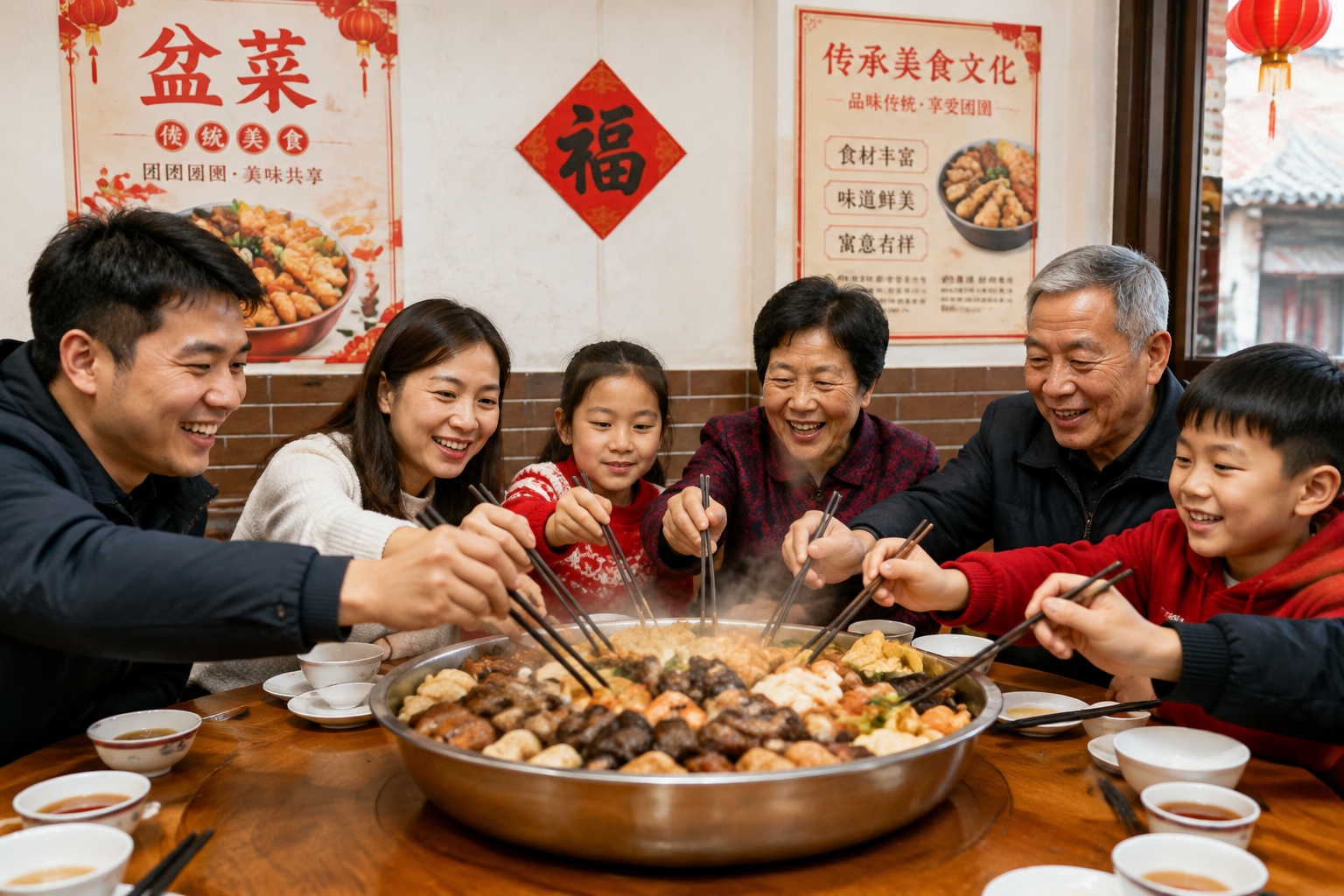
I once joined a friend’s family in a small village near Guangzhou for New Year’s Eve. The basin was set in the middle of a round table, surrounded by a dozen relatives. When the lid was lifted, the aroma was so intense that even the most stoic uncle smiled. Everyone reached in with their chopsticks simultaneously, a silent agreement that the best oyster is the one you catch first. It was messy, loud, and utterly joyful.
A Country of Many Flavors
Between the northern dumplings and southern basin dish, there’s an endless variety. In Sichuan, families hang cured sausage and bacon outside their windows, letting the winter wind season them. In Shanghai, niangao, or New Year cake, is sliced and fried with greens, its sticky texture symbolizing a tight-knit family. In the northeast, you might get a whole fish, boiled or steamed, served whole to symbolize surplus and unity. In Fujian, there’s Buddha Jumps Over the Wall, a slow-cooked soup of over a dozen ingredients that is so rich, legend says even a monk would jump the wall to have a taste.
This diversity tells a story. For centuries, China was a vast agrarian empire where regional cuisines developed in isolation, shaped by climate and local produce. The Spring Festival table thus became a map of the nation’s geography. Even today, when I visit friends in different cities, I feel like I’m traveling through China’s food atlas — each plate carries the terroir of its place.
There’s also the northern tradition of eating jiaozi at midnight, while southerners might have a late-night sweet soup. In my own family, the clock striking twelve is our cue to boil the dumplings. The kitchen fills with steam, and we shout out the year’s greetings. It’s a moment so regular, you’d think it was scripted — but it’s the script we wrote together, generation after generation.
The Reunion Dinner: More Than a Meal
The Chinese New Year’s Eve dinner is called nian ye fan, the “night of the year feast.” It is the one meal Chinese people, no matter how far away, try to make it home for. This year, China’s transport system moved billions of trips during chunyun, the world’s largest annual human migration. People endure long train rides, crowded buses, or anxious drives — often bringing gifts from their city to their hometown village.
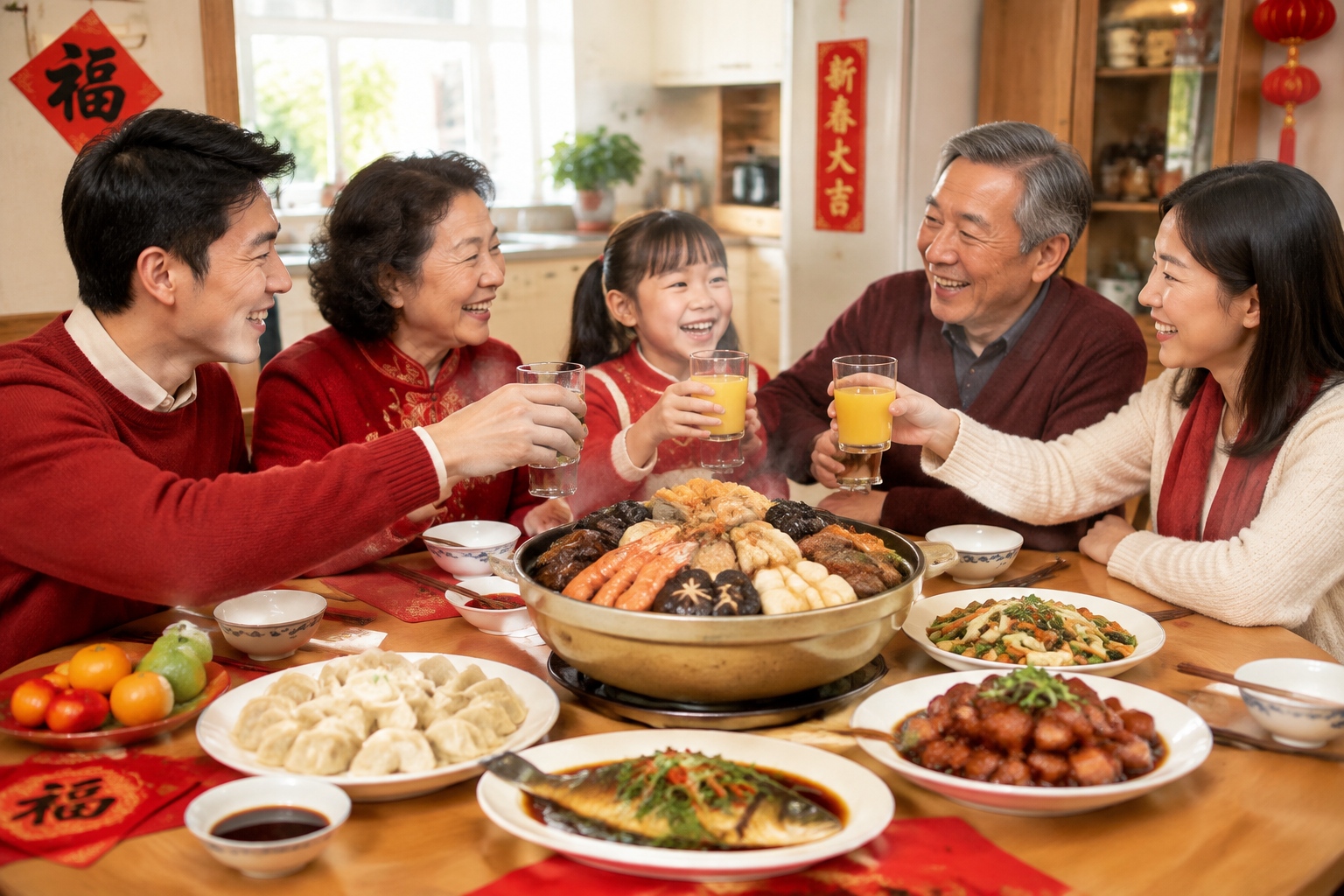
The food on the table is the reward. But more often, it’s the people who sit around it that matter. In my own family, when we sit down for dinner, my grandfather will raise his cup and say a few words. Then everyone clinks glasses, and talk drowns out the TV broadcast of the Spring Festival Gala. The noise, the warmth, the steam rising from the dishes — that’s what makes it the most important meal of the year.
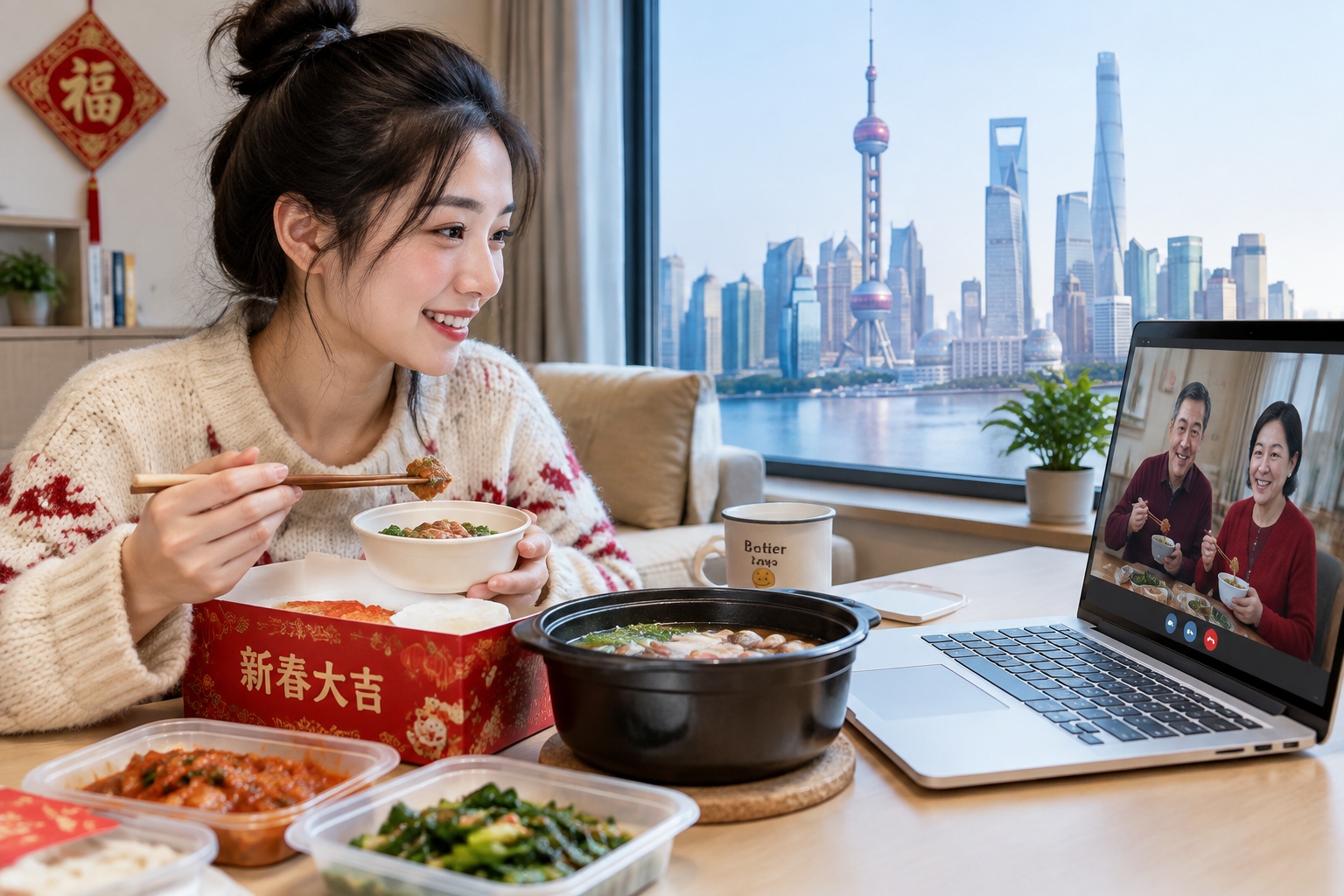
For those who can’t make it home, the distance can ache. Last year, my friend in Shanghai couldn’t return to Sichuan because of the pandemic. She ordered a hotpot kit online and joined a video call with her parents, both of them cooking at home. They ate together, virtually. “The taste wasn’t the same,” she said, “but the ritual kept me sane.” Her story reminds me that the national tradition also adapts to the realities of modern life.
Change and Continuity
Of course, China’s food culture is not frozen. This year, many families are choosing to pre-order prepared dishes, or su shi, to save time. Younger cooks or busy parents can now buy a whole poon choi kit or dumpling skins already rolled. Restaurants report booming business for New Year’s Eve bookings. Some families have even started ordering hotpot delivery, a fusion of old and new.
Yet tradition persists. In a 2023 survey, over 70% of Chinese people said they still cook the same dishes as their parents did. For the younger generation, the classics are becoming a kind of cultural anchor. My cousin, a 25-year-old in Shanghai, told me she’s learning to make her grandmother’s dumpling recipe — not because she has to, but because “when I roll those wrappers, I feel connected to every Chinese person who did this before me.”
Food suppliers have jumped on the trend. Online platforms now offer “reunion dinner boxes” with regional specialties, from hand-made dumplings to instant poon choi. Many young people, who live far from home, order these boxes and then video-call their parents while eating. It’s not the same, but it’s a way to keep the taste alive.
Food as Memory, Food as Home
The Spring Festival table is not just about food. It’s a living archive of family stories, a performance of belonging. When you bite into a dumpling that tastes exactly like the ones your great-grandmother made, or when you taste the rich broth at the bottom of a poon choi basin, you’re tasting history — both national and personal.
I think that’s why, no matter how far I travel, the image of my grandmother at the kitchen table remains the warmest memory of home. She passed away two years ago, but every Spring Festival, I still make her dumpling recipe. The ingredients are the same: flour, water, salt, pork, cabbage. But the taste is richer now, carrying her hands’ memory and the love she poured into every fold.
So this Chinese New Year, if you see a family in Beijing rolling dumplings, or a Cantonese clan lifting the lid of a steaming basin, remember: they’re not just preparing a meal. They’re holding onto a memory of home, and, at the same time, passing it forward.
Start the discussion at forum.chinacomes.com