

Morning in a Lhasa sweet tea house
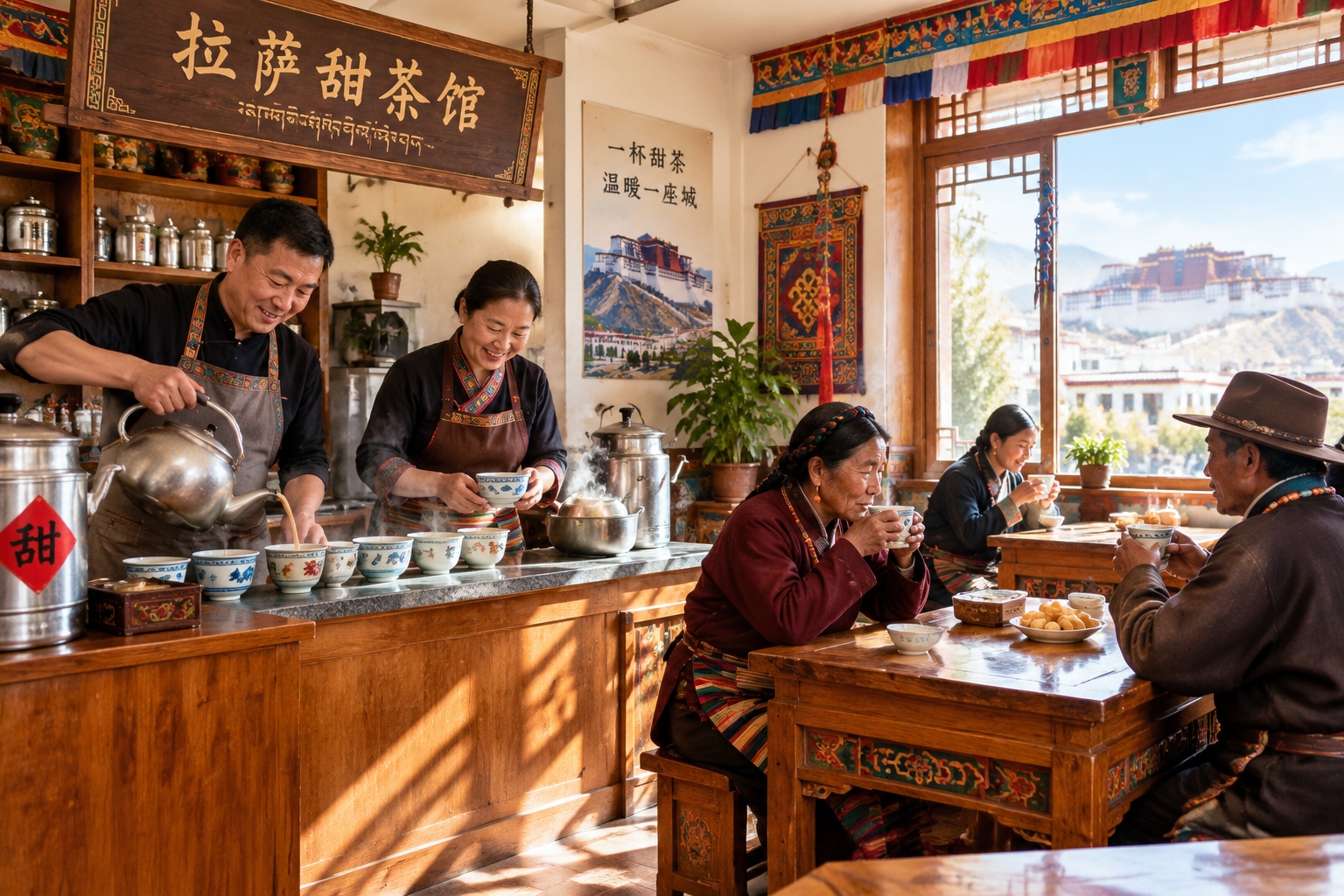
At 6 a.m., Lhasa is still a quiet town. The sky is a deep blue, and the air smells of dust and incense. On a narrow street near Barkhor Square, a small tea house is already open. Through the glass door, you can see a large pot of sweet tea boiling on a gas stove. A woman in a white apron is slicing bread, while her husband is carrying a crate of milk bottles from a truck.
This is Wang Wei and Li Hua, a couple from Sichuan Province, who have been running this tea house for over a decade. They sell sweet tea, Tibetan noodles, and Sichuan-style dumplings. A Tibetan grandmother, dressed in a chuba, walks in. She says something in Tibetan. Li Hua answers in the same language, and the old woman sits at her usual table without saying anything else. It is the kind of familiarity you sometimes get at a family-owned café or pub back home, but here, the mix of languages and customs makes it feel extraordinary.
Why a Sichuan couple ended up in Lhasa
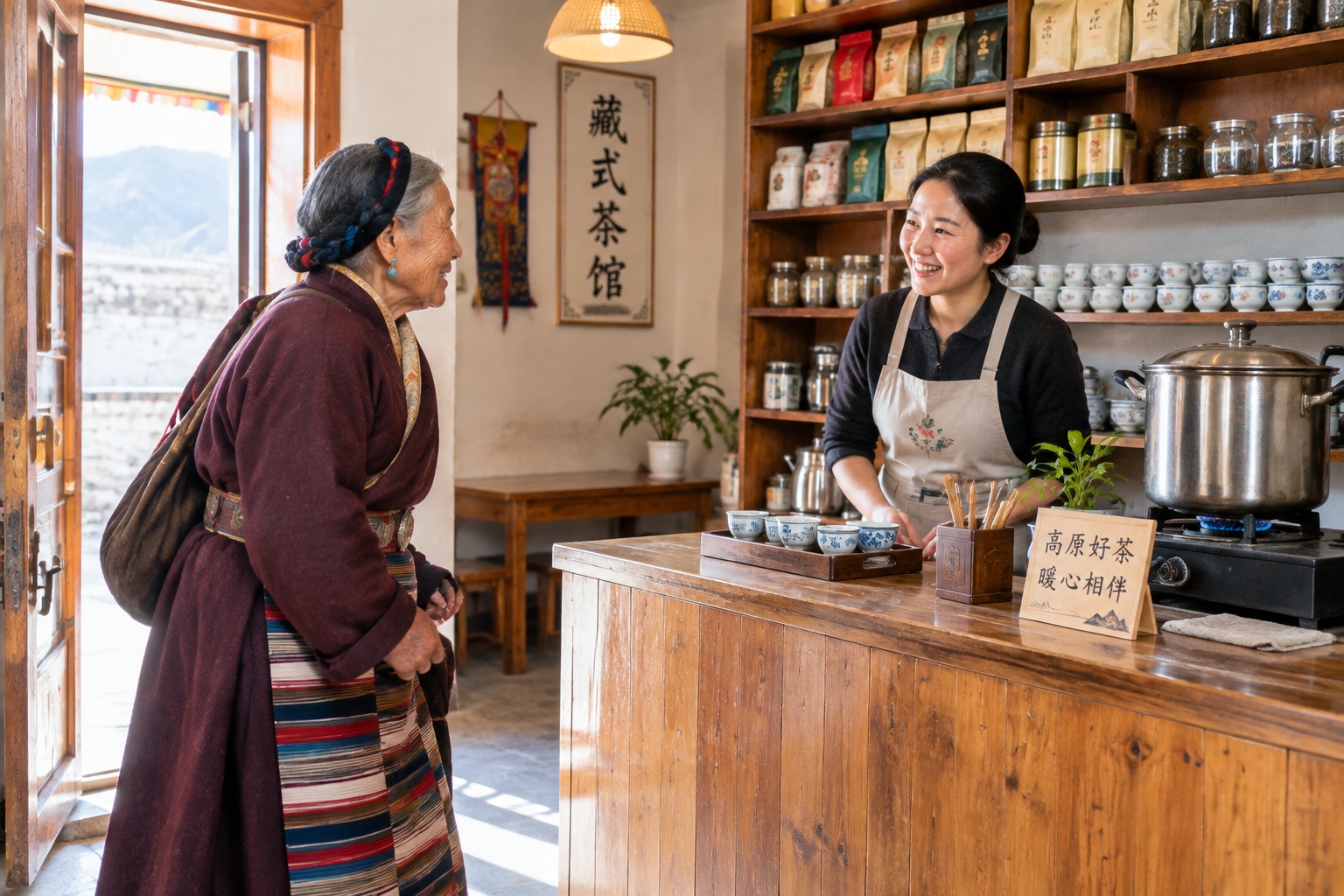
Wang Wei first came to Lhasa in 2013 as a construction worker. Like many migrant workers from inland China, he was looking for better pay and a chance to see a part of the country that was nothing like his home in the Sichuan basin. Li Hua followed a year later after they married. They planned to work for a few years and then go back to open a small restaurant in Sichuan. But their plans slowly changed when they started spending their free time in the city’s sweet tea houses.
In Western countries, a café might be a place to grab a quick coffee and bring it to work. In Lhasa, sweet tea houses are community living rooms. People come in the morning and stay until the afternoon. They chat with friends, play a traditional dice game called sho, or simply sit and watch the street. The tea is cheap, the refills are endless, and everyone seems to know everyone. Wang Wei and Li Hua were drawn into this rhythm. They noticed that many tea houses were run by Tibetans, but few had a Sichuan twist. They felt they could do something different – a tea house that served both sweet tea and the spicy snacks that reminded them of home.
Sweet tea houses are not just about tea
To understand the role of a tea house, imagine a combination of a European café, a British pub, and a community center. Sweet tea itself is made from black tea, milk, and sugar, sometimes with a pinch of salt. It is served in small glasses, much like mint tea in North Africa. Most tea houses also offer food, such as thukpa (noodle soup), momos (dumplings), and a Tibetan bread called balep. In Lhasa, there are hundreds of such places. They are open from dawn to dusk, and they play an essential role in the social fabric of the city.
For Wang Wei and Li Hua, opening a tea house was both a business decision and a cultural bet. They invested their savings in a small storefront, added a Sichuan-style kitchen, and learned the local customs. At first, some customers were skeptical – a tea house run by Chinese migrants? But the quality of the food and the couple’s genuine respect for Tibetan culture won them over.
Learning Tibetan: a step toward acceptance
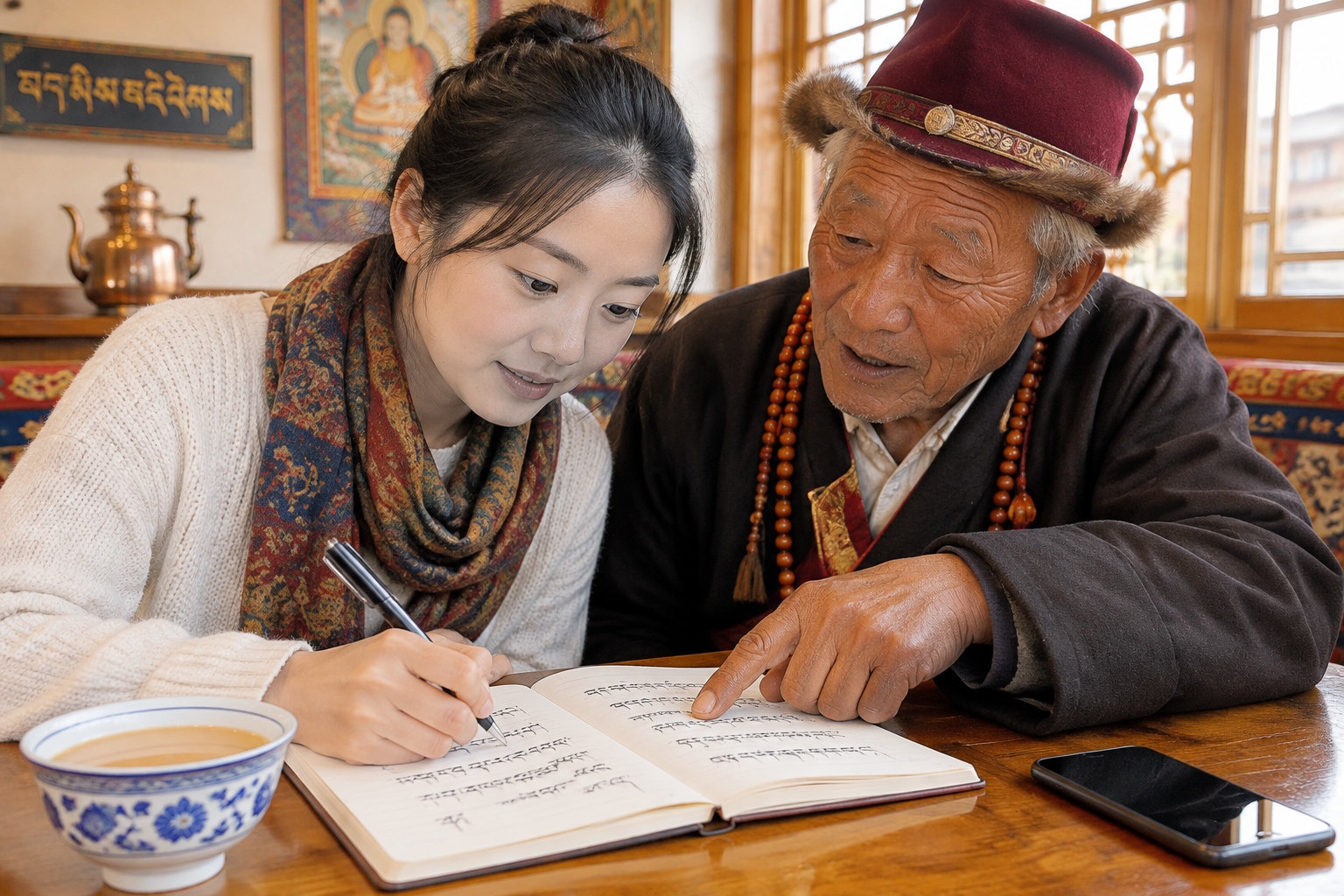
When they first started, the couple spoke no Tibetan. They could serve tea, but they could not understand the conversations around them. Wang Wei says it was like being in a movie with subtitles missing. They tried to use simple Chinese, but they could feel a barrier. Li Hua decided to learn the language seriously. She asked a retired Tibetan teacher who came to the tea house every morning for lessons. She filled a notebook with letters and phrases, practiced while cleaning tables, and listened to the radio in Tibetan. It took her about a year to reach basic conversational fluency. Now she can discuss recipes, joke about the weather, and even comfort someone who is grieving.
Wang Wei is slower at languages, but he has learned enough to greet customers and comment on the day’s football match. He says the most important lesson was that Tibetans appreciate any effort to speak their language, even if you sound like a child. That effort, he believes, is what made their tea house feel like a local spot rather than a tourist trap.
Friendships beyond the counter
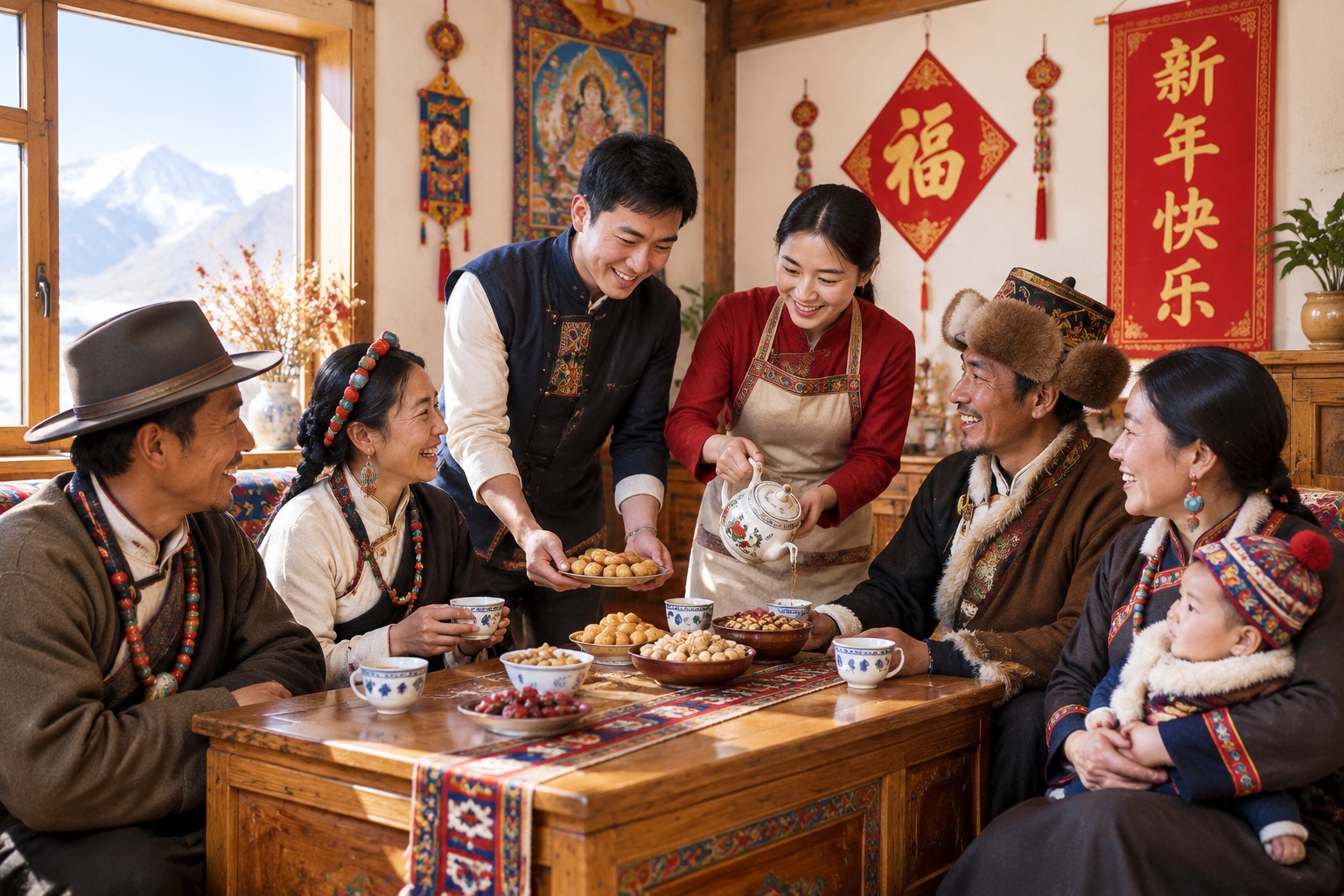
In many countries, the relationship between a shopkeeper and a customer is often brief and unspoken. Here, it is personal. The couple is invited to Tibetan weddings, New Year celebrations, and family gatherings. A group of regulars gather at the tea house almost every day, and they treat it as their own. Drolma, a kindergarten teacher, has become Li Hua’s closest friend. The two women talk about raising children, exchange recipes, and have even taken trips together to see the plains in Sichuan.
Wang Wei remembers the time his father fell ill back home. He mentioned it to a customer, and within days, several of his Tibetan friends had pooled money and offered to help with the hospital bills. It was a gesture of gratitude for the way the couple had integrated into the neighborhood. Such friendships are not measured in headlines but in everyday moments – a bowl of home-made yogurt, a helping hand during a busy day, a shared silence at the death of a friend.
Challenges: adapting to altitude, climate, and customs
Life in Lhasa is not without friction. The altitude of 3,650 meters makes simple tasks difficult. The couple would get terrible headaches in the first months. They had to adjust their recipes, swapping pork for yak meat and adding more butter to suit local tastes. They also had to learn a set of unwritten rules: never step on the threshold when entering a house, don’t point with your finger, and always drink tea with your right hand. They made mistakes – once, Li Hua served pork dumplings to a Muslim customer, not knowing that some of the local Tibetans also avoid pork for religious reasons. But instead of being offended, the customer taught her about halal practices. These moments are lessons in humility, and the couple says they are now much more aware of cultural nuances.
Economically, the tea house faced a major downturn during the pandemic, when tourists disappeared and lockdowns restricted movement. Yet the couple survived because of their regulars. When they had to close for three months, neighbors came by to ask if they needed food and money. They even offered to give up a portion of their own grain rations. It was a reminder that in a tightly knit community, you are never fully alone.
Ten years later: home is where the tea is
Today, the tea house has expanded. It now has eight tables and two local staff members. The couple’s son, now eight, goes to a Tibetan-language school and often helps with the tea service. He is growing up with two languages and two identities, and it seems to suit him. Wang Wei says they have been offered opportunities to move back to Sichuan or to open a bigger shop, but they feel no need. “In Sichuan, we would be just another restaurant. Here, we are a part of people’s lives.”
Their story is part of a larger trend of mainland Chinese moving to Tibet for work and opportunity. Not all of them integrate as deeply as Wang Wei and Li Hua, but many do. The couple is quick to point out that they are not exceptional. “We just run a tea house. The real bridge is the tea.”
One cup at a time
There is a great deal of talk about cultural difference, identity, and social cohesion. But here, on a quiet street in Lhasa, such concepts are made tangible. It is present in the way a grandmother corrects Li Hua’s grammar over a cup of sweet tea. In the laughter that erupts when Wang Wei tells a Tibetan joke in a heavily Sichuan-accented voice. In the small gestures of friendship that happen every day between a couple from the plains and their neighbors from the mountains.
Wang Wei and Li Hua did not come to Lhasa to build bridges or make a statement. They came to work, to save money, and to live. In doing so, they built a life where a Sichuan accent sounds at home in a Tibetan tea house, and a cup of tea is enough to warm anyone, no matter where they are from. That is the everyday reality of modern China – not always simple, but full of human connection.
Start the discussion at forum.chinacomes.com