

Morning Inside a Third-Floor Flat
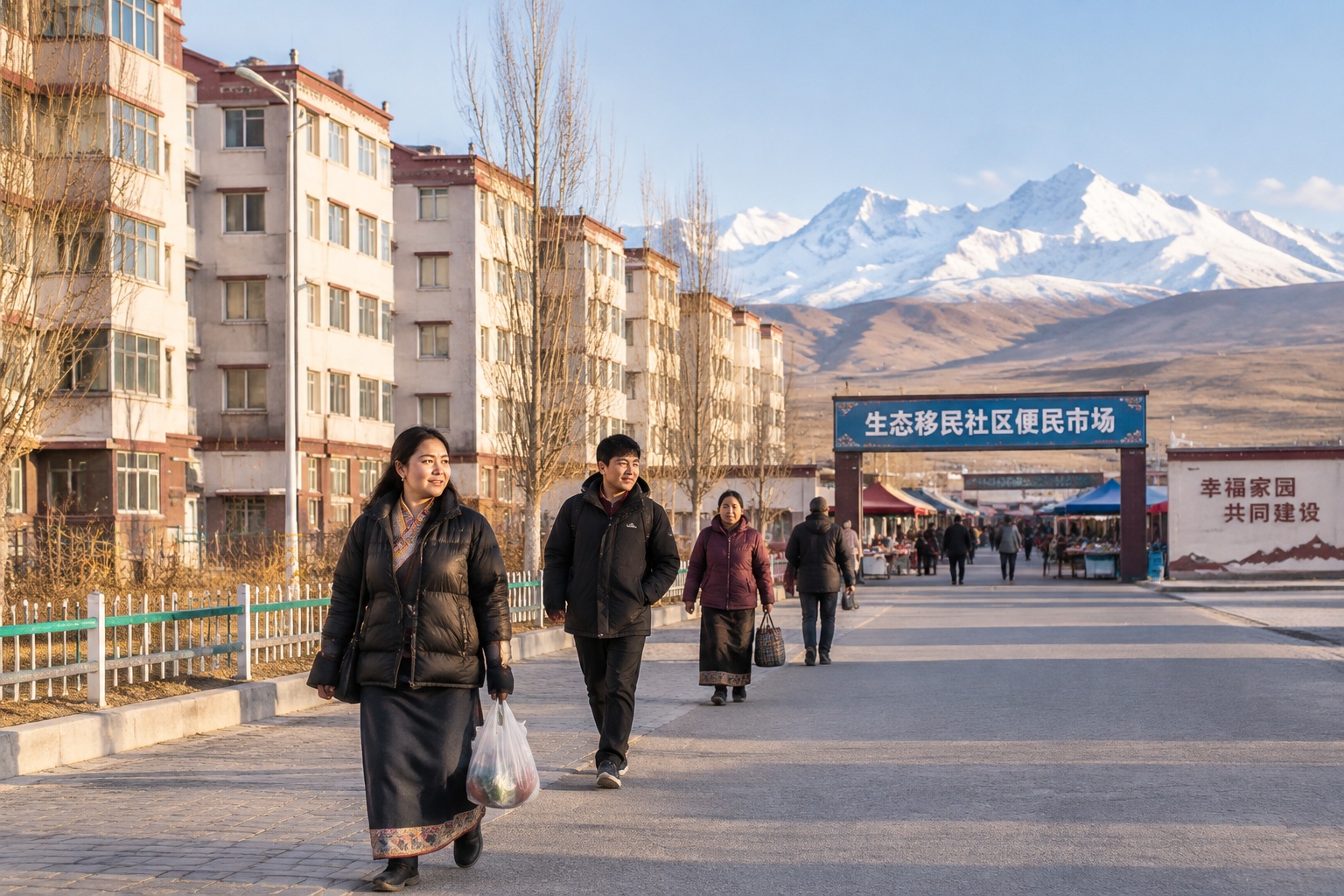
At 7 a.m., Tashi Tsering flicks on the electric kettle in his third-floor flat in Golmud, a dusty desert city on the edge of the Kunlun Mountains. Through the window, the mountain peaks are hazy, and the curb below is already lined with delivery tricycles. Tashi’s wife, Drolma, pours boiling water into a stainless steel thermos. Their two children sit at a small desk by the heater, as they have almost every school morning for the past decade.
Tashi is one of thousands of former herders who moved from the Sanjiangyuan region — the headwaters of the Yellow, Yangtze and Mekong rivers on the Tibetan Plateau — to townships in Qinghai Province under a national ecological resettlement program. His family left their pastures in 2013. Ten years later, they live in a two-bedroom apartment that smells of roasted barley flour and machine-oiled heating panels.
Why Herders Were Asked to Leave
Sanjiangyuan is often called China’s "water tower". Melting snow and rain here feed rivers that support hundreds of millions of people downstream. By the early 2000s, decades of dense grazing, rodent damage and changing weather patterns had stripped much of the grassland. The central government responded with a series of ecological-protection measures, including a controversial one: moving herders out of the core areas.
The offer included a modern apartment in or near town, compensation for fencing and other assets, and a shift to urban household registration. For Tashi, the decision was driven by his oldest child. "Our daughter was seven," he says, pausing to measure the words. "The nearest school was three days away on foot. We could not continue."
The Long Truck Ride and the First Winter
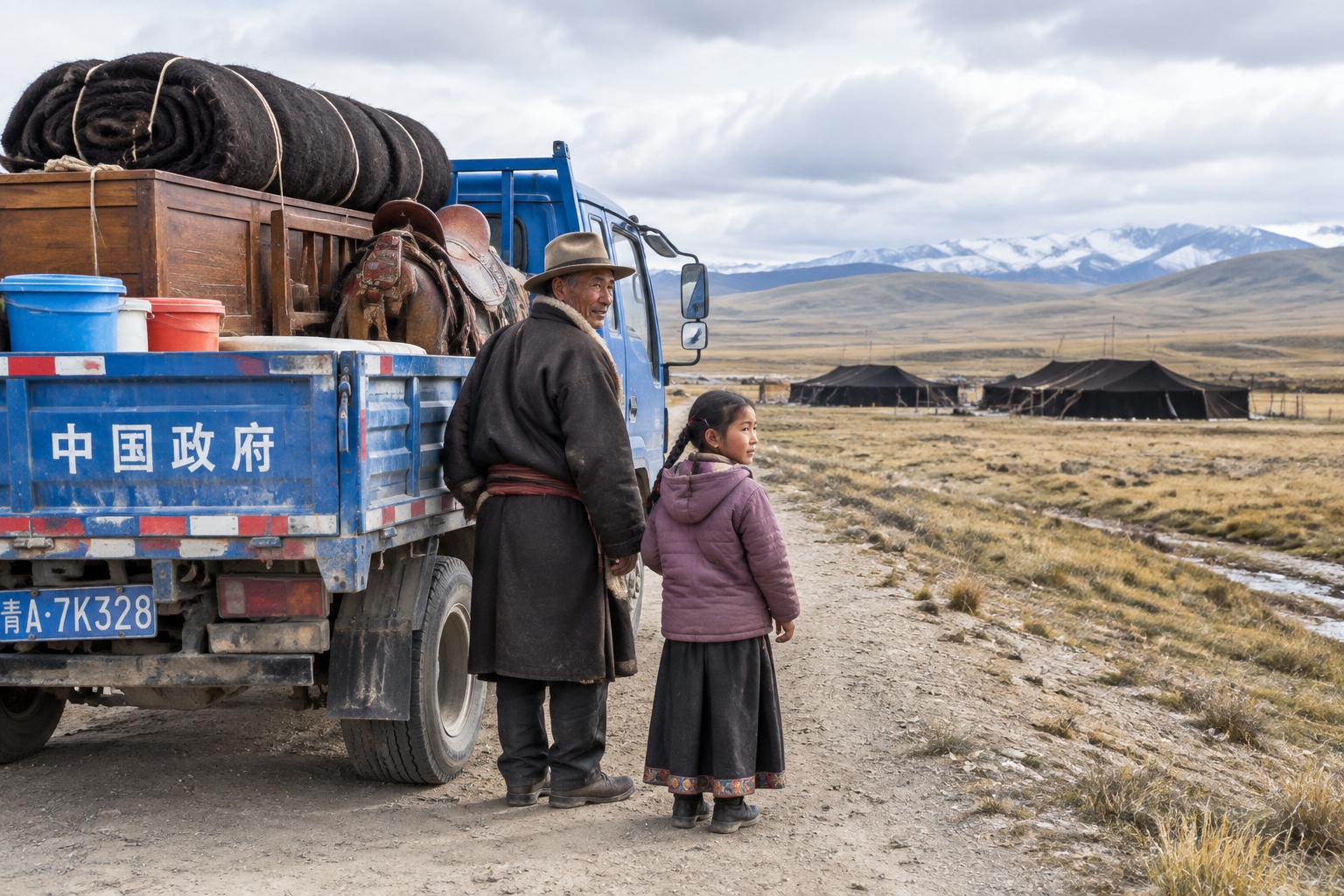
In the spring of 2013, a government truck carried the family’s belongings for nearly 800 kilometers to Golmud. They took an old leather saddle, a wooden butter churn and two bundles of dried yak dung. The manure turned out to be useless in a city with central heating, but Drolma kept it in a sack for months before throwing it away. "The silence of the apartment was harder than the wind on the grassland," she says.
The first winter was overwhelming. Tashi signed up for a security-guard training course. Drolma stayed home with the children, learning how to pay electricity bills and which vegetables were worth buying. The couple could not speak Chinese well, and the registration procedures felt like a maze. The community provided temporary assistance, but the sense of loss remained.
A New Kind of Work and Routine
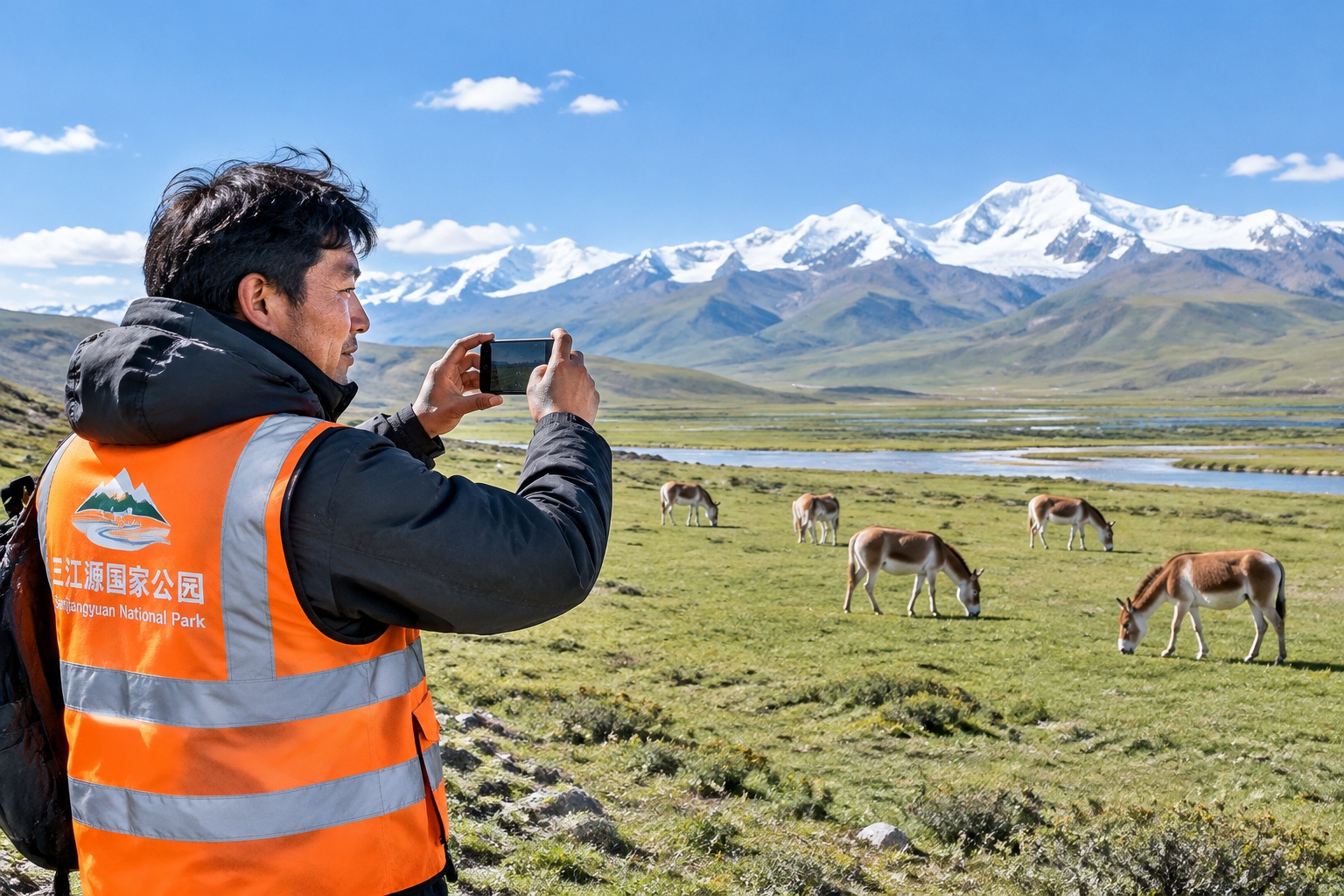
Today, Tashi works as an ecological caretaker for Sanjiangyuan National Park. Each month, he spends about ten days at a station near his old grazing land, checking fencing, counting wildlife and documenting grassland recovery on an older smartphone supplied by the park. His monthly salary is 2,600 yuan (about $360). It’s not a lot, but it is predictable, and it includes social insurance.
Drolma earns extra income by weaving traditional wool bracelets that are resold to tourists through a community cooperative. The apartment rent is 850 yuan per month, partly covered by the government for the first five years. After that, Tashi says, the family had to manage on their own. They do, but barely.
The community now has a health clinic, a Tibetan Buddhist temple, a mosque, and two small grocery stores. An electric scooter charging station sits next to the basketball court. There is even a tiny "whiteboard corner" in the courtyard where neighbors share job announcements.
The Next Generation Rethinks "Home"
The biggest change is the children. Tashi’s daughter, Lhamo, now 20, is studying tourism management at a college in Xining. In the summer, she returns to Sanjiangyuan to work as a guide for small eco-tours. "My parents gave up their pasture," she says. "I want to help other people understand what they gave it up for."
Her younger brother, Dorje, 14, is in middle school. He has never milked a yak. On weekends he plays basketball in a community league. When he says the word "home," he points at a high-rise, not a mountain pass. The transition is not just physical; it is deeply psychological.
Some second-generation migrants struggle in different ways. Dorje’s friend, a boy named Purbu, started drinking heavily at 16 after his parents left him with his grandmother to seek work in another province. The community center runs group sessions for teenagers, but funding is sparse.
The Unfinished Business of Resettlement
Not every family has adapted as smoothly as Tashi’s. A 2022 study by the Chinese Academy of Social Sciences on ecological resettlement sites in Qinghai found that roughly 40 percent of surveyed households still rely chiefly on government cash transfers. Many adults lack the skills needed for formal employment. In Tashi’s building, two neighbors collect recyclables to supplement subsidies.
There is also a quieter tension: some locals feel they exchanged one kind of insecurity for another. On the grassland, a family could rely on its own animals for food, warmth and trade. In Golmud, a missed payday means a skipped meal. But Tashi’s neighbor, Norbu, a taxi driver, says the move at least gave him options: "My children are in school, and I can visit my brother only by car, but I can also choose to try other work. In the past, there was no choice."
Grasslands Recover, Lives Reroute
Satellite data shows that vegetation density across Sanjiangyuan’s core reserve areas has improved since the program began. Snow leopards and wild asses are more commonly sighted. The restoration of grassland is real. The restored land is part of Tashi’s identity, even when he is not there.
One evening, Tashi pulls out his phone to show me a photo from last month’s patrol: a herd of Tibetan donkeys crossing a green valley. "This was my family’s winter pasture," he says softly. "Now it is their land. I am not regretful — just tired, sometimes."
Ten years after leaving, the resettlement community is no longer a temporary stop. It has become a permanent place where tea prices are a little higher than in town and where the wind off the mountains carries less grass and more dust. But children walk to schools, bills are paid online from a single phone, and new shapes of life are being formed.
Tashi watches his daughter’s graduation photo on the wooden shelf. "We were told we were leaving the grassland for the future," he says. "Now I see that future in her. She carries it without knowing. That is enough."
Start the discussion at forum.chinacomes.com