

Daybreak on Mihuntai
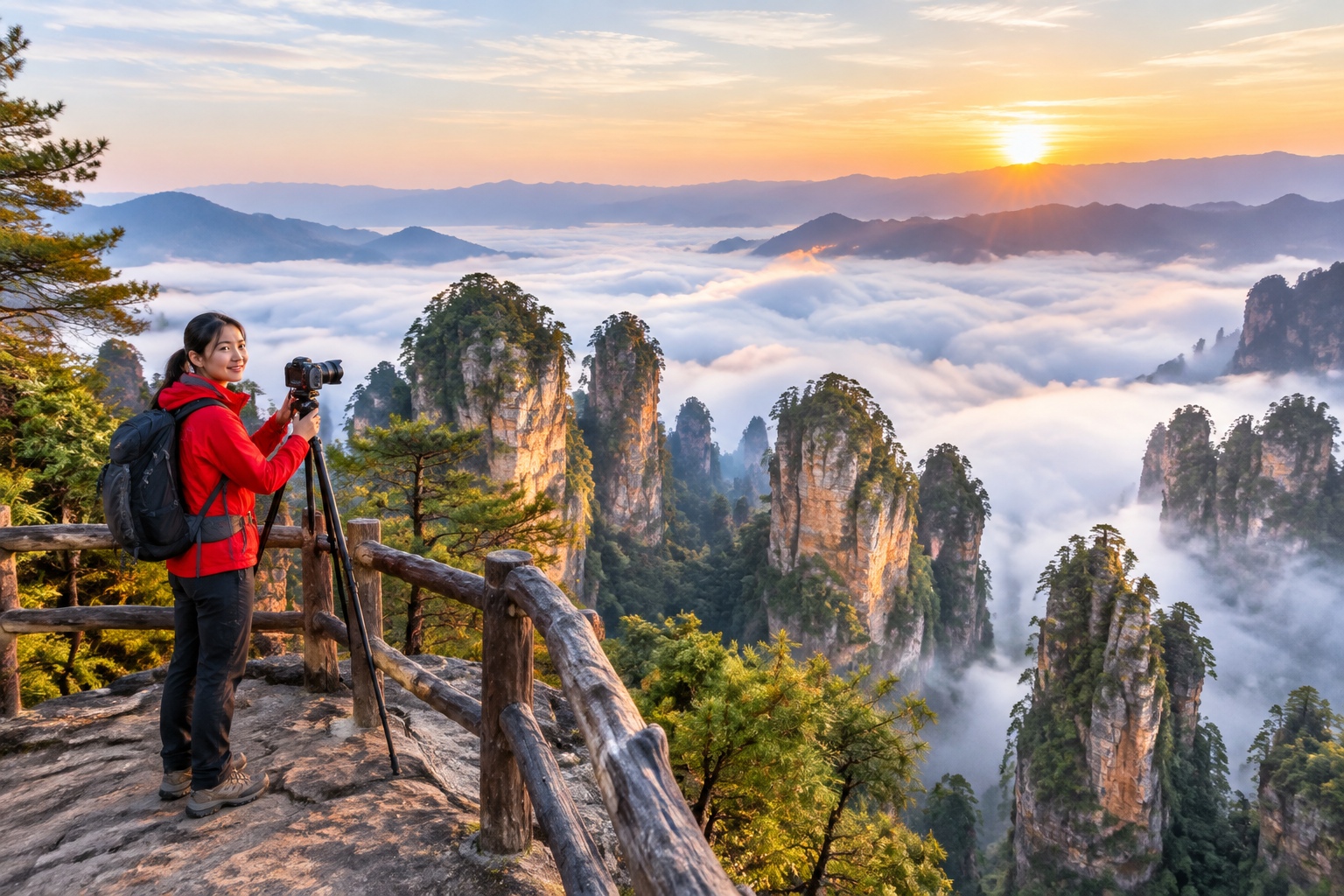
I set my alarm for 4 a.m. to reach Mihuntai, a viewing ledge carved above the valley floors in Wulingyuan, before sunrise. Inside the mist, the trees looked like wet ink. Then the wind did something theatrical. It peeled the clouds back slowly, and the first sandstone pillars appeared—not round or smooth, but sharp, oxidized yellow and wrapped in ivy and pine.
A Chinese child pointed at one crooked summit and yelled, “Blue aliens!” Her father smiled and told her they were the mountains from Avatar. It was an easy connection to make. Since 2009, this landscape has been promoted as “Avatar Hallelujah Mountain,” blurring the line between geology and cinema. But the fantasy does not erase a real story worth hearing—a story about how this remote and poor corner of Hunan Province was rediscovered, commercialized and pushed into the complex business of sustainable tourism before it was quite ready.
A geologist’s work of art
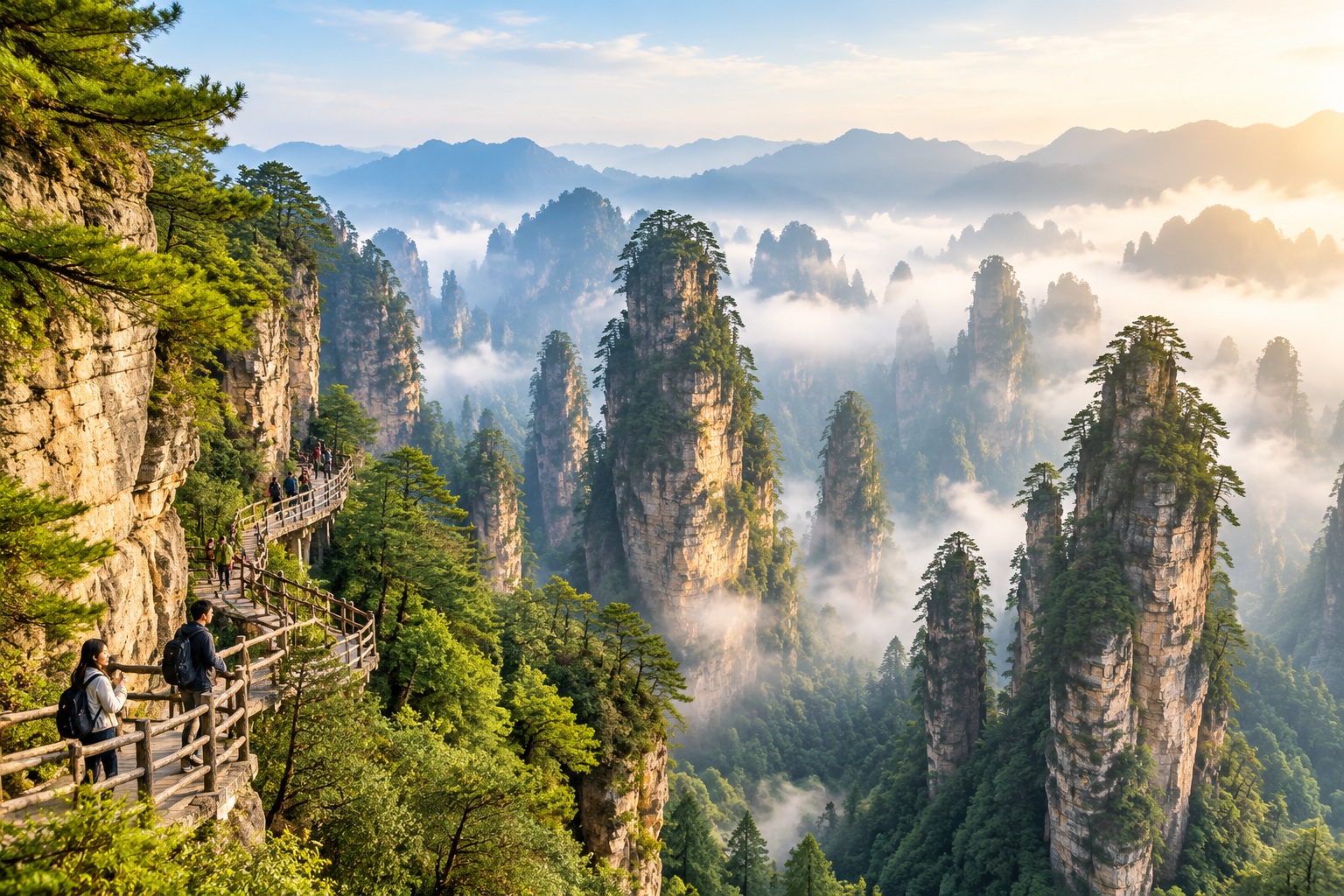
Around 380 million years ago, this region lay under an ancient inland sea. Rivers carried quartz sand into a delta, producing one of the purest quartz sandstones on the planet. Later, Earth’s crust lifted the sedimentary rock into a plateau, and the resulting network of rivers spent millions of years cutting downward along natural vertical joints. The result is today’s stone forest: more than 3,000 independent pillars, each one rising from the forest floor like a frozen fountain.
The Chinese name for this special landform is fenglin—a “peak forest,” distinct from the karst towers of Guilin, because here the rock is layered and vertical, not carved by groundwater. In 2010, Chinese and international geologists gave it their own protected name: Zhangjiajie landform. In ordinary language, it is a global geological museum.
Before Pandora, before tourists
This extraordinary landscape did not bring wealth at first. The city, still named Dayong, stood at the dead end of northwestern Hunan. Roads barely reached it; farmers planted crops in narrow valley floors, and nobody came for adventure. In 1982, the first state-owned national forest park in China was created here, but Dayong still had no airport and no expressway—just slow trains and dirt roads.
The real break came in 1992, when the United Nations declared the whole Wulingyuan area a World Heritage Site. Suddenly, money and engineers started pouring in. A local airport was built near the mountain, then expressways, then cable cars. The city itself was renamed Zhangjiajie in 1994, after the very landscape that had made it poor for so long.
Mr. Chen’s 19 rooms
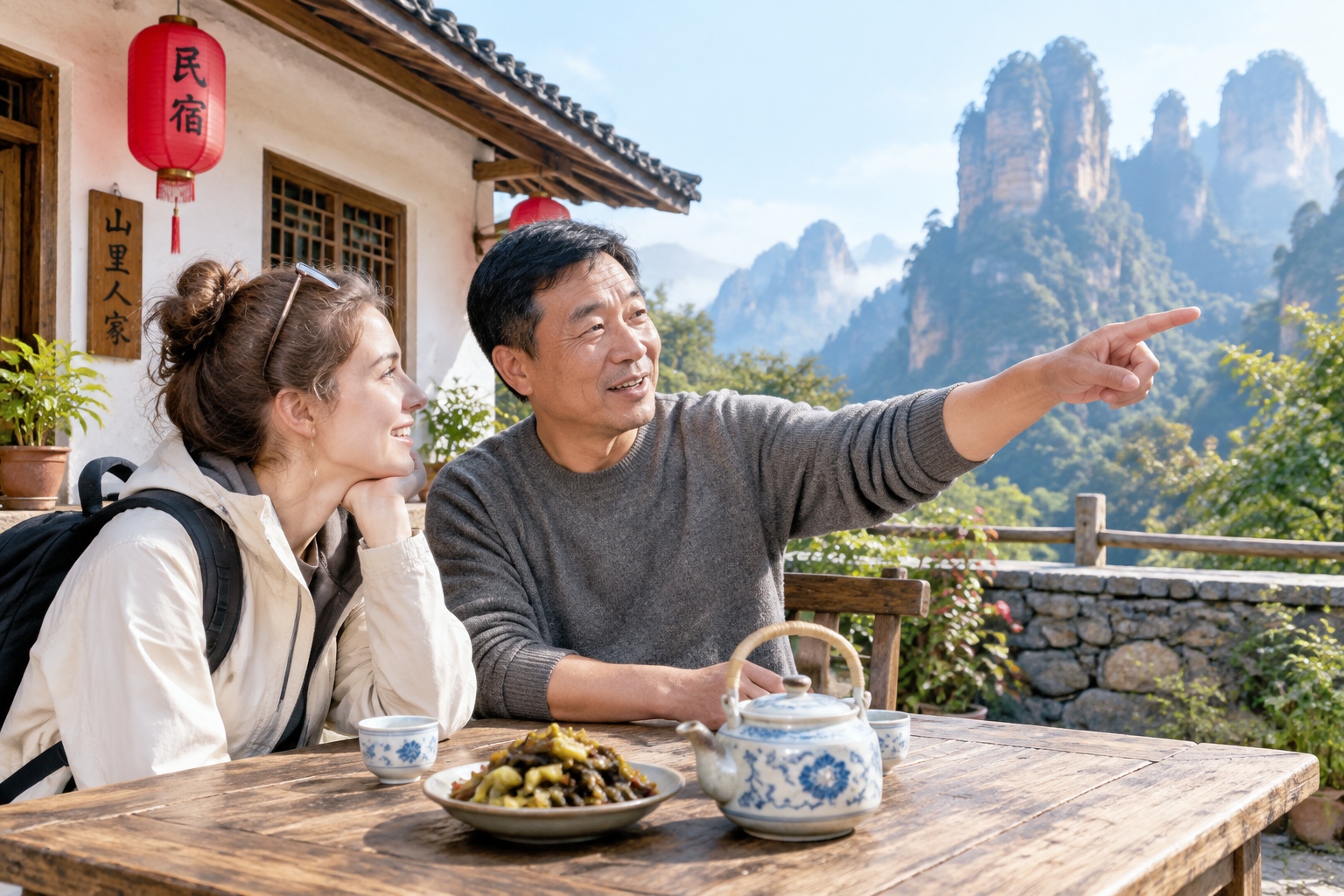
Half an hour outside the park’s main gate, I met Chen Yuan at his family’s three-story guesthouse in a village that used to depend on logging and farm work. Pictures on his phone show the house in 2008: dark brick and a bamboo drying rack. The same building is now painted white and has nineteen rooms, most of them booked for the month.
Chen left for Shenzhen in 1996 and worked in a plastics factory until his father’s knees failed. “In those days, if a traveler couldn’t reach the town, we shared our dinner and let him sleep on the floor,” he recalled. “We were embarrassed that we lived so close to mountains yet so far from opportunities. Now the mountains pay for my children’s school and for the hot water in every room.” He laughed when he said this. Around him, guests from Shanghai, Seoul and Paris were tasting his wife’s pickle dishes.
At the edge of the village, more than thirty guesthouses have opened in a lane that had only two in 2010. Chen’s son Jun left for university in Changsha, then returned to write a business plan for a small travel company. “I came back because I think this place can still be real,” Jun said. He brings tourists to visit farms where local Tujia women peel potatoes and sing old mountain songs. The village has learned that authenticity itself is a resource newer than the mountain forests.
Too many feet on Pandora
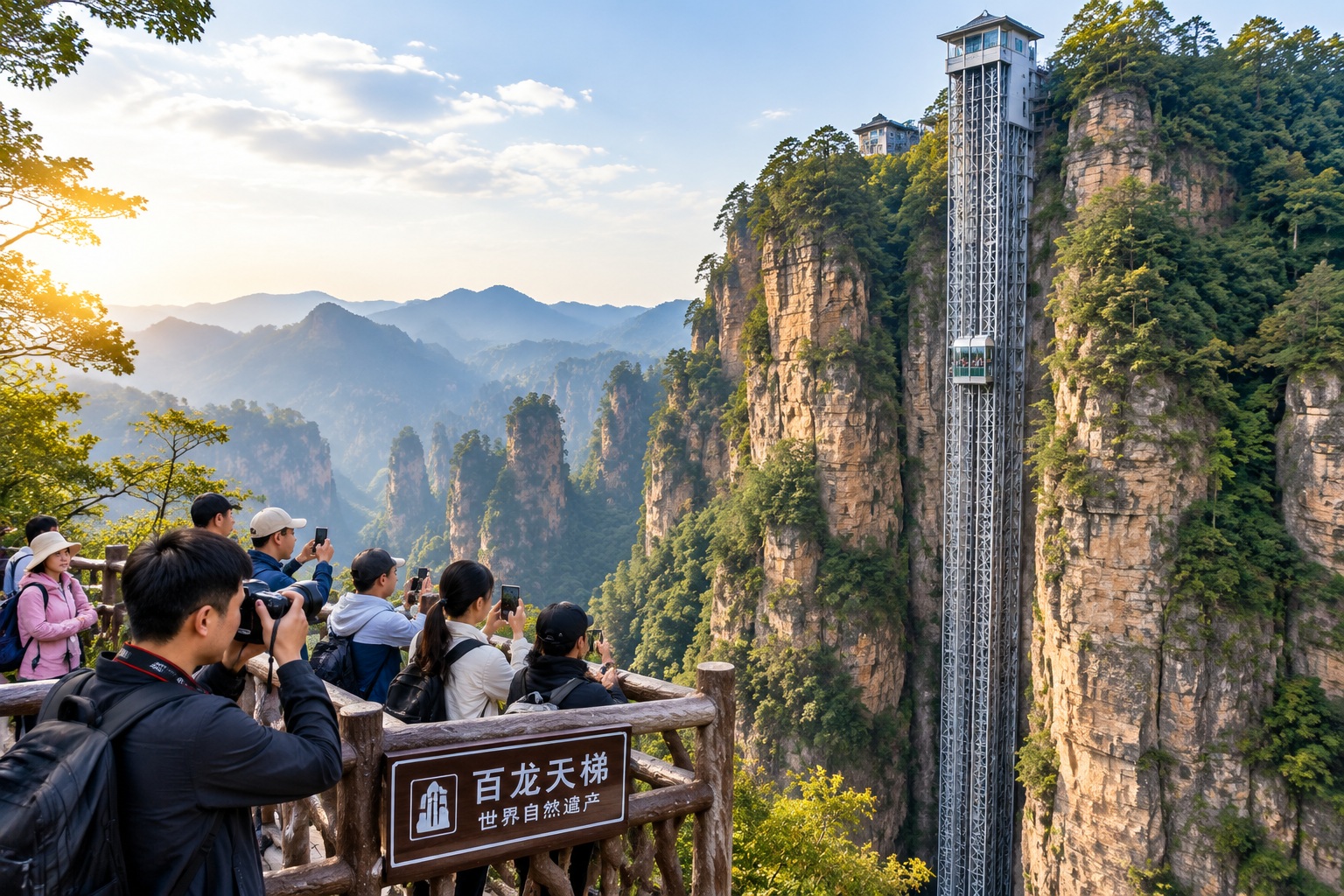
But the flow of visitors has a shadow side. In the late 1990s, hotels and even a sprawling market colonized the fragile soil inside the heritage core. UNESCO warned Wulingyuan in 1998 and called its state serious. The local government was forced to demolish nearly 30 hectares of buildings and push development outside the protected boundary. Today every core point is checked by shuttle buses and digital reservation systems. National holidays are chaotic, and local authorities often stop ticket sales when parking lots fill.
Some visitors question whether the tourist infrastructure has gone too far. Bailong Elevator carries people up a cliff-side shaft in minutes, but it also leaves a giant steel mark on the view. Cable cars, glass-bottom bridges and promenade walkways are profitable, but they also distance travelers from the untouched natural environment they came to see.
A park ranger I met put it more directly: “People complain that we limit them. But if we stop the limit, they’ll complain about trash in every creek. The trick is to make tourism smart enough, and we are still learning.”
What’s next for the stone forest
Instead of just counting passengers, Zhangjiajie is looking for a second act. Old villages outside the reserve are being renovated into “rural art workshops.” Residents who used to be garbage collectors now work with designers to build collection markets. Sustainable travel means inviting travelers to stay for days, walking the quiet valleys before the crowds arrive, not just snapping selfies.
Jun, Chen’s son, is part of that generation. Before we walked along the rocky bottom of the Golden Whip Stream, he said, “I want my guests to see that the village is not a movie set. It is a real home.” The old and new China meet in that sentence. During the day he acts like a professional tour leader; at night he chews corn taken from his mother’s kitchen, arguing with her about next year’s booking calendar.
On my last morning, standing at a riverside pavilion, I watched the sun hit the top of the stone columns. They looked solid, older than any national park. But this place is younger in its current form than many of its guests. Even under the label of Avatar, the sandstone pillars continue to carve out a new story—one that is part geology, part commerce, and part honest search for balance.
Practical tips for a trip to Zhangjiajie
Getting there: Zhangjiajie Hehua Airport has direct flights from many cities in China and Asia. High-speed trains from Changsha reach Zhangjiajie station in roughly three hours. Local buses connect the airport, railway station and the area’s four park entrances.
Best time: April to May and September to mid-October offer the best combination of green foliage and clear visibility. Avoid Chinese national holidays if you can.
Budget: a four-day ticket to the main Wulingyuan scenic area is about 225 yuan; cable cars, the Bailong elevator and park shuttle buses are paid separately. Staying inside the park is possible but expensive—book weeks ahead.
Start the discussion at forum.chinacomes.com