
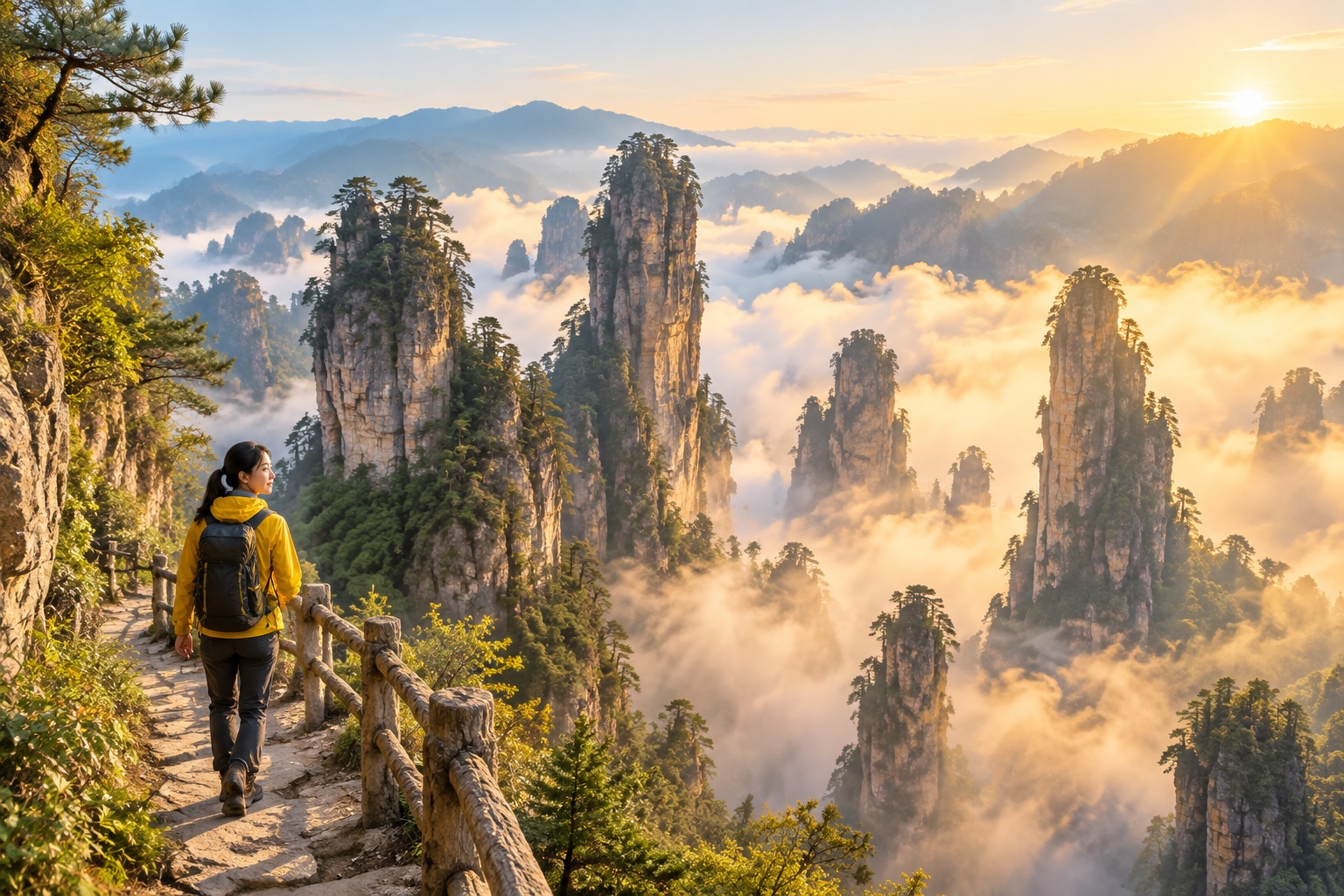

The shuttle bus pulls into the Yuanjiajie parking lot at 7:30 a.m. The air smells of rain and pine resin, and the morning mist is still tangled in the quartzite pillars. Most visitors stream toward the Bailong Elevator, the glass lift that drops down the cliff face. Tour-group guides wave little red flags and shout into headsets. But you didn’t come to ride the elevator. You turn down a narrow stone path that curves into the forest. Within ten minutes, the crowd disappears, replaced by birdsong and the wet squeak of boots on mossy rock. Zhangjiajie still has places where you can be alone with the mountains—this guide is about five of them.
I’ve been hiking these trails since 2016, and I’ve watched the visitor numbers climb every year. Yet even when the main boardwalks are shoulder-to-shoulder, there are viewpoints that stay empty, mostly because tour groups don’t have the time to venture away from the bus stops. The five spots below are all inside Zhangjiajie National Forest Park and are reachable via shuttle buses plus a bit of legwork. They’re not in any standard tour itinerary. They’re where the park reveals its quieter side.
Before You Start: Timing, Tickets, and Shuttle Buses
To get the most out of these viewpoints, plan around the park’s daily rhythm. Buy your entrance ticket online in advance using your passport; the four-day pass costs about ¥225 (roughly $34) in peak season, though the price may vary. Enter through the Wulingyuan Gate, the main southern entrance. If you can, spend one night inside the park at a village guesthouse near Yuanjiajie or Tianzi Mountain, so you’ll be at the trailheads before the first shuttle buses arrive in the morning. The park’s internal shuttle buses are free with admission, but they only connect major scenic areas. The hidden viewpoints require walking from a bus stop, and the distances are longer than most visitors expect. Wear sturdy hiking shoes, carry at least two liters of water, and bring layers: temperatures in the valleys can be 10°C hotter or colder than at the summits. Download offline maps and keep cash in small notes, because vendors deep in the forest rarely accept mobile payments or cards.
As for when to go: April, May, September, and October are the driest months. Summer is lush but humid and busier; winter offers occasional snow and fewer visitors, but some trails can be icy. Start every hike by 8 a.m., before the first tour buses roll into the scenic areas. The shuttle bus system begins picking up passengers at 7:00 from key stops, so you can be at a quiet trailhead by 7:30.
Hidden Viewpoint 1: Laowuchang Sky Farmland
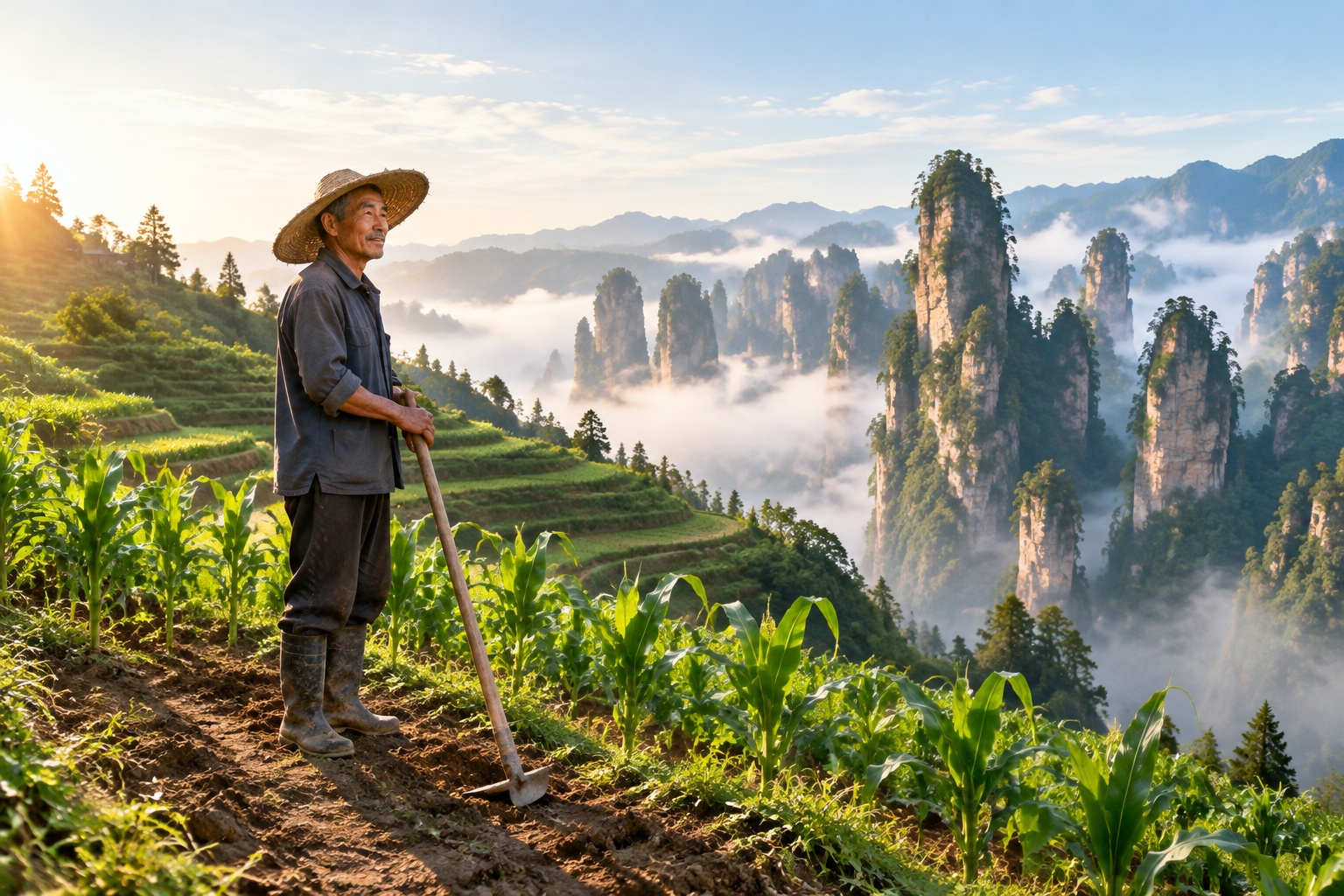
From the Tianzi Mountain area, take a shuttle bus to the Daguantai stop—a small shelter on the western edge of the scenic area. The path from the stop descends through mixed pine and bamboo forest for about forty minutes before it suddenly opens onto Laowuchang, a village whose fields have been carved into wide terraces on a huge natural plateau. These fields are suspended more than 300 meters above the surrounding valley, which is why they’re called “sky farmland.” Farmers still grow corn and potatoes here without machines. One man in his seventies explained that his father cleared the first terraces by hand in the 1950s, long before the park was established. The fields look like jagged green feathers against the massive sandstone mesa. In summer the crops are waist-high and rustle in every breeze. A small water tank rests where a hill spring spills over an edge, but you’ll want to bring your own drinking water. The only sounds are distant birds and the low murmur of farmers talking at the edge of their plots. Plan to spend at least an hour here, including the walk down and back up—though the return climb will have you breathing hard.
Hidden Viewpoint 2: Shentang Bay
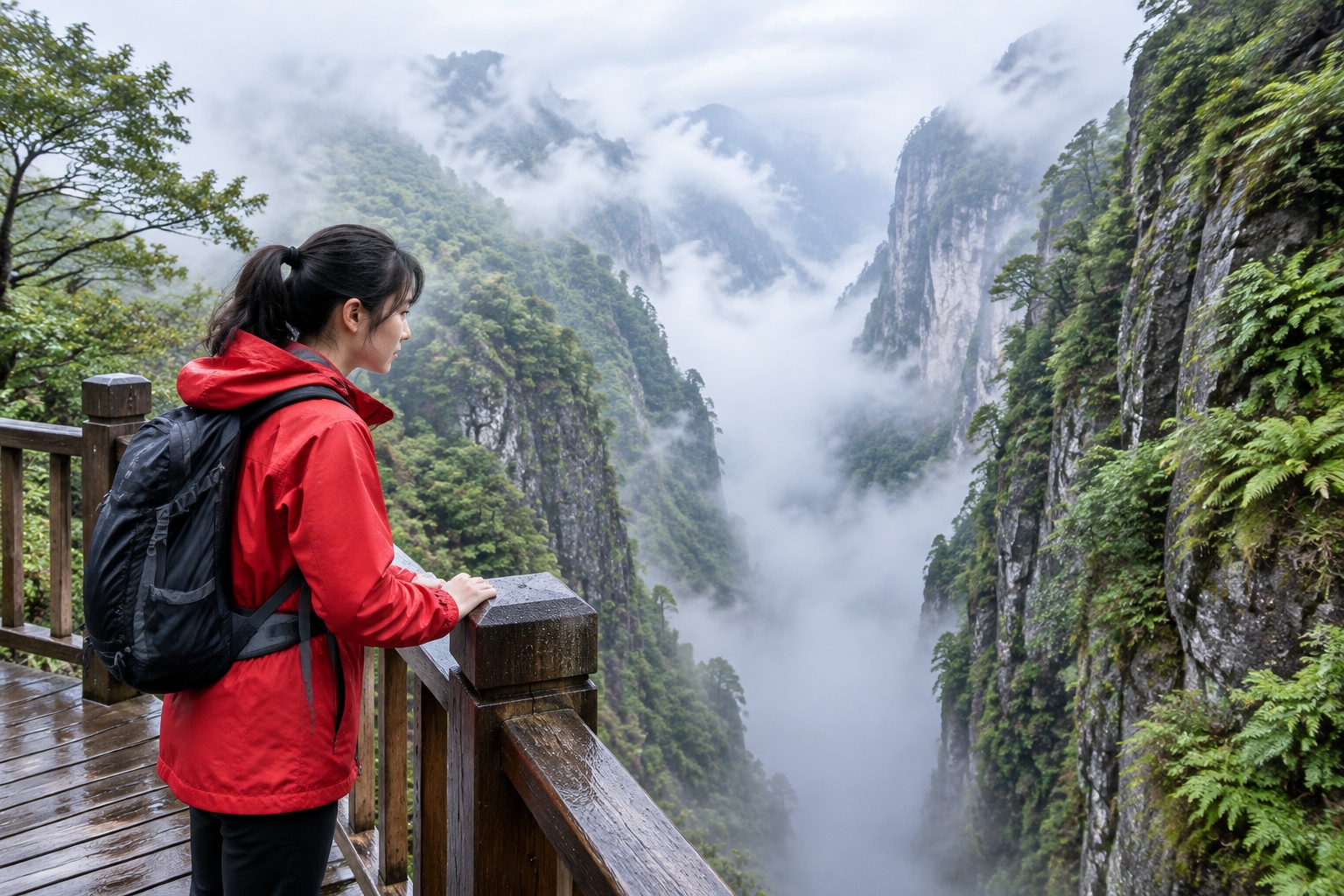
On the shuttle route between Yuanjiajie and Tianzi Mountain, a surprising number of drivers will stop at Shentang Bay if you ask. The stop is marked by a weathered sign half-hidden in ferns. From there, a 400-meter flagged path leads to a railing that hangs over a steep, funnel-shaped canyon known as Shentang Bay. The bay is a detached block of the plateau: sheer sides drop over 300 meters to an invisible floor. Often the chasm fills with dense fog, turning the space into a white hole that seems to swallow sound. The area feels alive with stories. A local legend says that when a Ming dynasty general, Xiang Dakun, was defeated in battle, he mounted his horse and leaped into the bay, and on windy nights you can still hear his war drums. Scientists might blame the roar on air currents rushing over the cliff, but standing here alone, you are free to believe both. There’s a rough bench on the left side of the lookout, and it’s a perfect place to sit quietly and watch the mist roll in and out. This spot rarely receives tour groups, so you may have the whole place to yourself.
Hidden Viewpoint 3: Dianjiangtai (The General’s Table)
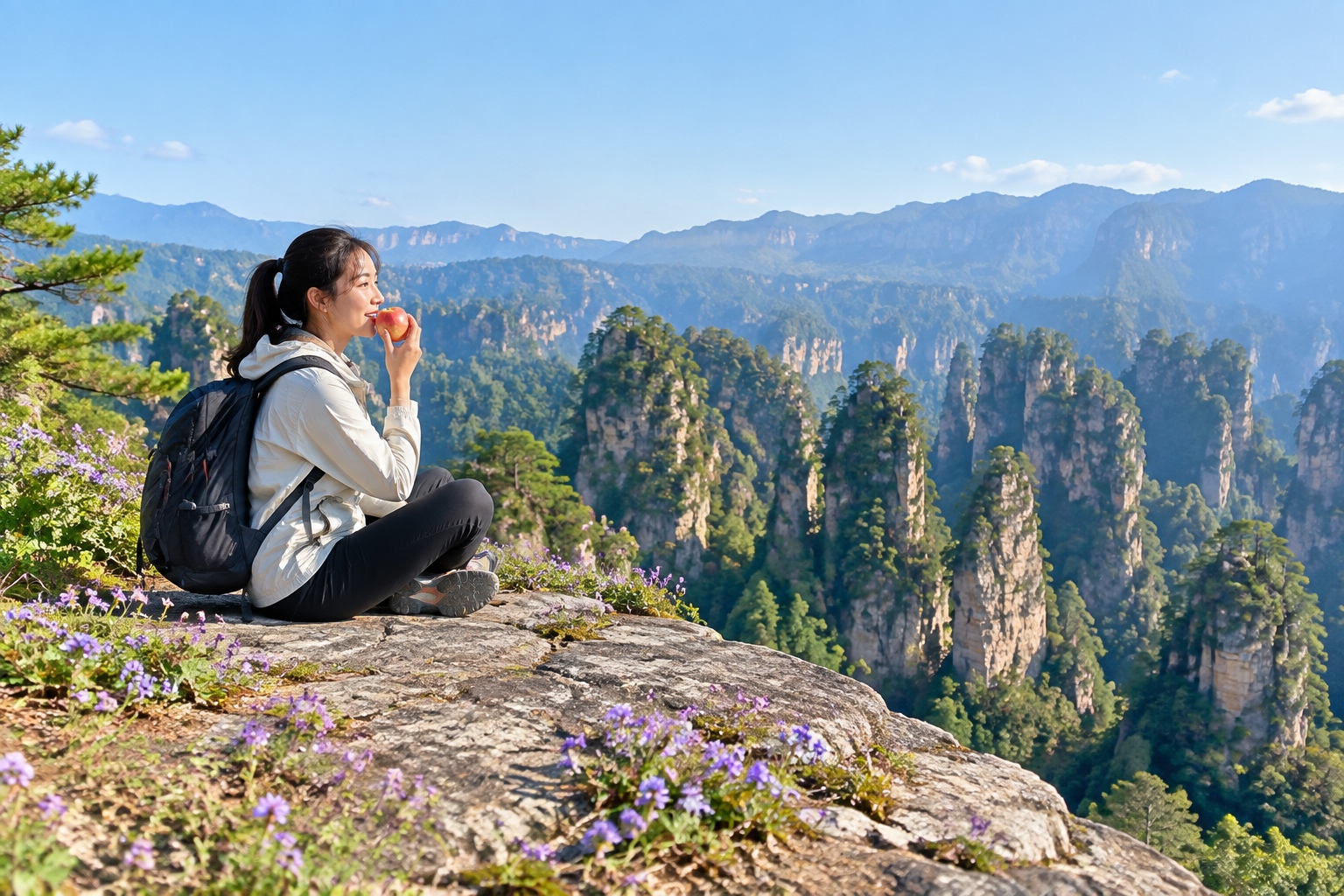
Continue along the same road for about ten more minutes and you’ll come to a bus stop labeled Dianjiangtai. A gravel path slopes down through grass and low shrubs, then opens onto a wide shelf of rock that juts over the valley. From here, you look straight at the place’s namesake: a formation of stone pillars that resemble soldiers in loose rows, as if waiting for orders. The viewpoint is often described as “the general’s table” because every general needs a place from which to review his troops. Unlike the often-packed Lost Souls Platform and the First Bridge, Dianjiangtai is wide and open. On a mid-week morning, I’ve had the entire rock shelf to myself. The light in late afternoon is especially pleasant—the low sun stretches long shadows across the fields and gives the stone columns a honey-colored glow. Bring a small picnic, take off your backpack, and lie on the warm stone for a while. Just remember to keep a safe distance from the edge, because fences are not installed along most of this viewpoint.
Hidden Viewpoint 4: One Step to Heaven (Yangjiajie)
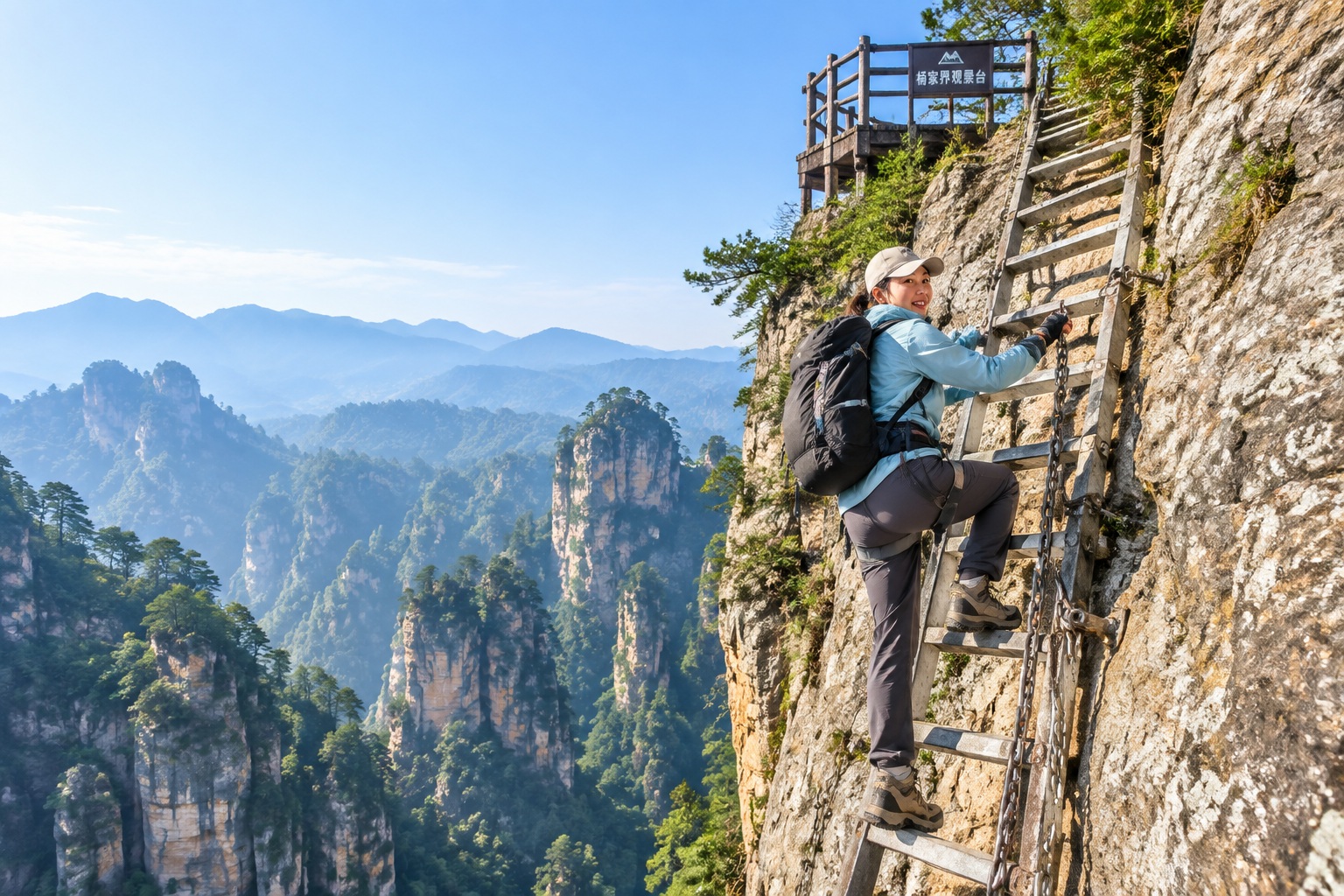
Yangjiajie is already the most remote of the park’s main scenic areas, and One Step to Heaven is its least visited viewpoint. From the Yangjiajie cable-car upper terminal, follow the path toward Wulong Village, a former bandit lair tucked into caves beneath sheer cliffs. Instead of taking the well-marked path to Tianbo Mansion, turn right toward the sign for Yibu Dengtian. The walk becomes increasingly narrow: stone staircases twist through dense forest, then you’ll need to climb a long, nearly vertical ladder of reinforced steel that rises about 30 meters (100 ft) from a ledge to a platform at the top. Steel steps, railings, and a harness-like side chain make the climb safe, but you’ll feel every meter. At the top, a flat platform barely the size of a bathroom opens to a 360-degree view of the sandstone labyrinth. You will likely be alone, especially if you arrive before 9 a.m. or after 3 p.m. The silence is broken only by the wind and, occasionally, a chough calling. Allow at least two hours for this detour, plus extra time for your legs to stop trembling afterward.
Hidden Viewpoint 5: The Back Garden (Yuanjiajie)
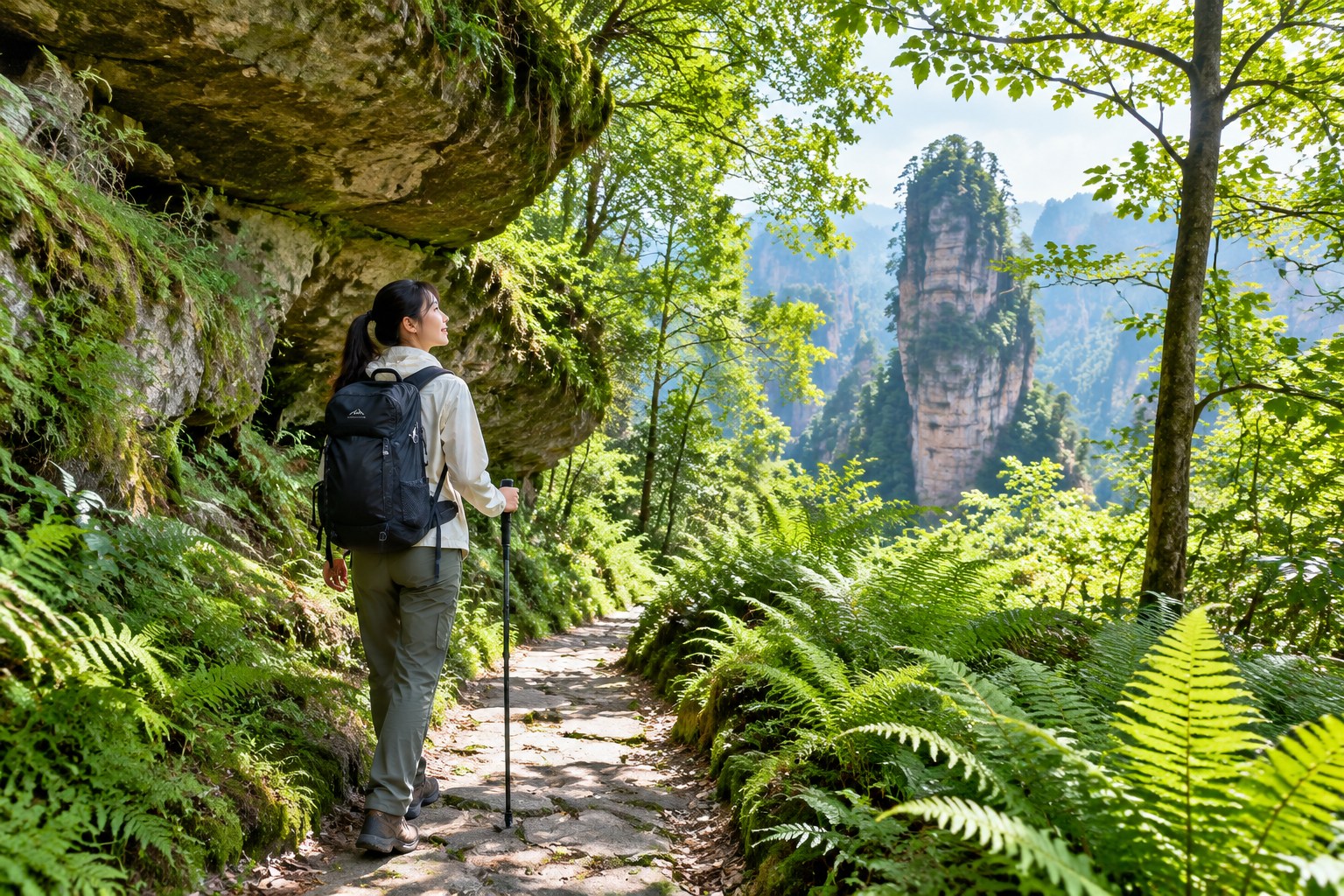
Yuanjiajie’s main attractions—the Avatar Hallelujah Mountain, the First Bridge Under the Sun, and the Misty Terrace—are so crowded that it’s easy to forget the area is also natural. But if you follow the path between Misty Terrace and the bridge, you’ll notice a small sign reading “Back Garden” that leads you down a series of stone steps. Within minutes, the shouting of hawkers and click of selfie sticks fades. The trail threads under rocky overhangs, past ferns as tall as your waist, and across narrow natural bridges that span small ravines. The “garden” is a collection of enclosed valleys that open to flashes of cliff and pillar through the dense foliage. It’s a beautiful, quiet path that feels like it belongs to the wilder older version of Zhangjiajie. The full loop takes about an hour, and you’ll see maybe a dozen other hikers at most. The best time is in the early morning, before most tourists reach Yuanjiajie, when the low sun filters through the forest canopy and mist still drips from the leaves. Some sections are uneven and damp, but overall this is an easy stroll compared to the climbs in Yangjiajie. Save it for your last day, as a relaxed finale.
Beyond the Viewpoints
What lingers after your trip is not only the postcard-peak landscapes, but the small human moments: an elderly farmer offering a slice of boiled sweet potato while you watch him tend his terraces, a shuttle bus driver who waits two extra minutes so you can finish a photograph, a friendly stray cat that follows you halfway up the trail to One Step to Heaven. Zhangjiajie’s hidden viewpoints give you space to notice these things. They don’t demand climbing skills or long wilderness expeditions; they just require extra walking time and a willingness to wander. If you have that, the park will reward you with a version of itself that most travelers never see.
Start the discussion at forum.chinacomes.com