

One barge, or a hundred trucks
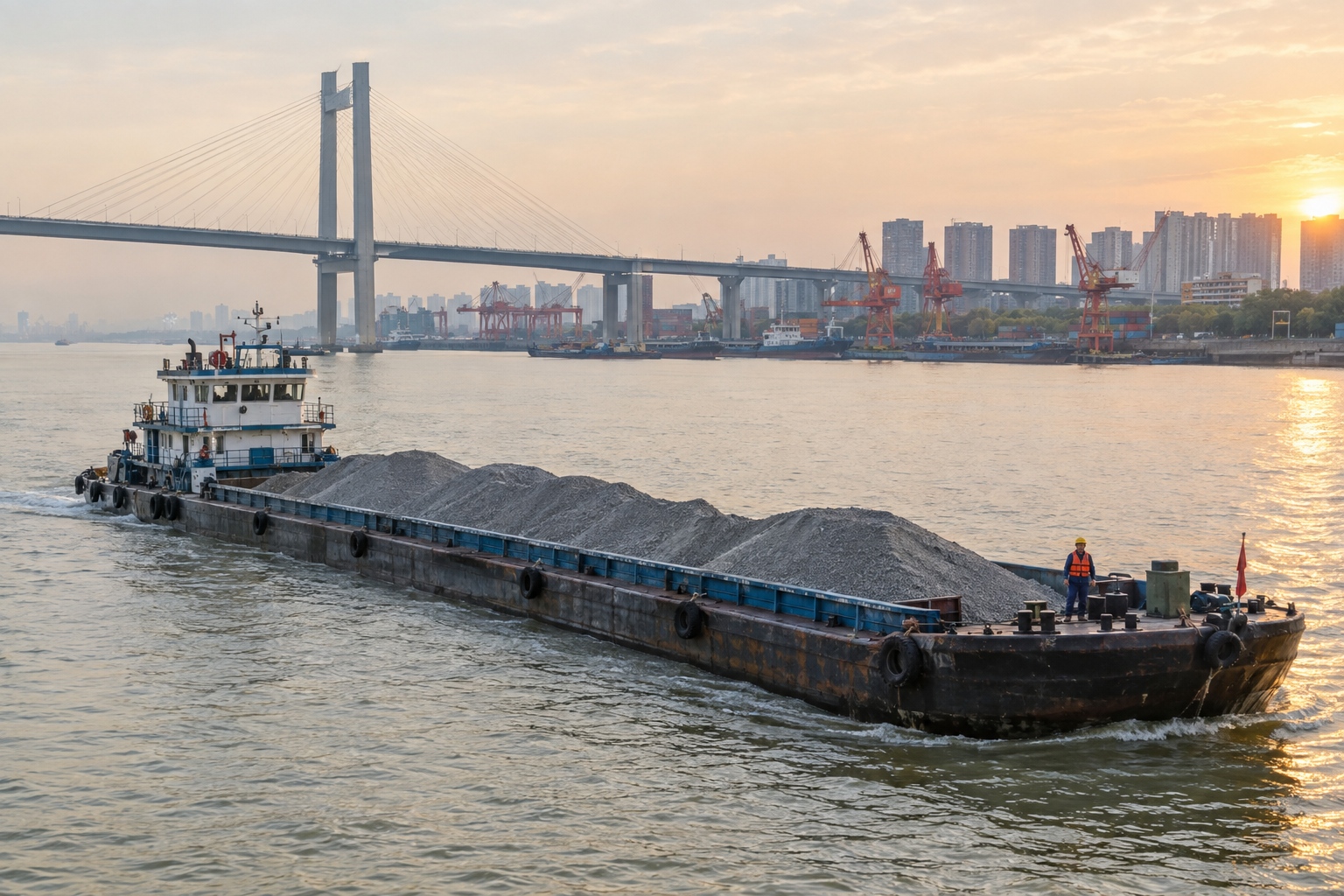
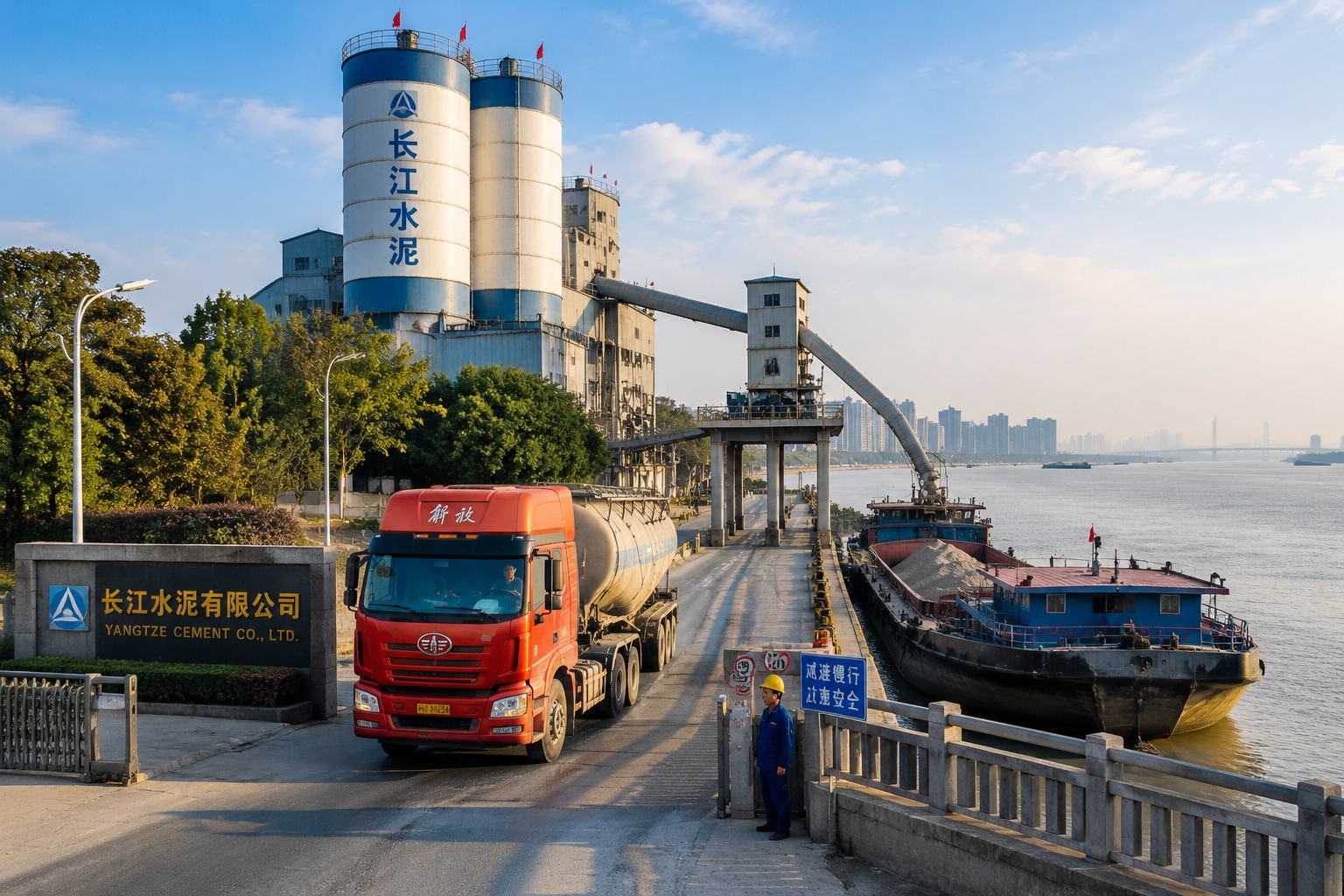
On the edge of Chongqing, a cement plant has 3,000 tonnes of clinker to send downriver to Shanghai. The cargo is not urgent. It is, however, very heavy.
Send it by road and the plant needs roughly 100 truckloads — a hundred drivers, a hundred diesel engines, a hundred vehicles queuing at the same toll stations. Send it by river and it needs one barge: a bulk carrier of about 5,000 tonnes with a crew of eight.
Same cargo. Two very different bills.
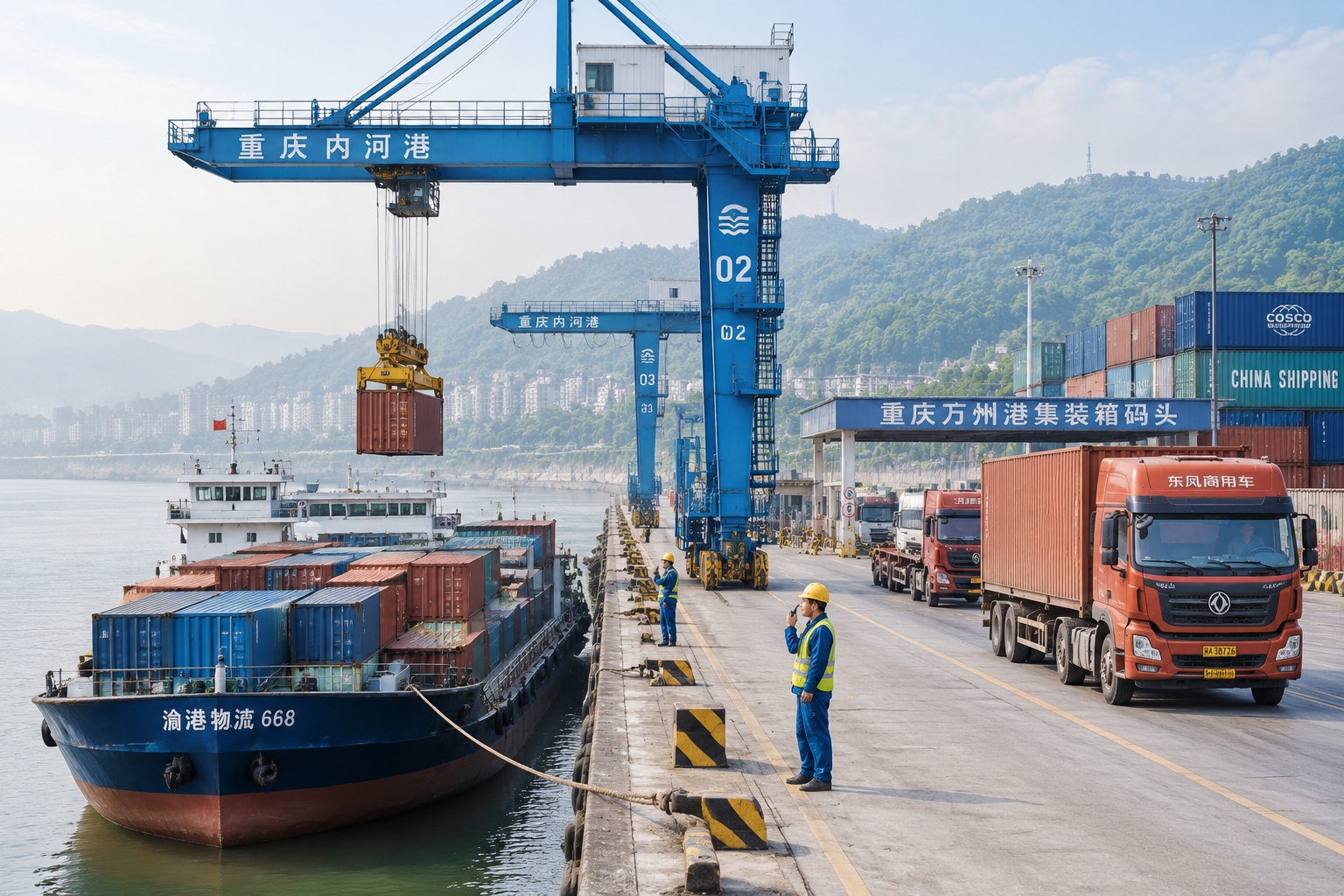
This is not a Chinese secret. Water has always been the cheapest way to move heavy things, which is why Rotterdam, New Orleans and Hamburg exist. What is unusual is how much of China’s economy has been arranged around that single fact.
The physics, in plain terms
A truck carries its own weight on rubber tyres rolling over asphalt. Every extra tonne of cargo adds friction, and the engine fights it for the entire journey. A barge floats. The water holds the weight, and the engine mostly just pushes against drag.
There is a second difference, and it matters more: scale. Make a truck bigger and you run into bridges, lane widths and weight limits. In China a six-axle truck is legally capped at 49 tonnes gross, and enforcement tightened sharply after 2016, which pushed a lot of bulk freight off the highways. Make a ship bigger and almost nothing happens — the crew stays roughly the same size and the engine grows far more slowly than the cargo. A 10,000-tonne vessel burns a fraction of the fuel that 300 trucks would need for the same load.
The cost per tonne-kilometre
Transport planners everywhere use the same yardstick: what does it cost to move one tonne of cargo one kilometre? In China the rough rules of thumb look like this.
- Long-haul road freight: about 0.4–0.6 yuan per tonne-kilometre.
- Rail: roughly 0.15–0.2 yuan.
- Inland waterway: about 0.03–0.05 yuan.
Treat those as ballpark figures. They move with fuel prices, the route, the season, whether the ship has a paying cargo on the way back, and how much of the trip is actually spent on water. But the order of magnitude is stable, and it is unforgiving: for bulk cargo, river shipping often costs one-fifth to one-tenth of road.
Energy follows the same curve. Chinese transport officials routinely cite water transport as using roughly one-fifth to one-seventh of the energy per tonne-kilometre compared with trucks — a number that shows up in European and American comparisons too, in roughly the same range.
Now put it on a real route. Move one tonne of bulk cargo from Chongqing to Shanghai. The highway distance is about 1,700 kilometres, and a truck might charge 700–1,000 yuan. The river route is longer — around 2,400 kilometres — but at typical bulk rates the water bill lands near 100 yuan. A factor of seven or eight, for the same tonne, over the same journey.
The catch is time. A truck does Chongqing to Shanghai in two or three days. A barge takes about a week going downstream, and closer to two weeks coming back up against the current.
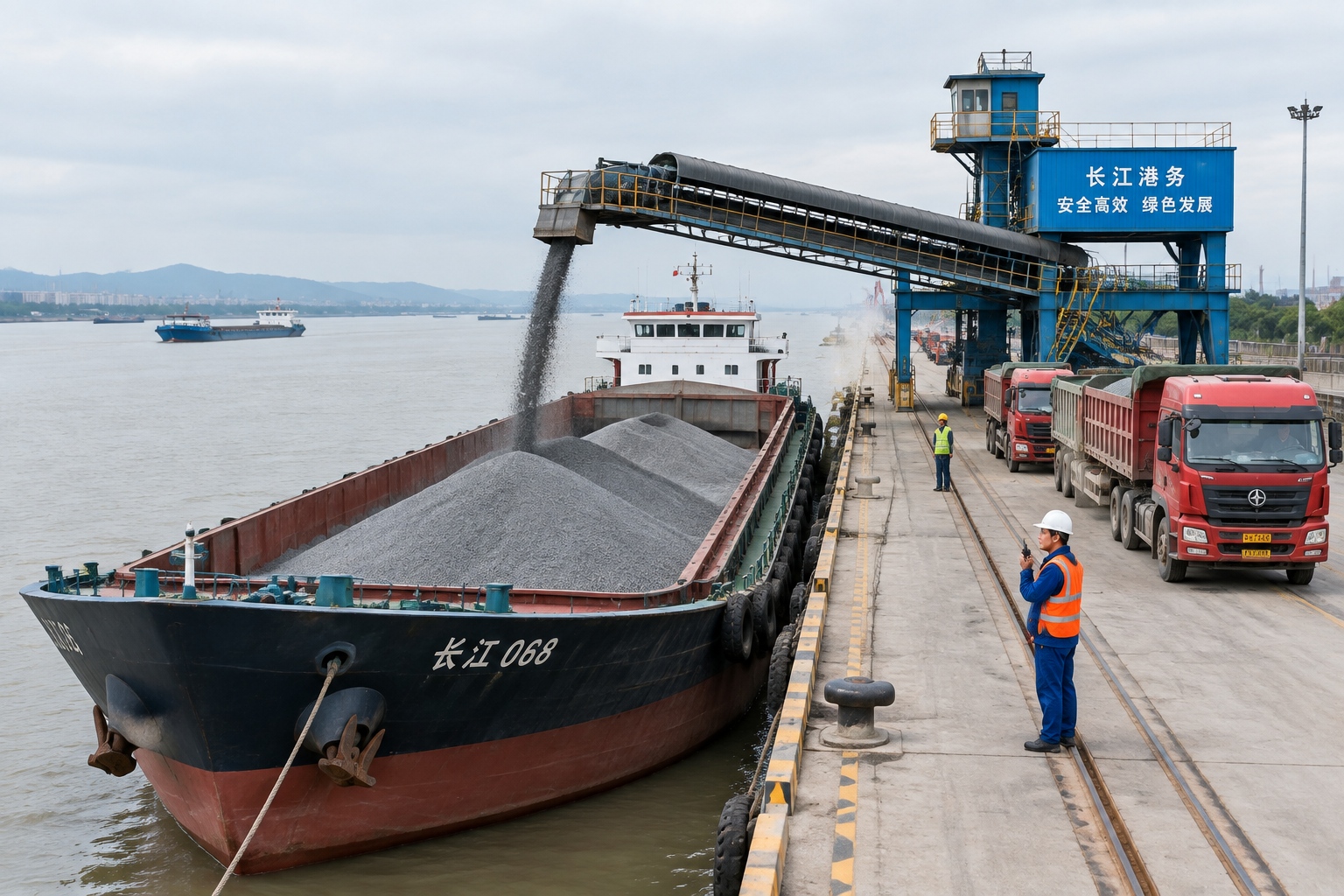
The comparison holds outside China as well. On the US inland waterway system, grain moves by barge for a fraction of what rail charges and a small slice of truck rates. On the Rhine, the same logic keeps German and Dutch heavy industry competitive. China’s version is simply larger and more concentrated: one river, one direction, an enormous hinterland behind it.
Containers change the picture slightly. The Yangtze now carries millions of containers a year, with liner services running Chongqing to Shanghai in around five days. River container rates are still cheaper than road, but the gap narrows, because boxes cost money to lift twice at each end and the savings are in the line-haul, not the handling.
Why the Yangtze is in a league of its own
The Yangtze runs 6,300 kilometres from the Tibetan Plateau to the East China Sea. About 2,800 kilometres of it, from Yibin in Sichuan down to the sea, is navigable trunk line. It flows west to east, which happens to be the direction most of China’s cargo needs to go: from inland factories toward the coast, and then out into the world.
More than 3 billion tonnes of cargo moves along the main channel each year, a figure commonly described as exceeding the Mississippi, Rhine and Danube combined. Shanghai port alone handled roughly 49 million containers in 2023 — the most of any port on earth — and much of what fills those boxes arrives from upstream.
None of that is pure geography. A great deal of engineering went into making the river behave.
Dredging, dams and deep water
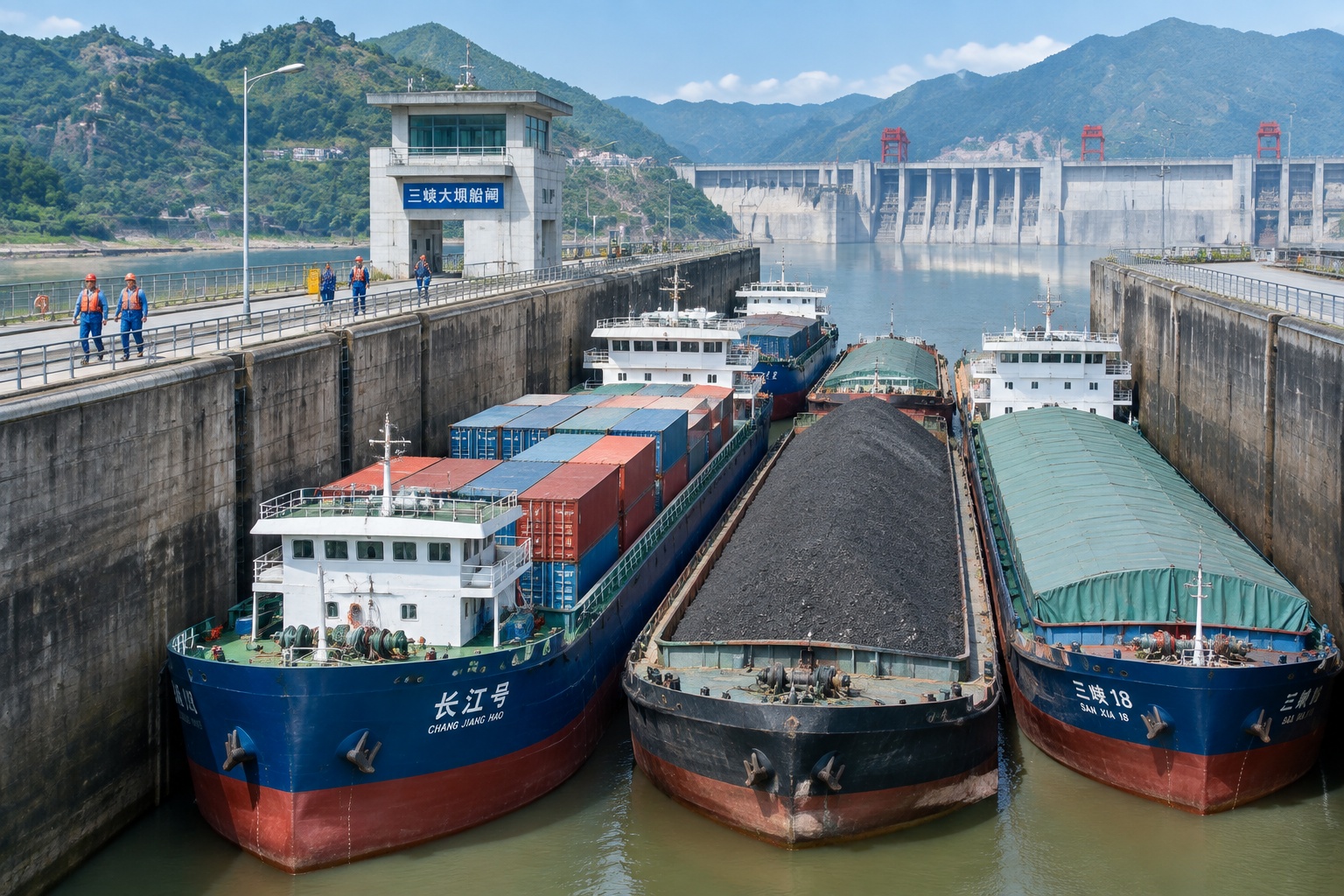
For most of the twentieth century, the lower Yangtze was too shallow for large ships. In 2010 a 12.5-metre deepwater channel opened from Nanjing to the sea. Later work extended a six-metre channel upstream to Wuhan, enough for 10,000-tonne vessels to reach the city year-round. Further up, the Three Gorges Dam, completed in 2006, turned a stretch of rapids into deep, calm water, and its five-step ship lock — plus the huge vertical ship lift that opened in 2016 — lets vessels climb into the Sichuan basin.
Cheap freight changed what the riverside cities do for a living. Wuhan makes steel. Chongqing builds cars. Hefei assembles appliances. Coal, iron ore, sand, cement, soda ash and grain — the heavy, low-value cargo that cannot justify air freight or a truck — moves by water because nothing else makes economic sense at that volume.
Where the cheapness stops
River shipping has real limits, and anyone who lives along the Yangtze can list them.
It is slow. It is seasonal: in the dry winter months low water forces ships to load lighter, and in flood season safety rules slow everything down. It depends on locks that are permanently oversubscribed. The Three Gorges lock has been running above its designed capacity for years, with waits that can stretch into days — long enough that some shippers route cargo by rail or road instead. A second route, the long-planned Three Gorges Water Transport New Channel, is meant to relieve that bottleneck, but it is expensive, slow work.
And the river never delivers to a doorstep. Cargo still needs trucks or trains at both ends. That last mile is why factories cluster on the waterfront, and why a plant 200 kilometres inland may never touch the river at all. Rail sits in the middle: faster than a barge, cheaper than a truck, less dependent on water levels. For container traffic heading to Europe, the China–Europe rail route out of Chongqing has been a serious competitor since 2011.
What it means at the kitchen table
It is tempting to file all this under industrial logistics and move on. But cheap inland freight is one of the quiet reasons a household in Chengdu, 2,000 kilometres from the sea, can buy a refrigerator, a car or a bag of fertiliser at prices not wildly different from coastal cities.
Move 3,000 tonnes of clinker on 100 trucks instead of one barge and somebody pays for the difference: the drivers, the diesel, the tolls, the wear on the road. Those costs do not disappear. They show up in the price of a bag of cement, and eventually in what it costs to build an apartment block.
There is also a newer line item. Inland vessels are being converted to run on LNG, and short-haul electric barges are appearing on some routes. The cheapest mode of freight is under pressure to become the cleaner one, and that will cost money too.
The bottom line
River shipping is not magic and it is not free. It is slow, weather-dependent, lock-limited, and it only works if you happen to be near the water. But for heavy cargo the gap with road is enormous: often five to ten times cheaper per tonne-kilometre, on a fraction of the fuel.
Which is why, when a cement plant near Chongqing has 3,000 tonnes to move and a month to spare, nobody calls 100 truck drivers. They call one barge captain.
Start the discussion at forum.chinacomes.com