
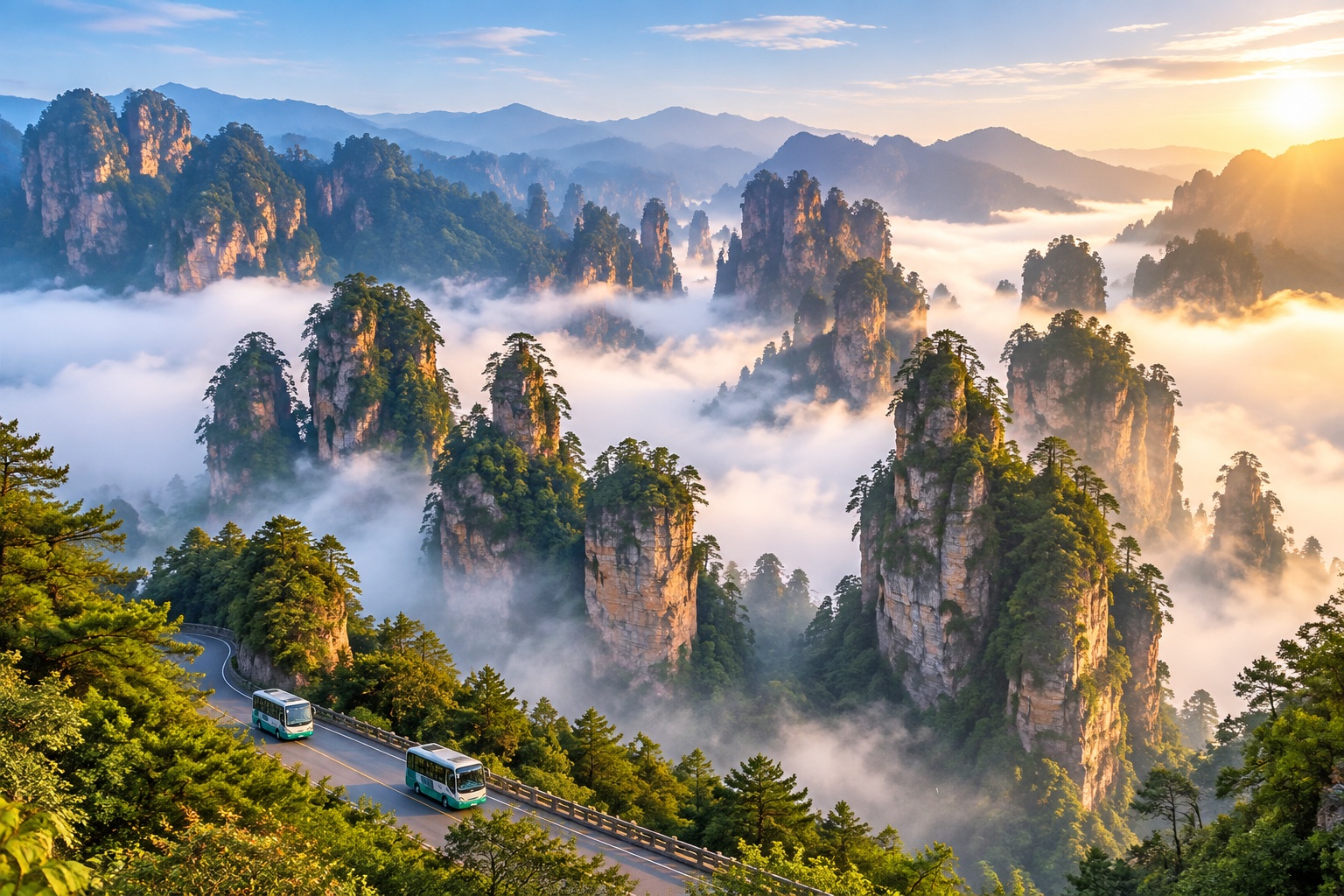

Morning in the Valley
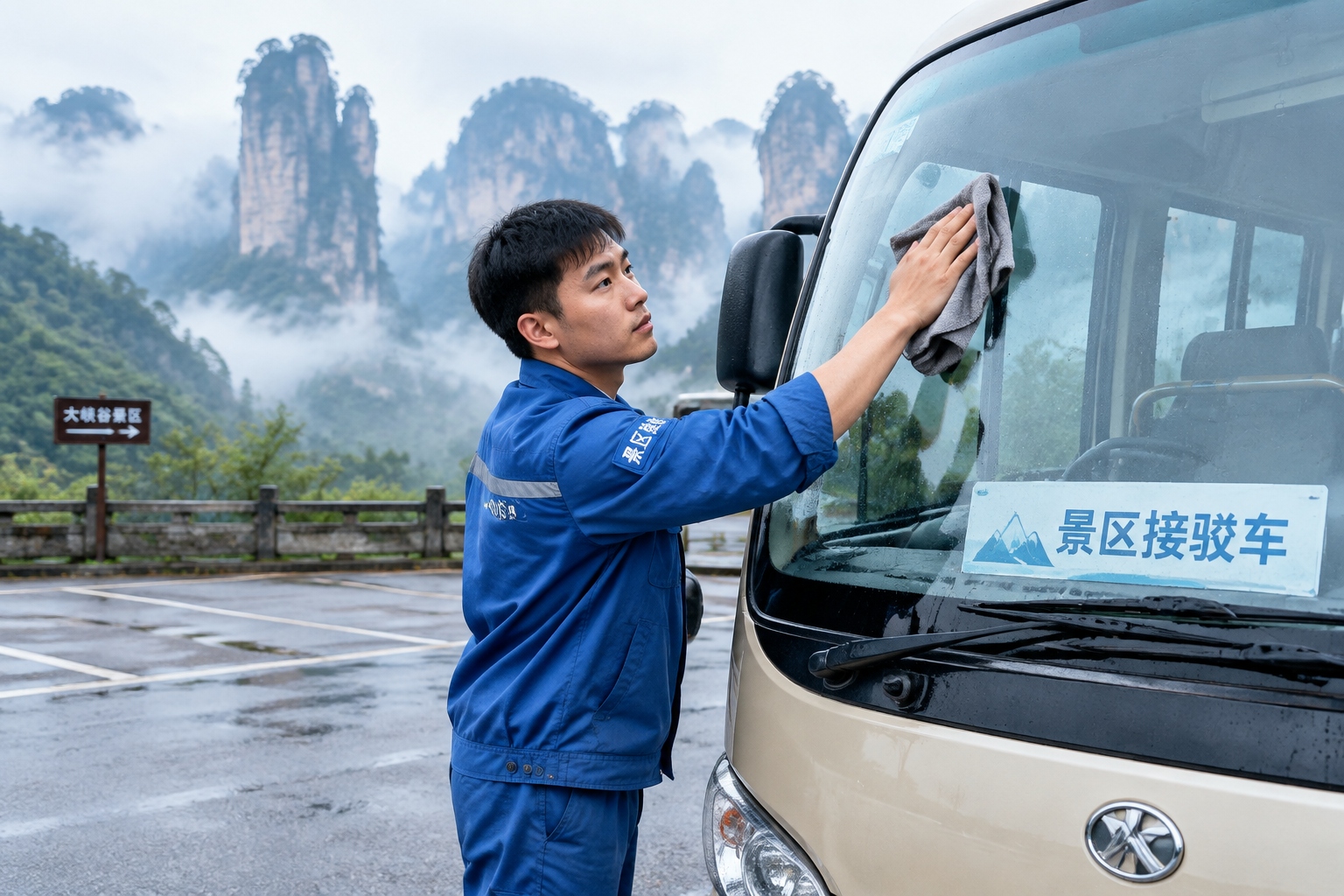
At 6 a.m., the valley is still wrapped in cloud. In the parking lot of Zhangjiajie National Forest Park, a young shuttle bus driver named Chen Wei, 26, wipes dew off the windshield. ‘These mountains were my childhood playground,’ he says, pointing to the silent sandstone pillars that rise like giant green fingers behind him. ‘Back then we never imagined they’d become a must-see for the world.’
He climbs into his bus as the first group of tourists boards, each holding a phone to capture the view. Chen smiles: ‘My grandfather called these peaks the dragons’ home. Today, most visitors just call them the “Avatar Mountains”.’
What Exactly Are the ‘Avatar Mountains’?
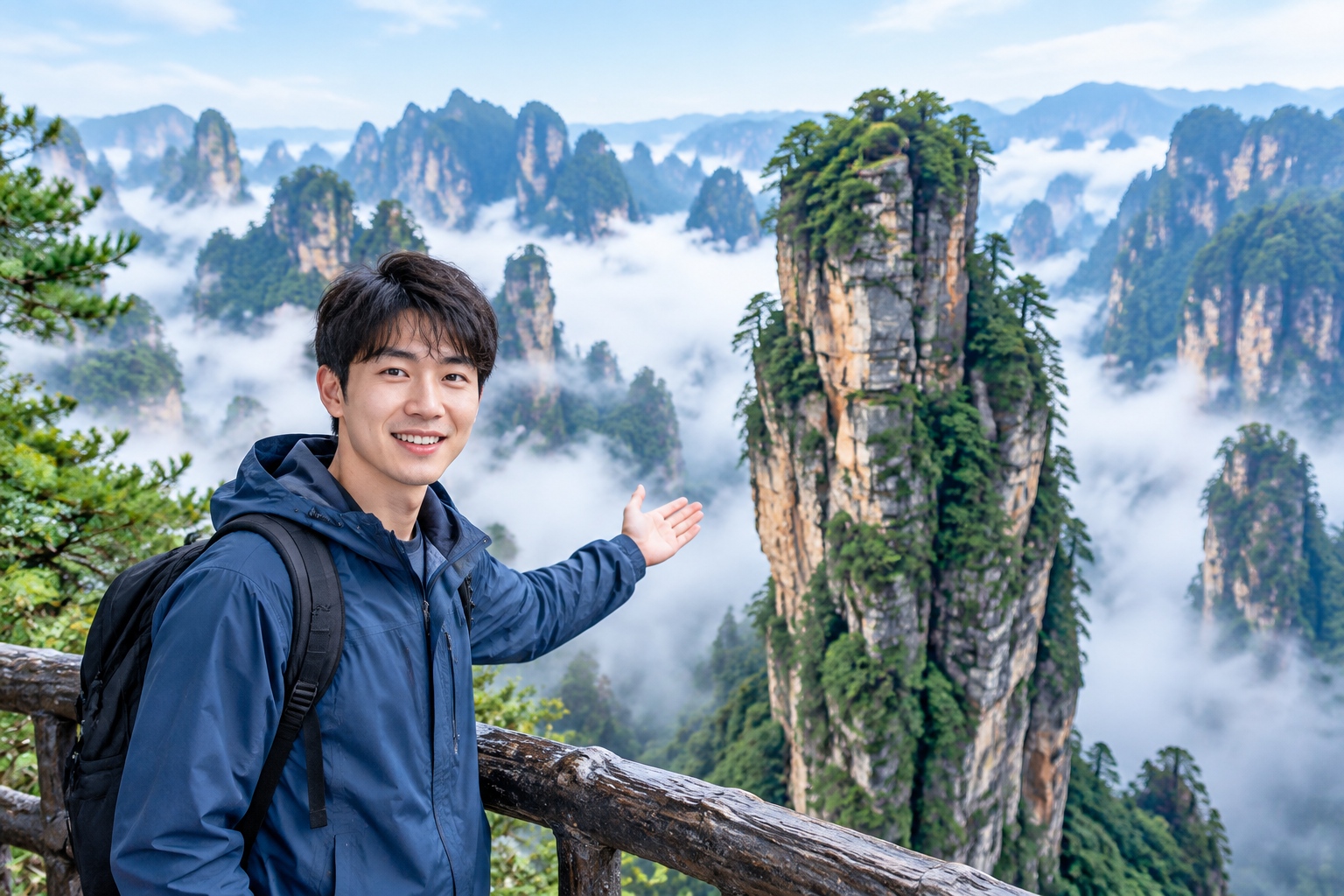
The name is both a gift and a simplification. Zhangjiajie National Forest Park, set up in 1982 as China’s first national forest park, covers a landscape of more than 3,000 quartzite sandstone pillars. Some stand over 200 meters tall—fragments of a plateau carved by rain, wind and running water over millions of years. UNESCO added it to the World Natural Heritage list in 1992.
James Cameron has said the floating peaks in his 2009 film Avatar were inspired by images of the karst-like towers seen here. In 2010, the park even renamed one of the tallest columns, the Pillar of Heaven, as the ‘Avatar Hallelujah Mountain’ for marketing. It worked: today the phrase ‘Avatar Mountain’ appears on coffee shop menus, hotel signboards, even plastic rain ponchos, and the real name is often forgotten.
How the Boom Reached This Mountain Town
For decades, this remote corner of Hunan Province lived quietly on the edges of China’s economy. Then the airport opened in the 1990s, and in 2018, the Zhangjiajie–Changsha high-speed rail line put the park within two hours of the provincial capital. Now a trip that once took a day is a morning commute. At the same time, short-video apps like Douyin and its international version TikTok have turned every drone shot of the peaks into shareable gold.
Last year the scenic area received more than 7 million visits. At peak moments, the parking lots contain more buses than trees. The tourist facilities around the gates now include bubble tea stalls, rainbow-colored 3D art museums and a 990-meter glass bridge that attracts nearly as much attention as the mountain itself.

The Young People Riding the Wave
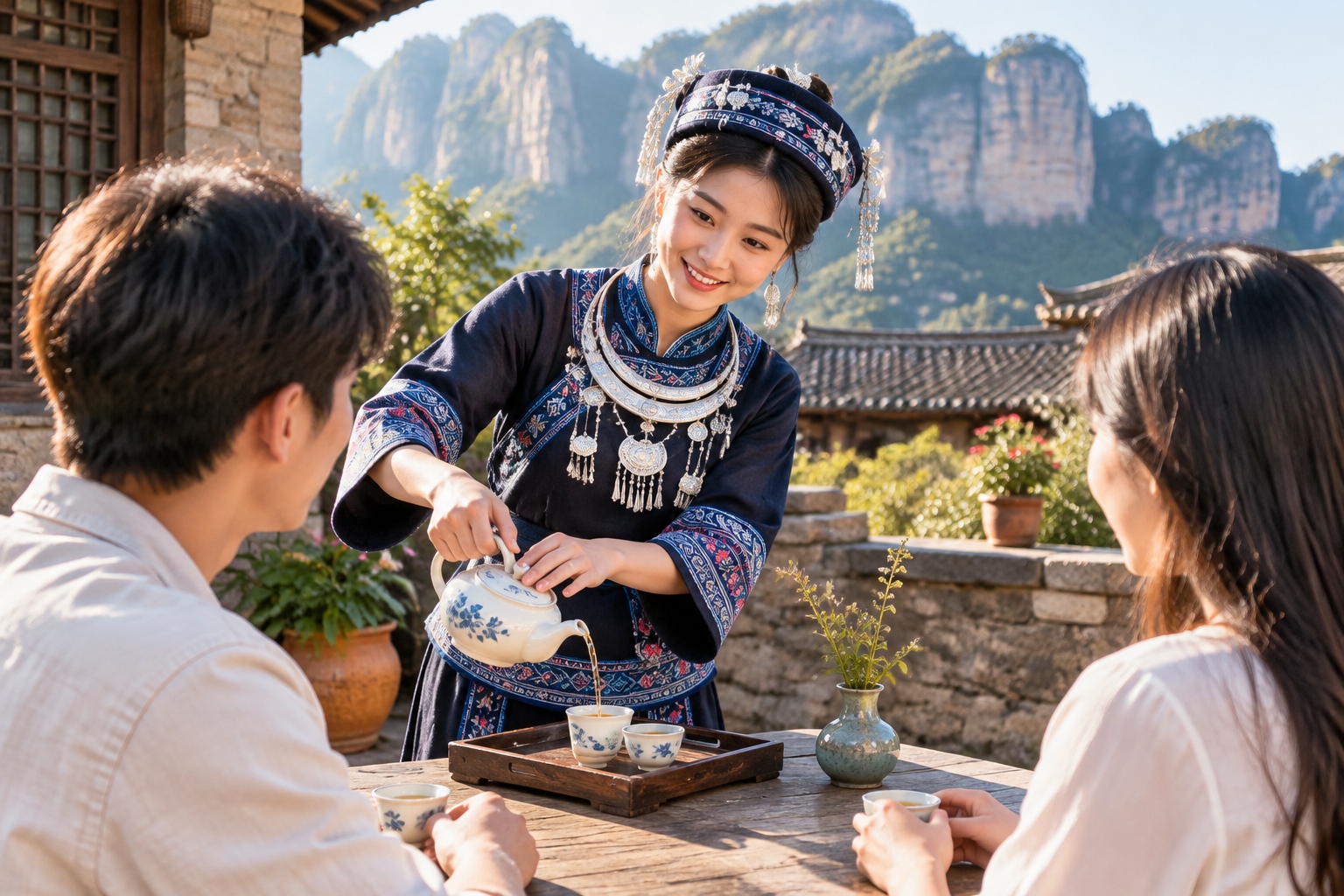
In the middle of this transformation, a generation of local youth is making a deliberate choice: to stay, or to return. A Yue, 24, from the Tujia ethnic group, spent one year in an office in Guangzhou before feeling that she was a small screw in a machine. ‘I grew up seeing tourists take photos of our traditional clothes, but I never really thought about my own culture until I left,’ she says.
Now she runs a teahouse in a stone-covered alley below the mountains. During the day she serves guests until noon, then switches to her mini studio to dress clients in silver-decorated Tujia clothing. Her phone’s memory is filled with photographs taken in front of the same peaks her ancestors knew. ‘I want people, and also ourselves, to remember the real story behind the scenery.’
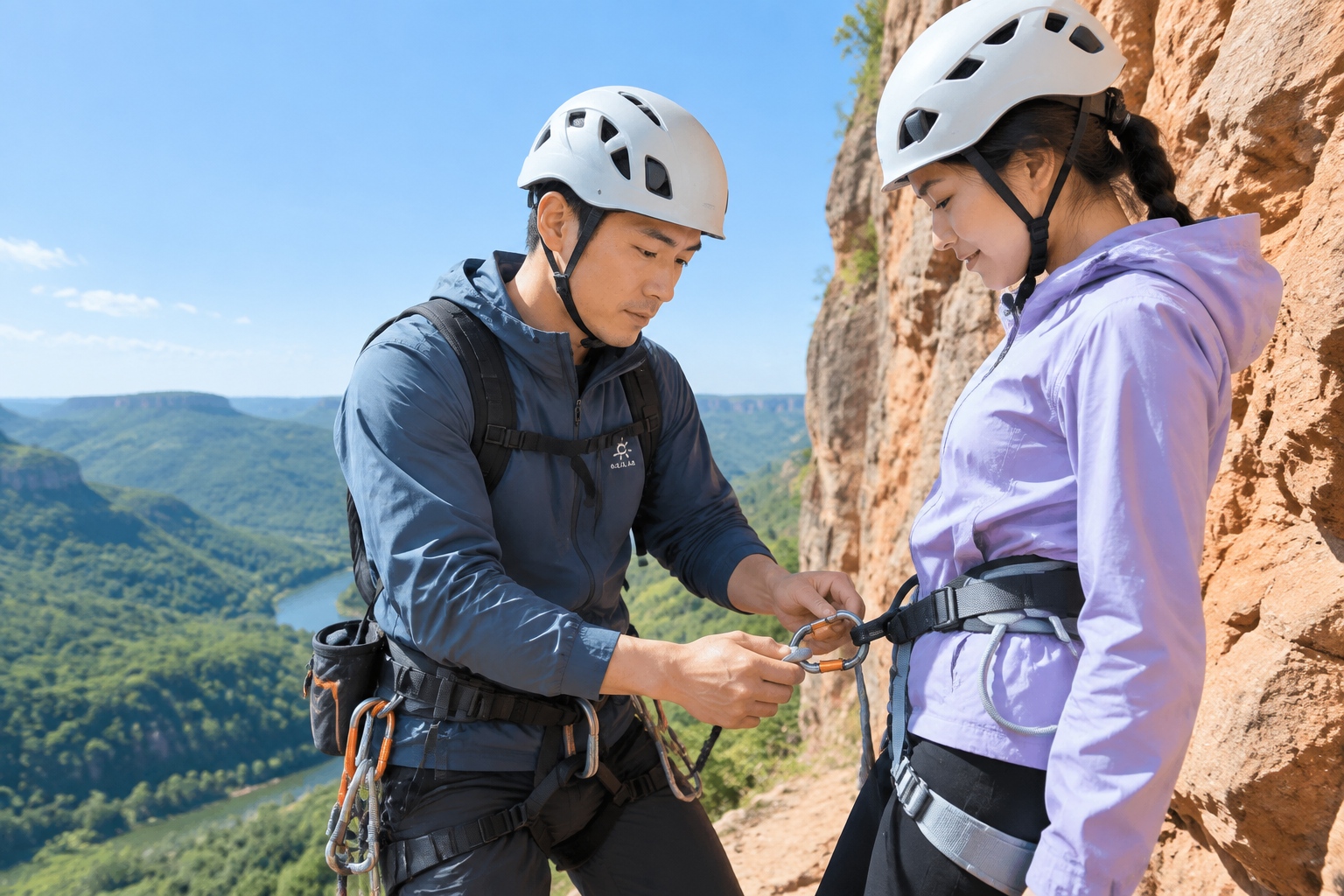
Nearby, Xiao Lin, 28, traded a city-planning job in Shanghai for a life of ropes and carabiners. He worked as a climbing guide in a section of the forest where the crowds thinned out and the cliffs got steeper. ‘When I was a kid I used to run up these hills to take a shortcut to school. Now I can show young tourists how to trust their hands and feet on the same rock,’ he says while adjusting a harness. For him, the tourism boom is not only a business opportunity but a way to remain close to a landscape he loves.
Real Pressure Behind the Postcards
Growth also brings friction. On National Day, the park sometimes hits its daily visitor cap before lunch; visitors complain of long queues for cable cars and packed boardwalks. Occasionally, an empty plastic bottle is thrown into a bush. ‘I love welcoming people to my home, but I also worry about the pressure,’ says Chen Wei, the bus driver, while chewing a mouthful of rice from his lunchbox. ‘When I find rubbish on a trail, I feel as if someone has spat on the corner of my house.’
Some young residents have taken a precautionary attitude. They know that the ancient rocks cannot be left scarred for a few extra receipts. And they have started asking themselves what kind of tourism development they want to shape.
Between Fame and Home
The park authority has implemented strict measures to prevent the landscape from being overwhelmed: online reservation caps, daily limits of visitors, an enlarged public transport system, and patrol staff to stop illegal climbing and unauthorized drones. Waste separation bins now stand at most viewpoints, and each month volunteers carry out trash-collecting trips on the less-frequented slopes.
These volunteers are often the same young people who grew up in the area. ‘We’ve formed a group called “No Trace of Us”. We just want our children to be able to climb these hills as we did,’ says Xiao Lin. His phone screen saver is a photograph of the same stone pillars covered in snow, from a January morning.
Practical Tips for Your Visit
If you’re planning your own trip, spring and autumn are the best seasons, with fewer crowds and clearer views. Tickets must be bought online in advance during holidays. Stay at least two nights—the park is huge. And please take your garbage with you. The local youth you’ll meet on the shuttle bus or in the tea house will be glad to say xiexie.
Beyond the Movie Screen
Zhangjiajie’s story isn’t just about cinematic inspiration. It is a close-up of contemporary China: a young generation threading its hometown heritage through a global tourism world. Look past the most photographed spot, and you’ll discover bus drivers who used to chase monkeys here, tea shop owners who returned from megacities, and rock climbers who play in the shadows of their own backyards. The true wonder of these mountains lies not only in how high they rise, but in the way the people below are learning to live with them.
Start the discussion at forum.chinacomes.com