

Two towers that look like writing brushes
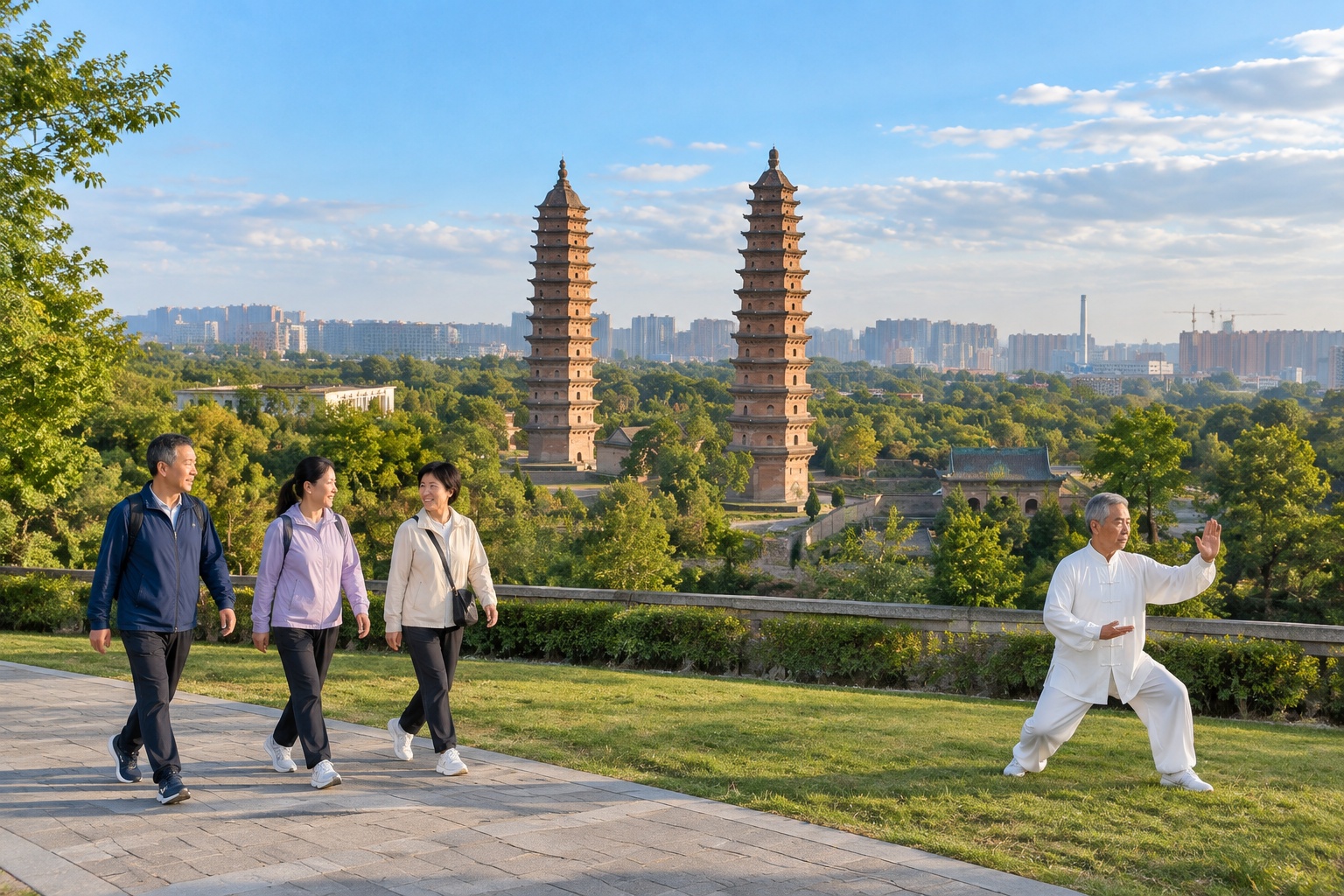
Stand on the low ridge in southeast Taiyuan on a clear morning and the first thing you notice is proportion. Two brick towers, dark red and very thin for their height, rise out of the trees. From the walkway below, they look like a pair of upright Chinese writing brushes — the kind with a wooden handle and a tuft of hair at the tip.
That is exactly what locals see. They call them wenbi shuangta: the Twin Brushes. Schoolchildren here grow up with the nickname. It shows up on tea tins, on posters at the railway station, on the city’s own promotional graphics.
Which raises an obvious question for a visitor: why would a city’s most loved landmark be named after stationery?
The short version: what and where
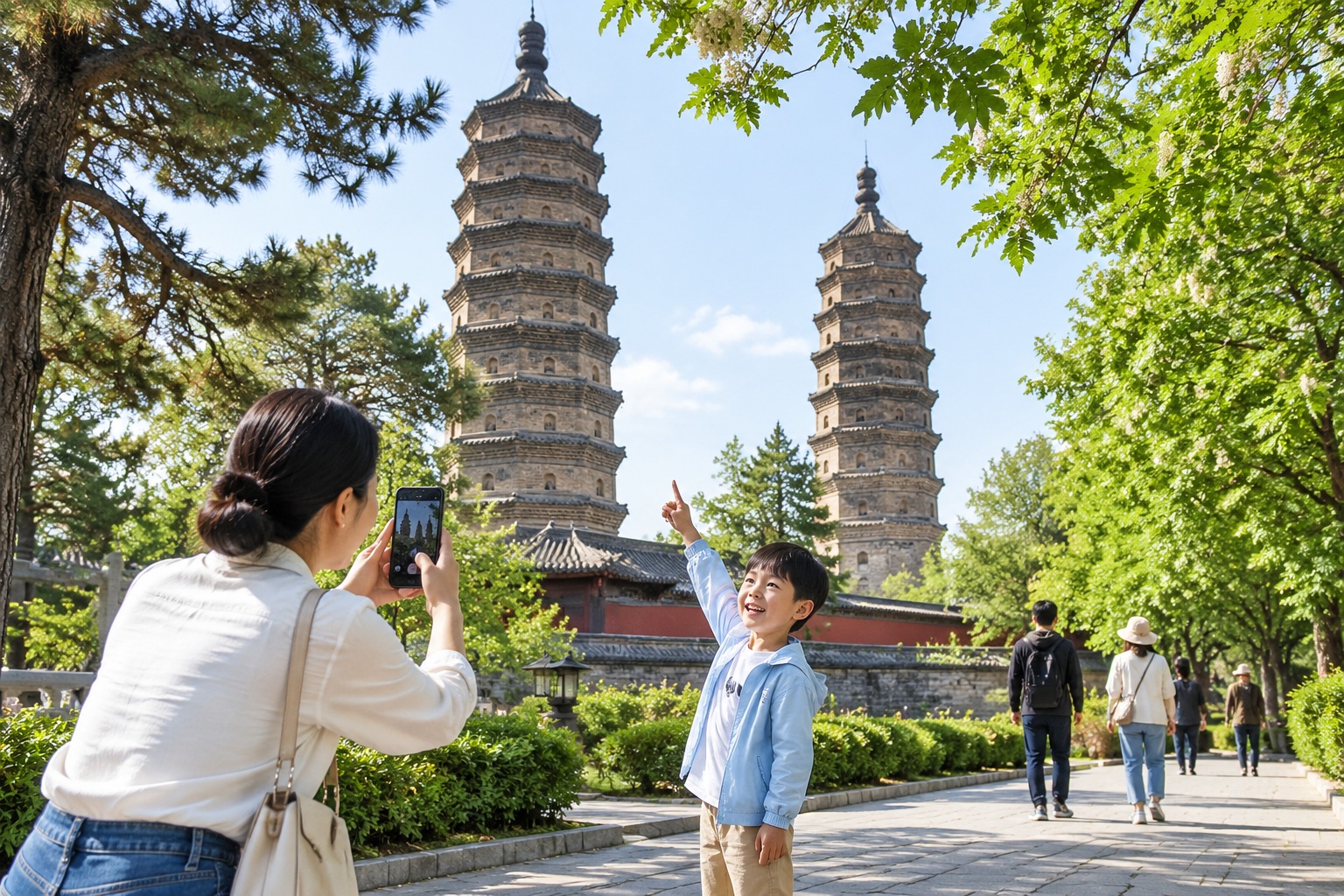
Yongzuo Temple — yongzuo si, Temple of Lasting Blessing — sits about three kilometres southeast of central Taiyuan, in Yingze District. Almost nobody outside Shanxi uses that name. Everyone calls it Shuangta Si: Twin Pagoda Temple.
Taiyuan is the capital of Shanxi province, a city of roughly 5.3 million people, known for coal, steel and vinegar, and usually skipped by foreign travellers heading to Pingyao or the Yungang Grottoes. That is part of the appeal. You can spend an afternoon here without meeting another non-Chinese face.
Both pagodas are Ming dynasty brickwork. The first went up in 1599, late in the reign of the Wanli Emperor; the second followed in 1608. Each is octagonal, thirteen storeys tall, about 54 metres from base to top. When they were built, nothing in the city came close.
Why a pagoda was supposed to help you pass exams
For about 1,300 years, until 1905, China selected its officials through the imperial examination, the keju. A young man memorised the classics for decades; only a small number passed. A county that produced a top-level graduate gained prestige, tax advantages and useful connections.
So cities competed. And one popular way to compete was feng shui engineering. If a town’s literary luck felt thin, you built something tall in the right place to encourage it. Such towers usually carried a name like wenfeng ta or wenbi ta — literary peak, literary brush. Think of a civic clock tower, a cathedral spire and a lucky charm in one object: part piety, part municipal marketing.
Taiyuan’s first tower belongs to that tradition. Local accounts credit a retired official named Fu Lin, grandfather of the famous scholar and physician Fu Shan, with building it in 1599 to shore up the city’s exam record. Nine years later a second tower was added with backing from the princely household of Jin, and a Buddhist temple grew up around the pair.
One tower born of exam anxiety, the other of religious patronage. They have stood side by side ever since, about 60 metres apart.
Not quite identical twins
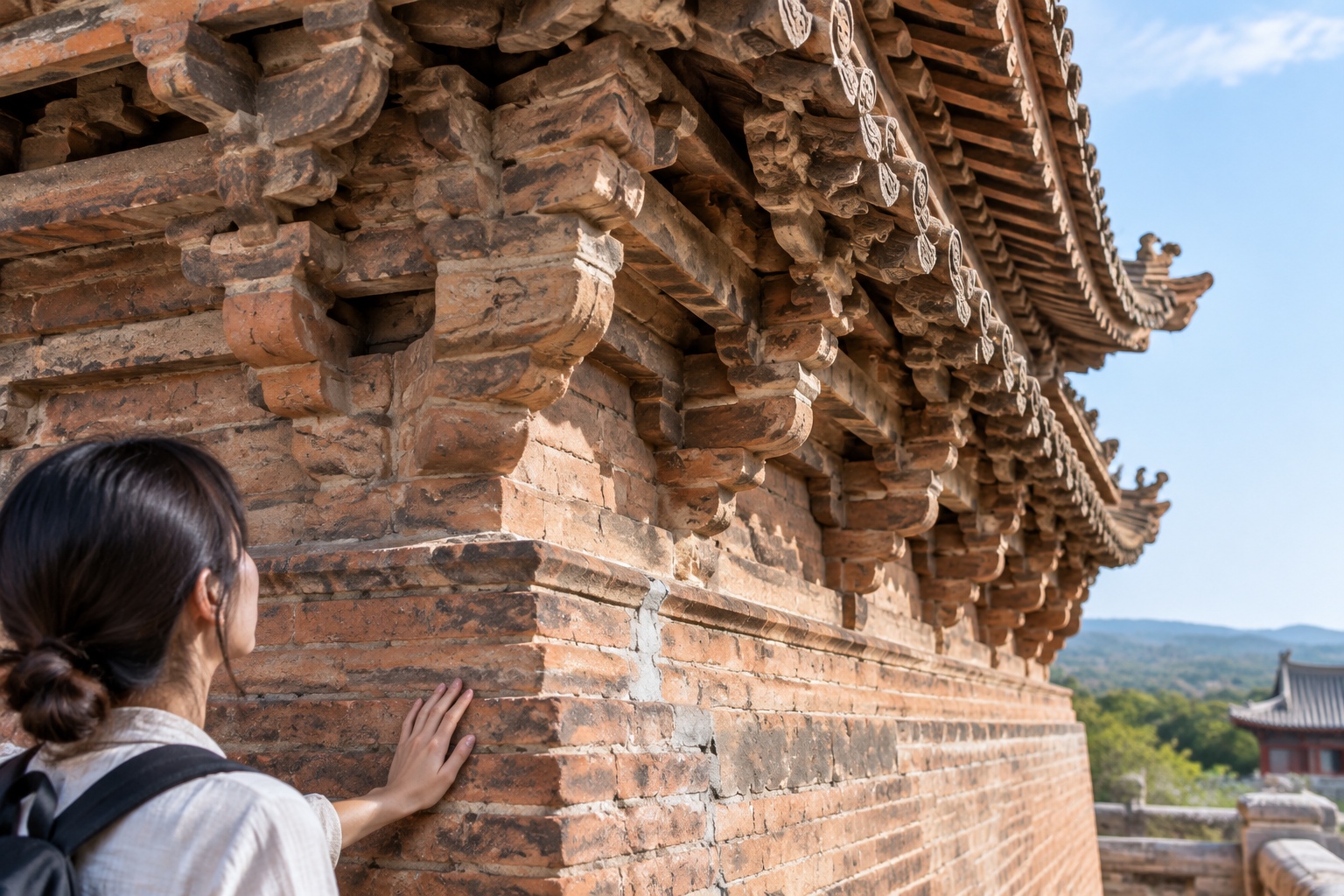
Look carefully and the two towers disagree with each other. One is a little thicker, its brick eaves slightly tighter, its top finished with a metal finial. The other is plainer and marginally shorter, though both are so close to 54 metres that the difference is easy to miss.
They are brick imitations of wooden architecture, which is the quiet technical achievement here. The brackets, the eaves, the carved decoration — all fired clay, shaped and stacked to look like timber. Inside, one tower is usually open to climb for a small extra fee. The staircase is narrow and dark, the steps worn smooth in the middle, the windows small squares that hand you the city in slices. At the top, wind.
Peonies, brick halls and a slow afternoon
Most visitors come for the towers and then stay longer than planned. The grounds are small enough to walk in an hour and pleasant enough to sit in for three.
The main hall is a wuliang dian, a beamless hall built entirely from brick vaults, with carved brick ceilings imitating wooden coffers. Along the surrounding corridors, stone tablets are set into the walls, including a Ming-era anthology of famous calligraphy carved in stone. People who care about brushwork come here and trace characters in the air with a finger.
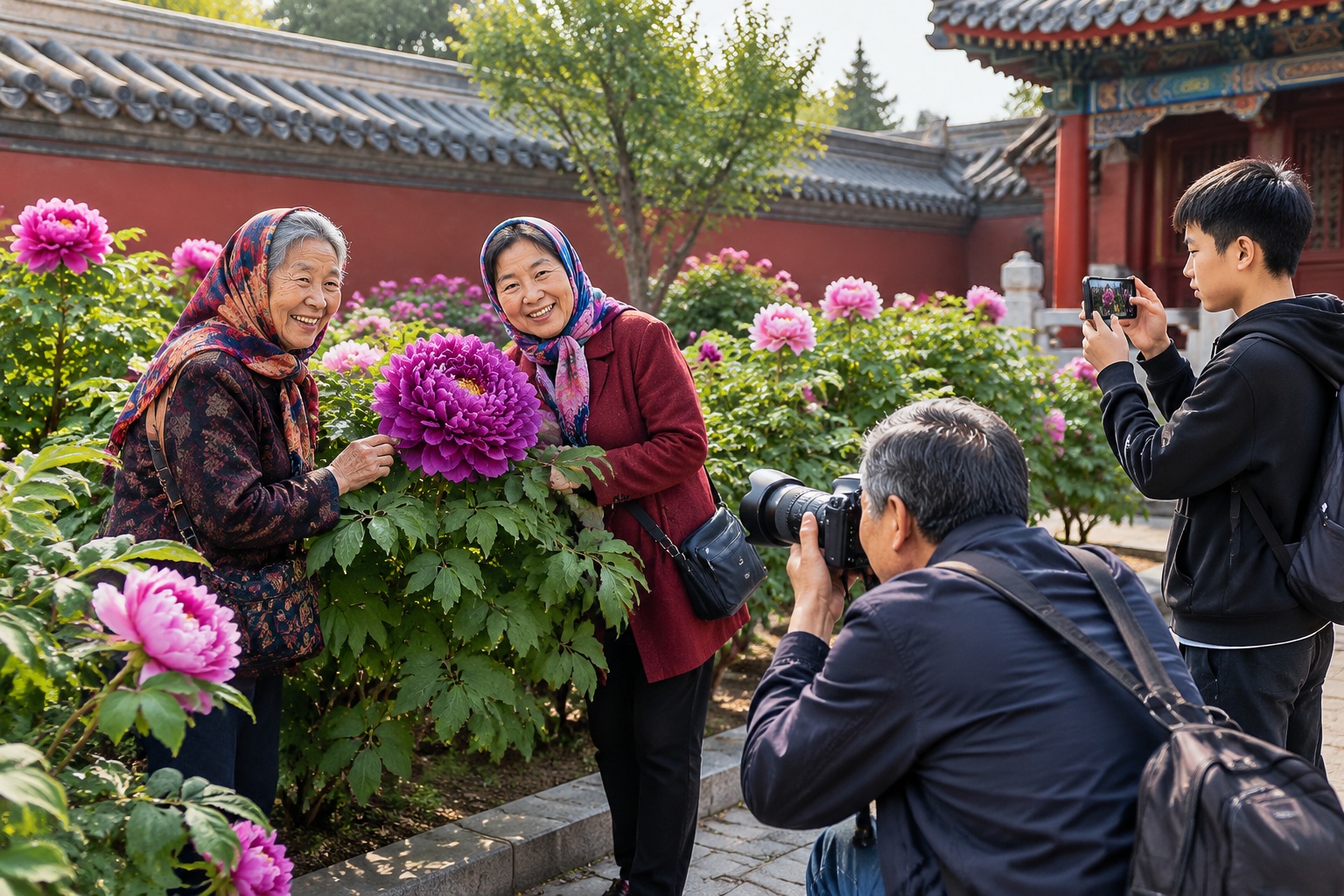
Then there are the peonies. The garden behind the halls holds tree peonies said to date back to the Ming, including a celebrated variety called Zixia Xian, the Purple Cloud Immortal. They bloom for about two weeks, usually from late April into early May, and the temple fills up. Grandmothers in matching scarves pose beside the biggest blooms. Men with heavy cameras argue about light. Teenagers film twelve-second videos.
That is the thing to understand about a temple garden in China. It is not a hushed museum. It is a park with history attached.
The view: Ming towers, an e-bike market, electric taxis
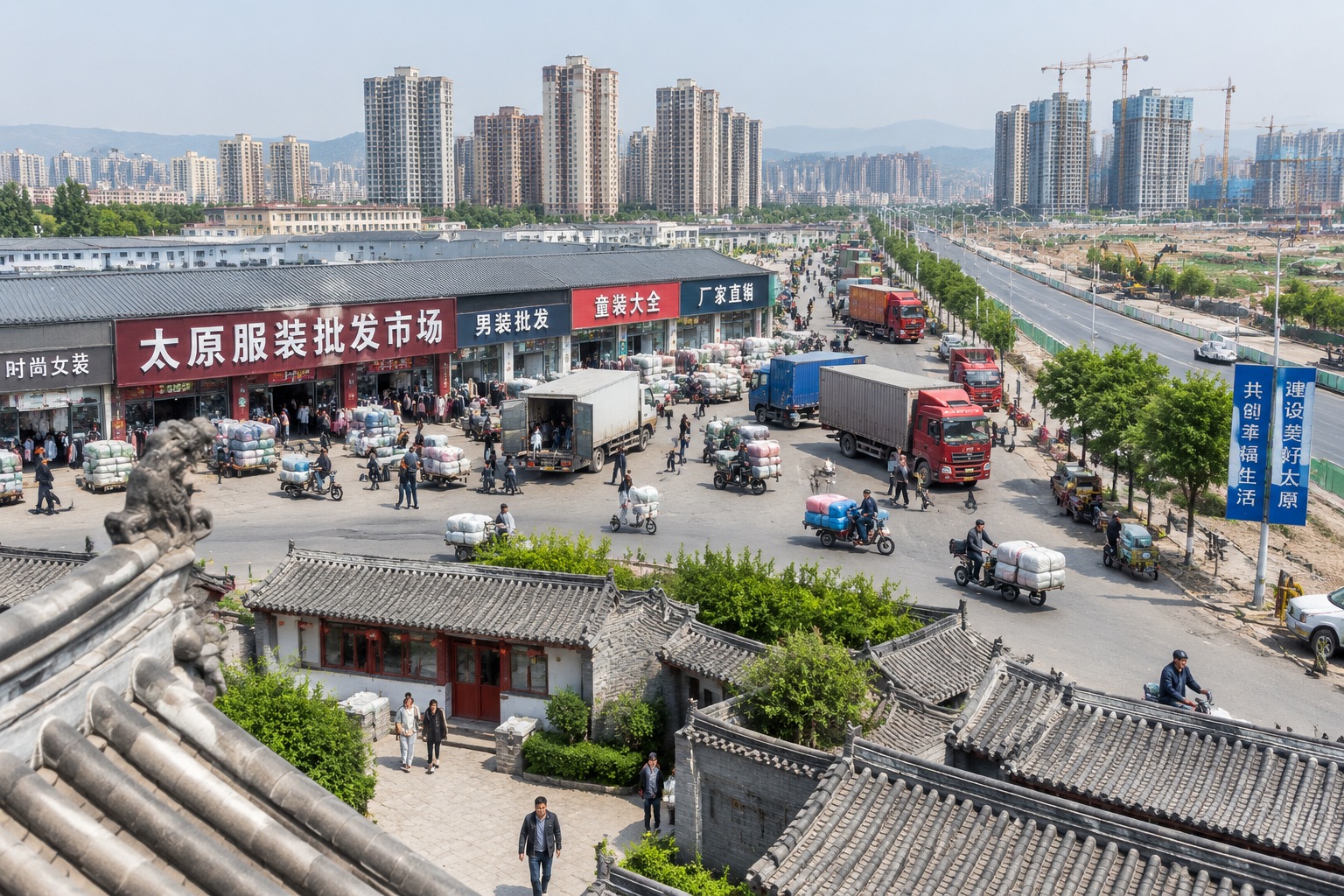
Stand under the pagodas and turn around. On one side: grey tiled roofs, low courtyards, old alleys. On the other: the wholesale clothing market of Haozhuang, a district of loading trucks, hand carts and e-bikes stacked with plastic-wrapped bundles, where shopkeepers from across the province come to buy stock.
Climb the pagoda and the contrast sharpens. Beyond the temple ridge you see apartment blocks, cranes and the flat shine of new roads. In 2021 the city opened Shuangta Park around the temple — lawns, paths, young trees, benches — and on weekends it fills with families, kite-flyers and joggers, the two towers floating above them.
Taiyuan itself has been changing in ways a visitor can feel rather than read about. The air is far cleaner than it was twenty years ago, when this was one of China’s coal capitals. Almost every taxi on the street is electric: the city replaced its whole taxi fleet with battery-powered cars years ago, among the first in China to do it. The first metro line opened in 2020. It is still small, but it exists.
And the pagodas remain the logo. New apartment compounds borrow the name. Wedding photographers bring couples here at sunset. A 400-year-old lucky charm has turned into a piece of city branding — which is either ironic, or exactly what its builders had in mind.
If you go
Yingze District, southeast Taiyuan, in the Haozhuang area. A taxi from Wuyi Square takes about fifteen minutes; buses run along Chaoyang Street. Tickets cost a few dollars, with a small extra charge to climb.
Late April to early May is peony season and the busiest time. Early mornings are quiet, autumn gives the clearest light, and weekday visits are calmer than weekends.
Pair it with food. Taiyuan does not get enough credit for its cooking. Order daoxiaomian, knife-shaved noodles cut straight into boiling water, or on a cold morning try tounao: a thick mutton and yam soup with herbs and rice wine, served with steamed dumplings for breakfast. Locals either love it or avoid it. Either way, you will understand the city better than any landmark can explain.
The brushes still standing
The nickname is a small joke with a long memory. A city once anxious enough about its exam results to build towers for luck now runs electric taxis, opens metro lines and argues about parking. The towers did not stop anything from changing. They simply stayed.
That is why they matter — not as a monument to a dead tradition, but as the thing people in Taiyuan point at when they want to say: this is us. Two brushes, still standing, still writing.
Start the discussion at forum.chinacomes.com