
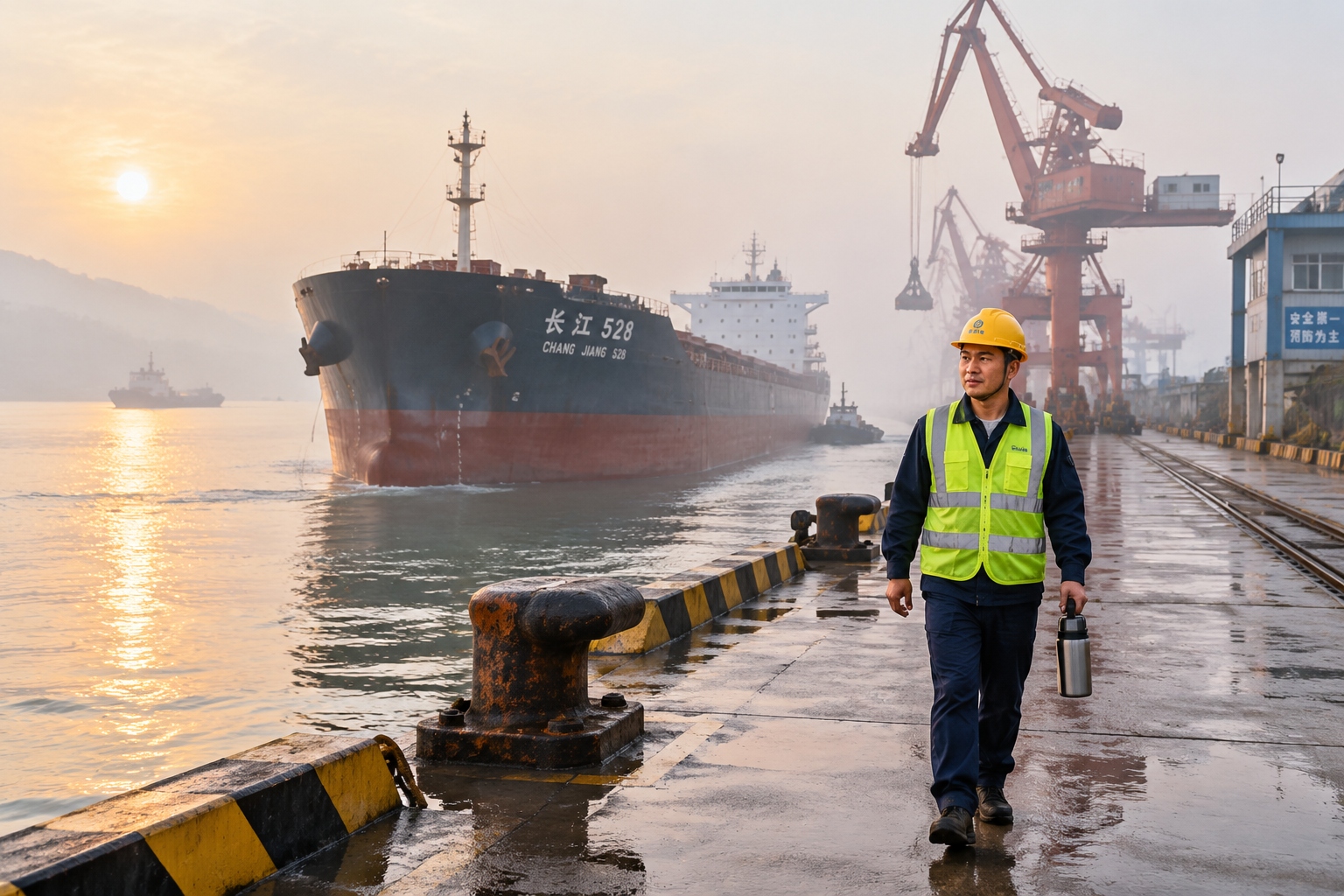

A Dock at 5:40 in the Morning
At 5:40 on a Tuesday morning, fog on the Yangtze is thick enough to blur the outline of a 5,000-tonne bulk carrier sliding toward its berth. On the pier in Wuhu, a city of about 3.6 million people in China’s Anhui province, a crane operator named Wang Jianhua is finishing a bowl of dry noodles at a stall that opens at four. He has worked this stretch of riverbank for 29 years.
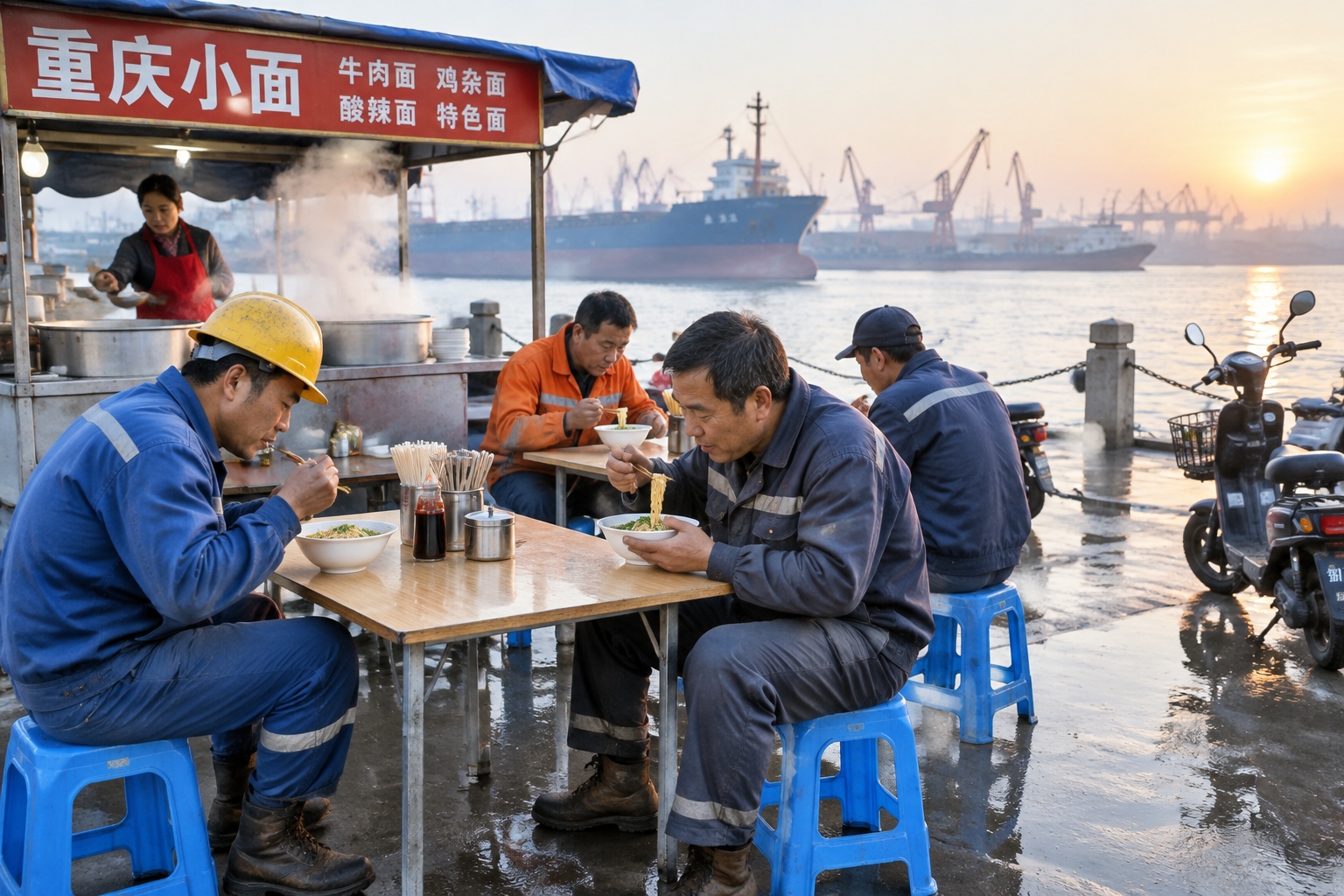
By six, the ship is tied up. The cargo is not what it would have been when Wang started: not sand and gravel shovelled by hand, but containers of auto parts, cement, air conditioners and packaged snack food. A line of newly built cars waits under floodlights to be driven aboard for the trip downstream.
The Yangtze River Economic Belt is one of those phrases that fills policy documents and vanishes from daily conversation. You can still see it here, at 5:40 in the morning, in what a dock handles, who works on it, and what the riverbank behind it has become. Some names in this piece have been shortened at the request of the people interviewed.
What the Yangtze River Economic Belt Actually Is
Strip away the jargon and it is a plan for the 11 provinces and municipalities along China’s longest river — together roughly 40 percent of the country’s population and close to 45 percent of its economic output.
Four things happen under that plan, and all four are visible from a pier.
First, the river itself was made easier to use. The main channel has been dredged and regulated so larger ships can travel further upstream, and the Yangtze now carries more freight than any other river in the world — several times the volume moved on the Mississippi system. Second, factories were encouraged to move inland from the coast, which is part of why a carmaker like Chery builds and exports from Wuhu instead of from Shanghai. Third, polluting plants along the water were shut, relocated or rebuilt. Fourth, ports were wired into rail and road networks, so a container can leave an inland city and reach a seaport without being unpacked.
For a resident, the plan never shows up as a document. It shows up as a different job, a different commute, a cleaner riverbank and a rent that is higher than it was ten years ago.
The Dock That Changed the Work
Wang’s first job, in 1996, was shovelling. Coal and construction sand arrived in 1,000-tonne boats and left the dock on men’s backs and in wheelbarrows. A good day moved 800 tonnes. The dock had no fence, no dust suppression and a few bare bulbs for lighting.
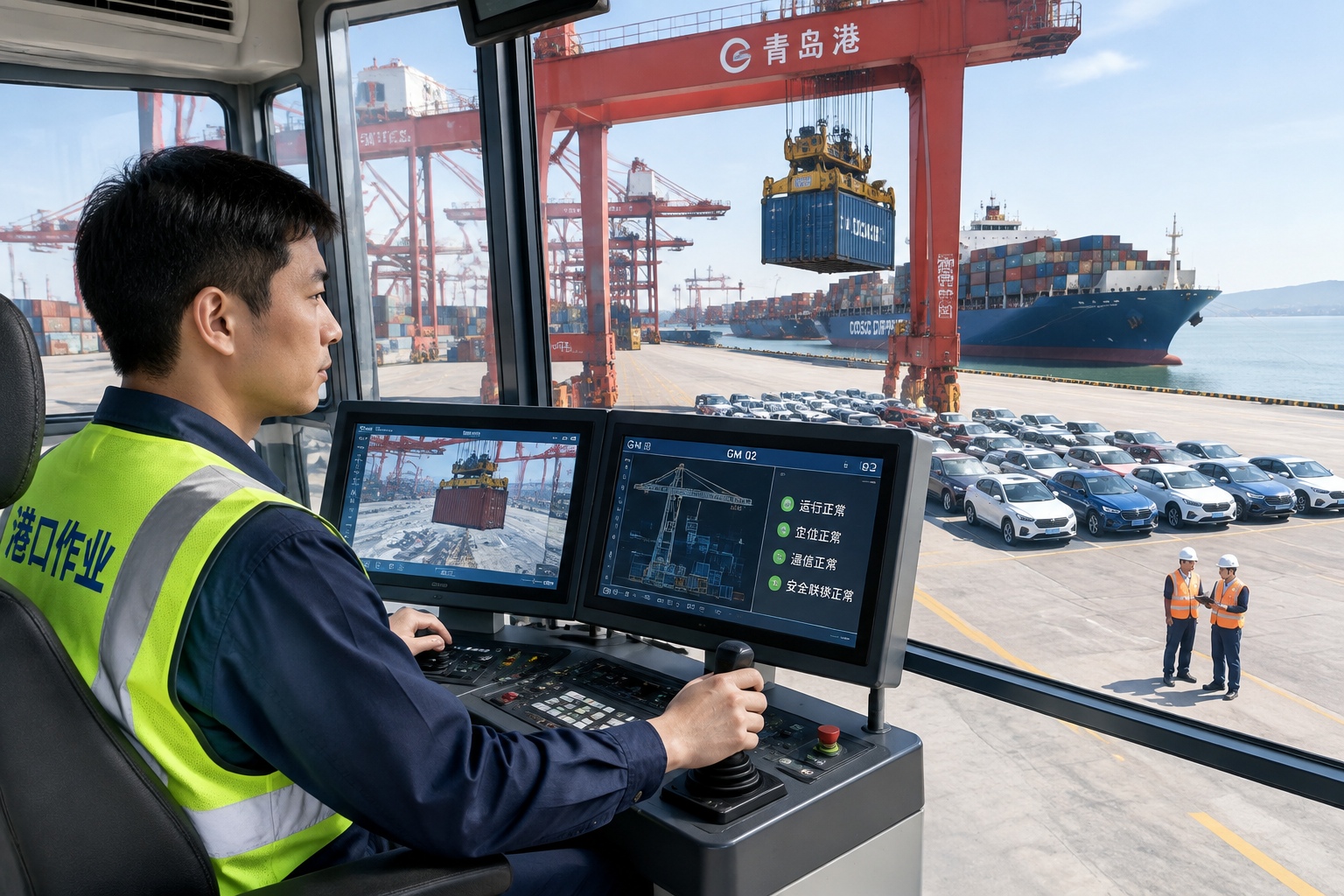
Today the same berth handles ships five to ten times larger, and the work is done by remote-controlled gantry cranes and conveyor belts. Wang sits in an air-conditioned cab with a screen in front of him. “The hardest part now is the paperwork,” he says.
What changed, in three details
The cargo. Sand and scrap metal have largely gone. In their place: containers, cars, cement, home appliances and packaged food from brands such as Three Squirrels, an online snack company founded in Wuhu in 2012 that now ships across the country.
The ships. A 10,000-tonne vessel can now reach Wuhu, which means one voyage carries what used to take ten. Ships plug into shore power at the berth instead of running diesel generators all night — a change that matters to anyone living downwind.
The shoreline. Along the whole river, a campaign that began in 2016 removed roughly 1,300 illegal or unlicensed small docks, according to official figures. Wuhu lost dozens of them. Some were eyesores. Some were the only livelihood of the families running them.
From the Riverbank to the City Center
Walk 20 minutes inland from Wang’s crane and you are inside a different story. On the site of demolished sand docks, Wuhu built a riverside park: a long promenade of grass, running tracks and trees that locals call Shili Jiangwan — “ten li of river bend,” roughly five kilometres. On a Sunday it fills with children on scooters and retirees doing tai chi.
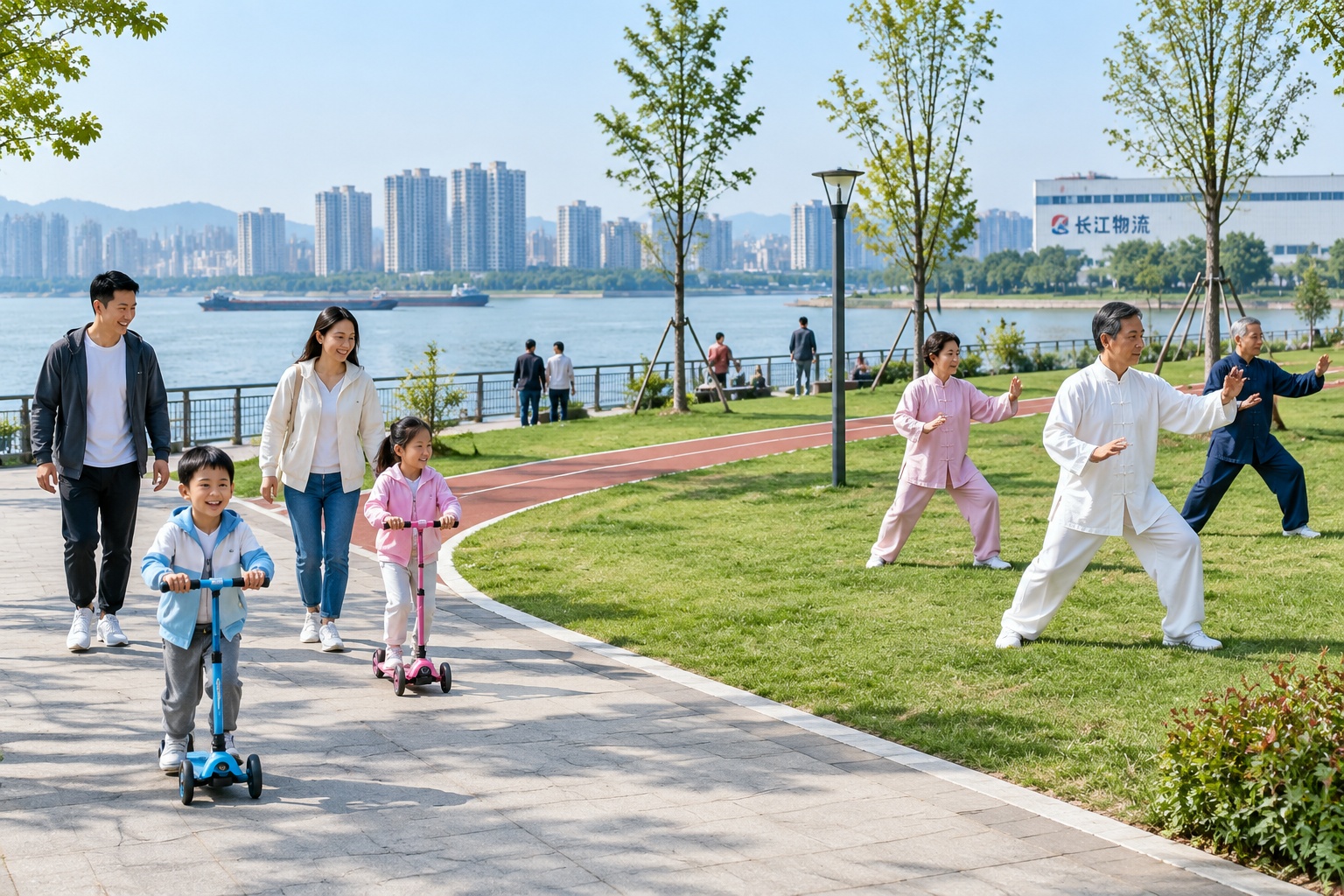
Behind the park sits a logistics park, an auto-parts cluster, appliance factories and the headquarters of Conch Cement. Wuhu’s economy now produces around 470 billion yuan a year, about 65 billion US dollars, in a city smaller than Chicago. Per capita, that is high for inland China.
The shift is visible in who lives there. Liu Fang, 29, spent six years in Shanghai doing supply-chain work and came home in 2022. She earns about a third less than she did in Shanghai. Her rent is less than half, and her commute is 20 minutes on a monorail line that opened in 2021. “In Shanghai I never saw my apartment in daylight,” she says. “Here I cook dinner.”
That trade — lower pay, better hours, closer family — is now common enough in China’s second- and third-tier cities that it has its own phrase in everyday conversation: going back to the hometown.
What the Turnaround Cost
None of this happened as a smooth line upward, and it would be dishonest to pretend otherwise.
When the small docks closed, the people who ran them did not automatically get jobs at the container terminal. Most were family operations, and their owners were often over 50 and short on formal qualifications. Some moved into trucking. Some opened restaurants near the new park. Some left for other cities.
The same goes for the chemical industry. Official figures count several thousand chemical enterprises along the river that were shut, relocated or rebuilt over the past decade. That is good news for water quality — the main channel has improved markedly, and the Yangtze finless porpoise, whose numbers had been falling, has begun to stabilise in some stretches. It is harder news for a 48-year-old machine operator in a town where the plant was the largest employer.
Retraining exists, usually short courses in forklift operation, electrical maintenance or warehouse systems, sometimes with a monthly stipend of a few hundred to a few thousand yuan. It works for some people and not for others. A ten-year fishing ban that began in 2021 retired about 231,000 fishers along the river; most were resettled and given pensions or new work. Many now patrol the water as river guards — which pays less than fishing did in a good year, and more than fishing did in a bad one.
Property prices in Wuhu’s riverside districts have roughly doubled in a decade, which pleases owners and frustrates their children. The park is free. The apartment overlooking it is not.
Why a Reader in Ohio or Rotterdam Should Care
Two reasons, one economic and one human.
The economic one: inland water freight is not a Chinese curiosity. Barges on the Rhine and the Mississippi move bulk goods at a fraction of the cost of trucks, and China has spent two decades building the same kind of system on a much larger scale. When a car built in Wuhu is driven onto a ship and sails for Europe, Latin America or the Middle East — Chery exported more than a million vehicles in 2024 — the cost of getting it from an inland factory to the sea is built into the price a buyer pays. Inland logistics is one of the quiet reasons Chinese manufacturing is hard to undercut.
The human one: the pattern here — a city that loses its old docks, gains a park and a logistics park, and watches its young people choose between a big-city salary and a small-city evening — is not unique to China. It is what deindustrialisation and reindustrialisation look like almost everywhere. The difference is speed, and the fact that the state is an explicit participant rather than a bystander.
Evening at the Dock
By seven in the evening the pier is quieter. The last shift is finishing, and the promenade a few hundred metres away has filled with walkers, street vendors and a dance group with a portable speaker. Lights come on along the cable-stayed bridge across the water.
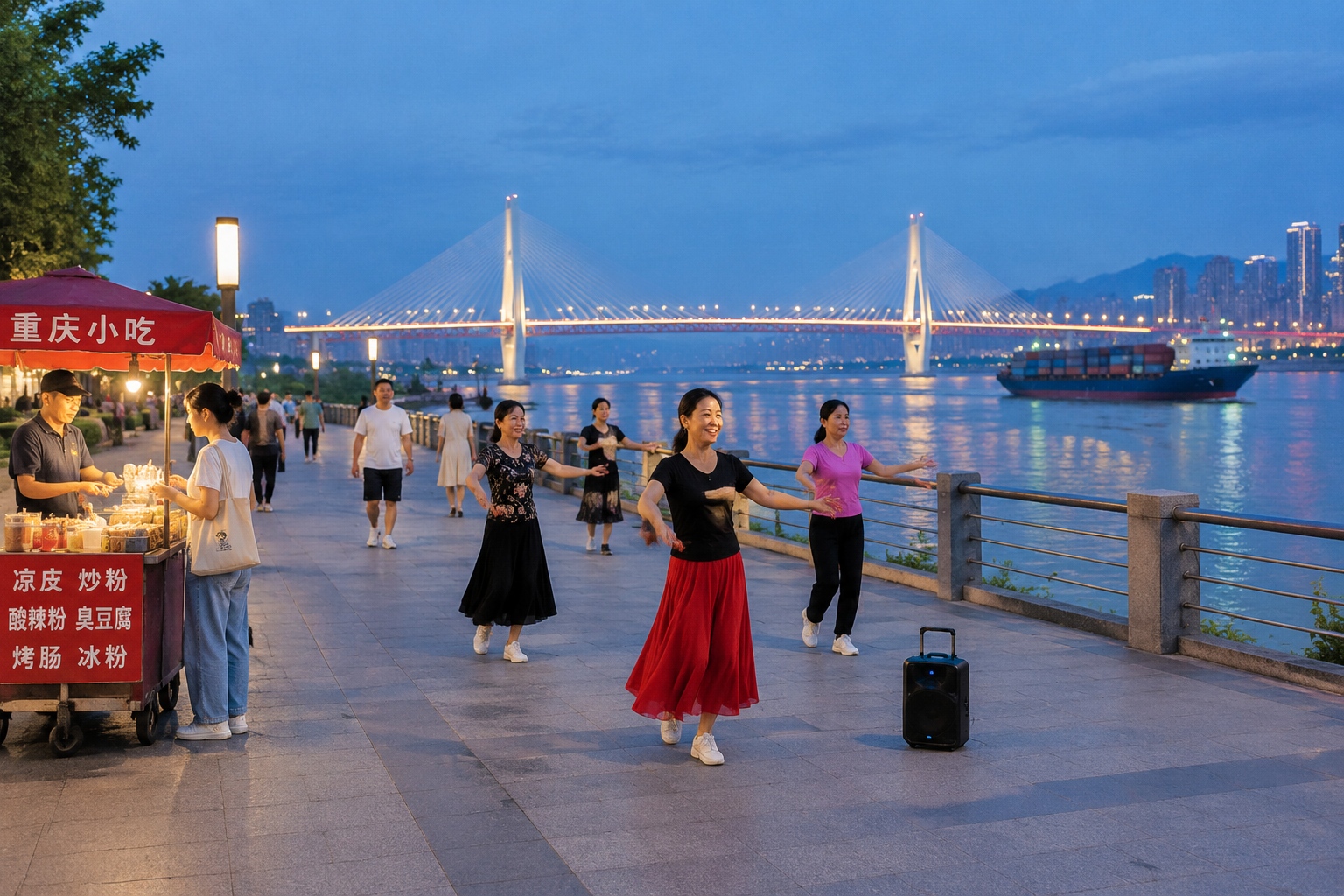
A container ship pushes downstream toward Shanghai, its navigation lights small and steady. Wang will be back at 5:40 tomorrow. The river, he says, “doesn’t really change. It’s what we put on it that changes.”
Start the discussion at forum.chinacomes.com