

Before Sunrise, the Cutting Begins
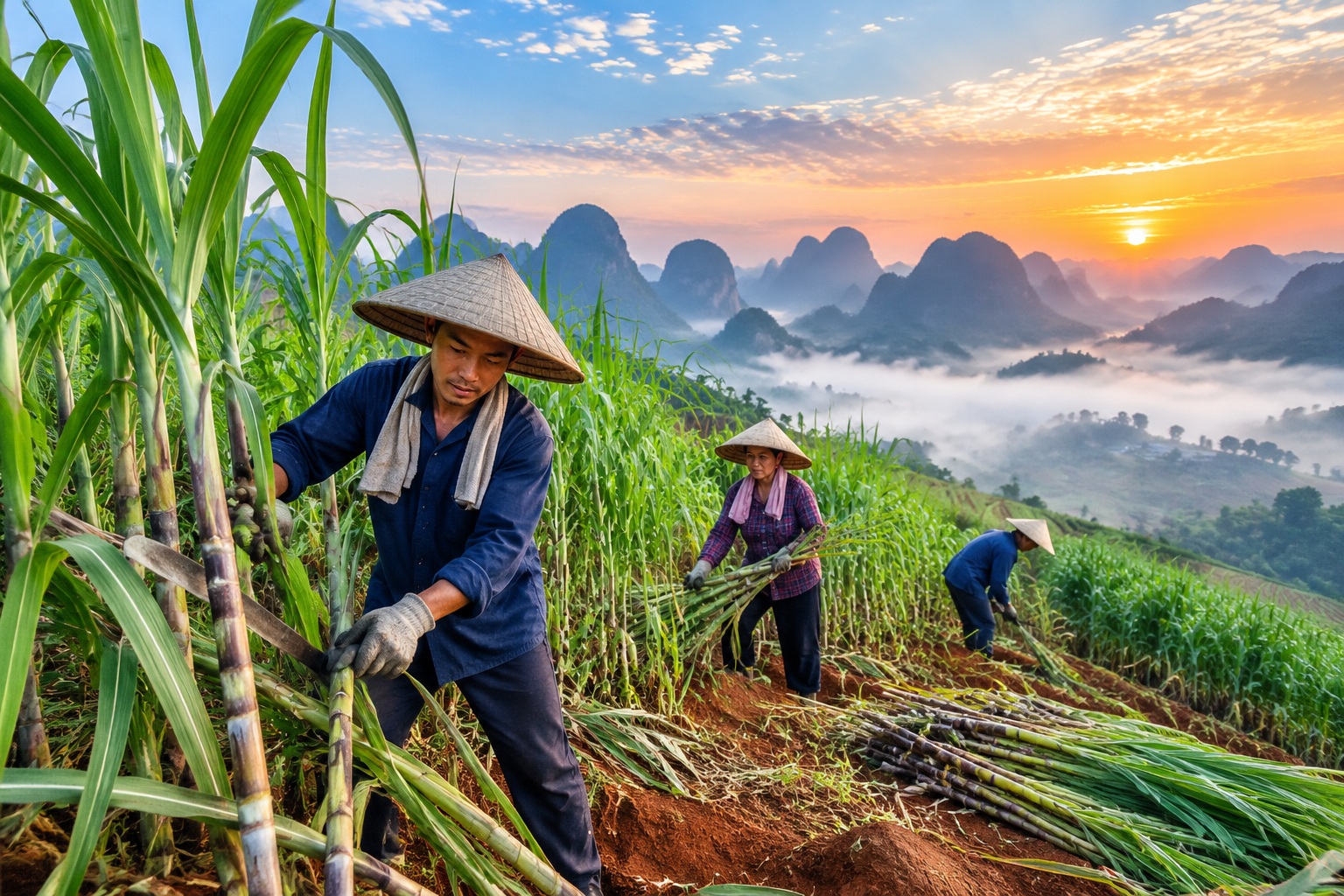
At 5 a.m., deep in the valleys of Guangxi, a ring of machetes against thick stalks breaks the cold silence. The air smells of damp earth and sweet sap. Wearing faded cotton caps and rubber boots, teams of cutters work their way through rows of cane that stand three meters tall. Every few seconds, they swing, slice, strip leaves, and lay the cane neatly on the ground.
These workers, many of them farmers from nearby villages, are the first link in an enormous chain that ends with the small white packets on your kitchen table. Guangxi, an autonomous region in southern China, is the country’s sugar bowl. In recent years, it has produced around 60 percent of China’s sugar — more than any other province and as much as several major sugar-exporting countries combined.
If you ask locals why Guangxi dominates, they’ll point to the sun, the rain, and the dirt. The region sits on the Tropic of Cancer, with plenty of warmth and a long frost-free growing season. Its hillsides of red soil drain well while retaining enough water for the thirsty crop. “It’s not fancy farming,” one veteran grower told me, walking me through a field in Chongzuo. “Sugar cane is hardy. You plant it once, and it can come back three or four years from the roots.”
A Harvest That Moves Mountains
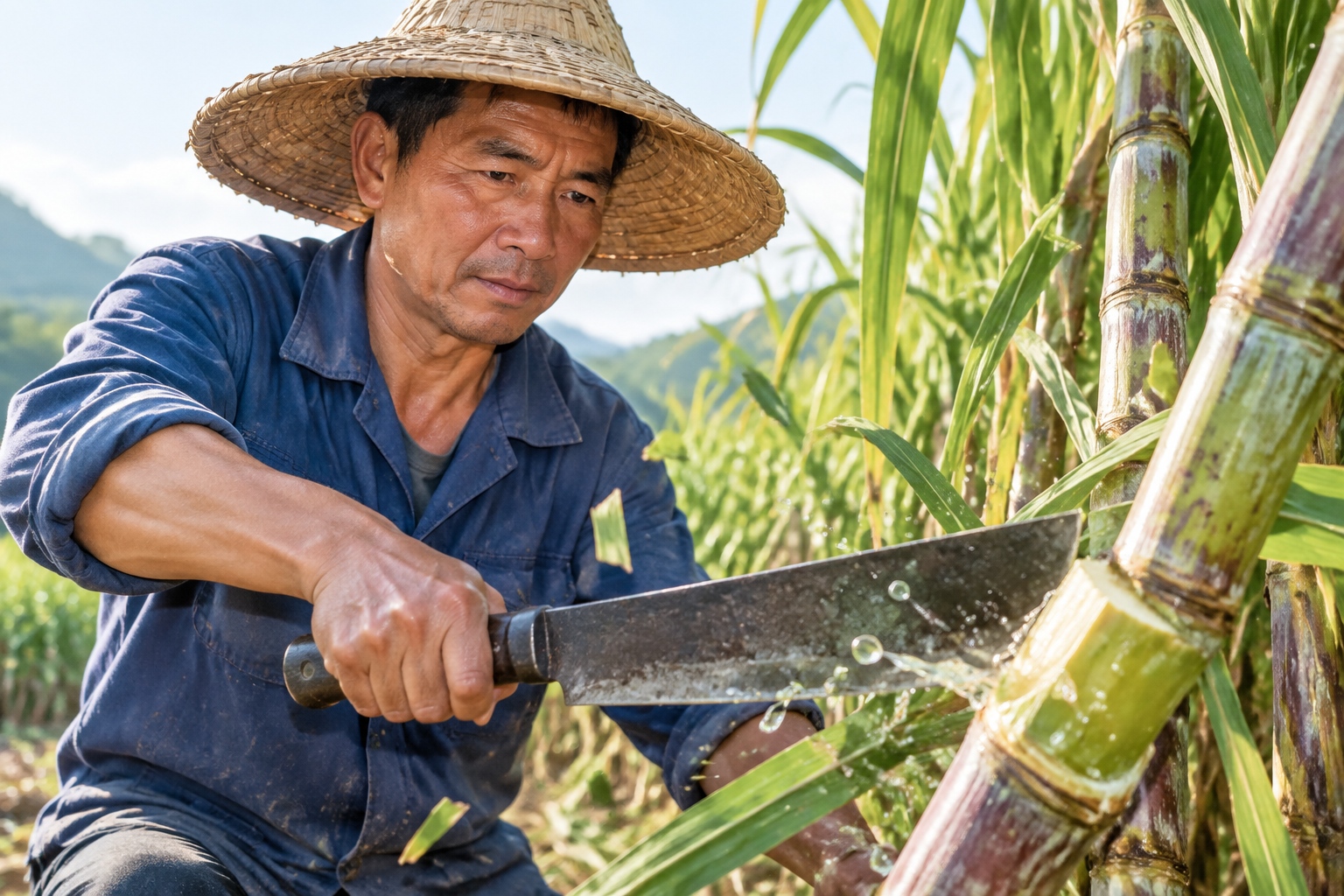
The harvest season runs roughly from early November to the following April. During these months, the landscape turns into a strange choreography of labor and machines. In the flat fields, large harvesters chew through the rows, but on the steep hillocks of Guangxi — more than half of all cane fields — there is no access for big equipment. Here, the work remains what it has been for generations: hand-cutting.
Over the past two years, an estimated two million farmers and seasonal workers have participated in the harvest. It is back-breaking work. A skilled cutter clears one or two tons of cane in a day. They are usually paid by weight, and the rate floats with sugar prices. In a good season, a strong worker might earn 300 to 400 yuan a day — roughly 45 US dollars. In a bad one, less.
Younger people increasingly balk at the job. “It’s hard. You get cuts all over your arms, and your back says no,” says a 29-year-old cutter who came from a smaller county in Baise. “I do this for two months a year, the rest I work in the city.” Stories like his are everywhere. Labor shortages have pushed many small farms to pool their plots and rent machinery from specialized cooperatives.
The Sugar Mill: A River of Sweet Steam
Once the cane is cut, haulers pile it onto open-top trucks and race to the nearest mill. The factories are the beating heart of this industry. Many have been here since the 1980s, with towers of steel piping, chimneys, and the constant hiss of steam.
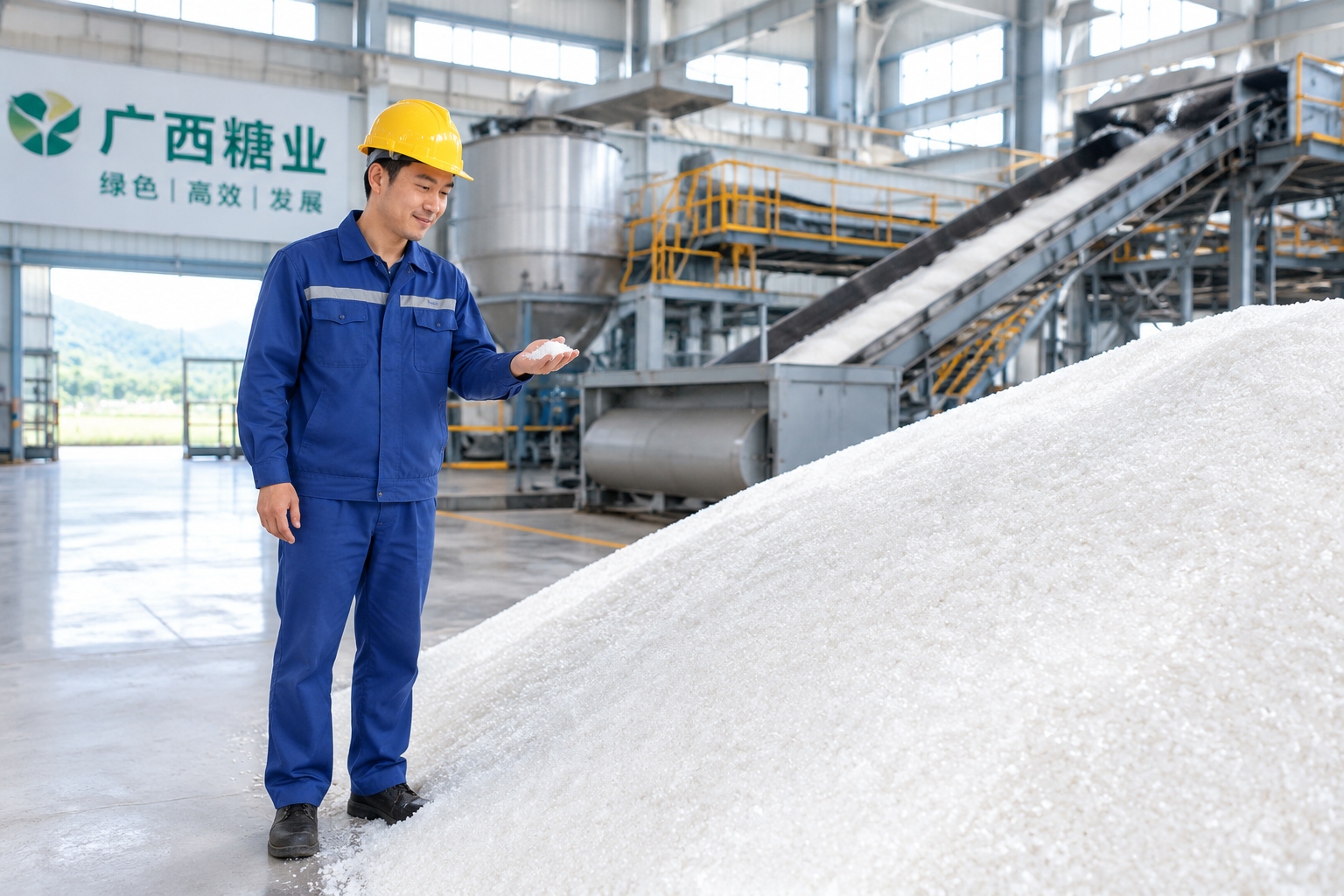
Inside, the cane gets dumped, washed, shredded, and crushed under massive rollers that squeeze out the pale-green juice. The juice is then boiled repeatedly, clarified, crystallized, and spun in high-speed centrifuges. What comes out is a mountain of white, crystalline sugar. From the field to the final white pile, it usually takes less than 24 hours.
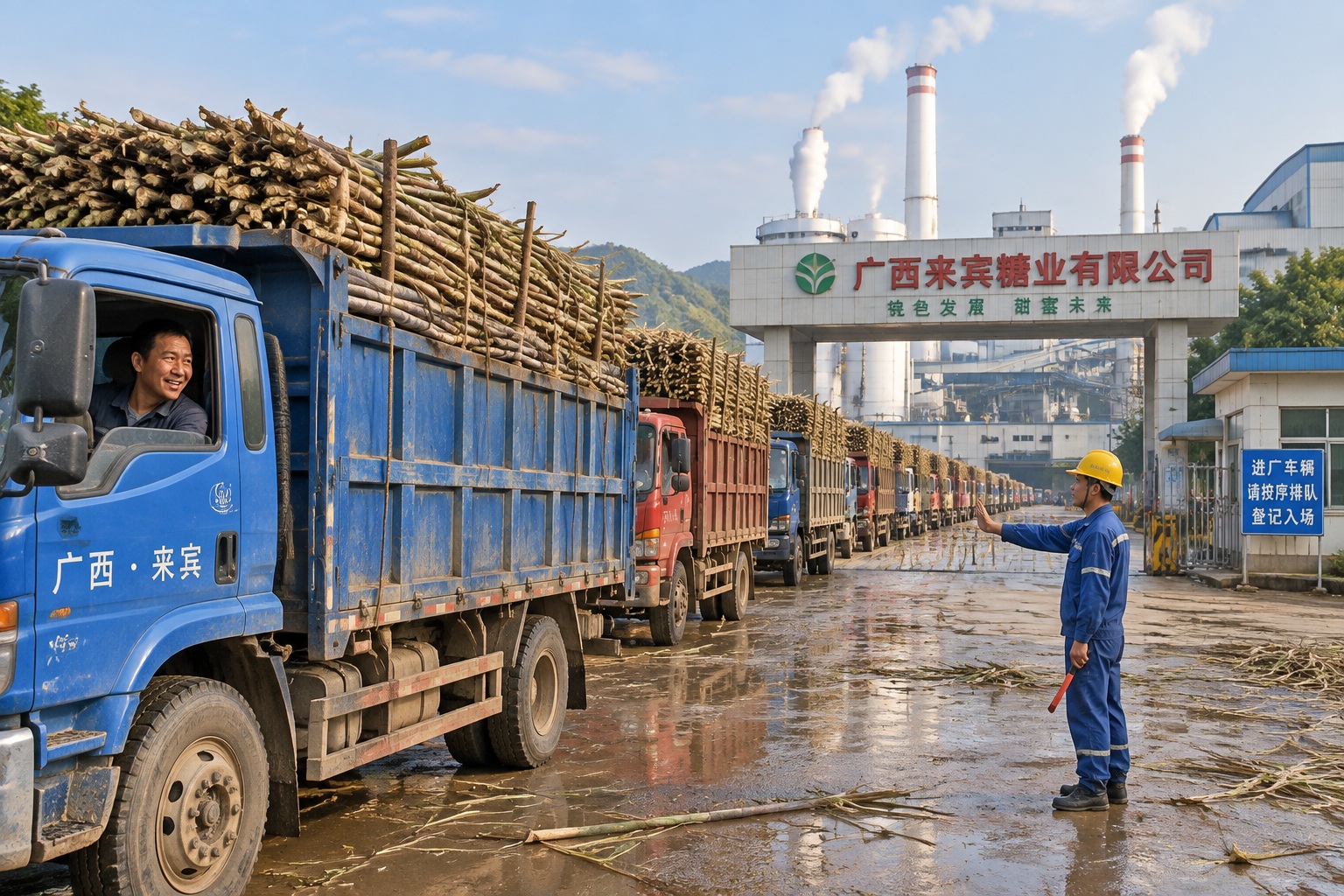
A typical mill may crush more than 10,000 tons of cane per day during peak season. The scale is hard to grasp until you stand beside a pile of shredded cane that looks more like a green sand dune than a agricultural product. Trucks line up for kilometers along the access roads, engines rumbling, drivers barely able to nap before it’s their turn at the gate.
Nothing Goes to Waste
What surprises first-time visitors is how little is wasted. The fibrous stalk left after juice extraction, called bagasse, is burned in the mills’ own power plants to generate electricity and heat. Many mills generate more power than they need and sell the surplus to the provincial grid.
Molasses, the brown liquid left after sugar crystallization, is fermented into alcohol, yeast, and animal feed additives. Even the leftover filter mud — the muddy sediment from juice purification — is recycled as fertilizer for the next crop. The industry has effectively turned a tropical grass into a refinery of sweet, energy, and by-products.
At a newer mill in Laibin, they’ve gone even further. “We are exploring the use of bagasse to make biodegradable tableware and packaging materials,” an engineer told me, pointing to a small box made from compressed plant fibers. “It’s a response to the plastic ban. And the raw material grows right outside the gate.”
The Price of Sweetness
The world’s sugar price is set in New York and London, but in Guangxi it is felt at the kitchen table. When the price drops, farmers delay cutting, hoping for a rebound. When it rises, trucks crowd the mill gates and the night is lit by headlights. Everyone in the region, from the street soup vendor who buys sugar in bulk to the man who repairs machetes, is tied to this cycle.
Since China has become one of the world’s largest sugar buyers, the government also keeps a strategic reserve. This has occasionally stirred controversy — stockpile releases can depress prices when supply goes flat. But for most cane growers, the government’s minimum purchase price is the anchor that keeps them on the land.
“I can’t complain too much,” a farmer in Fusui County said, standing beside his dirt road with a scar on his forearm. “The price is set, so we know where we are. The last few years, we’ve gotten a little support for seeds and fertilizer. But my son won’t take over this farm. Maybe he’s right.”
Sweetness with Complexity
Guangxi’s sugarcane world is far from perfect. Labor is aging, wages are uneven, and the weather is increasingly unpredictable. Droughts in 2022 and floods in 2023 cut yields and slowed the harvest. Yet the region still manages to supply more than half of China’s sugar, year after year.
Walking along the edge of a cane field near Nanning, I noticed a new type of drone buzzing overhead. A local youth had started a business spraying fertilizer using drones. “It’s faster, and it uses less,” he said, landing the quadcopter on the soft peat. “We’re still learning. But the old days are ending.”
As the sun set, a truck loaded with fresh-cut cane rumbled down the hill. The driver honked at my group, and the silhouette of the stalks waved gently against the orange sky. This is not a romantic vision. It is just the everyday machinery that puts sugar on your table. But the next time you stir a spoonful into your coffee, you might pause for a second and picture the region where the sweetness begins.
Start the discussion at forum.chinacomes.com