

Hainan, organized by the sun
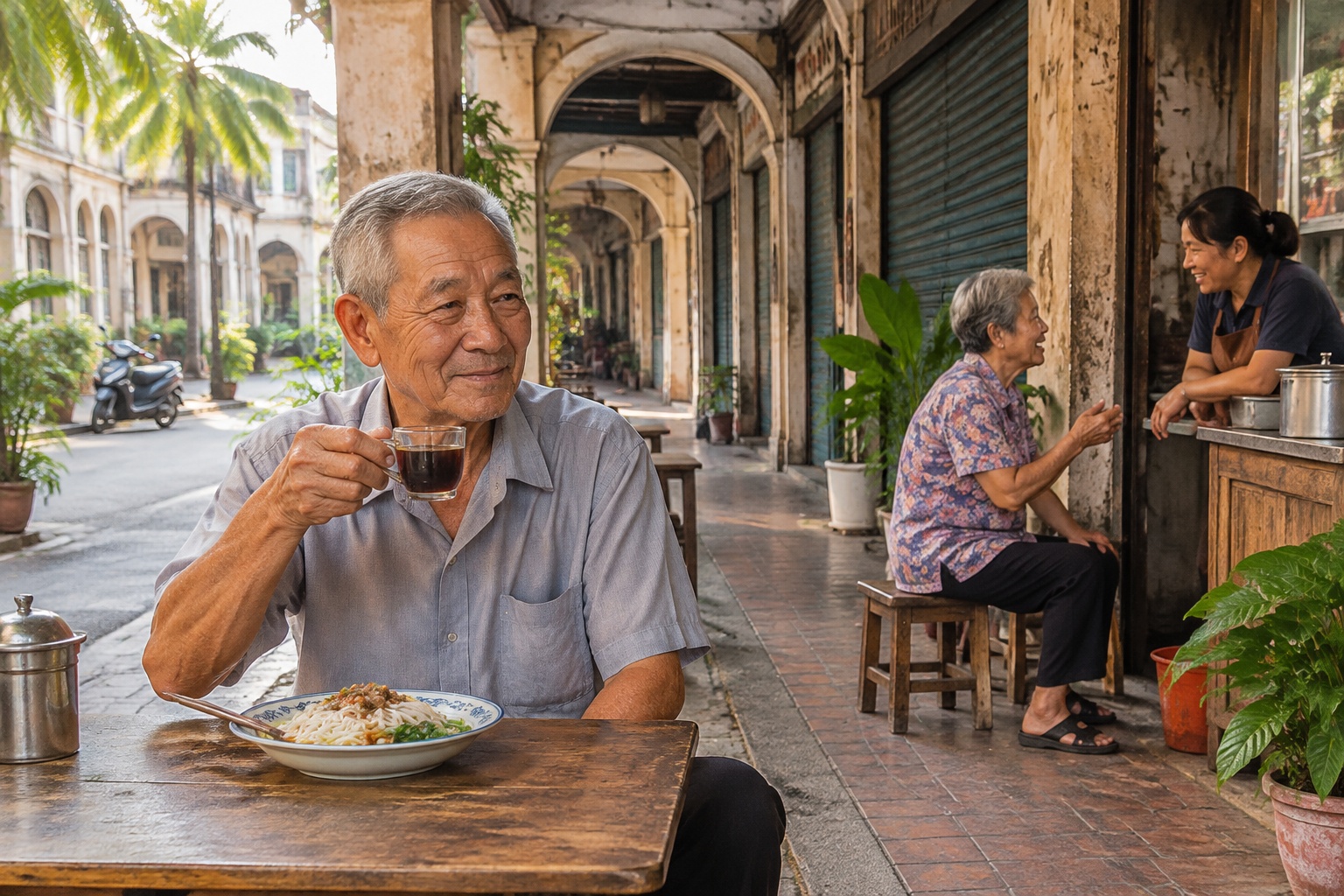
At 6:40 in the morning in Haikou, the arcade streets are still in shadow. The shop shutters are down. An elderly man sits at a low table with a cup of black coffee, a plate of Hainan rice noodles, and no particular hurry. This is not a staged tourist scene. It is how the city wakes up.
Hainan is China’s southernmost island province, a tropical place most Chinese people know as a winter escape. The route below links Haikou, Wanning, Lingshui, Sanya and, optionally, Wuzhishan: seven days, one island, summer in every season. You will probably not remember which day you did what. You will remember certain hours.
On a tropical island, the day is not set by a schedule. It is set by the sun. So this guide is arranged by time of day rather than Day 1, Day 2. Over seven days, you will live these moments more than once.
06:40 — The people who wake first
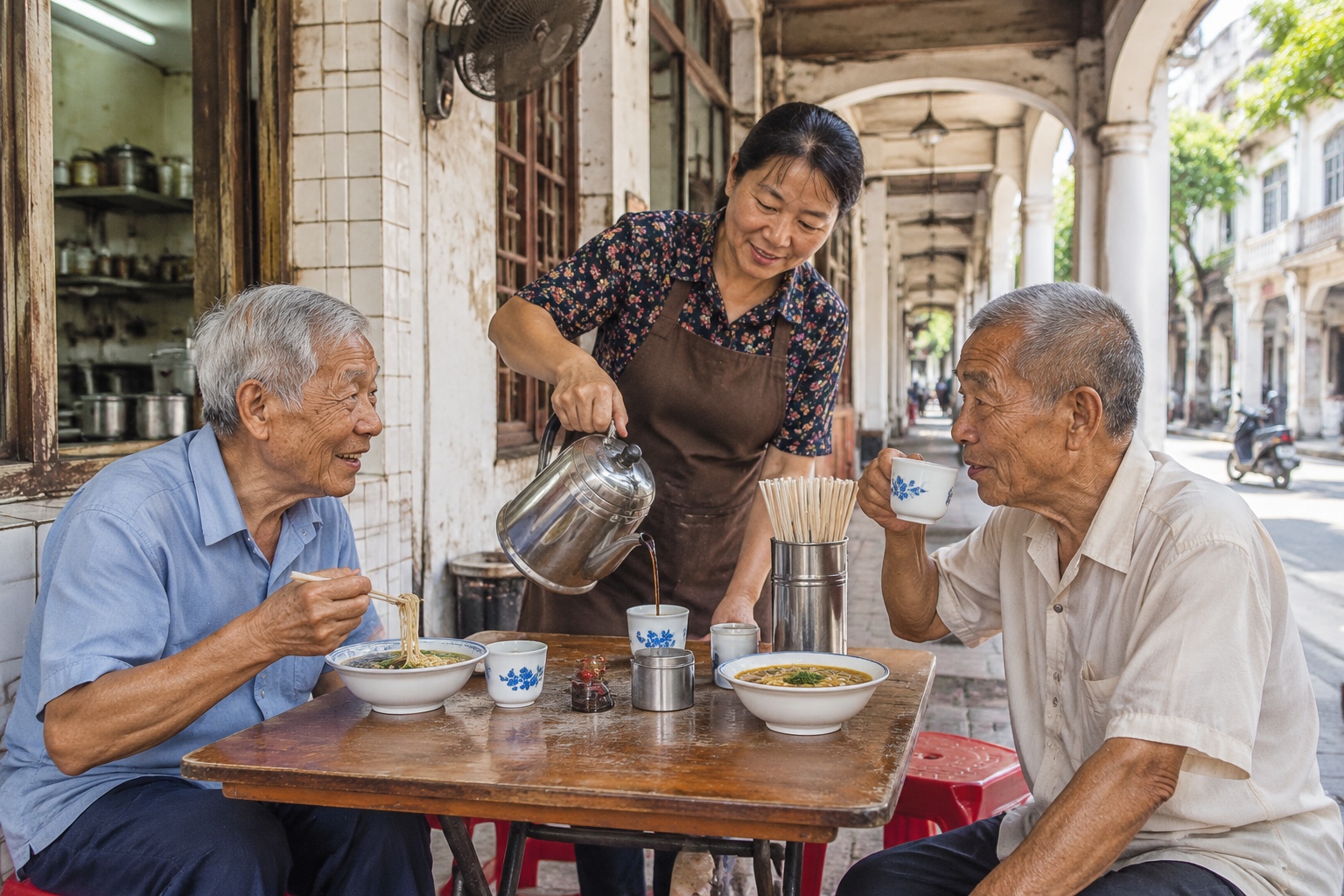
In Haikou, this is the best hour on Qilou Old Street. The arcades were built about a century ago by Chinese families returning from Southeast Asia: the ground floor is set back to form a covered walkway, blocking rain and sun. Shops are still closed, but older people are already sitting outside with coffee.
Morning coffee in Hainan is not an imitation of a foreign habit. It is local. The island is one of China’s earliest coffee-growing areas, and Haikou people call black coffee kafei wu. It comes with a plate of Hainan noodles or a fried sesame ball. The tea houses are known as laoba cha, or old man tea. In them you see the loosest side of the city.
In Lingshui, the same hour belongs to the sea. The wind has not picked up. The water is flat. The sand holds last night’s footprints and a few early shell collectors. If you swim before seven, the day already counts.
09:20 — Get in the water
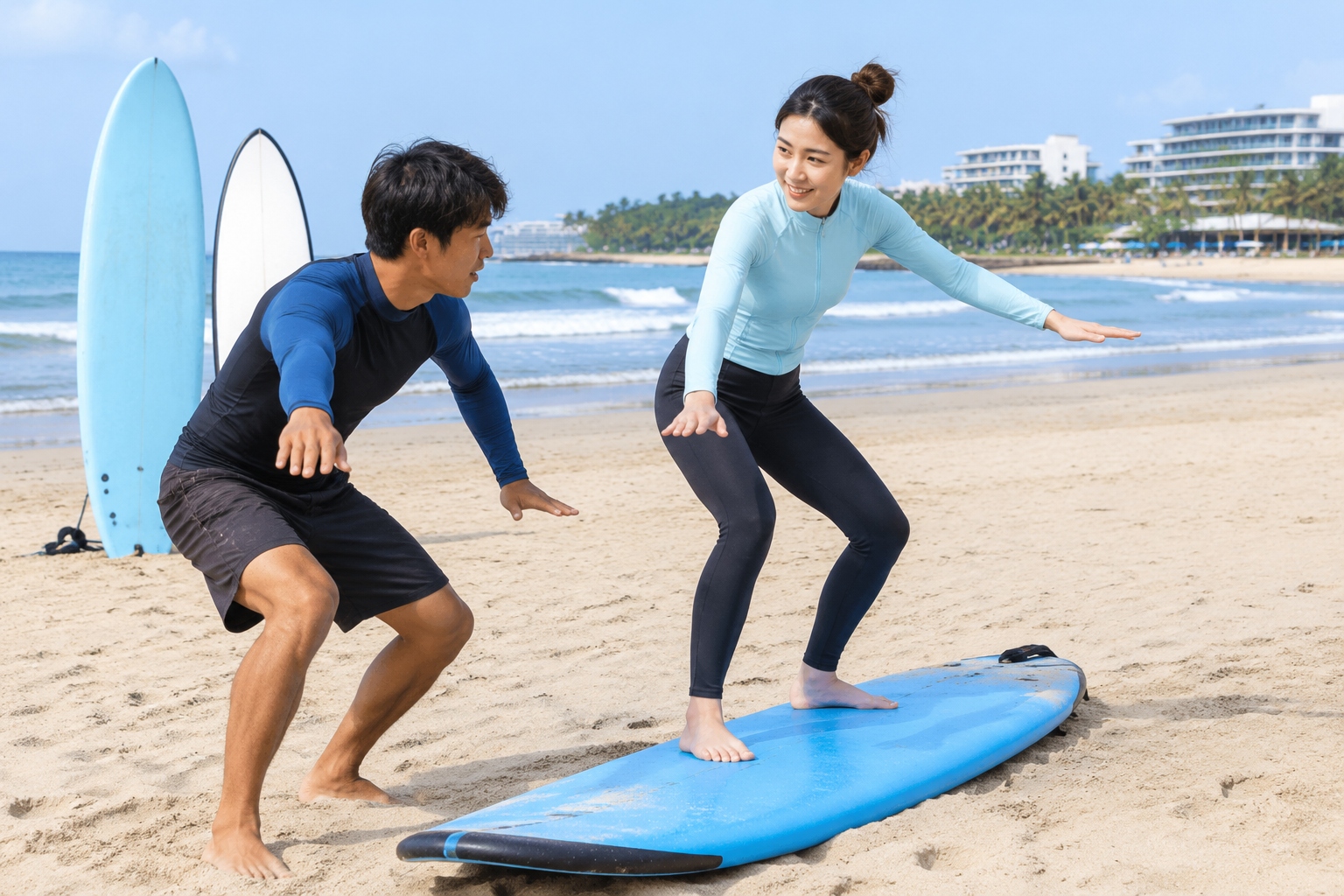
Riyue Bay in Wanning is one of China’s best surf spots. From October to March, the northeast monsoon pushes clean, consistent waves onto the shore. A whole street of surf clubs runs along the beach. Instructors start on the sand: lie on the board, practice the pop-up, then walk you into the shallows. In two hours most beginners stand a few times. The first three-meter ride stays with you.
Wuzhizhou Island, off Sanya, offers a different kind of water. You do not surf it; you look at it. Take the earliest boat, when the crowd is thinnest. Below the surface are coral and tropical fish. On a clear day, light falls in stripes across the sandy bottom. If you get seasick, take medicine before the crossing. It is short, but it rocks.
11:00 — The morning you don’t swim
On Day 6, head to Nanshan Temple. Its best-known sight is a 108-meter Guanyin statue standing in the sea, facing three directions. Believer or not, standing beneath it makes people quiet without being told.
In the afternoon, visit Tianya Haijiao. Honestly, it is two large rocks by the sea with characters carved into them. Many Chinese visitors look and think: is that it? But for Chinese readers, the phrase tianya haijiao carries weight. It means the edge of the sky and the corner of the sea—the end of the world as ancient people imagined it, a place where exiles were sent beyond civilization. You stand there now, turn around, and go back to a hotel with air conditioning. That fact alone is a kind of luxury.
13:00 — The hottest two hours
At noon in Hainan, do not fight the heat. These two hours are for not moving.
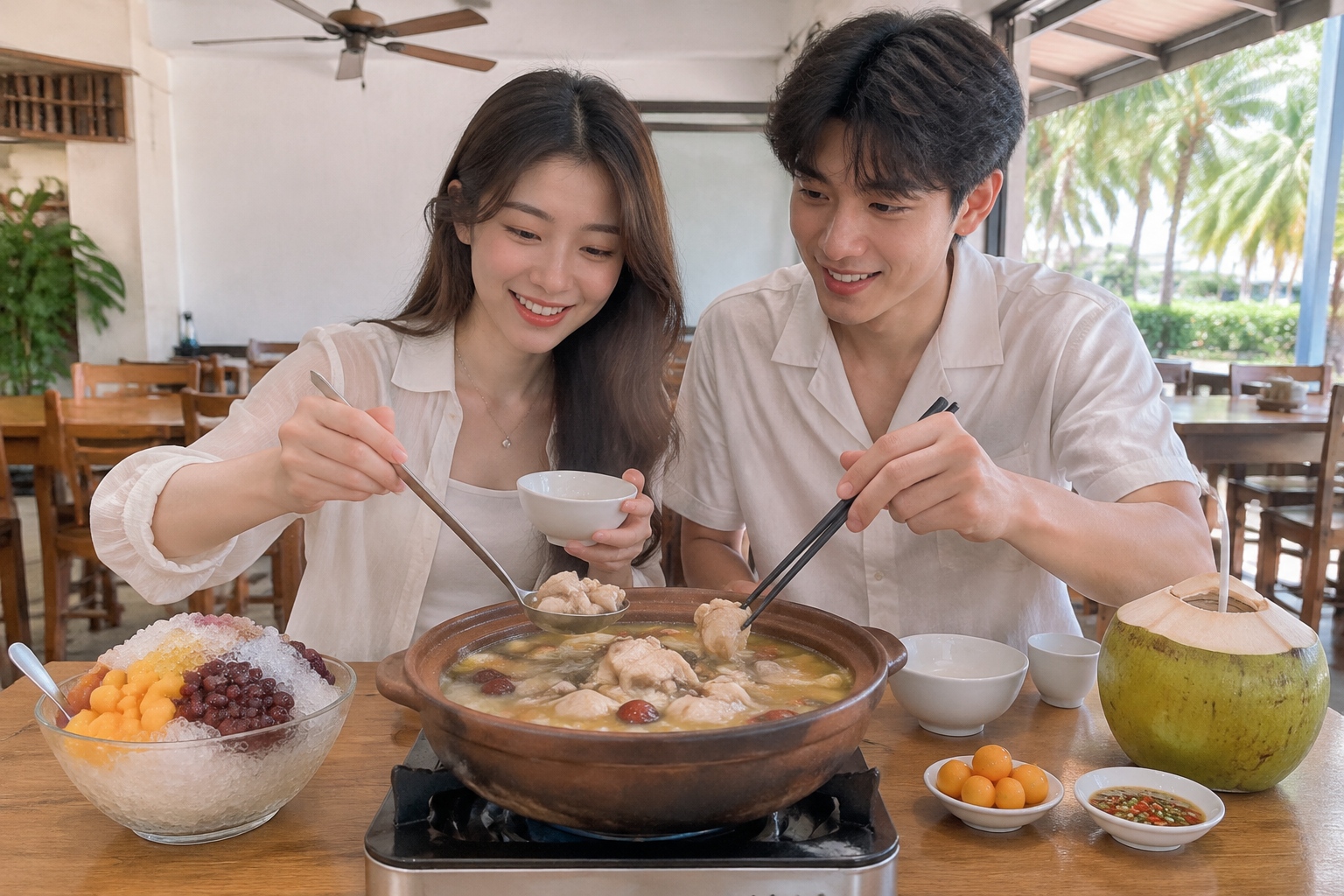
Start with a bowl of qingbuliang: coconut milk, red beans, mung beans, job’s tears, taro, watermelon, ice, sugar. One bowl lowers your body temperature by two degrees. Then comes coconut chicken. The broth is young coconut water. You poach Wenchang chicken in it for four minutes, drink the soup first, then eat the meat. The dipping sauce is small green kumquats, sand ginger, soy sauce and chili. Squeeze the kumquat. It is the soul of the dish. Hainan people do not eat this with rice. They eat it with time.
After lunch, go back to the room and sleep. This is not laziness. It is the core arrangement of this route.
17:40 — The most expensive light of the day
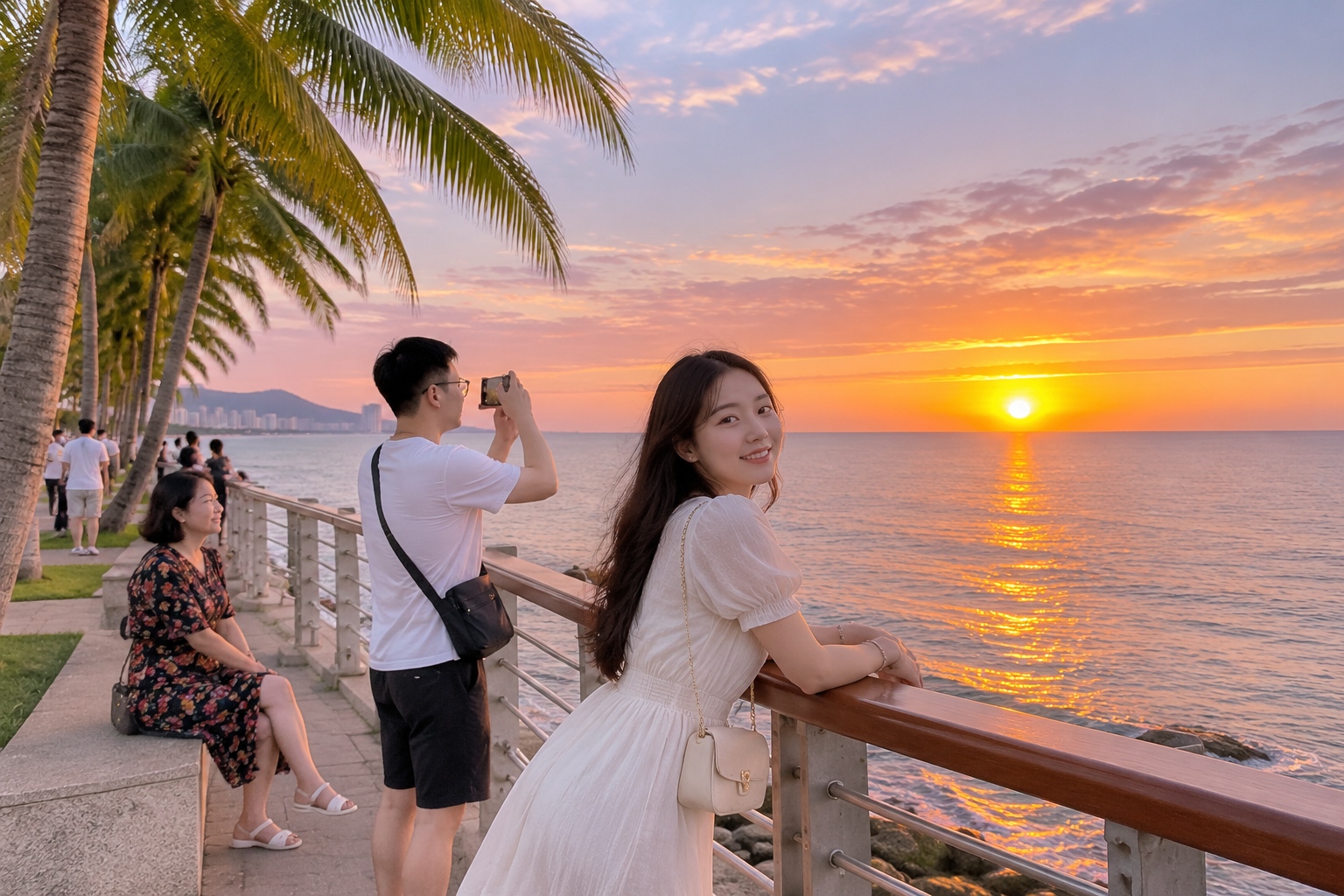
Day 4 is Yalong Bay. The sand is as fine as flour, and the water comes in bands of blue. At sunset, the sun presses down to the sea. The whole surface turns orange, then purple, then gray.
To be honest: Yalong Bay faces south. The best sunset view is actually farther west, along Sanya Bay’s Coconut Dream Corridor, about twenty minutes by car. It is a twenty-kilometer seaside road lined with coconut palms as far as you can see, and the sun drops straight into the water. If you want the standard Hainan photo, any beach will do. If you want the fullest sunset, go west.
20:30 — Dinner on plastic stools
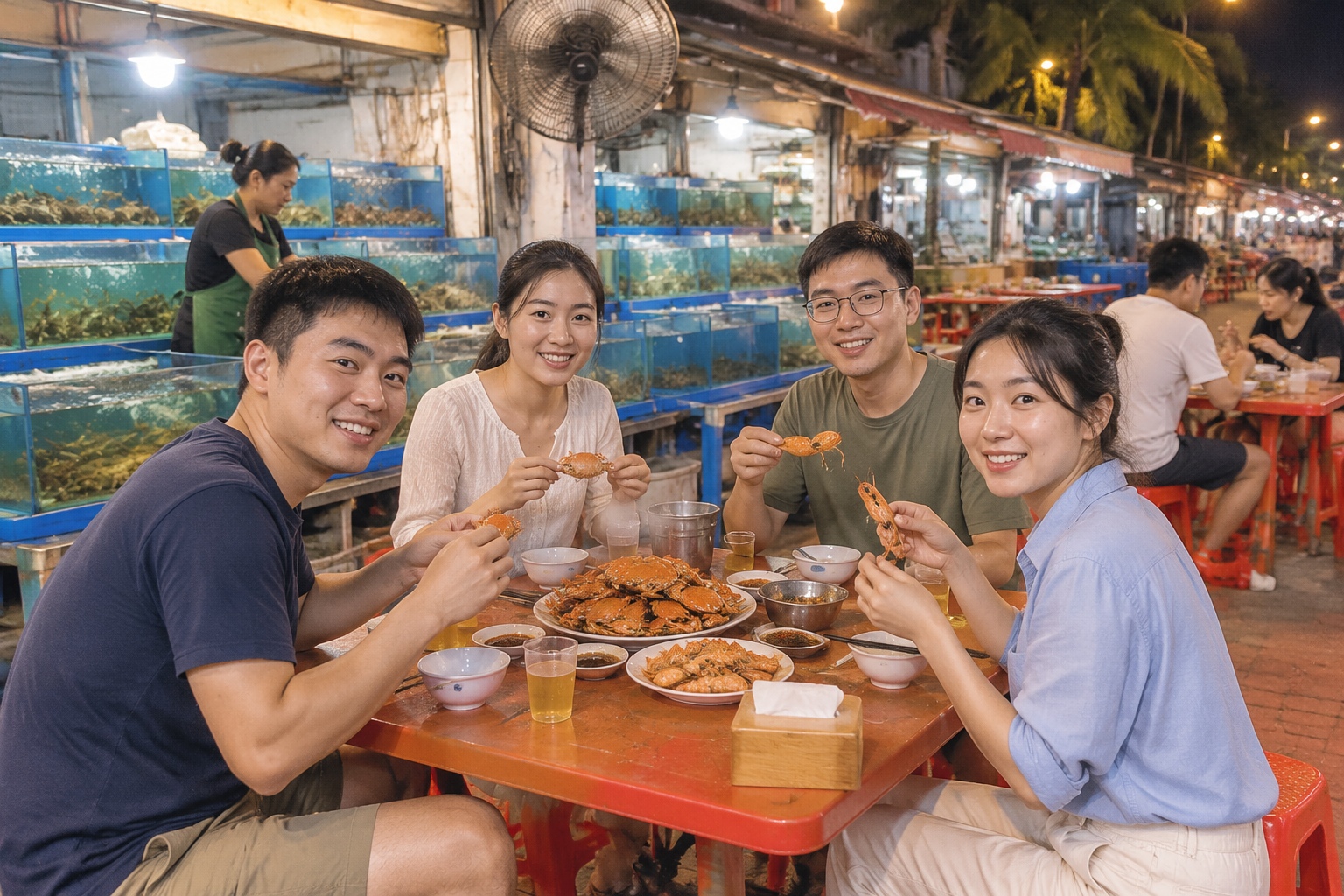
In Lingshui on Day 3, or on any night in Sanya, the correct way to eat seafood is this: first go to the market. Buy Hele crab, mango snails, prawns, sea urchin. Point at the live ones and have them weighed. Then carry them to a nearby cooking shop, pay by weight, and explain whether you want steaming, blanching or garlic.
The tables are plastic. The stools are plastic. A fan turns overhead. The next table is playing a drinking game. This is the best meal on the route and also the cheapest. Finish with another bowl of qingbuliang, and the day closes.
Another day, optional: into the mountains
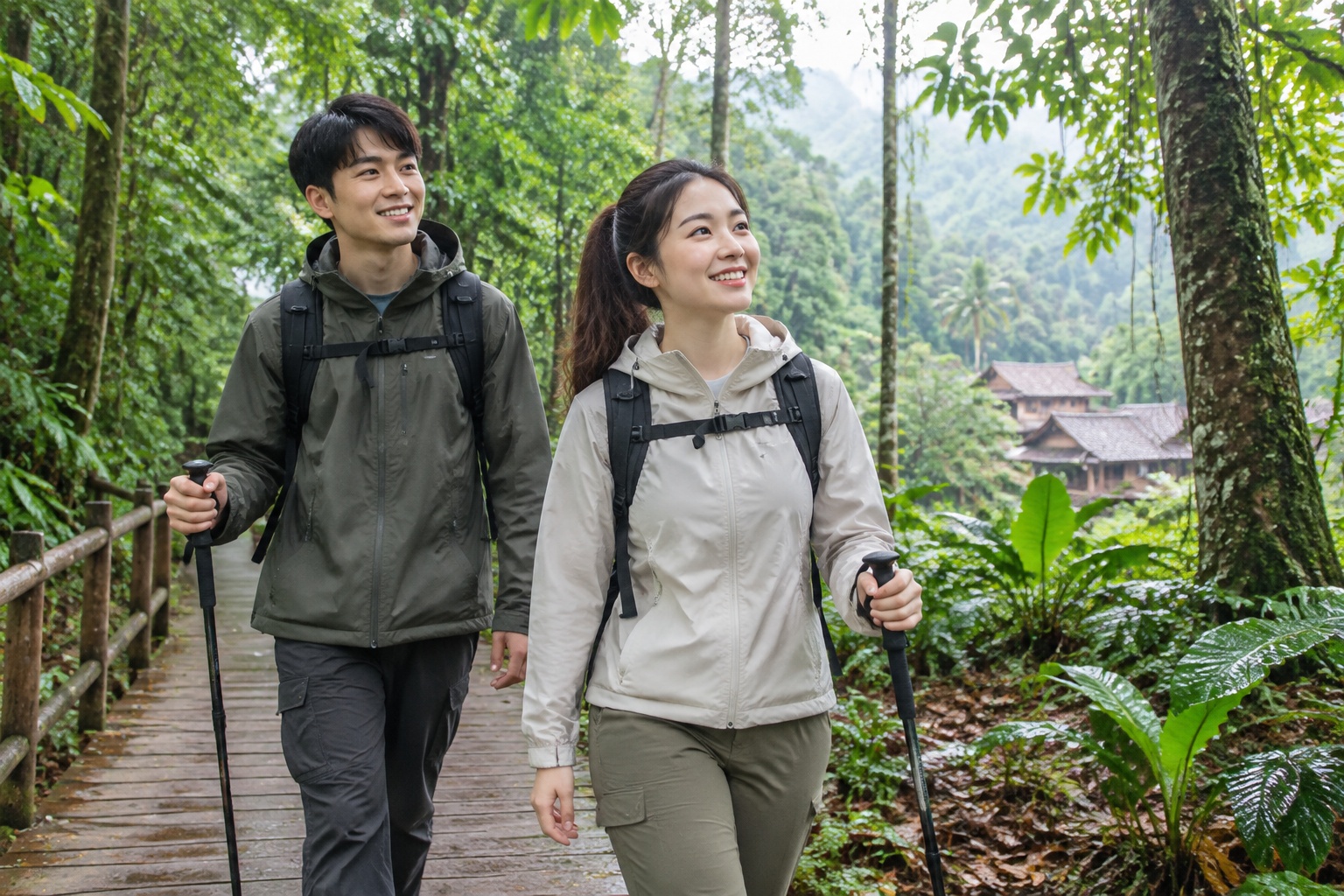
Wuzhishan is the one part of this route that does not feel like Hainan. In the tropical rainforest, trees rise out of sight. Vines hang down. The air is wet and heavy. After ten minutes of walking, your clothes stick to your back. The island’s highest peak is here, more than 1,800 meters above sea level, with boardwalks for visitors.
Li and Miao communities live in these mountains. The weaving techniques of Li brocade and the taste of shanlan wine are still here. This day is not an extra attraction. It adds the other half of the island. Most people know Hainan’s sea. They do not know that Hainan’s interior is rainforest.
Return to Sanya afterward, about two hours by car, and fly out from Sanya Phoenix International Airport.
Before you go: small practical notes
Season decides everything
November to April is best: dry, warm, sunny. May to October is the rainy season. August to October brings the most typhoons, which can disrupt flights and plans. If you come in that window, leave room in your itinerary.
Sun protection is not optional
The UV index is strong all year, even on cloudy days. Sunscreen, a hat and a long-sleeved snorkel shirt are more useful than after-sun lotion.
Water temperature
Even in winter, the sea stays around 20°C, so swimming is possible. If you feel the cold, bring a thin wetsuit top.
Getting around
The high-speed loop railway connects Haikou and Sanya in about an hour and a half. Between scenic areas, hire a car or use taxis. Hainan’s highways have no tolls, but the cost is included in fuel prices.
Shopping and seafood
Duty-free shopping is available before departure; check current allowances and rules on site. Buy before you leave the island, not as a souvenir inside a scenic area. For seafood, choose live items, watch the scale, ask about cooking fees, and avoid restaurants where touts pull you in from the street.
Who this route suits
It suits people escaping winter, families with children or parents, and anyone who wants to do nothing for a few days. It also works as half culture, half island if you combine it with a mainland city route. It does not suit travelers who need a new thrill every day. The repetition here is intentional. It does not suit people who dislike sun, or visitors outside November to April who cannot accept typhoon-related changes. And it is not a budget route: Sanya hotel prices are the main cost.
What you bring home
Not coconut-shell souvenirs. You bring home the shade under the Haikou arcade and the coffee sweetened with condensed milk; Lingshui at 6:40, the sea like glass no one has touched; the first three meters on a surfboard; light falling in stripes on the sand at Wuzhizhou; the few seconds of silence beneath the 108-meter Guanyin; the first cold mouthful of qingbuliang; crab shells on a plastic stool, fingers smelling of garlic and kumquat; and in the rainforest, the damp cloth stuck to your back.
Seven days teaches you to read the time, not the calendar. The best things on this island are free. They just ask you to wake early, get in the water, and sleep at noon.